You can’t remove every stress trigger at work. Deadlines show up. Emails pile up. Meetings run long. But you can change how your space feels, and that matters more than most people think.
The best indoor plants for reducing office stress do two simple things: they soften hard edges (screens, sharp lighting, bare walls) and they add a small living rhythm to your day (watering, new leaves, slow growth). Plants also nudge you to look up, pause, and breathe. That micro-break is often the reset your brain needs.
This guide walks you through office-friendly plants that look good, tolerate neglect, and fit real desks, not fantasy home tours. You’ll also get practical placement tips and a low-effort care plan that doesn’t turn into another task on your list.
Why plants can help you feel calmer at work

Stress isn’t only “in your head.” Your surroundings push your nervous system around all day. Bright glare, noise, clutter, and stale air all add load. Plants can’t fix your calendar, but they can make your space feel less harsh.
Research on nature exposure and mental fatigue keeps pointing in the same direction: when people get small doses of nature, they often report better mood and attention. If you want a deeper look at how nature contact can support attention and stress recovery, check summaries like the American Psychological Association’s overview on nature and well-being.
Plants also improve perceived air freshness, even when the measurable change is modest in a typical office. If you’re curious about the bigger picture on indoor air, the EPA’s indoor air quality resources give a clear, practical baseline.
What “stress-reducing” means in an office plant
For this article, “stress-reducing” doesn’t mean a plant cures anxiety. It means the plant helps your space feel calmer and easier to work in. The best choices tend to share these traits:
- They survive inconsistent watering.
- They tolerate office light (often dim, sometimes harsh).
- They don’t drop leaves everywhere or smell strong.
- They look good from a few feet away on video calls.
- They’re safe enough for most shared spaces (with clear notes if not).
Best indoor plants for reducing office stress

These are desk-tested picks. Each one includes what it’s good for, how to keep it alive, and where it works best.
Snake plant (Sansevieria)
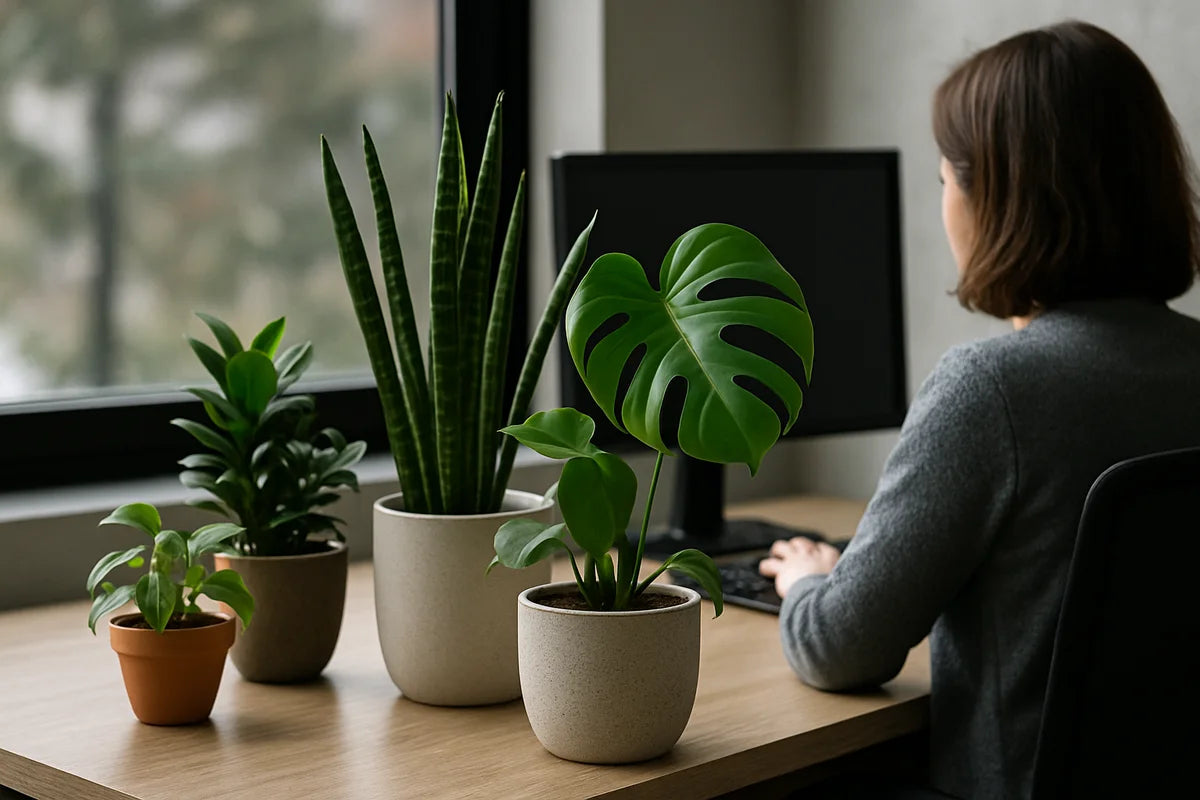
If you want the lowest effort option, start here. Snake plants handle low light, missed waterings, and office heat swings. The upright leaves also add structure to a messy desk area, which can make your space feel more ordered.
- Why it helps: clean lines, steady growth, almost no mess
- Light: low to bright indirect light
- Water: let soil dry out fully, then water
- Best spot: floor pot near your desk, or a corner by a window that doesn’t get direct midday sun
One caution: snake plants are toxic to pets if chewed. In pet-friendly offices, keep them out of reach or choose a safer plant.
Pothos (Epipremnum aureum)
Pothos is forgiving and fast-growing, which makes it satisfying. Long trailing vines soften shelves, filing cabinets, and monitor stands. That “softer” feel can reduce the visual sharpness of a workstation.
- Why it helps: easy wins, fast growth, looks good in plain pots
- Light: low to medium indirect light (brighter light keeps variegation)
- Water: when the top inch of soil feels dry
- Best spot: on a shelf or cabinet where vines can trail
Want it to look tidy? Trim vines back and root cuttings in water. You’ll get more plants for free, which is a small morale boost you can share with coworkers.
ZZ plant (Zamioculcas zamiifolia)
ZZ plants look polished even when you ignore them. The leaves are glossy and upright, so the plant always looks “put together.” That visual order can feel calming on days when everything else is chaotic.
- Why it helps: always looks neat, thrives on neglect
- Light: low to bright indirect light
- Water: every 2-4 weeks, only when soil dries
- Best spot: beside your desk, lobby areas, conference rooms
Like pothos, ZZ plants are toxic if ingested, so use care in shared spaces.
Peace lily (Spathiphyllum)
If your office has decent light and you want a softer, more relaxing look, peace lilies work well. They droop when thirsty, which makes the watering cue simple. They also add white blooms from time to time, without looking flashy.
- Why it helps: gentle shape, clear “I need water” signal
- Light: medium indirect light (low light is okay, fewer blooms)
- Water: when leaves start to droop or top soil dries
- Best spot: near a window with filtered light
Peace lilies can irritate pets and some people with sensitivities, so place them thoughtfully.
Spider plant (Chlorophytum comosum)
Spider plants are friendly, bright, and hard to kill. They also produce “babies” on long stems. Watching new offshoots develop adds a small sense of progress, which can help on repetitive workdays.
- Why it helps: lively look, easy propagation, non-fussy
- Light: bright to medium indirect light
- Water: when the top inch dries; don’t let it sit in water
- Best spot: hanging planter, high shelf, or file cabinet top
For more plant-by-plant care details, including spider plants and pothos, the Royal Horticultural Society plant pages are a solid reference.
Rubber plant (Ficus elastica)
If you want a bigger plant that changes the feel of a whole corner, rubber plants do that job well. Broad leaves make a space feel more “designed” and less temporary. That sense of comfort matters when you spend hours in the same chair.
- Why it helps: strong presence, bold leaves, good for corners
- Light: bright indirect light
- Water: when the top couple inches dry
- Best spot: near a window, away from heating vents
Wipe leaves once a month. Dust blocks light and makes the plant look dull, which defeats the point.
Cast iron plant (Aspidistra elatior)
This plant has a well-earned name. It handles low light and irregular watering, and it doesn’t demand attention. If you want the “set it and forget it” vibe but don’t like the look of snake plants, this is a good swap.
- Why it helps: tough, steady, low-drama
- Light: low to medium indirect light
- Water: when the top half of the pot dries
- Best spot: low-light offices, hallways, interior desks
Philodendron (heartleaf types)
Heartleaf philodendrons feel softer than pothos and often look a bit more “lush” in low light. They’re also forgiving and easy to prune. If you want a calming green cascade without much planning, add one.
- Why it helps: lush look, easy care, good in low light
- Light: low to medium indirect light
- Water: when the top inch dries
- Best spot: shelves, bookcases, high desk corners
Succulents (with a warning)
Succulents look great on desks and fit small spaces. They can reduce visual clutter because they stay compact. But many people kill them in offices due to low light. If your desk is far from a window, skip them.
- Why it helps: compact, tidy, pleasing shapes
- Light: bright light, ideally near a window
- Water: soak, then let dry fully
- Best spot: windowsills, bright reception areas
If you want a practical light check, try a phone light meter app and compare spots. You can also use a simple guide like this breakdown of houseplant light levels to match plants to your desk.
How to choose the right plant for your office setup
The “best” plant depends on your light, your habits, and your office rules. A plant that thrives in your coworker’s window office might suffer in your interior cubicle.
Start with light, not looks
Ask one blunt question: do you have a window within 6-8 feet of your desk? If yes, you can choose from most stress-reducing office plants. If not, focus on low-light survivors like snake plant, ZZ plant, cast iron plant, or heartleaf philodendron.
Match the plant to your watering style
- If you forget to water: choose snake plant, ZZ plant, cast iron plant.
- If you like a weekly routine: choose pothos, philodendron, spider plant.
- If you want a clear signal: choose peace lily (it droops when thirsty).
Check pet safety and allergy concerns
Shared offices have mixed needs. If pets sometimes visit, or coworkers bring them in, pick pet-friendlier plants like spider plant. If you aren’t sure, the ASPCA’s toxic and non-toxic plant list is the quickest way to reduce risk.
Placement tips that make plants feel calming (not cluttered)
A plant can reduce stress, but it can also become “one more thing” if it crowds your workspace. Use placement to keep the effect calm and clean.
Use plants to block small stress triggers
- Put a taller plant near a harsh light source to soften glare.
- Place a trailing plant on a shelf to reduce the “hard edge” look of metal cabinets.
- Use one medium plant in a corner instead of three small plants across your desk.
Keep one plant in your sightline
If you want the stress benefit, you need to see it. Put one plant where your eyes land during micro-breaks, like next to your monitor or a bit behind it. That encourages a quick shift in focus, which can ease eye strain and mental fatigue.
Choose pots that reduce mess
- Use a pot with a drainage hole and a saucer. It prevents root rot and avoids surprise leaks.
- If drainage isn’t possible, water less and use a moisture meter. Overwatering kills more office plants than neglect.
- Pick a heavier pot for top-heavy plants to prevent spills during desk bumps.
A low-effort care routine for busy workweeks
You don’t need a plant schedule that looks like a training plan. Keep it simple and consistent.
The 60-second weekly check
- Touch the soil. If it’s damp, don’t water.
- Look for yellow leaves or mushy stems (often too much water).
- Rotate the pot a quarter turn if the plant leans toward the light.
- Empty any standing water in the saucer.
Water less than you think
Most office plants die from too much care, not too little. Offices run cool, and many spots have low light, which means soil dries slowly. If you feel tempted to water “just because,” wait two days, then check again.
Make travel-proof choices
If you travel or work hybrid, pick drought-tolerant plants. Snake plant and ZZ plant can handle longer gaps without drama. If you keep thirstier plants, set a simple handoff: ask a coworker to do one soil check mid-week, not daily watering.
Simple ways to build a calmer plant setup over time
If you want more than one plant, add them slowly. That keeps care easy and prevents the “plant graveyard” effect.
Start with a two-plant stress-reducing combo
- One upright plant for structure: snake plant or ZZ plant
- One trailing plant for softness: pothos or heartleaf philodendron
This pairing works in most offices and looks intentional without trying too hard.
Use propagation as a small team ritual
Clipping and rooting pothos or spider plant babies gives you low-cost plants for new hires, shared spaces, or a “quiet corner.” That kind of small shared project can improve the feel of a team without forcing a culture program.
Where to start this week
If you want the best indoor plants for reducing office stress but don’t want to overthink it, do this:
- Pick one low-maintenance plant that fits your light (snake plant or ZZ plant are safe bets).
- Place it where you’ll see it during a pause, not where it steals work space.
- Set a calendar reminder for a weekly soil check for the first month. After that, you’ll know the rhythm.
Once the first plant stays healthy, you can expand with a trailing plant, a larger floor plant, or a small cluster for a shared area. Over a few months, you’ll end up with an office that feels less sterile and more human. That’s not fluff. It changes how the day feels when you sit down to work.