If you wake up tired, groggy, or stuffed up, your bedroom air might play a bigger role than you think. Improving indoor air quality for better sleep isn’t about chasing perfection. It’s about cutting the most common irritants and pollutants that keep your body on alert when it should power down.
Your brain reads the room all night long. If the air feels dry, smoky, dusty, or stale, you can snore more, wake more, and spend less time in deep sleep. The good news is that most fixes are simple, measurable, and cheap compared to a new mattress.
How indoor air quality affects sleep

Sleep works best when your nervous system feels safe and steady. Bad air pushes it the other way. Here’s how:
- Irritants (dust, smoke, fragrance) inflame your nose and throat, which can increase snoring and mouth breathing.
- Allergens (dust mites, pet dander, pollen) can trigger congestion and nighttime coughing.
- Carbon dioxide (CO2) rises in closed rooms, which can make the air feel “heavy” and may affect sleep quality for some people.
- Heat and humidity make it harder for your body to cool down, and cooling down matters for falling asleep.
The EPA’s indoor air quality guidance lays it out plainly: indoor air can be more polluted than outdoor air, and the fix often starts with source control and ventilation.
Common bedroom air problems (and what they feel like)

Dust and dust mites
Dust isn’t just “dirt.” It’s a mix of fabric fibers, skin flakes, soil tracked in from outside, and more. Dust mites feed on those flakes and thrive in bedding. If you wake up sneezing or with a scratchy throat, start here.
Pet dander
Dander is light and sticky. It rides air currents, clings to soft surfaces, and hangs around long after your pet leaves the room. If your symptoms improve when you sleep elsewhere, dander may be part of the problem.
Mold and damp air
Musty smell? Condensation on windows? A humid closet? Mold doesn’t need a flood. It needs moisture and time. If you feel congested at night and better outdoors, check humidity and hidden damp spots.
Smoke and combustion pollutants
Wood smoke, wildfire smoke, vaping, candles, and even cooking can leave particles that irritate your airway. These fine particles can stay suspended for hours. For health guidance on particles like PM2.5, the CDC overview on particulate matter is a solid reference.
Fragrances and VOCs
That “clean” smell from sprays, plug-ins, and some detergents often comes from volatile organic compounds (VOCs). Some people sleep fine with them. Others get headaches, throat irritation, or restless sleep. If you’ve ever felt worse in a strongly scented room, simplify what you use.
Stale air and high CO2
When doors and windows stay shut all night, CO2 can rise, especially in smaller bedrooms. You might wake with a dull headache or feel like the room is stuffy. It’s not always CO2 alone, but fresh air often helps.
Set targets that actually help sleep

You don’t need lab equipment. A few rough targets cover most homes:
- Temperature: many people sleep best in a cool room, often around 60-67°F (15.5-19.5°C).
- Relative humidity: aim for 30-50% to limit dust mites and mold while avoiding overly dry air.
- Particles: lower is better, especially if you have allergies or asthma.
If you want a clear humidity target, the U.S. Department of Energy advice on indoor air quality includes practical notes on ventilation and moisture control.
Improving indoor air quality for better sleep starts with the basics
1) Control the sources you can
Air cleaning helps, but source control often beats everything else.
- Skip scented sprays and plug-ins in bedrooms. Use soap, water, and simple cleaners instead.
- Keep candles and incense out of the sleep routine. If you want a wind-down cue, use a dim light or music.
- Store paint, solvents, and strong-smelling products outside sleeping areas.
- Take shoes off at the door to cut tracked-in dust and pollen.
2) Ventilate with a plan
Fresh air matters, but timing matters too. If outdoor air is clean, crack a window for 10-20 minutes before bed and again in the morning. If you live near traffic or you’re dealing with wildfire smoke, keep windows shut and rely on filtration instead.
Want a simple guide to ventilation options and what they do? BuildingGreen’s ventilation and IAQ overview gives a practical building-science perspective without getting lost in jargon.
3) Filter the air where you sleep
A good air purifier can make a real difference, especially for particles (dust, smoke, pollen). Focus on these features:
- A true HEPA filter (or HEPA-grade) for particles.
- A Clean Air Delivery Rate (CADR) that matches your room size.
- Quiet operation at the setting you’ll use overnight.
- Low ongoing cost and easy filter changes.
Here’s the trick most people miss: if it’s too loud, you won’t run it high enough. You’re better off with a purifier you can run all night at a steady, tolerable level.
If you want help sizing a unit, a practical tool like an AHAM air cleaner CADR explainer can help you match CADR to room size and smoke/dust needs.
4) Clean the “soft stuff” on a schedule
Bedding and fabric surfaces hold onto what you breathe.
- Wash sheets weekly in hot water if you can tolerate it (follow fabric care labels).
- Wash pillowcases more often if you have allergies, acne, or a pet on the bed.
- Use allergen-proof covers for pillows and mattresses if dust mites bother you.
- Vacuum rugs and carpets at least weekly with a HEPA vacuum if possible.
Also: replace old pillows. They collect dust and lose support, and both can mess with sleep.
5) Manage humidity without guessing
Humidity swings can wreck sleep. Dry air can irritate your nose and throat. Damp air helps dust mites and mold. Buy a simple hygrometer and put it near the bed. They’re cheap and more useful than most “smart” gadgets.
- If humidity stays above 50%, run a dehumidifier or improve ventilation, especially in humid climates.
- If humidity drops below 30% and you feel dry, a humidifier may help, but only if you keep it clean.
Humidifiers can backfire if you let slime build up or if you use hard water that sprays minerals into the air. If you use one, clean it often and follow the maker’s instructions. For a deeper look at moisture and mold control, the HUD guidance on mold and moisture is clear and practical.
Room-by-room habits that improve sleep fast
Make your bedroom a low-pollution zone
- Keep laundry hampers closed if dirty clothes trigger allergies.
- Store extra blankets in bins so they don’t collect dust.
- Limit clutter near the bed (it traps dust and makes cleaning harder).
- If you have pets, consider keeping them off the bed, or at least wash bedding more often.
Keep the air moving, but keep it quiet
Stagnant air feels stale. A ceiling fan or a quiet box fan can help mix air so your purifier and HVAC can filter it. If fans dry your eyes or throat, lower the speed and aim it away from your face.
Handle laundry and detergents with care
Strong detergent scent can bother some sleepers. If you wake with headaches or a tight chest, switch to fragrance-free detergent for bedding and pajamas for two weeks and see if sleep improves. Simple tests like this beat guessing.
HVAC and whole-home fixes (worth it if you can do them)
Upgrade your HVAC filter the right way
If you have forced-air heating or cooling, your HVAC filter matters. A better filter can catch more particles, but you must match it to your system. If you go too restrictive, you can reduce airflow.
- Check what your system can handle before jumping to the highest MERV rating.
- Replace filters on schedule, not when you remember.
- Run the fan more often if your system allows it and noise isn’t an issue.
Check for backdrafting and combustion safety
If you use gas appliances, fireplaces, or an attached garage, treat combustion safety as non-negotiable. Make sure you have working carbon monoxide alarms and address any venting issues fast.
Consider balanced ventilation in tight homes
Newer or renovated homes often seal up air leaks. That saves energy, but it can trap pollutants. Systems like ERVs or HRVs bring in fresh air while keeping temperature more stable. If your home feels stale year-round, an HVAC pro can assess your options.
Quick checklist for tonight
If you want a simple start, do these in order:
- Air out the bedroom for 10 minutes if outdoor air is clean.
- Remove any scented products from the room (sprays, plug-ins, candles).
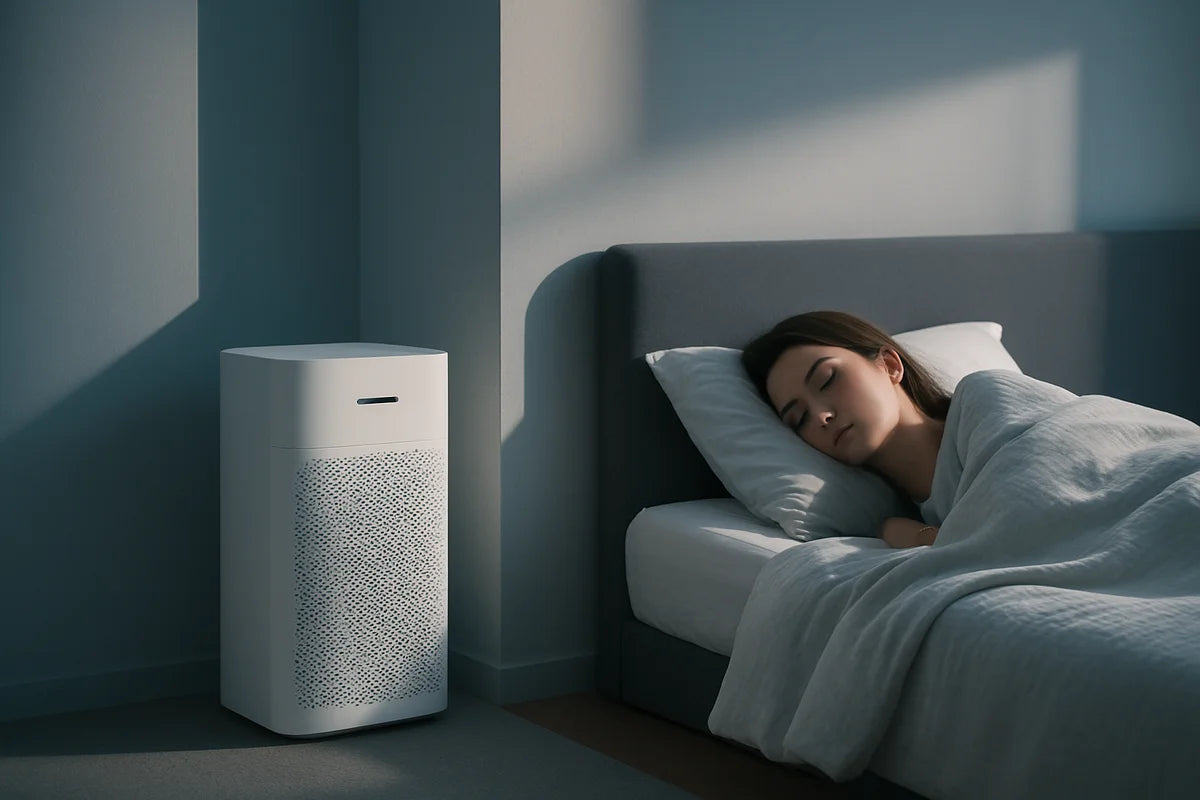
- Run an air purifier on a quiet setting near the bed, not across the room.
- Wash sheets and pillowcases, and swap in a clean pillowcase tonight.
- Set the thermostat cooler and keep humidity in the 30-50% range if you can.
When to take indoor air quality problems seriously
Sometimes “sleep issues” are really health issues. Talk to a clinician if you have:
- Loud, frequent snoring with gasping or pauses in breathing
- Wheezing, chronic cough, or shortness of breath at night
- Regular morning headaches
- Allergy symptoms that don’t improve with cleaning and filtration
Indoor air fixes can help a lot, but they shouldn’t replace medical care when something feels off.
Looking ahead with a simple plan you can keep
The best setup is the one you’ll stick with. Aim for steady improvements, not a weekend overhaul you’ll never repeat. Pick one measurement (humidity or particles), one habit (weekly bedding wash), and one tool (a correctly sized purifier). Give it two weeks and pay attention to how you feel in the morning.
Once you dial in the bedroom, expand outward: improve ventilation during cooking, seal obvious leaks that pull garage air indoors, and keep moisture under control after showers. Improving indoor air quality for better sleep often turns into better breathing all day, too. That’s a trade worth making.