If your nose starts running the second you step indoors, you’re not imagining it. Homes trap the stuff that triggers allergies: dust mite waste, pet dander, mold spores, and pollen that rides in on clothes and shoes. Add in smoke, cooking fumes, and chemical scents, and your air can feel “thick” even when the house looks clean.
The good news is you can make real changes without turning your life upside down. The best healthy indoor air solutions for allergy sufferers focus on three things: remove the source, filter what’s left, and control moisture. Do those well, and you’ll notice it in your sinuses, your sleep, and your energy.
What’s actually in your indoor air (and why it triggers allergies)

Allergy symptoms come from your immune system overreacting to tiny particles. Indoors, the usual suspects fall into a few buckets:
- Dust mites: They thrive in bedding, carpets, and upholstered furniture.
- Pet dander: Lightweight flakes and saliva proteins that cling to fabrics.
- Mold: Spores spread when moisture stays high or water damage lingers.
- Pollen: It comes in through open windows, hair, shoes, and HVAC intakes.
- Irritants that make symptoms worse: smoke, strong fragrances, and some cleaning sprays.
Ventilation also matters. Many homes keep air sealed in for energy savings, which means allergens and irritants build up. The EPA’s indoor air quality overview explains why indoor air can be more polluted than outdoor air, even in places with decent outdoor air.
Start with the fastest wins
If you want relief this week, don’t begin with big renovations. Begin with steps that cut exposure right where your face spends the most time.
Make your bedroom an allergy-light zone
You breathe in your bedroom for 7-9 hours a night. If you fix one room first, fix this one.
- Use zippered allergen covers on your mattress and pillows.
- Wash sheets and pillowcases weekly in hot water when fabric allows.
- Keep pets out of the bedroom if dander sets you off.
- Remove extra throw pillows and heavy fabric you don’t wash often.
If hot washing isn’t possible, a long warm wash plus a full dry cycle can still help. The key is consistency.
Vacuum the right way (most people don’t)
Vacuuming can help or backfire. A weak vacuum or clogged filter can blow fine dust back into the room.
- Use a vacuum with a sealed system and HEPA filtration.
- Vacuum slowly. Fast passes miss fine particles.
- Focus on edges, under beds, and high-traffic paths.
- If you react strongly, wear a well-fitting mask while you vacuum.
If you can’t replace your vacuum right now, at least replace or wash its filters on schedule and empty the bin outdoors.
Pick the right air purifier (and size it correctly)
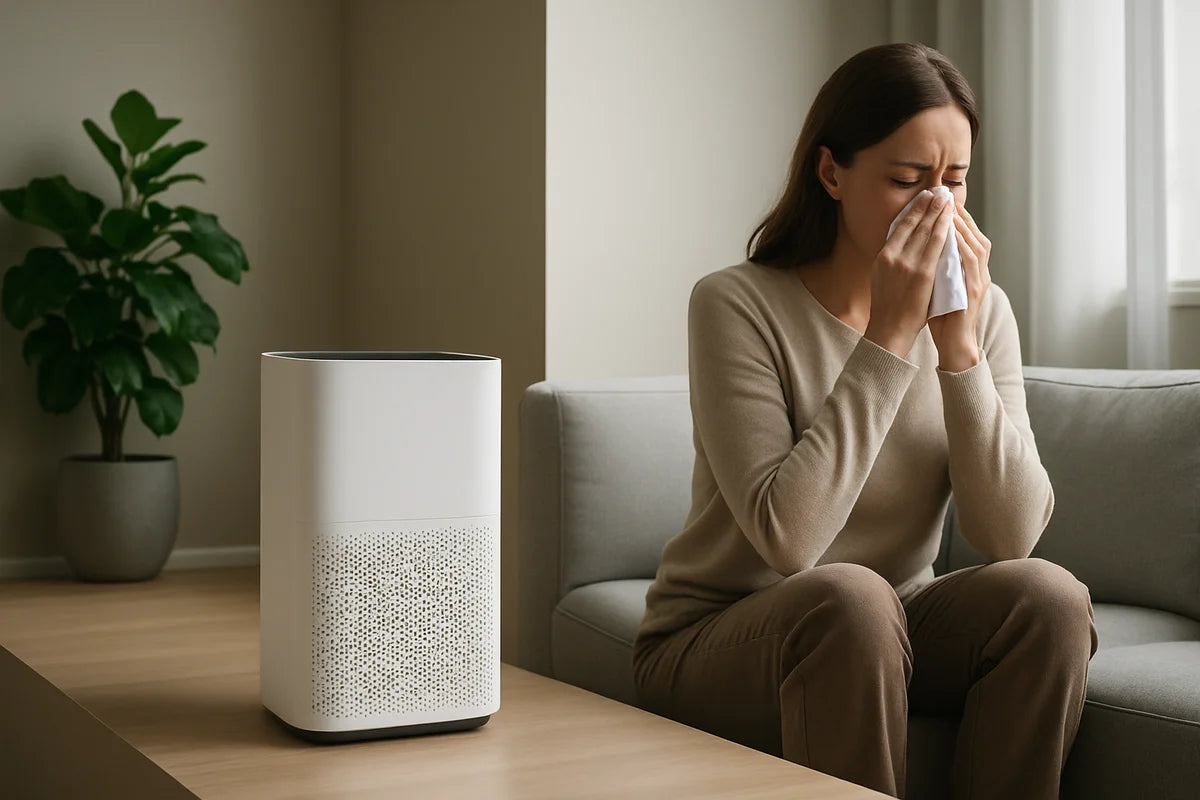
For many homes, an air purifier is the most direct healthy indoor air solution for allergy sufferers. But only if you buy the right type and match it to the room.
HEPA is the filter that matters for allergies
Look for “True HEPA” (or HEPA H13/H14). These filters capture fine particles that drive allergy symptoms. Avoid devices that lean on vague claims like “ionic” or “energized oxygen” without clear test data.
For a deeper explanation of what works and what doesn’t, the American Academy of Allergy, Asthma & Immunology’s air filter guidance is a solid reference.
CADR and room size decide performance
CADR (Clean Air Delivery Rate) tells you how fast a purifier can clean a room’s air for smoke, dust, and pollen. Bigger CADR usually means better results, as long as noise doesn’t force you to run it on low all the time.
A practical rule: pick a unit that can give you 4-5 air changes per hour in the room where you spend the most time (often the bedroom). If the listing only gives room size, treat it as optimistic and size up.
You can sanity-check the math with a simple CADR calculator before you buy.
Activated carbon helps with odors and fumes
HEPA handles particles. It doesn’t remove gases well. If you deal with cooking smells, wildfire smoke, or strong cleaning scents, choose a purifier that includes a real carbon filter (not a thin “carbon sheet”). More carbon usually works better and lasts longer.
Placement matters more than people think
- Put it where air can flow freely, not tucked behind furniture.
- Keep doors closed if you’re trying to clean one room.
- Run it on a higher speed for 30-60 minutes, then drop to a quieter setting.
Control humidity to stop mold and dust mites
Humidity is a quiet driver of indoor allergies. Too high, and mold and dust mites thrive. Too low, and your nose and throat dry out, which can make symptoms feel worse.
Aim for 30% to 50% relative humidity
This range works well for most homes and seasons. Use a cheap hygrometer in problem areas (bedrooms, basements). Then act based on what it shows, not on guesswork.
- If humidity stays above 50%: run a dehumidifier, fix leaks, improve bathroom ventilation.
- If humidity drops below 30%: consider a humidifier, but clean it often to avoid mold growth.
For health-focused guidance on dampness and mold risks, see the CDC’s mold and health information.
Fix the moisture sources, not just the symptoms
Dehumidifiers help, but they shouldn’t hide a bigger problem.
- Repair roof and plumbing leaks fast.
- Vent dryers outdoors and check the duct for blockages.
- Use the bathroom fan during showers and for 20 minutes after.
- Don’t ignore damp basements or musty closets.
If you see repeated mold growth, address the cause and remove the damaged material. Painting over it rarely works for long.
Upgrade your HVAC and filters without wasting money
Your heating and cooling system can either spread allergens or trap them. A few smart changes go a long way.
Choose a filter your system can handle
Higher MERV ratings capture smaller particles, but very high MERV filters can restrict airflow in some systems. Many homes do well with MERV 11-13, but you should match it to your unit.
If you want a clear breakdown, Energy Vanguard’s explainer on MERV ratings lays out the tradeoffs in plain language.
- Replace filters on schedule (often every 1-3 months).
- Set a reminder. A forgotten filter turns into a dust pad.
- If allergies spike seasonally, change filters before that season starts.
Keep supply vents clean, and don’t block returns
Closing vents in unused rooms can reduce comfort and strain some systems. Instead:
- Keep return vents clear so air can circulate through the filter.
- Dust vent covers with a damp cloth so dust doesn’t re-float.
Use kitchen ventilation every time you cook
Cooking releases fine particles and gases, especially with frying or high heat. If your range hood vents outdoors, use it. If it recirculates, keep the filters clean and still crack a window when you can.
Cleaning habits that cut allergens without harsh smells
You don’t need a shelf of strong sprays to get better indoor air. In fact, heavy fragrance can irritate your eyes and nose even if you aren’t “allergic” to it.
Wet-clean hard surfaces instead of dry dusting
Dry dusting often just moves particles into the air. Try this instead:
- Use a damp microfiber cloth for shelves and baseboards.
- Mop hard floors with plain soap and water or a low-scent cleaner.
- Wash pet bedding and throw blankets often.
Rethink carpet and fabric if symptoms stay high
Wall-to-wall carpet can hold allergens deep in the pile. If you rent or can’t replace flooring, you still have options:
- Use washable area rugs and clean them often.
- Steam clean periodically, then dry the area fast to avoid mold.
- Choose blinds or washable curtains over heavy drapes.
Skip ozone and “air freshening” gimmicks
Some devices market ozone as a cleaner. Ozone can irritate lungs and doesn’t belong in a home. If you want a safer overview of what air cleaners should and should not do, the ASHRAE resources on filtration and air cleaning are useful.
Keep outdoor allergens from moving indoors
Pollen doesn’t need an open window. It sticks to hair, fabric, backpacks, and dog fur. A few small routines reduce what comes inside.
Create a simple “drop zone” by the door
- Leave shoes at the entrance.
- Put jackets in a closet, not on the couch.
- Use a doormat and vacuum it often.
Change clothes and shower after high-pollen time
If pollen hits you hard, showering before bed helps because you stop rubbing pollen into your pillowcase. This matters in spring and fall, and it matters even more if you sleep with windows open.
Watch pets after walks
Dogs can carry pollen on their coats. A quick wipe-down with a damp cloth after walks can cut what ends up on your floors and furniture.
Signs your indoor air plan is working (and when to get help)
Healthy indoor air solutions for allergy sufferers should lead to real changes you can feel.
Good signs
- You wake up with less congestion.
- You sneeze less indoors than outdoors during pollen season.
- Musty smells fade and don’t return after a few days.
- You need fewer rescue meds (if you use them) for indoor symptoms.
When to bring in a pro
Some problems hide behind walls or in ductwork. Consider help if:
- You see recurring mold or smell dampness you can’t trace.
- Your basement stays humid even with a dehumidifier.
- Allergy symptoms stay intense after 4-6 weeks of changes.
- Someone in the home has asthma flare-ups indoors.
An allergist can help identify triggers, while a reputable indoor air quality or HVAC pro can spot ventilation and moisture issues. If you want to test, use results as a map, not as a scare tactic. Focus on the big drivers: particles, humidity, and ventilation.
Where to start this week
If you want a simple plan you’ll actually follow, do this in order:
- Put a HEPA purifier in your bedroom and run it daily.
- Wash bedding weekly and use allergen covers.
- Measure humidity and keep it in the 30% to 50% range.
- Upgrade your HVAC filter and replace it on schedule.
- Vacuum with a sealed HEPA vacuum, slow and steady.
Then keep going. Once your bedroom feels better, expand to the living room. Once your humidity stays stable, tackle the basement or the musty closet. Small steps compound fast when you stick with them.
The next few years will bring better sensors, smarter ventilation controls, and quieter filtration you can run all day. But you don’t have to wait. Start with the basics, track what changes your symptoms, and build a home that supports your lungs instead of testing them.