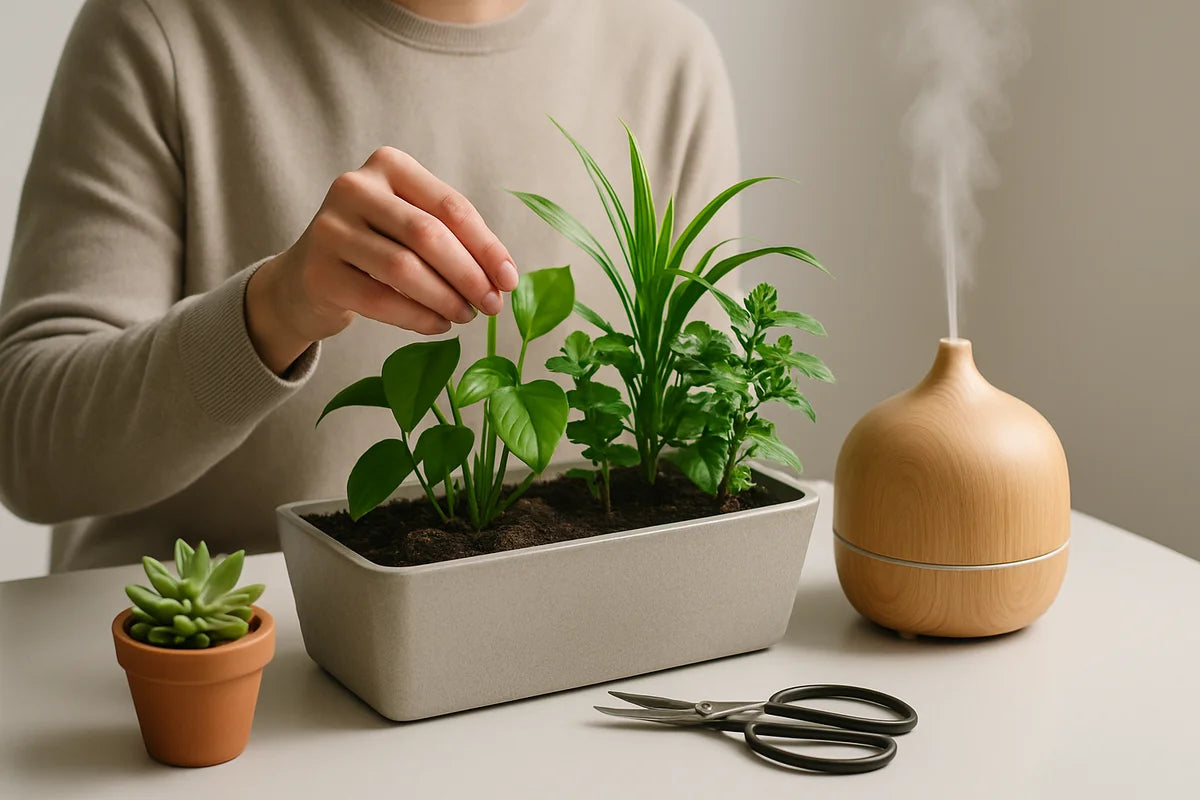
You don’t need a backyard to get the steadying feel of plants. You need a few square feet, a bit of light, and a setup that fits your real life. Creating an indoor garden for stress relief isn’t about chasing perfection or turning your home into a jungle. It’s about making a small, living space that helps your body slow down and your mind unclench.
Plants won’t fix everything. But they can support better habits: pausing, noticing, caring for something simple. They also change a room in a way a screen never will. If you want a calmer home, start with a calmer corner.
Why an indoor garden can help with stress

Stress relief works best when it’s repeatable. An indoor garden gives you small actions you can do daily without much effort: water, wipe leaves, check soil, watch new growth. These tiny routines can ground you when your day feels scattered.
There’s also a research angle. Exposure to nature and plant-rich spaces links to better mood and lower stress in many studies. If you want a deeper overview of how nature contact affects mental health, the American Psychological Association’s reporting on nature and wellbeing is a solid starting point.
What changes when you live with plants
- You get built-in pauses: plants invite you to look up and check in.
- You engage your senses: soil smell, leaf texture, and color shifts pull you out of your head.
- You practice “good enough” care: plants reward steady attention, not intensity.
- You create a softer room: green shapes break up hard lines and clutter.
Stress relief comes from the process, not the plant
Many people treat houseplants like decor. That’s fine, but stress relief comes from interaction. Choose plants you’ll touch, water, prune, and move around. Your indoor garden for stress relief should feel like a living hobby, not a fragile display.
Pick the right spot: light first, aesthetics second

The fastest way to kill the calm is to fight your space. Before you buy anything, do one quick check: where does light land in your home, and for how long?
If you’ve never paid attention to window direction, you’re not alone. A simple guide like the one from University of Minnesota Extension on houseplant light needs can help you match plants to your windows instead of guessing.
Easy light check you can do today
- Stand in your chosen spot at three times: morning, mid-day, late afternoon.
- Note if you get direct sun (bright beams) or indirect light (bright room, no beams).
- Take one photo each time. Your camera helps you compare brightness.
Good stress-relief locations (that don’t require a full makeover)
- Next to where you drink coffee or tea
- Near your desk, but not blocking your screen
- By the couch where you unwind at night
- In the bathroom if you have a window and like humidity-loving plants
Make it easy to visit. If the plants live behind a chair or in a “special room” you rarely enter, the habit won’t stick.
Start small: a three-plant indoor garden that feels good
If you’re new, start with three plants. Not ten. Three gives you variety without turning care into a chore. Aim for different shapes and growth habits so the corner looks alive.
A simple, low-stress starter set
- One upright plant: snake plant (Sansevieria/Dracaena trifasciata) or ZZ plant
- One trailing plant: pothos or heartleaf philodendron
- One “touchable” plant: peperomia or a small fern (only if you can keep it evenly moist)
These choices forgive missed waterings and average light. That matters because an indoor garden for stress relief should lower pressure, not add it.
If you want scent, choose it on purpose
Some people find fragrance calming, others find it irritating. If scent relaxes you, consider herbs near a bright window. You can brush the leaves and smell them without waiting for blooms.
- Mint (hardy, forgiving, grows fast)
- Rosemary (needs bright light, likes to dry a bit between waterings)
- Lemon balm (fresh scent, easy to grow)
If you have pets, check toxicity before you buy. Many common houseplants can cause stomach upset in cats and dogs.
Make care simple: the fewer decisions, the calmer you feel
Stress often comes from too many choices. Build a system that removes guesswork. That means standard pots, predictable soil, and a watering routine you can repeat.
Choose pots that help you, not just your style
- Use pots with drainage holes. No drainage turns watering into a gamble.
- Put plants in plastic nursery pots, then slide them into nicer cover pots.
- Use saucers you can wipe fast.
If you love the look of pots without holes, treat them as cover pots only. You’ll avoid root rot and a lot of frustration.
Pick one soil approach and stick with it
For most beginner houseplants, a basic indoor potting mix works. If you tend to overwater, mix in extra perlite to boost airflow. If you forget to water, mix in a bit of coco coir to hold moisture.
Want a quick reference on basic potting mix and repotting? The Royal Horticultural Society’s repotting advice is clear and practical.
A watering routine that doesn’t rely on memory
Forget strict schedules. Water based on soil feel. Here’s a low-effort method:
- Once a week, check all plants on the same day.
- Stick a finger 1-2 inches into the soil.
- If it’s dry at that depth, water until it drains, then empty the saucer.
- If it’s still damp, wait.
If you want a tool, use a cheap moisture meter as training wheels, then rely on touch. For a quick explainer on how to use one without overtrusting it, Epic Gardening’s moisture meter guide is a helpful read.
Design your calm corner: make it easy on the eyes
Design matters for stress relief because your brain scans rooms for “open loops.” A messy plant shelf with tangled cords and random tools can feel like another task. Keep your indoor garden simple and tidy.
Use the rule of three: height, medium, low
- Height: a taller floor plant or a plant stand
- Medium: one or two pots at table level
- Low: a trailing plant that softens edges
That’s enough to look intentional. You don’t need more to feel a shift.
Add one comfort cue
Pair the plants with something that signals rest:
- A small lamp with warm light
- A chair you can sit in for two minutes
- A tray that holds your watering can and keeps the area neat
- A notebook for quick notes (watering date, new growth, pests)
Skip clutter. One cue is stronger than five.
Use your indoor garden as a stress-relief practice
Plants help most when you treat them as a short ritual. Not a chore. A ritual has a start and end. It has a pace. It pulls you into the moment.
Try a 5-minute plant reset
- Turn off audio for five minutes.
- Check one plant closely: leaf tops, leaf undersides, soil surface.
- Remove dead leaves. Wipe dust with a damp cloth.
- Water only if the soil is dry at finger depth.
- End by stepping back and looking at the whole corner.
This sounds small because it is. Small is the point. Stress relief sticks when it fits into a day that already feels full.
Pair plants with breathing (without making it weird)
If you like structure, try a simple pace while you water or wipe leaves: inhale for four counts, exhale for six. Longer exhales can help your body downshift. If you want a medically grounded overview of stress responses and relaxation methods, the National Institute of Mental Health’s stress resource is a reliable reference.
Common problems that raise stress (and how to prevent them)
Most plant stress comes from three things: too much water, too little light, and ignoring early pest signs. Fix those and your success rate jumps.
Problem: Yellow leaves and mushy stems
- Likely cause: overwatering or poor drainage
- Fix: let soil dry more between waterings, repot into a pot with holes, trim rot
Problem: Long, weak growth
- Likely cause: not enough light
- Fix: move closer to a window or add a small grow light for winter months
Problem: Tiny spots, sticky leaves, webbing
- Likely cause: pests (aphids, mealybugs, spider mites)
- Fix: isolate the plant, rinse leaves, wipe with diluted soap, repeat weekly until clear
If you want a straightforward pest ID guide with photos, Gardeners.com’s houseplant pest resource is practical and easy to follow.
Air quality, humidity, and the “plants clean the air” myth
You’ll often hear that houseplants “purify indoor air.” Plants can play a role, but they won’t replace ventilation. A few pots won’t undo smoke, mold, or poor airflow.
For a clear, science-based take on indoor air and what really helps, see the EPA’s indoor air quality guidance. If indoor air worries you, focus first on fresh air, source control (like fixing leaks), and good cleaning habits. Then enjoy plants for what they do best: soften a space and support calm routines.
Simple humidity boosts that help many plants and people
- Group plants together to create a slightly more humid micro-area
- Run a small humidifier in dry seasons
- Keep plants away from heaters and AC vents
If you use a humidifier, clean it often. Dirty tanks can cause problems you don’t want.
Build a low-cost indoor garden for stress relief
You can spend a lot on plants. You don’t need to. A calm corner can cost less than a dinner out.
Budget-friendly ways to expand without chaos
- Propagate pothos or philodendron in water, then pot up once roots form
- Swap cuttings with friends or local groups
- Buy smaller plants and let them grow into the space
- Use simple terracotta pots and one matching tray for a clean look
What to buy first (and what can wait)
- Buy first: pots with drainage, saucers, basic potting mix, a small watering can
- Wait on: fancy fertilizers, rare plants, large shelves, complex self-watering systems
If you want to track care without turning it into homework, a simple plant app can help with reminders. Treat reminders as prompts, not orders. Light and season still matter.
Where to start this week
If you want an indoor garden for stress relief, don’t start with shopping. Start with placement and a routine. Here’s a simple plan you can finish in a week without burning out.
Day 1: Choose the calm corner
- Pick one spot with decent light and easy access.
- Clear a surface and remove clutter.
Day 2: Pick three plants that match your light
- Choose one upright, one trailing, one touchable plant.
- Check pet safety if that applies to your home.
Day 3: Set up for easy care
- Use pots with drainage and saucers you can clean fast.
- Place a small cloth or tray nearby for quick wipe-downs.
Day 4-7: Practice the 5-minute reset
- Do it once. Then do it again two days later.
- Adjust plant positions based on how they respond.
Over time, you’ll learn your plants and your space. Your indoor garden will stop feeling like a project and start feeling like part of your day. The next step is simple: add one plant only when care still feels easy. That’s how you keep the calm as your garden grows.