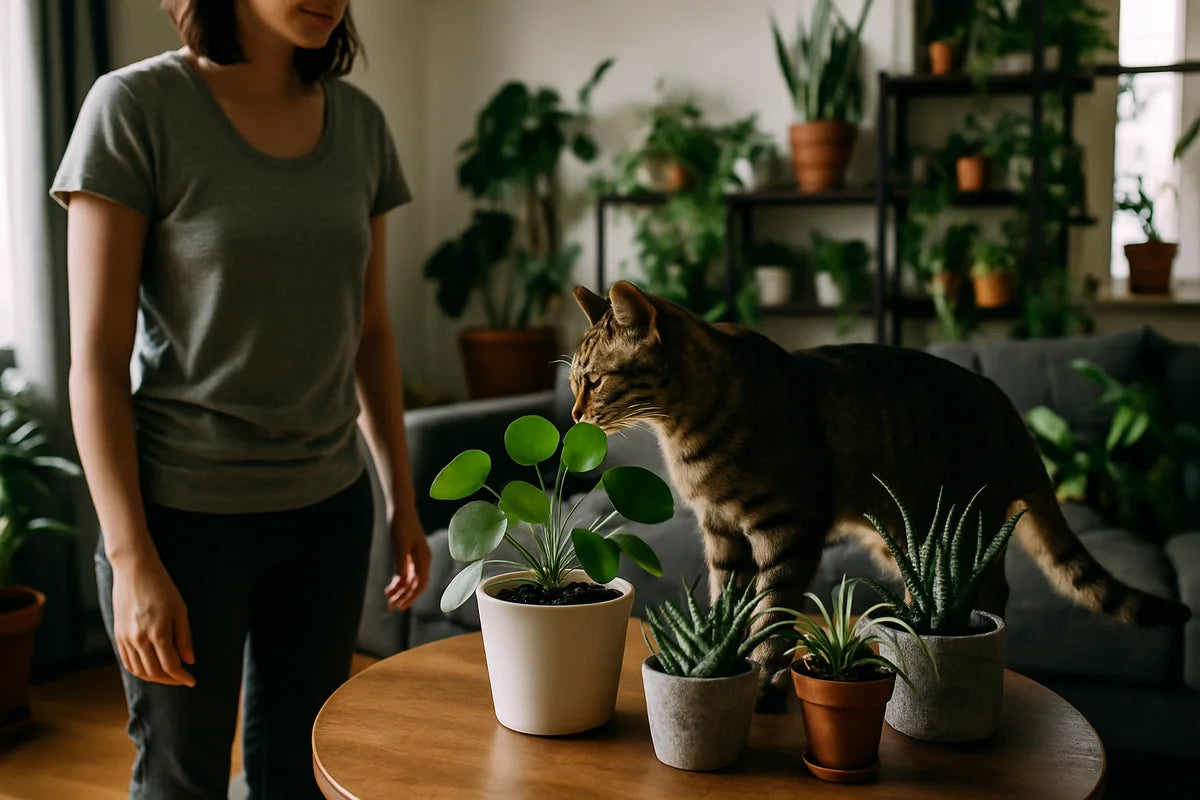
Cats and houseplants have a messy relationship. You want a calmer room, cleaner air, and a bit of green. Your cat wants to chew, bat, and dig like it’s their job. The trick is choosing indoor plants safe for cats, then setting them up so your home stays both lush and low-drama.
This article walks you through cat-safe plant options that are easy to find, how to check safety before you buy, and how to place and care for plants when you live with a curious nibbler.
What “cat-safe” really means (and why it still matters)

When people say a plant is “safe for cats,” they usually mean it’s non-toxic in typical exposure. That matters because many common houseplants can cause anything from mouth irritation to serious illness. Some are dangerous even in small bites.
Even with non-toxic plants, your cat can still get an upset stomach from chewing a lot of leaves or digging in soil. Think of “safe” as lower risk, not a free pass to let your cat graze all day.
If you ever suspect plant poisoning, call a pro right away. The ASPCA Animal Poison Control page explains what they need from you and what to do next.
How to confirm a plant is safe before it enters your home

Plant labels aren’t reliable. “Pet friendly” can mean anything. Do a quick check before you buy or accept a cutting from a friend.
Use a trusted toxicity list
The simplest step is to look up the plant by its common name and its Latin name. Common names vary a lot, and that’s where mistakes happen.
- Check the plant in the ASPCA toxic and non-toxic plant database before purchase.
- If you want extra detail, the Pet Poison Helpline poison guides can help you understand symptoms and urgency.
Watch for lookalikes
Some safe plants have toxic cousins that look similar. Palms are a classic example. The parlor palm is widely listed as non-toxic, but sago palm is highly toxic. Don’t rely on “it looks like the one I saw on Instagram.” Get the exact name.
Assume florists’ mixed bouquets are risky
Cut flowers often include lilies, which can be life-threatening to cats. Even pollen can be a problem. If you bring flowers home, keep them in a closed room your cat can’t access. For more detail on lily risk, see guidance from the FDA on lilies and cats.
15 indoor plants safe for cats (and how to care for them)
Below are solid, widely available choices. I’ll keep care notes simple so you can match plants to your light and habits.
1) Spider plant (Chlorophytum comosum)
Spider plants handle beginner-level care and bounce back fast. Bright, indirect light is best, but they cope with medium light.
- Light: bright to medium, indirect
- Water: when the top inch of soil dries
- Cat note: cats love to chew the long leaves, so hang it or place it high
2) Boston fern (Nephrolepis exaltata)
This fern gives you full, soft green fronds. It needs more moisture than most houseplants, so it suits bathrooms with a window or homes that don’t run bone-dry.
- Light: bright, indirect
- Water: keep soil lightly moist
- Cat note: safe, but fronds can turn into a toy fast
3) Parlor palm (Chamaedorea elegans)
Parlor palms look classic and do well indoors. They grow slowly and handle lower light better than many palms.
- Light: low to bright, indirect
- Water: when the top 1-2 inches dry
- Cat note: choose this, not sago palm
4) Areca palm (Dypsis lutescens)
If you want a taller plant with a light, airy look, areca palm works. Give it brighter light for best growth.
- Light: bright, indirect
- Water: when the top inch dries
- Cat note: safe, but cats may chew the tips
5) Calathea (Calathea/Goeppertia species)
Calatheas have bold patterns and fold their leaves at night. They like steady care, not extremes.
- Light: medium to bright, indirect
- Water: keep evenly moist, don’t let it sit in water
- Cat note: great option when you want color without risk
6) Prayer plant (Maranta leuconeura)
Prayer plants stay compact and trail nicely from a shelf. They like warmth and a bit of humidity.
- Light: medium, indirect
- Water: when the surface starts to dry
- Cat note: safe choice for smaller spaces
7) Polka dot plant (Hypoestes phyllostachya)
Polka dot plant adds pink, red, or white speckles. Pinch back stems to keep it bushy instead of leggy.
- Light: bright, indirect
- Water: keep lightly moist
- Cat note: safe, but keep it out of digging range
8) Peperomia (Peperomia species)
Peperomias come in many shapes, from ripple leaves to small succulent-like forms. They’re forgiving if you forget a watering.
- Light: medium to bright, indirect
- Water: let the top half of the soil dry
- Cat note: good “desk plant” that won’t stress you out
9) Pilea (Pilea peperomioides)
The Chinese money plant has round leaves and an upright look. Rotate it weekly so it grows evenly.
- Light: bright, indirect
- Water: when the top inch dries
- Cat note: safe, but the dangling leaves can tempt a playful cat
10) African violet (Saintpaulia)
Want flowers indoors without risking toxic blooms? African violets are a classic. Water from the bottom to avoid spotting leaves.
- Light: bright, indirect
- Water: keep soil lightly moist, avoid wet leaves
- Cat note: safe flowering option for windowsills
11) Orchid (Phalaenopsis)
Phalaenopsis orchids look high-end but aren’t hard once you learn the rhythm. They prefer bark mix, not regular potting soil.
- Light: bright, indirect
- Water: soak, then let drain well; usually weekly
- Cat note: safe, but flowers and stems can still be a chewing target
12) Hoya (Hoya species)
Hoyas have thick leaves and can bloom with the right light. They like to dry out between waterings.
- Light: bright, indirect to some gentle sun
- Water: when the potting mix dries well
- Cat note: safe and tough, good for hanging planters
13) Ponytail palm (Beaucarnea recurvata)
Despite the name, it’s not a true palm. It stores water in its base, so it tolerates missed waterings.
- Light: bright light, some sun is fine
- Water: sparingly, let soil dry
- Cat note: the “hair” can be fun to swat, so placement matters
14) Haworthia (Haworthia species)
If you want a small succulent that’s often listed as cat-safe, haworthia is a strong pick. It stays compact and doesn’t demand much.
- Light: bright light, some sun
- Water: only when fully dry
- Cat note: safer than many succulents, but still avoid letting your cat snack
15) Cat grass (usually wheat, oat, or barley grass)
Cat grass gives your cat a legal snack, which can reduce interest in other plants. You can buy trays or grow it from seed.
- Light: bright light
- Water: keep evenly moist
- Cat note: place it near your cat’s hangout to steer chewing away from houseplants
Plant placement that works with real cats
Even with indoor plants safe for cats, smart setup saves you stress. Cats climb. They jump. They test rules for sport. Plan for that.
Use height, but don’t trust it
High shelves and hanging planters help, but some cats treat them like a challenge. If your cat can reach a plant once, they’ll try again. Use sturdy hooks and avoid placing plants above breakables or favorite nap spots.
Create a “yes zone” and a “no zone”
- Yes zone: cat grass, sturdy toys, scratchers, and a perch near a window.
- No zone: delicate plants, seedlings, and anything you can’t replace.
Choose stable pots and simple surfaces
Wide, heavy pots tip less. If your cat digs, top the soil with large smooth stones that are too big to swallow. Skip small pebbles that can become a choking risk.
Common cat behaviors and how to handle them
Your cat chews leaves
Chewing can mean boredom, curiosity, or a need for roughage. Start with cat grass and more play. Then make your safe plants less fun.
- Offer daily play sessions, even 10 minutes helps.
- Move tempting plants to hanging planters or wall shelves.
- Rinse leaves so they don’t collect dust that might irritate your cat’s mouth.
Your cat digs in the soil
Digging often starts as a texture thing. Make the surface boring.
- Use large river stones on top of the soil.
- Try a denser potting mix that doesn’t puff up when dry.
- Give a separate dig-friendly box with paper strips or a spare tray of soil for supervised play.
Your cat knocks plants over
Sometimes it’s play. Sometimes it’s a demand for attention. Anchor pots in heavier planters, or use hanging baskets. If your cat targets one plant, move it and add a decoy toy to that spot.
Indoor plant care basics that also protect your cat
Skip risky fertilizers and pest sprays
Even if the plant is safe, treatments might not be. If you need to manage pests, start with physical methods like wiping leaves and isolating the plant. For lower-tox options and prevention tips, see practical houseplant pest advice from the Royal Horticultural Society.
Watch for mold and fungus gnats
Overwatering invites gnats and mold, and cats sometimes eat anything that moves. Let soil dry as the plant allows, and empty drip trays.
Choose the right plant for your light
Most “plant deaths” are really light problems. Before you buy, figure out if you have bright, medium, or low light. If you want a quick reference for light levels and houseplant basics, University of Wisconsin Extension houseplant resources offer clear, plain-English guides.
Plants to avoid around cats (quick list)
This article focuses on indoor plants safe for cats, but it helps to know a few common “no” plants people bring home without thinking.
- Lilies (many types are dangerous to cats)
- Sago palm
- Pothos
- Philodendron
- Snake plant
- Peace lily (not a true lily, but still a problem)
If you’re not sure about a plant you already own, look it up by exact name in a toxicity database and move it out of reach until you confirm.
Shopping tips: how to build a cat-safe plant collection without wasting money
Start with two “easy wins”
If you want quick success, pick one tough plant and one “cat distraction” plant.
- Tough: peperomia, spider plant, or parlor palm
- Distraction: cat grass near your cat’s favorite area
Buy small plants first
Small pots cost less, adapt faster, and let you test whether your cat will ignore or obsess over a plant.
Expect some trial and error
One cat ignores plants. Another treats them like salad. Your setup should change based on what your cat actually does, not what you hope they’ll do.
Where to start this week
If you want a greener home without worrying every time your cat sniffs a leaf, start simple: choose one or two indoor plants safe for cats, place them with care, and add cat grass as a pressure release valve. Over the next month, watch your cat’s habits. If they chew, hang plants and increase play. If they dig, cover soil and use heavier pots.
Once you’ve nailed the basics, you can expand into more variety like calatheas, orchids, and hoyas. Your goal isn’t a perfect, untouched indoor jungle. It’s a home where plants and cats can share space without constant risk.