Indoor vine plants do something most houseplants can’t. They move. They climb, trail, and spill over shelves, turning a plain corner into a living wall. If you’ve ever bought a vine that looked great at the store and then turned into a sad tangle at home, you’re not alone.
The good news: most problems come down to a few fixable basics. Light, watering rhythm, and support matter more than fancy gear. This article walks you through the best vine plants for indoor spaces, how to match them to your home, and how to keep them growing for years.
Why vine plants work so well indoors

Vines grow with a purpose. In nature they climb toward light. Indoors, that growth habit becomes a design tool and a space-saver.
- They use vertical space, so you can add greenery without taking up floor area.
- They adapt to pruning, which lets you shape them to fit shelves, windows, and walls.
- Many root easily from cuttings, so one plant can become several.
- They soften hard lines in a room better than upright plants.
They can also help you build a plant habit. A single vine on a shelf is easy to watch. You’ll spot new growth, drooping leaves, or dry soil fast.
Choose the right indoor vine plant for your light
Before you pick a plant, figure out your light. This step saves more plants than any fertilizer ever will.
What “bright indirect light” really means
Bright indirect light means the plant can “see” the sky but not get blasted by harsh sun for hours. Think a few feet back from an east or south window, or right near a north window.
If you want a simple reference, the EPA’s indoor environment resources can help you think about airflow, humidity, and room conditions that often pair with light issues.
Low light vs no light
Many vine plants indoor sellers label as “low light” still need decent daylight. Low light means you can read a book without turning on a lamp. No light means the plant slowly starves. If your space is dim, plan on a grow light or pick a plant that tolerates slower growth.
Top vine plants indoor gardeners love (and why)
These are reliable options for general readers. Each one has a clear “best use,” so you can match plant to place.
Pothos (Epipremnum aureum)
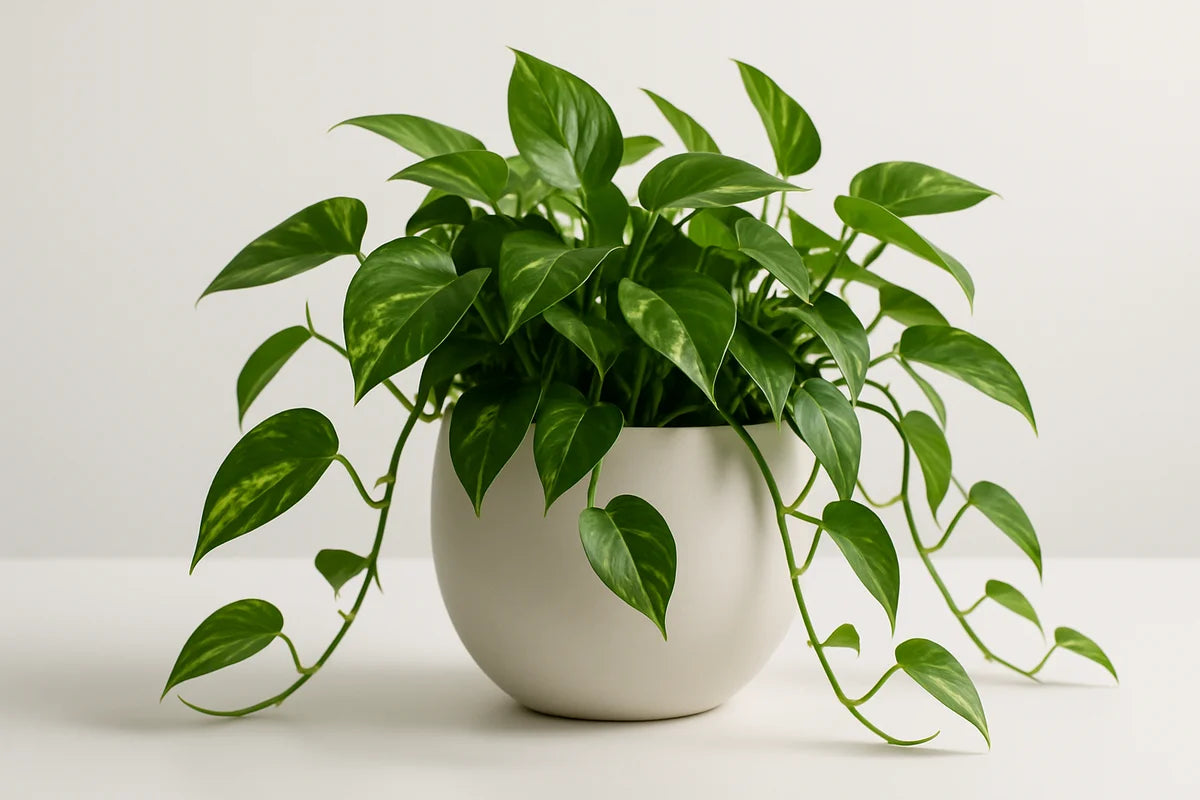
If you want an indoor vine plant that forgives mistakes, start here. Pothos handles missed waterings, average humidity, and a wide range of light. It also roots fast from cuttings.
- Best for: shelves, bookcases, hanging pots, beginners
- Light: low to bright indirect (variegated types want brighter light)
- Watch for: long bare stems when light is too low
Safety note: pothos is toxic if pets chew it. The ASPCA toxic plant database is a solid reference if you share your home with cats or dogs.
Heartleaf philodendron (Philodendron hederaceum)
This plant looks softer than pothos and often grows a bit more evenly. Leaves stay heart-shaped and glossy when the plant gets steady light and water.
- Best for: trailing from a pot, training up a moss pole, office desks
- Light: medium to bright indirect, tolerates lower light
- Watch for: smaller leaves and longer gaps between leaves when it needs more light
Hoya (wax plant)
Hoyas are vine plants indoor collectors get obsessed with for a reason. The leaves can be thick and sculptural, and many species bloom with fragrant clusters if you give them bright light and patience.
- Best for: bright windows, plant shelves, people who don’t overwater
- Light: bright indirect to a bit of gentle sun
- Watch for: bud drop from moving the plant or letting it dry too hard
If you want a deep dive into hoya types and care quirks, the Royal Horticultural Society’s hoya growing advice is clear and practical.
English ivy (Hedera helix)
Ivy looks classic, but it can be fussy indoors. It likes cooler rooms, strong light, and steady moisture. It also attracts spider mites if the air is dry.
- Best for: cool sunrooms, bright kitchens, hanging baskets with good airflow
- Light: bright light, some sun is often fine
- Watch for: pests and crispy leaves in dry heat
String of hearts (Ceropegia woodii)
This is a trailing vine with small heart leaves and a delicate look. It needs more light than many people expect, but it rewards you with fast growth when it’s happy.
- Best for: hanging planters near a bright window
- Light: bright indirect, some direct sun is often helpful
- Watch for: mushy stems from staying wet
Jasmine (indoor-friendly types)
Want a vine that smells good? Jasmine can work indoors, but only if you can give it high light and a cool rest period in winter. Not every home fits that. If you can pull it off, it’s worth it.
- Best for: very bright windows, sunrooms
- Light: strong light, often some direct sun
- Watch for: weak growth and no flowers in low light
Training vines: trailing vs climbing (and how to support both)
Most indoor vine plants can trail or climb. The difference is support. If you give a vine something to climb, it often makes bigger leaves and tighter growth.
Easy supports that look good
- Trellis in the pot: simple, tidy, and easy to rotate for even growth
- Wall hooks and plant-safe clips: guide vines around windows or along a shelf edge
- Moss pole or coir pole: best for climbing aroids like philodendron
- Wire hoop: great for hoyas, which like to wrap and loop
Don’t force a vine to change direction in one day. Bend stems slowly over a week so you don’t snap new growth.
Watering indoor vine plants without guesswork
Most vine deaths come from overwatering, not thirst. The fix isn’t to water less “in general.” It’s to water based on soil feel and pot size.
A simple watering routine that works
- Check the top 1-2 inches of soil with your finger.
- If it feels dry, water until excess drains out the bottom.
- Empty the saucer after 10-15 minutes.
- Wait until the soil dries again before the next watering.
Big pot, slow drying. Small pot, fast drying. Bright light, faster drying. Winter, slower drying. Those four facts explain most watering problems.
If you want a reliable baseline for indoor plant water and light needs, University of Minnesota Extension houseplant advice is a good no-nonsense resource.
Soil and pots: the quiet secret to healthy vines
Indoor vine plants want roots that can breathe. Heavy soil stays wet too long indoors, especially in low light. Aim for a mix that drains well but still holds some moisture.
A practical soil mix idea
- 2 parts quality potting mix
- 1 part perlite or pumice for air space
- Optional: a handful of orchid bark for chunkiness (great for pothos and philodendron)
Pick the right pot
- Use a pot with a drainage hole. This matters more than the pot material.
- Size up slowly. Jumping from a 4-inch pot to an 8-inch pot invites root rot.
- If you love cachepots (decor pots), keep the plant in a plastic nursery pot inside it.
Light fixes for indoor vine plants in darker homes
If your home doesn’t get much sun, you can still grow vine plants indoor with a plan.
Move the plant closer than you think
Light drops fast as you move away from a window. A plant that struggles on a back wall may thrive two feet from the glass.
Use a grow light without turning your home into a lab
A simple LED grow bulb in a normal lamp can make a big difference. Put it 12-18 inches from the plant and run it 10-12 hours a day.
For a practical starting point on setup and distance, Garden Myths’ grow light breakdown helps cut through confusing specs.
Pruning and pinching: how to get a fuller vine
Do you want long trailing strands, or a thick plant that spills over the pot? You control that with pruning.
How to prune for fullness
- Cut just above a leaf node. New stems grow from nodes.
- Take small cuts often instead of one big chop once a year.
- Rotate the pot every week or two so one side doesn’t stretch toward the light.
Turn prunings into new plants
Most common indoor vine plants root from cuttings. Put a node in water or moist soil and wait. Pothos and philodendron often root in a few weeks.
If you want a clear propagation walk-through with photos, Houseplant Journal’s pothos propagation guide is practical and grounded in real home conditions.
Humidity and temperature: what matters (and what doesn’t)
Many vine plants indoor prefer moderate humidity, but they don’t need a rainforest. Most do fine in average homes if you avoid extremes.
- Keep them away from heating vents that blast hot dry air.
- Group plants together to create a small humidity pocket.
- If leaf tips brown, check watering and salt buildup first, not just humidity.
Most popular vines like typical room temps. If you feel comfortable, they often do too.
Common problems with indoor vine plants (and fast fixes)
Leggy growth with small leaves
- Cause: not enough light
- Fix: move closer to a window or add a grow light; prune back to nodes
Yellow leaves
- Cause: often overwatering or poor drainage
- Fix: let soil dry more between waterings; check that water drains freely; consider a chunkier soil mix
Brown crispy edges
- Cause: underwatering, hot air, or salt buildup from fertilizer
- Fix: water deeply when dry; move away from vents; flush the pot with water every month or two
Pests (spider mites, mealybugs)
- Cause: dry air, stressed plant, or a new plant brought in without quarantine
- Fix: isolate the plant; wash leaves; treat with insecticidal soap; improve light and airflow
Where to place vine plants indoors for the best look
Placement affects both style and health. A few tried-and-true setups work in most homes.
- On top of a bookshelf: let the vine trail down the side, but keep it close to a window.
- Hanging near a bright window: perfect for string of hearts and pothos.
- On a wall trellis: turns a blank wall into living decor, especially with philodendron.
- On kitchen shelves: choose plants that handle a bit of heat and drafts, and keep them away from the stove.
If you want vines to climb a wall, use plant-safe clips and plan a path that lets you take the plant down for watering.
What this means for your home over the next year
If you pick one indoor vine plant that matches your light, you can shape your space over time instead of buying new decor. Start small: one pothos by a window, one trellis, one pair of clean snips for pruning. Track how fast the soil dries in your spot. That rhythm becomes your care plan.
Once your first vine settles in, take a few cuttings and fill a second pot. Or train the same plant upward and see how the leaves change. Indoor vines reward steady care, not perfect care. Your next step is simple: choose the window, choose the vine, and give it something to climb.