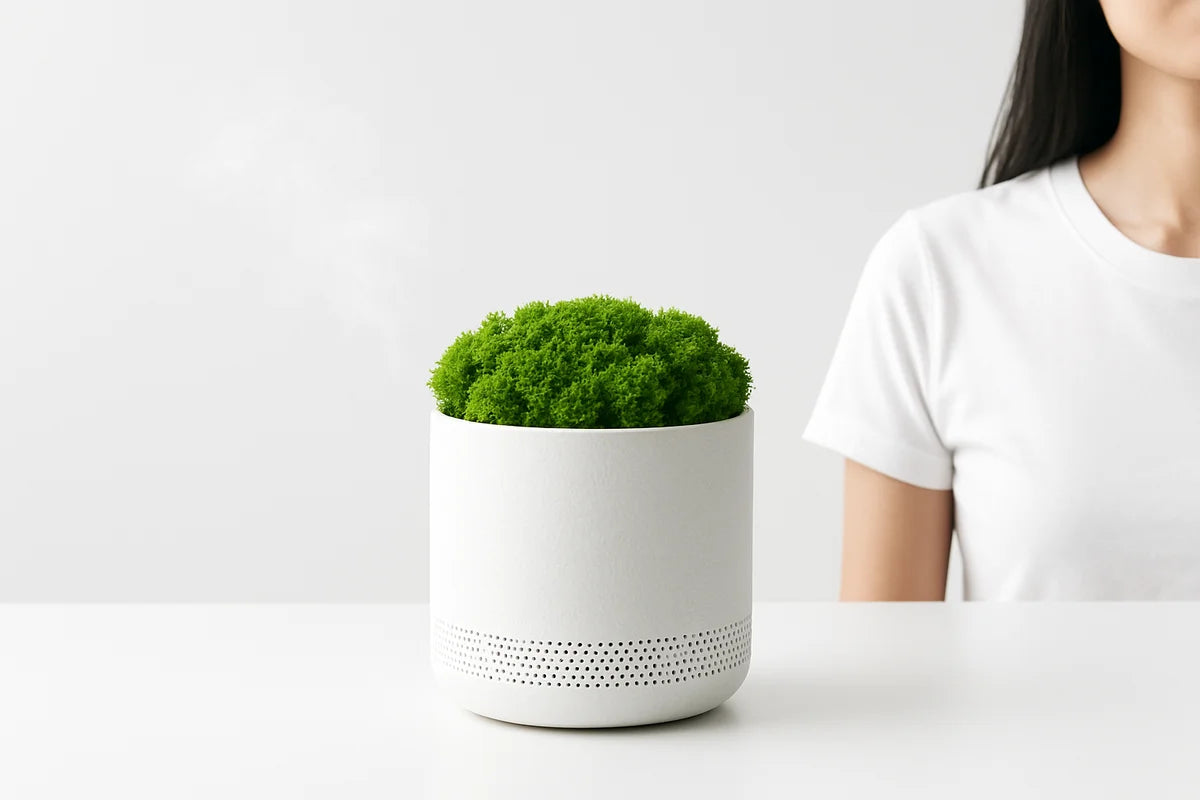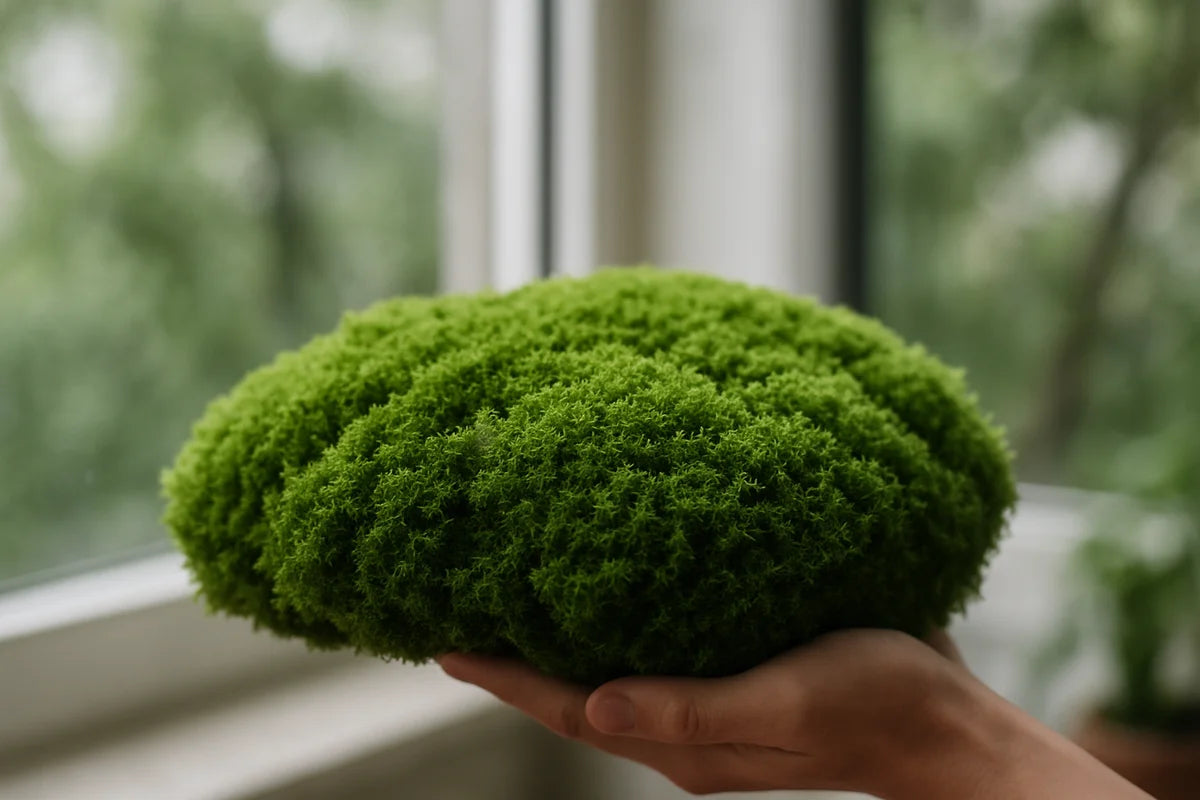
Moss has a certain pull. It looks calm, it feels soft, and it turns a hard-edged room into something more natural. Lately, moss has also picked up a bigger claim: that it can “detox” indoor air.
So, is moss good for detoxifying indoor air in any real, measurable way? The honest answer is: sometimes a little, often less than people hope, and it depends on what kind of “moss” you mean. Living moss behaves very differently from preserved moss panels, and a moss wall is not the same thing as an air purifier or proper ventilation.
This article breaks down what moss can and can’t do, what the science says about plants and indoor air, and what to do if your main goal is cleaner air in your home.
What people mean when they say “detoxifying indoor air”

The word “detox” gets used loosely. Indoor air problems usually come from a few common sources:
- Carbon dioxide buildup from people breathing in a closed space
- Volatile organic compounds (VOCs) from paint, flooring, furniture, cleaners, and fragrances
- Particles (PM2.5 and dust) from cooking, candles, smoking, fireplaces, and outdoor pollution
- Humidity problems that help mold and dust mites thrive
- Combustion gases like carbon monoxide or nitrogen dioxide from gas appliances
If someone says they want plants or moss to “detox” the air, they often mean “remove VOCs” or “make the air healthier to breathe.” Those are different goals, and the right fix depends on the pollutant.
For a grounded overview of what affects indoor air, the EPA’s indoor air quality guide lays out the big categories and what usually works.
What moss actually is (and why that matters indoors)
Moss isn’t one plant. It’s a group of small, non-vascular plants called bryophytes. They don’t have true roots. They absorb water and nutrients across their surface.
That trait sounds promising for air cleaning, but it leads to two practical realities indoors:
- Living moss often needs steady moisture and the right light, or it declines fast inside a heated, dry home.
- Many “moss walls” you see online use preserved moss. It’s dead. It won’t photosynthesize, grow, or filter much of anything.
So when someone asks, “is moss good for detoxifying indoor air,” the first question should be: living moss or preserved moss?
Living moss vs preserved moss panels
Preserved moss looks great but doesn’t act like a plant
Preserved moss usually gets treated with glycerin and dyes so it stays soft and green without watering. It can help with sound dampening and aesthetics, but it doesn’t “clean” air the way a living organism might.
It may still collect dust on its surface, like any textured decor. That’s not detox. That’s a dust shelf.
Living moss can interact with air, but scale is the issue
Living moss does gas exchange as part of photosynthesis and respiration. In the right setup, it can also host microbes on its surface, and those microbes can break down some compounds. In lab-style plant tests, that’s where much of the VOC removal comes from: the plant-medium-microbe system, not just leaves.
But your living moss terrarium on a shelf is not a lab chamber. The amount of moss you’d need for meaningful air cleaning in a whole room is usually far more than people expect.
What research on plants suggests (and what it doesn’t)
The most famous plant-air-cleaning research comes from NASA-era studies that showed certain plants could remove VOCs in sealed chambers. Those studies helped kick off the “plants purify air” idea.
The problem: sealed-chamber results don’t map cleanly to normal buildings with air exchange, gaps, doors opening, and pollutants coming and going.
A key review in a major journal argued that, in typical indoor conditions, you’d need an impractical number of plants to match the effect of ventilation. You can read it in a review in the Journal of Exposure Science & Environmental Epidemiology.
That doesn’t mean plants do nothing. It means they’re rarely the main tool for cleaning indoor air in a real home.
So, is moss good for detoxifying indoor air?
Here’s the practical answer, broken down by what you want moss to “detox.”
VOCs (new furniture smell, paint smell, cleaning products)
Living moss may help a little in a small, enclosed setup where air passes over it and microbes can do their work. In an open room, the effect is usually small compared with source control and ventilation.
If VOCs are your concern, start with the basics:
- Pick low-VOC paints, sealants, and finishes when you can.
- Air out new furniture or rugs before bringing them into bedrooms.
- Use exhaust fans and open windows when you paint or use strong cleaners.
If you want details on VOCs and what reduces them, Mayo Clinic’s indoor air overview covers common triggers and prevention steps.
Carbon dioxide (stuffy rooms, headaches, sleepy afternoons)
Houseplants, including moss, don’t meaningfully reduce CO2 in a typical room during the day, and at night many plants release CO2 as part of respiration. If your room feels stale, you almost always need more outdoor air, not more greenery.
To get a handle on CO2, a simple consumer monitor can help you see patterns. If you want a starter resource on what the numbers mean and how to respond, this practical breakdown from Energy Vanguard is useful.
Particles (smoke, cooking fumes, fine dust)
Moss won’t compete with a HEPA filter for particle removal. It can trap some dust on its surface, but that’s not the same as reducing PM2.5 across the room. If you’re dealing with smoke, wildfire haze, or heavy cooking particles, a properly sized HEPA purifier and good kitchen ventilation will do more, faster.
If you’re shopping for filtration, AHAM’s guide to CADR ratings helps you match an air purifier to your room size.
Humidity and mold risk
This one cuts both ways. Moss likes moisture. If you keep living moss indoors, you may raise local humidity (right around the moss) and keep surfaces damp. In a dry climate, that can be fine. In a damp home, it can add to the problem.
If your home already struggles with moisture, fix that first: exhaust fans, dehumidification, and stopping leaks matter more than any plant choice.
Where moss can still help in a home
Even if moss doesn’t “detox” indoor air the way marketing claims, it can still earn its spot.
It can support better habits
People who care for plants often pay more attention to their indoor environment. You notice dry air, musty smells, or a fan that doesn’t work. That awareness leads to real improvements.
It can reduce stress for some people
A greener room can feel calmer. That doesn’t equal cleaner air, but it can improve how a space feels day to day. If a moss terrarium makes you like your home more, that’s not nothing.
It can work in targeted setups
If you build a small moss display in a container where air flows across it (think: a ventilated terrarium or a DIY biofilter concept), you might see localized benefits. Just keep expectations realistic for whole-room air cleaning.
If you want cleaner air, do these things first
If your main goal is healthier indoor air, moss should sit in the “nice extra” category. These steps do the heavy lifting.
1) Control the source
- Use unscented cleaners and avoid spraying fragrances into the air.
- Store paints, solvents, and harsh chemicals outside living areas.
- Fix leaks fast and dry wet materials within 24 to 48 hours.
- Don’t smoke indoors, including vaping.
2) Ventilate on purpose
Open windows when outdoor air looks good. Use bathroom and kitchen fans. If you own your place, consider a balanced ventilation system (like an ERV) if the home stays sealed up most of the year.
3) Filter the air you breathe
A HEPA purifier in bedrooms and the main living area can make a visible difference for particles. If you have forced-air heating and cooling, use a filter your system can handle and change it on schedule.
4) Keep humidity in the right range
Aim for roughly 30% to 50% relative humidity for comfort and mold control (exact best range depends on your climate). A cheap hygrometer can tell you where you stand.
5) Test if you have a reason
If you suspect a specific issue, measure it. CO2 monitors can guide ventilation changes. Particle monitors can show you how much cooking or candles affect your air. If you have combustion appliances, make sure you have working carbon monoxide alarms.
For a clear, action-based overview of common indoor pollutants and what to do about them, CDC/NIOSH resources on indoor environmental quality offer a reliable starting point.
How to use moss indoors without creating new problems
If you like moss and want it indoors, you can do it in a way that supports air quality instead of fighting it.
Pick the right format for your home
- If you want low effort: choose preserved moss, but treat it as decor, not an air tool.
- If you want living moss: use a terrarium setup that holds moisture without wetting your walls or furniture.
Prevent mold and gnats
- Don’t keep moss soggy. Moist is enough.
- Use clean materials (rinsed stones, clean substrate) and remove decaying plant matter.
- Give it some airflow. Stagnant, wet setups cause problems.
Mind placement
- Keep living moss away from cold windows that cause condensation.
- Don’t put it near supply vents that dry it out fast.
- Avoid placing it where it will collect grease, like right next to a stove.
Moss walls and “air-cleaning” claims
Moss walls show up in offices, lobbies, and high-end homes. They look great in photos, and vendors sometimes claim they purify air.
If the wall uses preserved moss, treat air-cleaning claims as marketing. If it uses living moss with irrigation, light, and airflow design, it might provide some localized benefit, but the system matters more than the moss. Without forced airflow through the wall, you’re mostly adding a big green surface to the room.
If you’re considering a large install, ask direct questions:
- Is it living or preserved?
- How does air move across it, and at what rate?
- What maintenance keeps it from becoming a dust and moisture trap?
- Do they have any third-party testing data?
Where to start if you want moss and better air
If you’re drawn to the idea of moss detoxifying indoor air, keep the spirit of that idea but use the right tools.
- Buy a small hygrometer and check humidity for a week.
- If rooms feel stuffy, try a simple ventilation routine (10 minutes of cross-ventilation, then close up) and see how it feels.
- If you deal with smoke, allergies, or heavy cooking, choose a HEPA purifier sized for the room.
- Add moss because you like it. If you want living moss, set it up in a contained terrarium and keep it clean.
Moss can make a room feel better. It can nudge you toward a more thoughtful home. But if your goal is truly cleaner indoor air, pair that moss with fresh air, good filtration, and lower emissions. That mix will matter more next year than any single plant on a shelf.