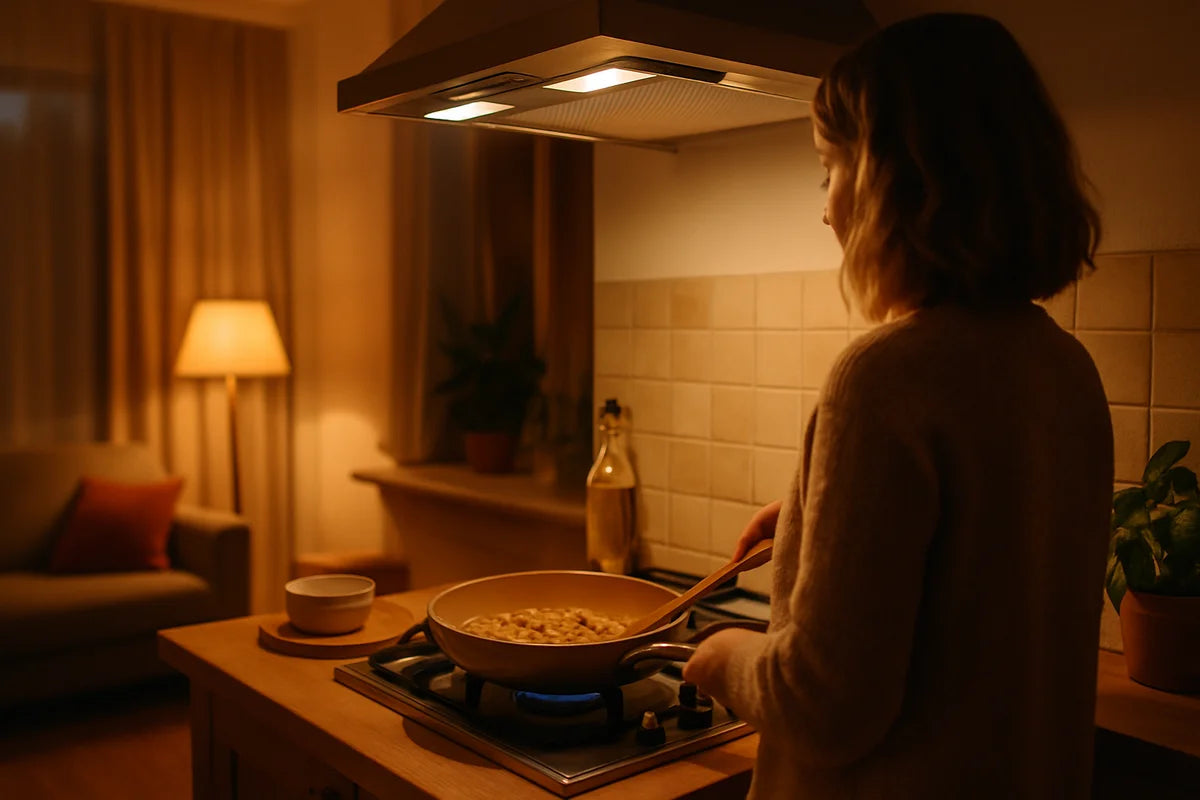
Best Practices for Maintaining Indoor Air Quality While Cooking
Cooking should make your home smell like dinner, not like a chemistry lab. But heat, oil, and food scraps can release smoke, grease, and gases that linger long after you plate the meal. Over time, that can drag down indoor air quality, trigger allergies, and irritate your lungs.
The good news: you don’t need a full remodel to breathe easier. A few smart habits, plus the right ventilation, can cut most cooking-related pollution. Below are practical, proven best practices for maintaining indoor air quality while cooking, written for real homes and real schedules.
What cooking puts into your air (and why it matters)

When you cook, you don’t just make steam. You can also create a mix of pollutants that build up fast in a closed kitchen.
- Fine particles (PM2.5): Tiny bits of smoke and oil that can reach deep into your lungs.
- Nitrogen dioxide (NO2): A gas linked to gas burners and poor ventilation.
- Carbon monoxide (CO): Less common in normal cooking, but dangerous with faulty appliances or poor venting.
- Volatile organic compounds (VOCs): Released from heated oils, foods, and sometimes cleaners.
- Moisture: Too much humidity can help mold grow and can make your home feel stuffy.
If you want a clear overview of common indoor pollutants and how they behave, the EPA’s indoor air quality guidance is a solid starting point.
Start with ventilation: your first line of defense

If you do just one thing for indoor air quality while cooking, make it this: move dirty air out and bring clean air in.
Use your range hood every time (and use it correctly)
A range hood works only when you treat it like part of the recipe. Turn it on early, run it during cooking, and let it keep going after you finish.
- Turn the hood on 2-3 minutes before you heat the pan so it can start pulling air right away.
- Use the back burners when you can. Most hoods capture better there.
- Keep it running for 10-15 minutes after cooking, especially after frying, searing, or cooking with lots of oil.
Got a microwave hood or a low-profile unit? Many don’t capture as well as you’d expect. Capture depends on airflow, hood shape, and how it vents. For technical but readable tips on what makes a hood effective, see BuildingGreen’s kitchen ventilation overview.
Vented outdoors beats recirculating
Recirculating hoods push air through a filter and send it back into the kitchen. They can reduce odor and some grease, but they don’t remove moisture or gases well. If you have a choice, vent outdoors.
- Outdoor venting removes particles, moisture, and gases instead of spreading them around.
- Recirculating hoods rely on filter quality and frequent filter changes.
If your hood vents outdoors, check that it actually exits the home and doesn’t dump into an attic or crawlspace. That can cause moisture problems and mold.
Open a window (but do it with a plan)
Sometimes the best “tool” is free. Cracking a window can boost airflow fast, especially in smaller kitchens.
- Open a window near the kitchen and, if possible, another window across the home to create cross-ventilation.
- If you have a window fan, point it outward to push cooking air out.
- If outdoor air is smoky or polluted, keep windows closed and rely more on mechanical ventilation and filtration.
Clean the air as you cook: filtration that actually helps

Ventilation removes pollution at the source. Filtration helps with what escapes. Used together, they can make a big dent in cooking particles.
Use a HEPA air purifier near (not on) the kitchen
Cooking creates lots of fine particles. A HEPA purifier can pull many of them out of the air, especially after the meal when the hood is off and the particles drift.
- Place it just outside the main cooking zone so it doesn’t ingest heavy grease right at the stove.
- Run it on high while cooking, then on medium for an hour after.
- Pick a unit sized for your space using CADR ratings, not marketing claims.
If you want help sizing, the AHAM guidance on CADR and room size gives a clear way to match a purifier to a room.
Don’t rely on “ionizers” or ozone devices
Some devices “freshen” air by making reactive molecules. That can create ozone or other byproducts you don’t want indoors. Stick to HEPA for particles and activated carbon for odors and some gases.
For plain-language health info on ozone indoors, the American Lung Association’s ozone resource is helpful.
Choose cooking methods that produce less smoke and fewer particles
You don’t need to give up flavor. Small method changes can improve indoor air quality while cooking without changing what you eat.
Use lower-heat methods more often
High heat drives smoke, oil mist, and browned bits into the air. Save searing for when you really want it, and use gentler heat for weeknight meals.
- Try sautéing at medium instead of high and give the pan more time.
- Bake, steam, poach, or slow-cook when it fits the dish.
- Simmer sauces with a lid slightly ajar to cut moisture release.
Pick the right oil for the job
When oil hits its smoke point, it breaks down and smokes. That’s bad for flavor and for air.
- Use higher smoke point oils for high-heat cooking (like refined avocado oil or refined peanut oil).
- Use extra virgin olive oil for low to medium heat where it shines.
- If the oil smokes, stop and reset. Ventilate, wipe the pan, and start fresh.
Cover pans when you can
A lid reduces splatter and keeps particles from blasting into the room. It also helps your hood capture what escapes, because the plume rises in a tighter column.
- Use a splatter screen for frying or pan-searing if a lid would trap too much moisture.
- Keep lids clean. Old grease on a lid can smoke later.
Gas vs induction vs electric: what changes for indoor air quality?
Any cooking can harm indoor air quality. But the heat source changes the mix.
If you cook with gas, ventilation matters even more
Gas stoves can add nitrogen dioxide and other combustion byproducts to the air. Good ventilation helps cut exposure.
- Always run the hood when cooking on gas, even for boiling water.
- Make sure flames burn blue, not yellow or orange, which can hint at poor combustion.
- Schedule appliance checks if you smell gas or get frequent headaches while cooking.
For a research-based look at how kitchen exhaust affects exposure, Energy Vanguard’s articles on kitchen exhaust and capture offer practical building-science advice without fluff.
Induction can reduce indoor pollution
Induction doesn’t burn fuel, so it avoids combustion gases. You still need ventilation for smoke, grease, and moisture, but many homes see less overall pollution during cooking.
If you’re weighing a switch, treat it as a health and comfort upgrade, not just a speed upgrade.
Keep your kitchen clean in ways that reduce airborne gunk
Old grease and food residue can reheat and smoke later. A clean cooking area makes a real difference.
Clean the range hood filters on a schedule
A clogged filter can’t capture grease well, and airflow drops. That hurts indoor air quality while cooking.
- Check metal mesh filters monthly if you cook often.
- Soak metal filters in hot water with dish soap, then scrub and rinse.
- Replace charcoal filters in recirculating hoods as the manual suggests, often every 3-6 months.
Wipe grease before it bakes on
Grease on backsplash tiles, cabinets, and burners becomes a future smoke source.
- Use a damp cloth with a mild cleaner after heavy cooking.
- Clean burner caps and drip pans so old spills don’t burn next time.
- Wash dish towels often. They can hold odors and grease.
Skip harsh sprays right before or during cooking
Strong cleaners can add fumes and VOCs. If you spray and then heat the area, you may make the air worse.
- Clean with soap and water for most daily messes.
- If you need a stronger cleaner, use it after cooking and ventilate.
Control moisture to prevent stale air and mold
Boiling pots, simmering soups, and dishwasher steam add a lot of humidity. That can linger in winter when homes stay closed up.
Use lids, then vent the rest
- Cover pasta water and soups to cut steam.
- Run the hood and, if needed, crack a window for 10 minutes.
Watch for signs your kitchen stays too damp
- Condensation on windows during or after cooking
- Musty smells in cabinets or under the sink
- Paint peeling or dark spots near the stove
If moisture seems chronic, a small dehumidifier can help, but treat it as backup. Ventilation should do most of the work.
Use simple monitoring to build better habits
Want to know if your changes help? Measure. You don’t need lab gear, just basic feedback.
Try an indoor air quality monitor or a PM2.5 sensor
Particle readings often spike when you fry, toast, or sear. Seeing the spike makes the fix obvious: hood on, window cracked, purifier running.
For a practical overview of what consumer sensors can and can’t do, Wirecutter’s air quality monitor guide is a useful starting point.
Make a “cooking air” checklist you’ll actually follow
- Turn on the hood.
- Use a back burner when possible.
- Keep heat as low as the recipe allows.
- Cover pans to limit splatter and smoke.
- Run the hood 10-15 minutes after.
- Run a HEPA purifier for an hour if you fried or seared.
Troubleshooting common problems
“My hood is loud, so I don’t use it.”
Use a lower setting for longer. A quiet low setting running the whole time often beats a loud high blast you avoid. If it’s still awful, consider a hood upgrade when you can. Sound ratings matter.
“My smoke alarm goes off when I sear.”
Move the pan to a back burner, preheat less aggressively, and use an oil with a higher smoke point. Run the hood early and open a window for five minutes. Also check if your alarm sits too close to the kitchen and whether it’s due for replacement.
“I have no range hood.”
You still have options:
- Use a window fan pointed out during cooking.
- Run a HEPA purifier nearby.
- Choose lower-smoke methods more often.
- If you rent, ask about adding a vented hood or at least upgrading a recirculating unit.
Conclusion
You don’t need to treat cooking like a hazard zone, but you should respect what it puts into the air. The best practices for maintaining indoor air quality while cooking come down to three moves: vent pollutants out, filter what’s left, and cook in ways that create less smoke in the first place.
Start small. Use the hood every time. Crack a window when the weather allows. Add a HEPA purifier if you cook often or love high-heat meals. These habits take little effort, and you’ll feel the payoff each time you walk into a kitchen that smells like food, not fumes.