Why Your Indoor Moss Wall Is Turning Brown and How to Fix It
Indoor moss walls can bring a peaceful, natural feel to any space, but when the moss starts turning brown or dry, that calm mood quickly fades. The good news is that browning moss isn’t always dead—it’s often reacting to conditions it doesn’t like. To keep your moss lush and green, you need to understand how factors like water, lighting, humidity, and soil moisture interact. This guide explains why your moss wall might be dying, how to bring it back, and what steps keep it healthy for the long term.
Understanding Moss, Water, Lighting, and Moist Conditions

Why Moss Needs a Balance of Moist and Dry
Moss thrives in a damp but not soaked environment. Too much water leads to fungal growth, while too little makes moss dry and brittle. Think of moss like a sponge—it should feel moist to the touch but never dripping. A small spray bottle can help you fine-tune water levels daily, especially if your room isn’t very humid. According to EPA indoor air quality guides, maintaining 40–60% humidity helps prevent drying in both moss and other plants like fern species.
Lighting Effects on Brown Moss
Lighting plays a major role in moss color. Direct sunlight often scorches moss, turning it brown and brittle. On the other hand, very low light causes it to fade and weaken. Aim for bright but indirect lighting, similar to what ferns prefer near shaded forest floors. Artificial grow lights are useful in darker rooms, but use a timer to prevent overexposure. You can find detailed light measurement advice from Royal Horticultural Society experts.
Why Is My Moss Wall Turning Brown?

The Main Causes: Water, Humid Air, and Soil Issues
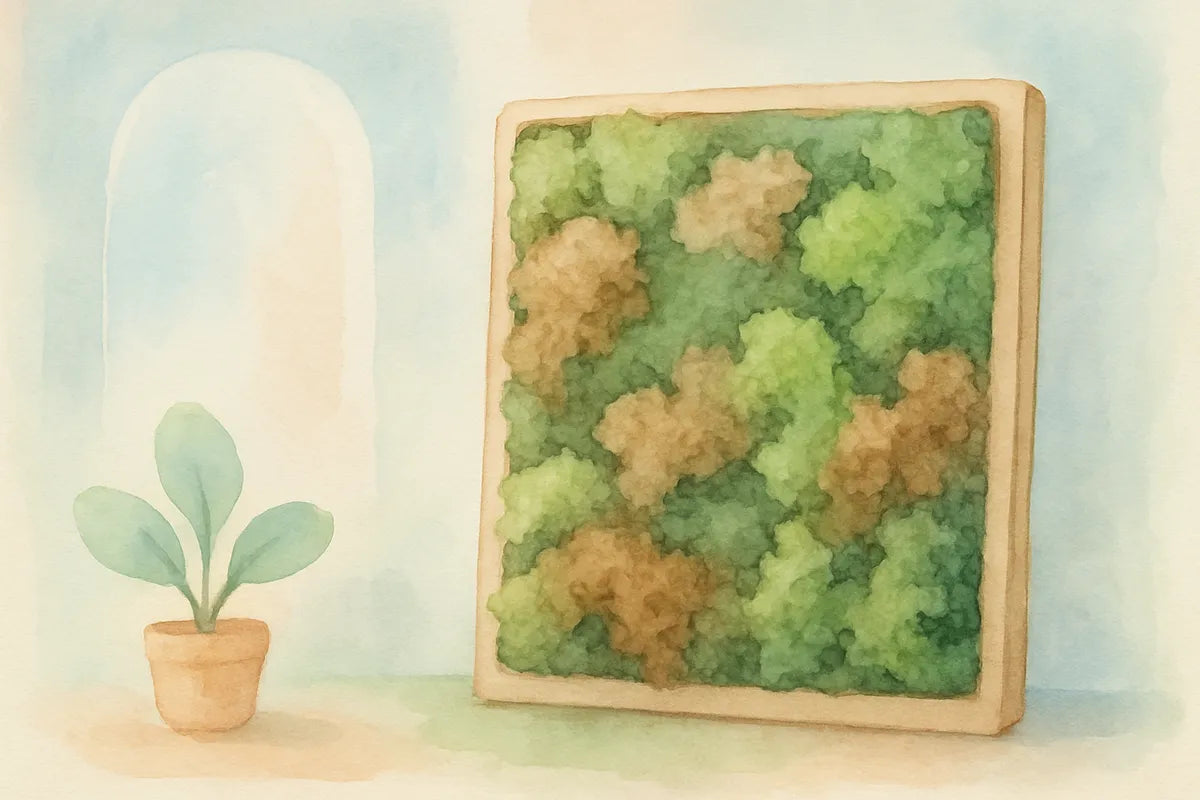
When moss turns brown, it’s sending a message. One common reason is dryness—indoor air is often less humid than outdoor conditions. In a heating or air-conditioned room, moisture evaporates faster, leaving moss dehydrated. Another factor is poor ventilation. Without airflow, mold can develop on the soil or backing, which prevents moss from absorbing water evenly. Overwatering is equally harmful because it suffocates roots and causes brown patches.
Lighting Stress and Placement Problems
If your moss wall faces direct sunlight, the outer layer can burn even while the back stays damp. This uneven condition makes parts of the moss turn brown, especially near windows. Try placing it in bright but filtered light. You can use thin curtains or install the wall in an area away from south-facing glass. Indoor plant specialists on The Sill recommend rotating wall positions occasionally to balance exposure.
Terrarium-Style Setups and Air Control
In some designs, moss is displayed inside a terrarium. Though beautiful, these enclosed setups often trap heat, making the moss dry from the top while too much condensation forms on the glass. To fix this, open the lid for short periods each day to restore air balance. The same logic applies to framed moss walls—ensure there’s steady airflow behind the panel.
How to Fix Browning Moss

Restore Moisture and Humid Conditions
The fastest remedy for brown moss is rehydration. Spray it lightly with non-chlorinated water or distilled water every few days. If your room air is dry, place a small humidifier nearby. You can check humidity with a simple indoor meter. A study from the University of Minnesota Extension confirms that consistent humidity helps maintain the color of moss and fern species indoors.
Improve Lighting and Avoid Heat Exposure
Adjust lighting to medium or low indirect brightness. Cool LED lights that mimic daylight are ideal. Avoid placing the wall directly under heating vents, as warm, dry air quickly dehydrates moss fibers. You can combine low-light moss species with companion plants like ferns for a natural mix that stays green.
Check the Soil and Clean the Surface
If your moss is attached to soil or another organic base, examine it for mold or white salt build-up from tap water. Rinse gently or replace that section. Avoid using chemical fertilizers—they can burn moss and lead to more brown spots.
Can Brown Moss Turn Green Again?
When Moss Can Recover
In most cases, yes. If the moss hasn’t gone completely dry or brittle, it can turn green again once you restore moisture and stable lighting. Mist it daily, keep it humid, and let it rest for at least a week before expecting visible change. Don’t overwater in hopes of speeding recovery—it grows slower when drowned. The Botanical Society of America notes that many moss species revitalize after short drying periods if conditions improve quickly.
When to Replace Sections
If parts feel stiff and crumble under gentle touch, they’re likely dead. Trim those brown patches and let the surrounding areas expand naturally. You can also propagate fresh moss from another healthy patch, similar to how you might replant a fern. Specialist suppliers like Moss Acres offer starter mats for quick replacement.
Keeping Your Moss Wall Healthy Long-Term
Simple Maintenance Tips
- Mist once or twice per week using distilled water
- Keep lighting indirect
- Maintain moderate humidity and temperature
- Avoid direct heat or cold drafts
- Clean dust from the surface occasionally
Final Thoughts
When your moss wall starts turning brown, it’s not a lost cause. With the right mix of water, gentle lighting, and consistent humidity, you can bring it back to a lush state. Treat it like a living surface that thrives in a calm, moist balance, much like a forest floor. A little observation each week will keep that wall green for years to come.