Preserved moss walls look like living green art, but they come with a bigger claim attached: cleaner indoor air. If you’ve seen “air-purifying moss” on a product page, you’ve probably wondered if it’s real science or good marketing.
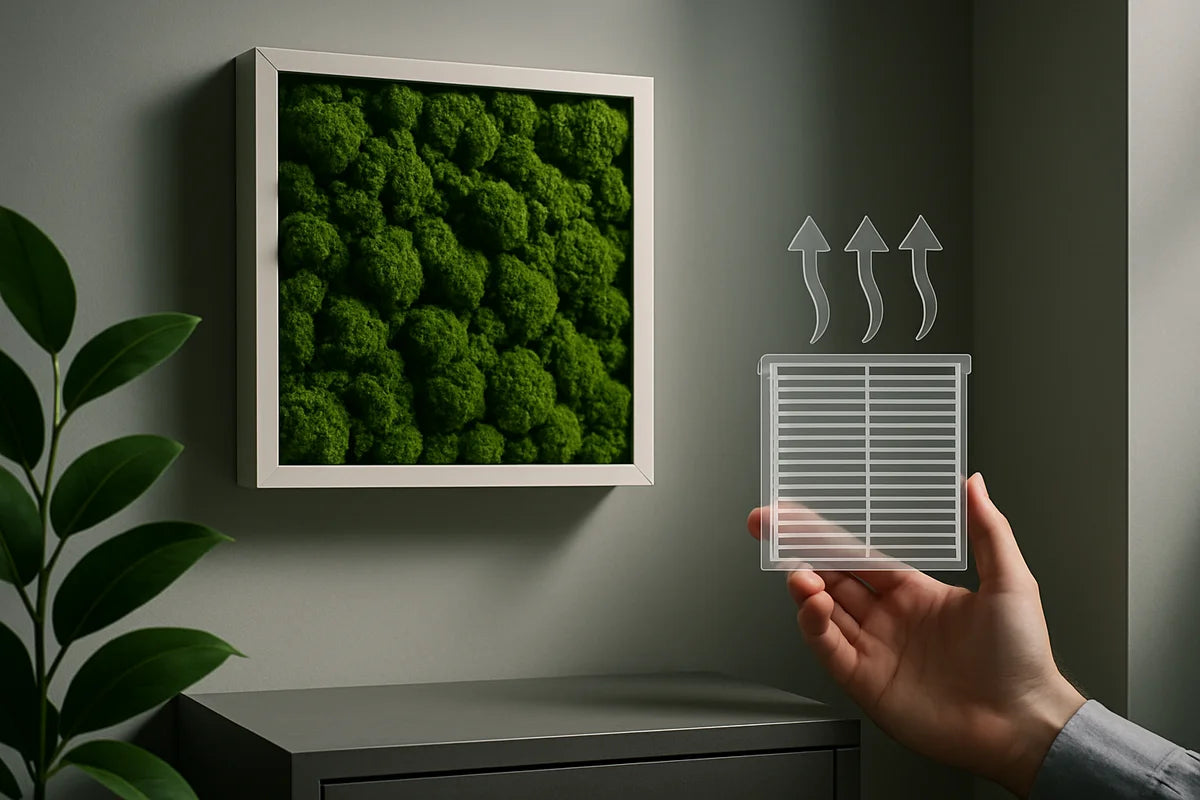
Here’s the clear answer: preserved moss walls can trap some dust on their surface, but they do not work like living plants or mechanical air purifiers for filtering indoor air toxins. They can support a healthier-feeling space in other ways (sound, mood, design), but you shouldn’t buy one as your main air-cleaning tool.
Let’s break down what preserved moss is, what “toxins” means indoors, what moss walls can and can’t do, and what to do instead if you want cleaner air.
What people mean by “indoor air toxins”

Most homes and offices have a mix of indoor pollutants. Some you can see (dust). Many you can’t (gases and tiny particles). Common examples include:
- Volatile organic compounds (VOCs) from paint, flooring, furniture, cleaners, and air fresheners
- Formaldehyde from pressed-wood products and some fabrics
- Fine particles (PM2.5) from cooking, candles, fireplaces, and outdoor pollution that leaks indoors
- Mold spores and damp-related pollutants
- Pet dander and allergens
- Carbon monoxide from faulty combustion appliances (more of a safety issue than a “filter it” issue)
If you want a solid overview of where indoor pollutants come from and how they behave, the EPA’s indoor air quality guidance lays it out in plain English.
What a preserved moss wall actually is
Preserved moss is not alive. Growers harvest moss, then treat it with a preserving solution so it stays soft and keeps its color for years. Many products also use dyes and stabilizers. The end result looks natural, but it doesn’t photosynthesize, grow, or “breathe” the way live moss does.
That matters because most real air-cleaning claims tied to plants rely on active biological processes. A preserved moss wall is closer to a high-texture decorative surface than a living system.
Preserved vs living moss walls
- Preserved moss: no watering, no light needs, low upkeep, not biologically active
- Living moss: needs moisture, light, and airflow control; may support some biological uptake, but results vary a lot
If you’ve seen stories about moss walls cleaning air in airports or big buildings, those are usually living installations or biofilter systems, not preserved panels.
So can preserved moss walls filter indoor air toxins?
They can catch some dust. They can’t meaningfully remove gases like VOCs. And they won’t replace ventilation or filtration.
Here’s the practical breakdown.
What preserved moss can do: catch larger particles on the surface
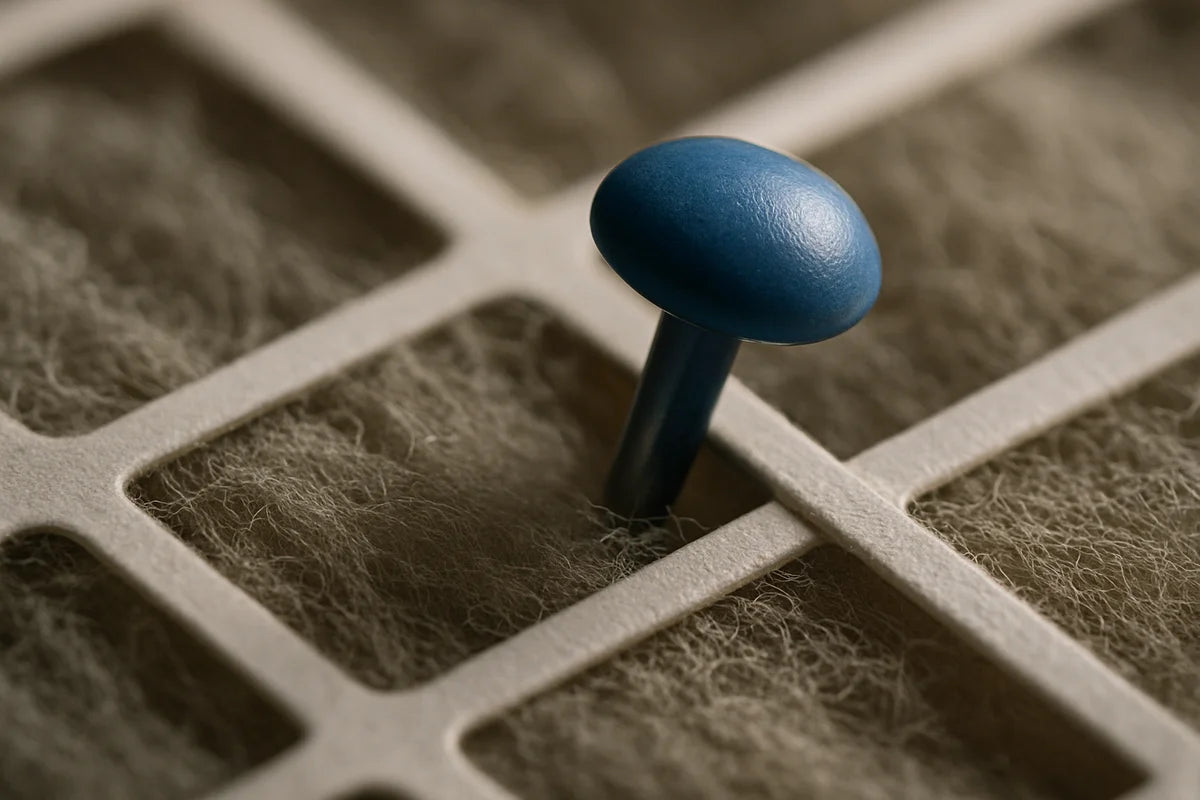
Any textured surface can collect dust. A moss wall has a lot of nooks and fibers, so it can act like a passive dust magnet. That may slightly reduce dust that would otherwise settle elsewhere, but it also means the moss itself can hold dust until you clean it.
This is not the same as filtering air the way a fan-driven system does. Real filtration needs air to move through a filter medium at a known rate.
What preserved moss can’t do: remove VOCs in a reliable way
VOCs are gases. To lower them, you usually need:
- Source control (stop using the thing that emits VOCs)
- Ventilation (swap indoor air with outdoor air)
- Adsorption media (like activated carbon) with enough surface area and airflow
- In some cases, chemical treatments (not common for homes)
Preserved moss isn’t designed as an adsorbent medium, and it doesn’t have active airflow. If a seller claims “VOC removal,” ask for test results that show:
- Which VOCs they tested (formaldehyde, benzene, toluene, etc.)
- The chamber size and airflow rate
- Starting concentration and time to reduction
- Independent lab verification
In most cases, you won’t get that level of data because the product isn’t an air cleaner.
What about the “plants clean the air” research people cite?
A lot of the plant-air-cleaning hype comes from controlled lab studies where plants reduced certain chemicals in sealed chambers. Those studies were useful, but homes and offices don’t behave like sealed lab boxes. Air moves, pollutants vary, and the amount of plant material needed to make a big dent is usually unrealistic.
If you want a grounded explanation of why real buildings are different, see this peer-reviewed review in Nature’s Journal of Exposure Science and Environmental Epidemiology that discusses the limits of using houseplants as air cleaners in practical settings.
And remember: preserved moss is even less active than a houseplant because it’s not alive.
When a preserved moss wall could still help your indoor environment
If the goal is cleaner air, preserved moss isn’t your top tool. But indoor comfort isn’t only about VOC numbers. A room can feel better without the moss “filtering toxins.”
It can make a space feel calmer and more inviting
People respond to natural textures. A moss wall can soften a hard room and reduce visual clutter. That can matter in offices, clinics, and homes where stress runs high.
It can improve acoustics in a small but real way
Moss has a 3D surface that can help reduce echo, especially in rooms with lots of glass, tile, and drywall. Don’t expect it to replace acoustic panels, but it may take the edge off reflections.
If you want the “why” behind noise control in rooms, this practical guide from ArchDaily often covers materials and interior acoustics in plain terms (search their site for acoustic treatments and interior surfaces).
It avoids some indoor air issues that come with living walls
Living walls can add moisture, require irrigation, and sometimes create mold risk if the system leaks or the wall stays damp. Preserved moss doesn’t need watering, so it removes that specific risk.
That said, it can still collect dust, and dust can bother allergy sufferers.
Potential downsides people don’t mention
Before you install a preserved moss wall, think about these points. None are deal-breakers, but they matter if your main worry is air quality.
Dust buildup can become the real story
If the moss sits near an air vent, a busy hallway, or a kitchen, it may load up with dust faster than you expect. Once dust sits in the moss, it can get stirred back into the air when people brush against it or when airflow changes.
Some products include dyes, fire retardants, or adhesives
Many installations use backing boards, glues, and sealants. The moss itself may also be treated. Good vendors choose low-odor materials and allow off-gassing time before installation, but not all do.
If you’re sensitive to smells, ask the installer what adhesive they use and whether it meets low-VOC standards. You can also look for products that align with indoor material guidelines used in green building programs. The U.S. Green Building Council’s LEED framework is a helpful reference point for how professionals think about low-emitting materials.
Humidity and sunlight still matter
Preserved moss does best in stable indoor conditions. Too much sun can fade it. Very dry air can make it brittle. Too much humidity can cause issues with the backing material or promote odor if dust builds up.
If you want cleaner indoor air, do this instead
You can still get a moss wall for looks. Just pair it with tools that actually reduce indoor pollutants.
Step 1: Find the source before you buy gear
Ask a few quick questions:
- Do you smell paint, fragrance, “new furniture,” or musty odors?
- Do symptoms spike after cleaning, cooking, or showers?
- Does dust settle fast even after you clean?
- Do you open windows often, or is the home sealed most of the year?
Source control often beats any filter. Swap harsh cleaners for low-odor options. Store paints and solvents outside living areas. Use a range hood that vents outside if you cook often.
Step 2: Ventilate with a plan
Fresh air helps, but random window cracking doesn’t always solve the problem, especially during wildfire season or heavy traffic hours. If you have HVAC, check whether you can increase outdoor air safely and whether your system can handle a better filter.
For building-level guidance on ventilation and filtration, the CDC’s ventilation guidance explains what works in plain language.
Step 3: Use a real air purifier where it counts
If you want to cut particles (dust, pollen, smoke), look for a purifier with a true HEPA filter and the right CADR (clean air delivery rate) for your room size. For VOCs, you need activated carbon or another sorbent media, and you need enough of it. A thin carbon sheet won’t do much.
If you want a practical way to size a purifier, tools like the AHAM room air cleaner guidance help you match CADR to room size without guessing.
Step 4: Control moisture and stop mold before it starts
If you see recurring condensation on windows, peeling paint, or musty smells, focus on humidity control and leak fixes. A dehumidifier in a damp basement can do more for “air toxins” than any decorative wall.
Step 5: Keep your filters and ducts from becoming the problem
Replace HVAC filters on schedule. If you use a high-MERV filter, make sure your system can handle it. A clogged filter reduces airflow, which can make air feel stale and hurt performance.
How to shop for a preserved moss wall without falling for air-cleaning hype
If you still want one (and many people do), shop with clear expectations. You’re buying design and comfort perks, not a toxin filter.
Questions to ask the vendor
- What species of moss is used, and is it 100% preserved (not living)?
- What preservatives, dyes, or fire treatments do you use?
- What adhesive and backing board do you install on the wall?
- How do you clean it, and how often?
- Where should it not be installed (near stoves, vents, direct sun, humid areas)?
Simple care that keeps it looking good
- Keep it out of direct sun to reduce fading.
- Avoid placing it where it will catch grease (near cooking areas).
- Dust gently as recommended by the maker (many suggest low-suction vacuuming with a brush tool).
- Keep indoor humidity in a normal range so it stays soft and stable.
Looking ahead if you want green design and better air
The next wave of “green walls” that truly impact air will look less like decor and more like equipment: living biofilters with controlled airflow, replaceable media, and clear performance data. Those systems may become more common in offices and public buildings, where designers can plan for drainage, lighting, and maintenance.
For homes, the best path is simpler. If you like preserved moss, treat it like art that softens a room. Then put your real effort into the basics that move the needle: low-emission materials, smart ventilation, good filtration, and moisture control. Do that, and you can have the moss wall and the cleaner air, without asking one product to do two jobs.