Your home shapes your health in quiet ways. It decides what you snack on, how well you sleep, how much you move, and what you breathe for hours a day. The good news is you don’t need a full remodel or a strict rulebook to make a real shift. You can transition to a health-focused home environment step by step, with changes that stick.
This article walks you through the biggest levers: food, air, light, movement, sleep, stress, and the habits that tie it all together. Pick a few ideas, start small, and build from there.
Start with a quick home health check

Before you buy anything or toss half your pantry, look at what’s already happening. A health-focused home environment isn’t about perfection. It’s about making the healthy choice the easy choice.
Try the 10-minute walkthrough
- Kitchen: What’s at eye level in the fridge and pantry?
- Bedroom: Is it dark, quiet, and cool enough for sleep?
- Living space: Do you have a spot to stretch or move for 5 minutes?
- Bathrooms: Do you have basic self-care items within reach?
- Entryway: Does the setup help you wash hands, remove shoes, and settle in?
Write down three friction points. Example: “I snack on chips because they’re on the counter.” Or “I scroll in bed because my charger is next to the pillow.” These small details matter.
Make your kitchen support better eating without willpower

The kitchen is the control center for most health goals. When you transition to a health-focused home environment, start here because the payoff is fast.
Reset your counters and eye-level spots
What you see is what you eat. Move the “sometimes foods” out of sight. Put the staples you want more of where you can grab them fast.
- Put a fruit bowl where you’ll actually see it.
- Store snacks in opaque containers on a higher shelf.
- Keep nuts, yogurt, cut veggies, or hummus at eye level in the fridge.
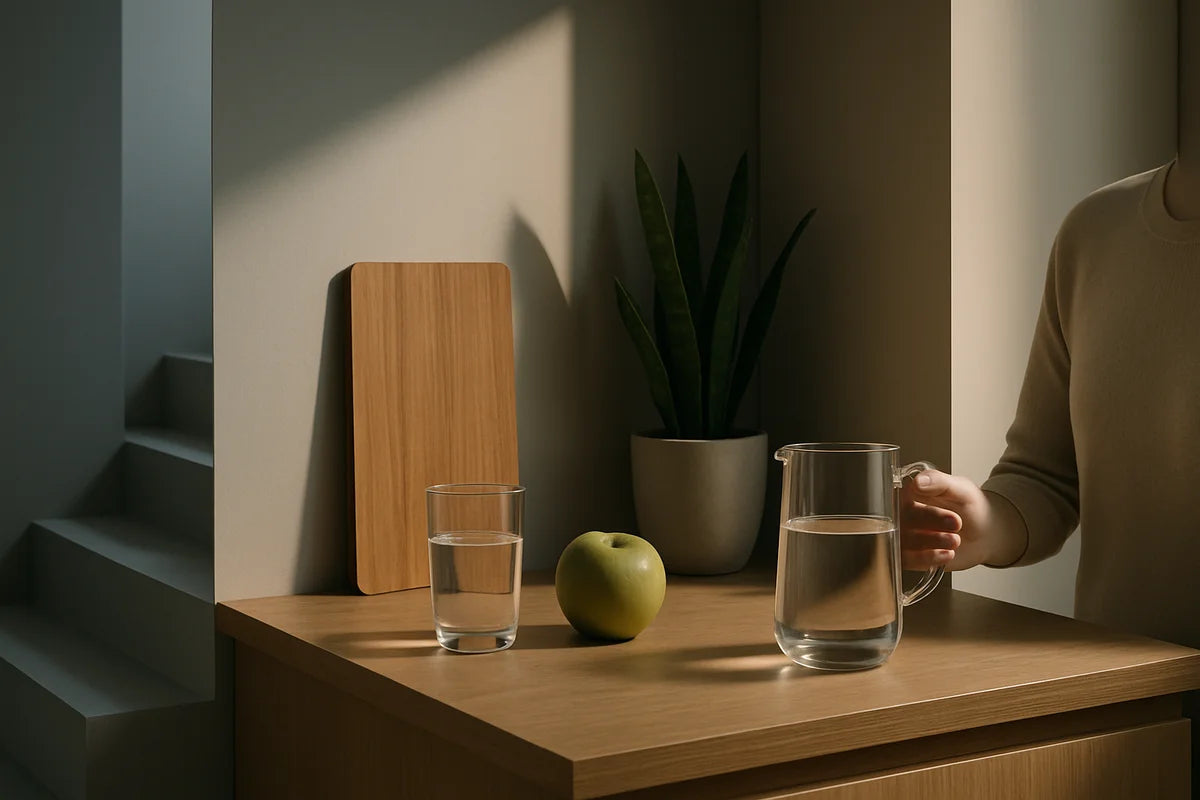
- Make water easy: a filled pitcher in the fridge or a bottle on the counter.
Build a simple “default meal” system
You don’t need new recipes every night. You need a few repeatable meals that cover protein, fiber, and color.
- Protein: eggs, canned fish, chicken, tofu, beans, Greek yogurt
- Fiber base: oats, brown rice, potatoes, whole-grain bread, lentils
- Color: frozen veg, salad greens, tomatoes, berries, citrus
- Flavor: olive oil, salsa, garlic, spices, soy sauce, lemon
If you want a simple target, use the plate method. Fill half your plate with non-starchy vegetables, add a protein, then add a carb or starch. Many clinicians teach this approach because it’s practical in real life. For a clear visual, see guidance from Harvard’s Healthy Eating Plate.
Use a shopping list that prevents “nothing to eat” nights
A health-focused home environment depends on what enters the house. Keep a running list with these anchors:
- 2 proteins you can cook fast
- 2 “backup” proteins with long shelf life (canned beans, tuna, frozen chicken, tempeh)
- 3 vegetables (at least one frozen)
- 2 fruits
- 1 breakfast option you’ll actually eat
- 1 snack you can grab without thinking
Want help planning balanced meals without obsessing? Tools like the meal planning tips from the Academy of Nutrition and Dietetics can keep it simple and realistic.
Clean up your indoor air without going extreme
Air quality is easy to ignore because you can’t always see it. But it affects sleep, allergies, asthma, and how you feel day to day. If you’re serious about a health-focused home environment, indoor air is a high-value project.
Ventilate on purpose
- Run the bathroom fan during and after showers.
- Use the range hood when you cook, especially with high heat.
- Open windows when outdoor air is decent, even for 10 minutes.
If you want a straightforward overview of the main indoor pollutants and what helps, the EPA’s indoor air quality resources break it down in plain language.
Use filters and cleaning habits that work
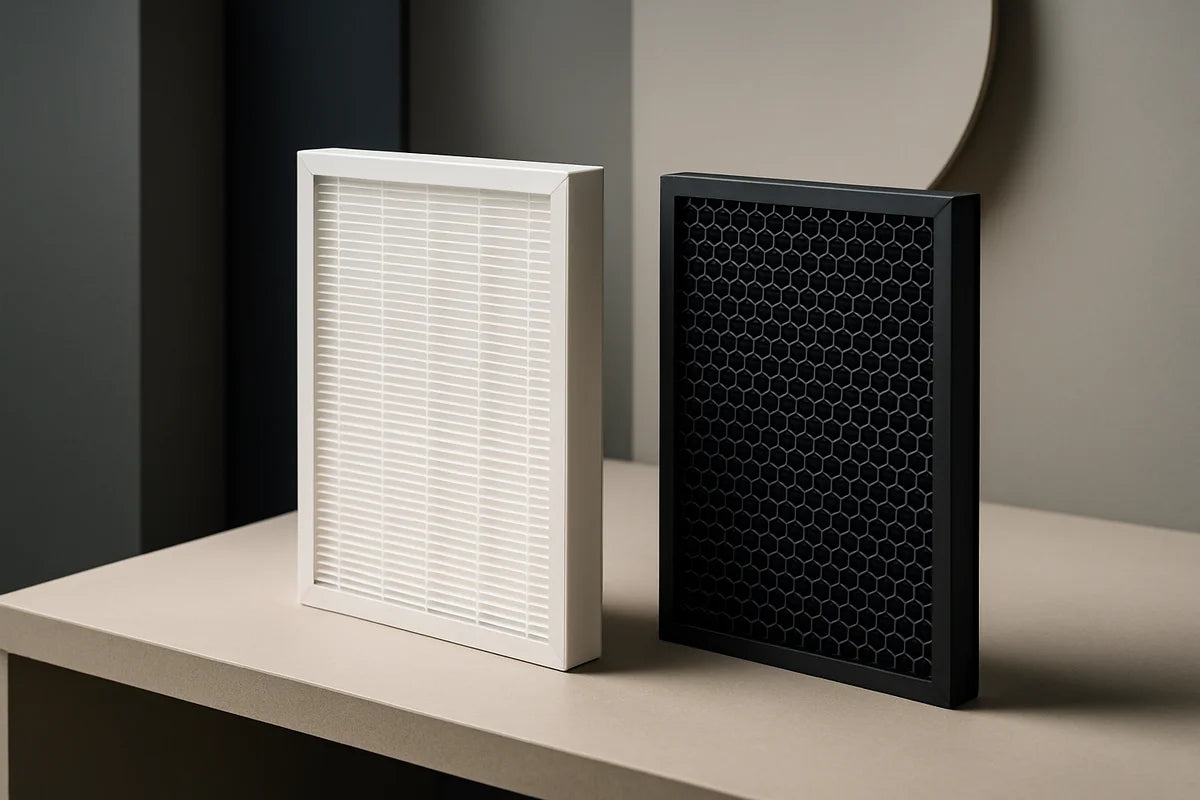
- Change HVAC filters on schedule (many homes do well with every 1-3 months).
- Vacuum with a sealed system if you can, and don’t forget rugs and soft furniture.
- Control humidity to reduce mold and dust mites.
Humidity is one of the biggest drivers of comfort and mold risk. If you want target ranges and practical steps, Energy Vanguard’s humidity guidance is a solid, HVAC-focused explainer.
Consider a DIY air check
You don’t need a lab test to learn a lot. A basic indoor air monitor can show patterns in CO2, particles, and humidity. If you go this route, place it where you spend time (not right by a window or vent) and watch for trends during cooking, cleaning, and sleep.
For practical product testing and plain advice on room air cleaners, Wirecutter’s air purifier testing can help you sort through options without marketing hype.
Fix light and noise so your sleep gets easier
Sleep is not just willpower. Your environment either supports it or fights it. If you want to transition to a health-focused home environment, make sleep feel protected.
Make your bedroom boring in the right way
- Keep it dark: blackout curtains or a sleep mask.
- Keep it cool: many people sleep better in a slightly cooler room.
- Keep it quiet: earplugs, white noise, or a fan if needed.
Light at night can disrupt sleep timing and quality. For a research-based overview of healthy sleep habits, the Sleep Foundation’s sleep hygiene guide lays out changes you can test without making your life rigid.
Move screens out of “sleep space”
If your phone lives on your bed, your brain links the bed with scrolling. Try one of these:
- Charge your phone across the room.
- Use a cheap alarm clock so you don’t “need” your phone at the pillow.
- Keep a book or magazine by the bed instead.
This isn’t about being strict. It’s about making the default behavior help you.
Design your home so you move more without planning workouts
Exercise matters, but so does the movement you do all day. A health-focused home environment makes movement normal, not a special event.
Create a “friction-free” movement spot
You need a tiny area you don’t have to set up each time.
- Leave a mat out in a corner.
- Keep a resistance band in the living room.
- Store a pair of walking shoes by the door.
Use short routines that don’t require motivation
If you wait for the perfect time, it won’t happen. Build a 5- to 10-minute option you can do between tasks.
- 10 bodyweight squats
- 10 counter or knee push-ups
- 30 seconds of plank or dead bug
- 10 hip hinges (good mornings) or glute bridges
- 1 minute of easy stretching
If you want reliable, safe exercise basics, ACE’s exercise library shows clear form cues and modifications.
Reduce exposure to irritants with simple swaps
You don’t need to fear every ingredient. But you can reduce common irritants and triggers without spending much.
Focus on the biggest “contact points”
- Laundry: choose fragrance-free detergent if scents bother you.
- Cleaning: avoid mixing products, and ventilate while you clean.
- Cookware and storage: use what you have, replace only as needed, and don’t microwave plastic containers if you can avoid it.
- Entry habits: consider a shoes-off rule to cut dirt and pollen indoors.
If you want a practical view of safer cleaning steps and how to improve indoor air while you clean, the EPA Safer Choice program can help you spot products designed to reduce harsh chemicals.
Make stress relief part of the layout, not a rare event
Most people try to “do stress management” like it’s a task. It works better when the house supports small calm moments during the day.
Build one calm corner
This can be a chair by a window or a small spot on the couch. Set it up so it feels easy to use.
- Keep a blanket, book, or journal there.
- Put a lamp with warm light nearby.
- Remove clutter from that one spot first.
Use cues that pull you back to baseline
- Put a water glass on your desk so you drink without thinking.
- Set a timer for one 3-minute breathing break each afternoon.
- Keep a notepad in the kitchen to dump mental clutter before bed.
These are small actions, but they change the feel of the day. That’s the point.
Get the whole household on board without fights
If you live with family, roommates, or a partner, you can’t enforce a health-focused home environment like a rule. You need buy-in.
Use “two yeses” for shared spaces
If a change affects everyone, aim for agreement. Instead of “We’re banning snacks,” try “Let’s keep snacks, but move them to one cabinet and keep fruit on the counter.”
Offer choices, not orders
- Pick two dinner options and let others choose.
- Ask what healthy snacks they’d actually eat.
- Agree on one house habit for the week (like a 10-minute tidy or an after-dinner walk).
Plan for kids and teens
Make healthy options visible and fast. Pre-portion yogurt, wash fruit, stock easy proteins. Keep treats, but don’t put them on display. This reduces power struggles and mindless eating.
Create habits that keep the changes from fading
The hard part isn’t starting. It’s keeping the home set up so it stays healthy when life gets busy.
Use a weekly reset list
Keep it short. Ten minutes is enough if you do it every week.
- Restock fruit and one easy protein.
- Throw out old leftovers.
- Wash water bottles and refill the pitcher.
- Swap towels and sheets if laundry piled up.
- Quick vacuum in high-traffic areas.
Make one change per week
Big overhauls fail because they demand constant attention. Try this pace instead:
- Week 1: Set up your kitchen counters for better defaults.
- Week 2: Improve sleep with darker room and phone charging across the room.
- Week 3: Add a movement corner and a 5-minute routine.
- Week 4: Improve indoor air with ventilation and filter schedule.
After a month, you’ll feel the shift. You’ll also know what’s worth keeping.
The path forward
A health-focused home environment isn’t a style. It’s a set of choices that makes daily life smoother. Start with one room that causes the most friction. For many people, it’s the kitchen or the bedroom. Change what you see first: what’s on the counter, what’s within reach, what’s near the bed, and what you breathe while you sleep.
Pick two actions you can do this week. Put them on your calendar like real plans. Then watch what gets easier. Once your home starts helping you, not fighting you, the next steps feel obvious.