You bought an air purifier because asthma and “clean air” seem like a perfect match. But weeks later, you’re still wheezing at night, waking up congested, or reaching for your rescue inhaler more than you want.
If you’re thinking, “My air purifier is not helping my asthma - what should I check?” you’re asking the right question. Air purifiers can help, but only when the real trigger is in the air, the purifier can actually capture it, and it’s set up in a way that fits your home and habits.
Let’s go through the most common reasons an air purifier doesn’t move the needle for asthma, and what to do about each one.
Start with this reality check - not all asthma triggers are “air purifier problems”

Air purifiers mainly remove particles from the air. That’s great for some triggers, but not all. If your main trigger isn’t floating in the air, a purifier may do very little.
Triggers air purifiers can often help with
- Dust and dust mite debris that becomes airborne
- Pet dander (the airborne fraction)
- Pollen that gets indoors
- Smoke particles (wildfire, wood smoke, some cooking smoke)
- Mold spores (airborne spores, not the source)
Triggers air purifiers often won’t fix on their own
- Dust mites living in bedding and carpet (source control matters most)
- Mold growing in a damp wall, under flooring, or in a bathroom (you must remove the moisture and clean the source)
- Strong odors and many gases (some VOCs, cleaning fumes, fragrance)
- Cold air, exercise, respiratory infections, stress
- Nitrogen dioxide from gas stoves or poor venting
If your symptoms spike after cleaning, showers, cooking, or using scented products, the problem may be gases or irritants, not particles.
Check whether your purifier can actually capture what you need

Many people buy a purifier that’s “fine,” but not right for asthma. Here’s what matters.
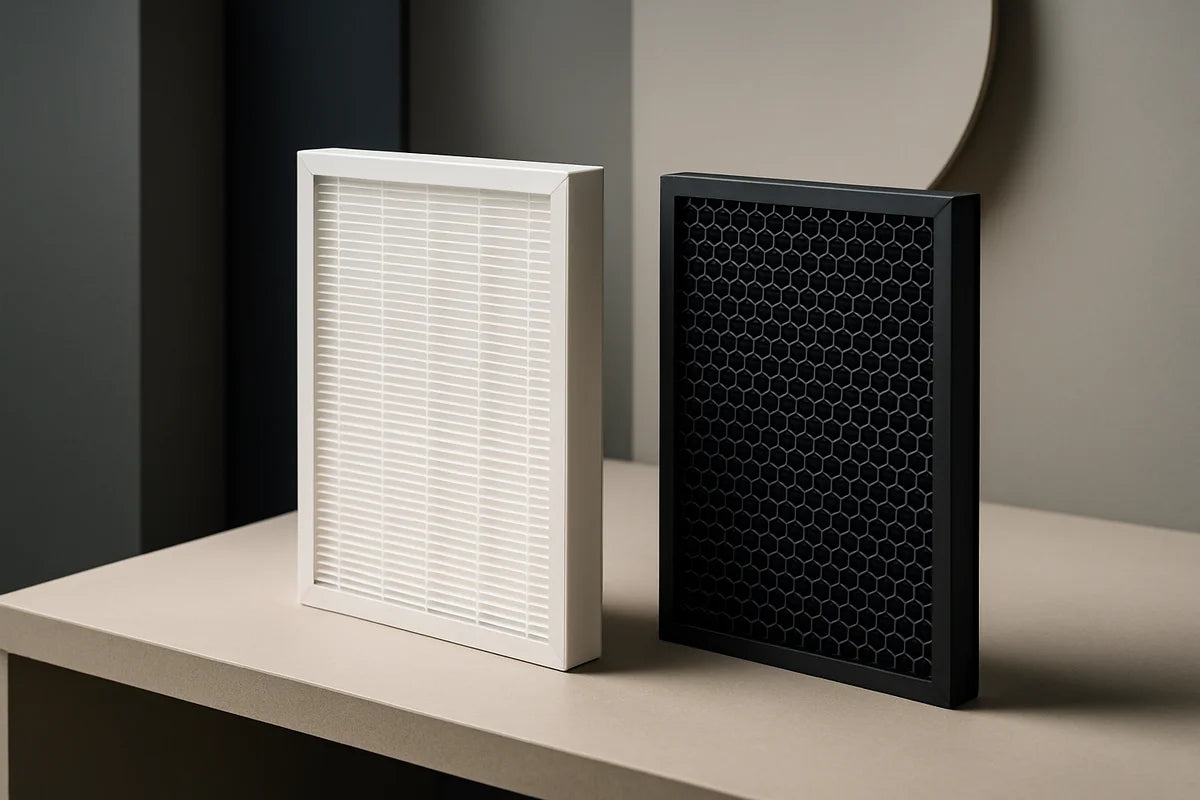
HEPA is the baseline for asthma
For most asthma households, you want a true HEPA filter. HEPA filters capture very small particles effectively, including those that can irritate airways. Some brands use vague terms like “HEPA-like” or “HEPA-style.” Those can perform well or poorly. The label doesn’t guarantee much.
The U.S. Environmental Protection Agency explains what air cleaners can and can’t do, and why particle removal depends on the filter and setup. Use it as a reality check while you troubleshoot: EPA guidance on air cleaners and home air filters.
Watch out for ozone and “ionizer” add-ons
If your purifier has an ionizer, plasma function, or “ozone” mode, turn it off. Ozone can irritate the lungs, and that’s the last thing you want with asthma. Some units produce very low levels, but the safest move is simple: avoid ozone-generating features.
For a clear explanation of why this matters, see the American Lung Association’s overview of ozone and lung health.
Carbon filters help odors, but they’re not a magic fix
Activated carbon can reduce some smells and some gases, but results vary a lot. Many purifiers include a thin carbon sheet that does little. If fumes trigger your asthma (fragrance, cleaning products, cooking), you may need:
- A purifier with a substantial carbon filter (more weight, more contact time)
- Better ventilation (exhaust fans that vent outdoors)
- Changing the products you use indoors
The most common problem - the purifier is too small for the room

This is where most “air purifier not helping my asthma” stories end up. The unit runs, the lights look nice, but it can’t move enough clean air to matter.
Use CADR and ACH, not just “recommended room size”
Manufacturers often list a large room size that assumes low fan speed or a best-case scenario. For asthma, you usually want higher air changes per hour (ACH), especially in the bedroom.
A practical rule of thumb: aim for about 4 to 6 ACH in the room where you sleep. That often means a larger purifier than you think, or running it on a higher setting.
AHAM (the trade group behind the CADR rating) explains how CADR works and why it matters when comparing models: how CADR ratings for room air cleaners work.
Quick sizing check you can do in two minutes
- Measure your room’s square footage (length x width).
- Multiply by ceiling height to get cubic feet.
- Decide your target ACH (start with 5 for asthma-friendly bedrooms).
- Convert to needed airflow: (room cubic feet x ACH) / 60 = CFM needed.
If you’d rather not do the math, use a simple calculator like this CADR calculator to estimate the airflow you need for your room.
Placement can make a good purifier act like a bad one
Where you put the unit matters more than most people realize. If airflow can’t circulate, the purifier cleans a bubble of air and leaves the rest of the room untouched.
Fix these common placement mistakes
- Shoved against a wall or behind furniture (keep a few inches of clearance, follow the manual)
- In a corner where air can’t move well
- Blocked intake or blocked outlet
- Placed far from the breathing zone when symptoms hit at night (bedroom placement matters)
Best placement for asthma in real homes
- Put the purifier in the bedroom if nighttime symptoms are the issue.
- Place it where the air can flow freely, not under a desk or behind a chair.
- Keep doors and windows consistent. If you leave the door open, you’re cleaning a larger area.
If you only run one purifier, prioritize the room where you spend the most time with symptoms. For many people, that’s the bedroom.
Run time and fan speed often explain “no results”
People often run a purifier for a few hours a day on a low setting because it’s quieter. That feels reasonable, but it can fail in practice.
What to do instead
- Run it 24/7 in the problem room for two weeks as a test.
- Use a higher fan speed when the room is empty, then drop it at night if noise bothers you.
- If “auto mode” keeps the fan low, don’t trust it blindly. Many sensors mainly detect larger particles and may miss what irritates your lungs.
You’re not trying to make the air perfect for five minutes. You’re trying to keep particle levels low all day so your airways calm down.
Filter problems can quietly ruin performance
If your air purifier isn’t helping your asthma, check the filter details before you assume the device “doesn’t work.”
Make sure you removed the plastic
It sounds silly, but it’s common. Many HEPA filters ship wrapped in plastic. If you forget to remove it, the purifier can’t pull air through the filter.
Replace filters on schedule, or sooner if your home is dusty
- HEPA filters often last 6 to 12 months, sometimes longer.
- Pre-filters may need cleaning every few weeks, especially with pets.
- Carbon filters often lose effectiveness faster than people expect.
Also check for off-brand replacement filters. Some fit, but leak around the edges or use lower-quality media. If the filter doesn’t seal well, air takes the easy path and bypasses the filter.
Your purifier can’t beat a strong source of irritation
Air cleaning works best when you also reduce what’s causing the problem. If you have a big trigger source, the purifier plays defense all day and still loses.
Dust mites and bedding often matter more than the air purifier
Dust mites don’t float around all day. They live in fabric, especially mattresses and pillows. But their debris becomes airborne when you move, make the bed, or flop down at night.
What helps most:
- Use mite-proof covers on mattress and pillows.
- Wash bedding weekly in hot water when possible.
- Keep humidity in check (often 30 to 50 percent).
If you want deeper guidance on allergen control for asthma, AAAAI’s indoor allergen resources lay out practical steps.
Humidity and mold are a package deal
If indoor humidity stays high, mold and dust mites thrive. A purifier may catch some spores, but it won’t stop growth. Check bathrooms, basements, and any room with a musty smell.
- Use a dehumidifier if humidity runs high.
- Run the bathroom fan during and after showers.
- Fix leaks fast. Don’t wait for “a weekend project.”
Smoke and cooking pollution can overwhelm a small unit
Cooking, especially frying or searing, can spike particle levels. A purifier helps, but a good range hood that vents outdoors matters more. If you use a gas stove, ventilation is even more important.
For a practical explanation of indoor air and ventilation choices in homes, see Building Science Corporation’s overview of ventilation and indoor air.
Don’t ignore the rest of your asthma plan
An air purifier is a support tool. It’s not a replacement for an asthma plan. If symptoms keep breaking through, it may signal uncontrolled inflammation, the wrong inhaler routine, or a trigger you haven’t found.
Signs you should talk to a clinician soon
- You wake up at night with coughing, wheezing, or chest tightness
- You need your rescue inhaler more than recommended by your care team
- You limit activity because breathing feels tight
- You’ve had urgent care or ER visits for asthma symptoms
If you want a structured way to review symptoms and control, the Global Initiative for Asthma (GINA) provides widely used guidance for patients and clinicians.
A simple troubleshooting checklist you can run this week
If you want a clear test plan, do this for 7 to 14 days. Change one thing at a time so you can tell what helps.
- Move the purifier to your bedroom and keep the door closed at night.
- Run it 24/7 and use a higher setting for at least a few hours daily.
- Confirm it has a true HEPA filter and that you removed all packaging.
- Clean or replace the pre-filter and confirm the main filter seats and seals well.
- Check room sizing using CADR or an online calculator. If it’s undersized, treat that as the main problem.
- Cut obvious irritants for the test window: no candles, no incense, skip sprays and strong fragrance, use the range hood when cooking.
- Control moisture: run bath fans, fix leaks, and aim for moderate humidity.
- Do bedroom allergen control basics: wash bedding, consider mite covers, keep pets out if they trigger you.
If you do all of that and nothing changes, you’ve learned something useful: particles in that room may not be your main driver, or your asthma may need a medical tune-up.
Where to start if you feel stuck
Pick the path that matches your situation:
- If symptoms hit hardest at night: resize and relocate the purifier to the bedroom, run it continuously, and tighten bedding and humidity control.
- If symptoms flare with cooking or smells: focus on ventilation, range hood use, and reducing fragranced products. Consider a purifier with a real carbon filter, not a token one.
- If you see dampness or musty odors: stop chasing spores and fix the moisture source first.
- If you’ve “done everything” and still struggle: bring your symptom pattern to your clinician and ask about trigger testing, inhaler technique, and whether your plan needs changes.
Once you find the weak link, the purifier often starts to help in a noticeable way. Not by “curing” asthma, but by lowering the background load on your lungs so your meds and habits can do their job. The next step is simple: run a two-week test, track symptoms, and let the results guide what you change next.