

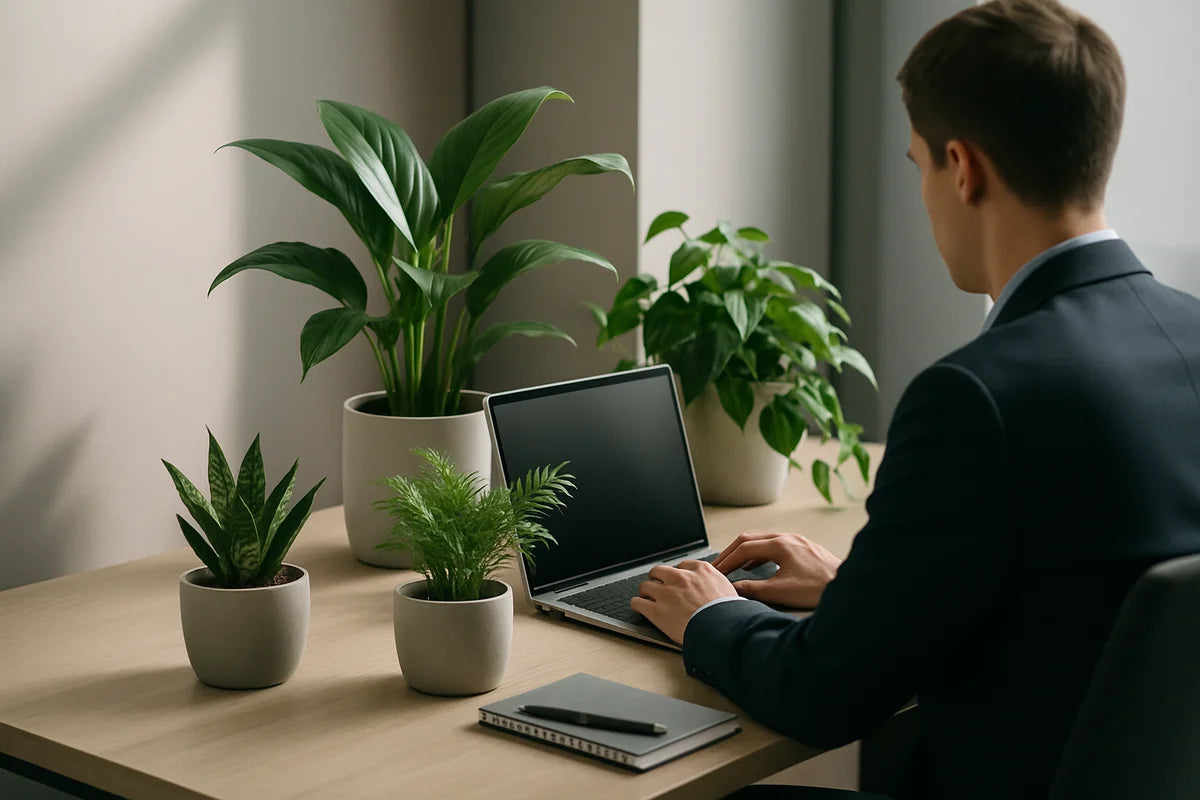
Best Plants for Reducing Stress at Work: A Practical Guide for Calmer Days
Work stress can feel loud. Notifications, meetings, and a long task list keep your brain switched on. One simple way to soften that noise is to add plants to your workspace. They don’t fix a bad workload, but they can make your desk feel less harsh and more human.
Why do plants help? Part of it is visual. Natural shapes and green color give your eyes a break. Part of it is routine. Watering a plant forces a small pause, and pauses matter. Research on nature exposure and stress often points in the same direction: even small “green” cues can support better mood and focus. If you want a deeper look at nature and stress science, the American Psychological Association’s coverage of nature and mental health is a solid starting point.
This guide covers the best plants for reducing stress at work, plus how to choose one that fits your light, your schedule, and your office rules.
How plants can lower stress at work (without hype)

Plants help in a few grounded ways:
- They create a softer visual field, which can reduce mental fatigue during screen-heavy days.
- They add a small sense of control and progress: new leaves, growth, and a simple care routine.
- Some plants can help with perceived air freshness, especially in stuffy rooms, even if the “air cleaning” effect gets overstated online.
About that last point: you’ll see claims that a single plant “purifies” a whole office. Real life is more complex. Ventilation and outdoor air matter far more. For the nuance, read the EPA’s guide to indoor air quality. Plants still have value, but think “comfort and atmosphere,” not “air filter replacement.”
What to look for in a stress-reducing desk plant

Before you buy anything, check three things. They decide whether your plant calms you or nags you.
1) Light at your desk
“Bright indirect light” means near a window but not in harsh sunbeams. Low light means you can read without turning on a lamp, but the space feels dim.
- Near a sunny window: pothos, snake plant, aloe, many succulents
- Bright but not sunny: peace lily, ZZ plant, philodendron
- Low light: ZZ plant, snake plant (still grows slower)
2) Your tolerance for plant chores
If you already feel stretched, pick a plant that forgives missed waterings. A “low effort” plant reduces stress. A needy one adds stress.
3) Office realities
- Allergies: avoid heavy pollen plants and strong fragrances.
- Pets at home or an office dog: many common plants can be toxic if chewed.
- Mess: choose plants that don’t drop leaves often and won’t leak water onto hardware.
Best plants for reducing stress at work (top picks)
These plants earn their spot because they look good, handle office life, and don’t demand much. Use the list to match your space and your habits.
1) Snake plant (Sansevieria / Dracaena trifasciata)
If you want a “set it and forget it” option, start here. Snake plants handle low light, dry air, and missed waterings. Their upright leaves also look clean and orderly, which suits a desk.
- Light: low to bright indirect
- Water: let soil dry out fully, then water
- Stress-friendly trait: low maintenance, steady look
2) ZZ plant (Zamioculcas zamiifolia)
The ZZ plant has glossy leaves and a calm, sculptural shape. It tolerates low light better than most. If your office has fluorescent lighting and one small window, ZZ can still cope.
- Light: low to bright indirect
- Water: every 2-4 weeks, depending on light and temperature
- Stress-friendly trait: thrives on neglect
3) Pothos (Epipremnum aureum)
Pothos grows fast and makes a workspace feel alive. You can trail it from a shelf, train it around a monitor stand, or keep it compact with trims. Trimming it can also become a quick reset ritual between tasks.
- Light: medium to bright indirect (tolerates low)
- Water: when the top inch of soil feels dry
- Stress-friendly trait: easy growth you can see week to week
4) Peace lily (Spathiphyllum)
Peace lilies add soft white blooms and broad leaves. They’re also dramatic in a useful way: they droop when thirsty, then perk back up after watering. That clear signal helps new plant owners feel confident.
- Light: low to medium, indirect
- Water: keep soil lightly moist, not soggy
- Stress-friendly trait: clear “I’m thirsty” cue
If you want care details and troubleshooting (brown tips, drooping, repotting), the Royal Horticultural Society’s peace lily guide is straightforward and practical.
5) Spider plant (Chlorophytum comosum)
Spider plants look playful, and they produce “babies” you can propagate in water. That small cycle of growth can feel oddly soothing, especially during repetitive work weeks.
- Light: bright indirect to medium
- Water: when the top inch dries; likes consistent care
- Stress-friendly trait: easy propagation and gentle look
6) Lavender (for scent lovers, with a big caveat)
Lavender smells calming to many people, and scent can influence mood. But lavender is not a typical desk plant. It needs strong light and airflow, and it can bother coworkers who are scent-sensitive.
- Light: strong light, ideally direct sun
- Water: let soil dry between waterings
- Stress-friendly trait: calming scent (only if your office allows it)
If you work from home and want aromatherapy support backed by a medical institution, Cleveland Clinic’s overview of aromatherapy gives a balanced take on what it can and can’t do.
7) Succulents (small, tidy, and desk-friendly)
Succulents suit tiny desks and shared spaces. They stay neat and don’t shed much. The main risk is overwatering, which turns “easy plant” into “dead plant” fast.
- Light: bright light, some direct sun helps
- Water: only when bone dry
- Stress-friendly trait: compact, clean, low mess
8) Rubber plant (Ficus elastica)
If you want a stronger “green corner” feeling, a rubber plant works well. Its thick leaves look bold and stay attractive with basic care. It can grow tall, so it fits better on the floor near your desk than on the desktop itself.
- Light: bright indirect
- Water: when the top few inches dry
- Stress-friendly trait: big leaves that make a room feel calmer
Pick the right plant for your work setup
For a windowless office
- ZZ plant
- Snake plant
- Peace lily (if there’s at least some ambient light)
For a sunny desk
- Succulents
- Aloe vera
- Lavender (mostly for home offices)
For people who travel or forget to water
- Snake plant
- ZZ plant
- Succulents
For people who want a quick “I need a break” ritual
- Pothos (trim and tidy)
- Spider plant (propagate a baby in water)
- Peace lily (water when it droops)
Where to place plants for the most calming effect
You don’t need a jungle. Placement matters more than quantity.
- Put one plant in your main line of sight, but not blocking your screen. You want a soft focal point for micro-breaks.
- Add a second plant farther away, like on a shelf or filing cabinet, to give your eyes a longer-distance target.
- Keep plants off crowded keyboard areas. Stress goes up when you feel cramped.
Want a simple way to remember to rest your eyes? Use the 20-20-20 rule: every 20 minutes, look 20 feet away for 20 seconds. The American Academy of Ophthalmology explains it here. A plant across the room makes the habit easier.
Low-stress plant care: a simple routine that won’t eat your time
The best plants for reducing stress at work stay calming only if they stay alive. Here’s a routine that takes minutes, not hours.
- Choose a pot with a drainage hole. If you use a decorative pot, keep the plant in a plastic nursery pot inside it so you can drain water safely.
- Water on a schedule at first, then switch to “soil check.” Stick your finger into the soil. If it’s dry to the first knuckle, water. If it’s damp, wait.
- Set a weekly 2-minute reset: remove dead leaves, wipe dust off leaves with a damp cloth, and rotate the pot a quarter turn for even growth.
- Don’t over-fertilize. Most office plants need very little feeding. Too much can burn roots and create more problems.
If you want a clean, no-fuss reminder system, a plant app can help. PictureThis can identify plants and suggest care, which helps when you inherit a mystery plant from a coworker.
Common mistakes that make desk plants stressful
- Overwatering: the most common killer. Plants drown more often than they dry out in offices.
- Putting a low-light plant in a dark corner: “low light” doesn’t mean “no light.”
- Ignoring pests: check leaf undersides for tiny dots or webbing. Treat early with a gentle wipe-down or insecticidal soap.
- Buying a plant that fights your schedule: if you travel, skip anything that needs steady moisture.
Quick FAQ: best plants for reducing stress at work
Do plants really reduce stress, or do they just look nice?
They do both. Plants can support mood by making a space feel safer and more pleasant. They also encourage short breaks, and those breaks can lower stress during the day.
How many plants do I need?
Start with one. If it makes you feel better and you can keep it healthy, add a second. Too many can become clutter and create chores.
What if my coworker has allergies?
Choose low-fragrance plants and avoid anything strongly scented. If you share close quarters, ask first. A calm office beats a plant argument.
Which is the easiest plant for a desk?
For most people, it’s a snake plant or a ZZ plant. Both forgive missed waterings and handle typical office light.
Conclusion
The best plants for reducing stress at work are the ones you won’t worry about. Start with a snake plant, ZZ plant, pothos, or peace lily, and match it to your light and habits. Place it where you’ll see it during the day, then use it as a cue to pause, breathe, and reset your focus. Small changes add up, and a living plant is a steady reminder that your day doesn’t have to feel sharp from start to finish.


