Which Plant Purifies Air the Most? A Clear Answer (Plus the Best Picks for Real Homes)
People love the idea that a houseplant can scrub the air clean. It sounds simple: buy the right plant, breathe easier. But which plant purifies air the most? The honest answer depends on what you mean by “most” and what your home air looks like.
If you mean “best proven in a lab chamber,” a few plants show strong results in controlled tests. If you mean “best for real life,” the answer shifts. In most homes, fresh air, source control, and filtration do far more than a few pots of greenery.
This guide gives you both: the top plants from research, what they can and can’t do, and how to set them up so they help as much as possible.
What “purifies air” really means

Indoor air can hold a mix of problems. Some you can smell (cooking fumes, paint). Others you can’t (fine particles, gases). When people talk about plants cleaning the air, they usually mean one of three things:
- Removing gases called VOCs (volatile organic compounds) like formaldehyde and benzene
- Reducing carbon dioxide a bit through photosynthesis (mostly in bright light, mostly during the day)
- Improving humidity, which can make air feel less dry
Plants can also trap some dust on leaves. But they don’t act like a fan-powered filter. Most plant “air cleaning” happens slowly, and often through the soil microbes around the roots, not just the leaves.
If you want a solid overview of what counts as indoor air pollution and what usually causes it, the EPA’s indoor air quality guidance is a good starting point.
So which plant purifies air the most?
If you want one name that shows up again and again in air-cleaning plant lists, it’s the spider plant (Chlorophytum comosum). It grows fast, tolerates mistakes, and performs well in classic lab tests that looked at VOC removal.
But there’s a catch. Many of those famous results come from sealed test chambers with high pollutant levels and little air exchange. Your home isn’t sealed like that (and if it is, you have bigger problems). A wide review in Nature’s Journal of Exposure Science & Environmental Epidemiology found that, in real buildings, you’d need a lot of plants to match the cleaning you get from normal ventilation and filtration.
That doesn’t mean plants do nothing. It means you should treat them as a small helper, not the main fix.
How researchers rank “best” air-purifying plants
You’ll see lists that name a “winner,” but ranking plants is messy. Different studies test different gases, light levels, pot sizes, soils, and airflow. A plant that does well with one pollutant might do little for another.
Three factors that change results
- Airflow: In still air, gases don’t reach leaves and soil fast. A little air movement can help.
- Leaf area: More leaves usually means more surface for absorption and dust capture.
- Soil biology: Microbes in the potting mix can break down some compounds. A healthy root zone matters.
One more point: dust on leaves blocks light and reduces plant health. Wipe leaves now and then. It’s simple and it helps.
The best air-purifying plants you can actually live with
If your goal is to pick plants that show up in research and also thrive in normal homes, start here. None of these require you to become a full-time plant keeper.
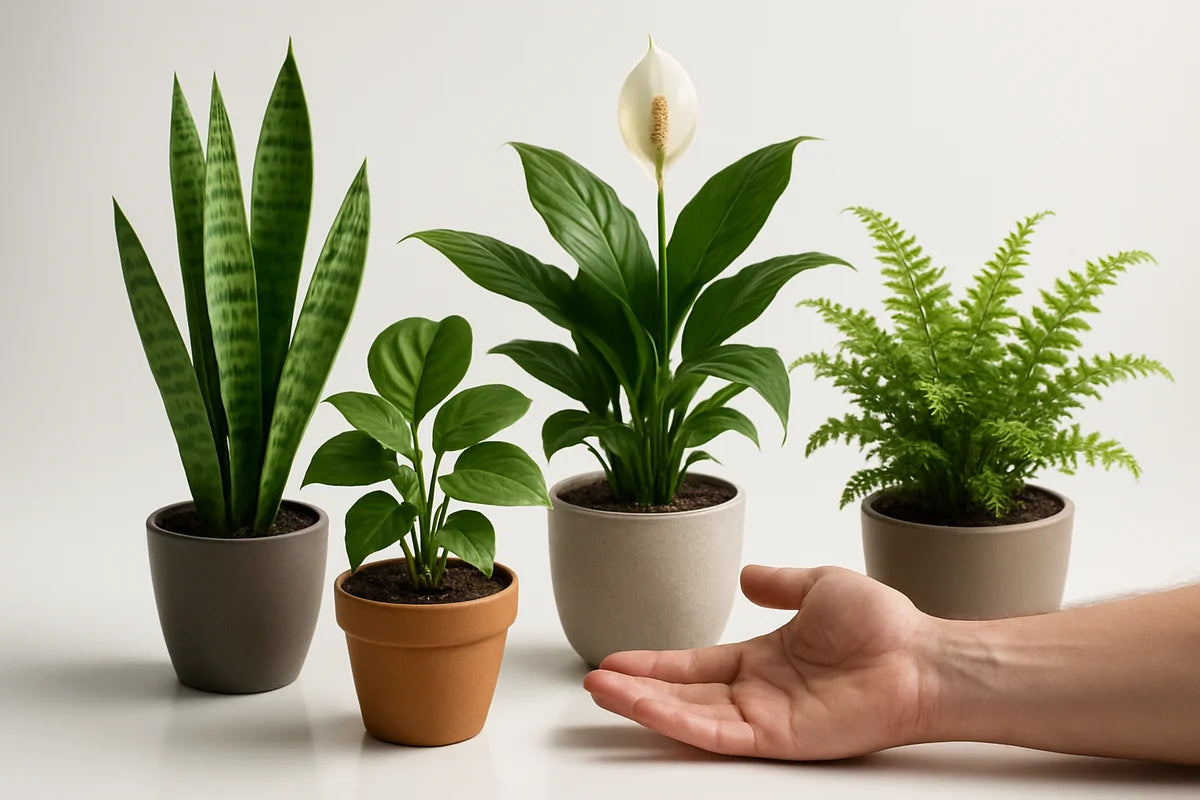
1) Spider plant (Chlorophytum comosum)
Why it ranks high: It’s one of the most cited “air-cleaning” plants and handles a wide range of conditions. It also grows quickly, which means you can turn one plant into several.
- Best for: beginners, bright indirect light, offices
- Care tip: let the top inch of soil dry before watering
- Watch out: leaf tips brown if water has lots of salts or fluoride
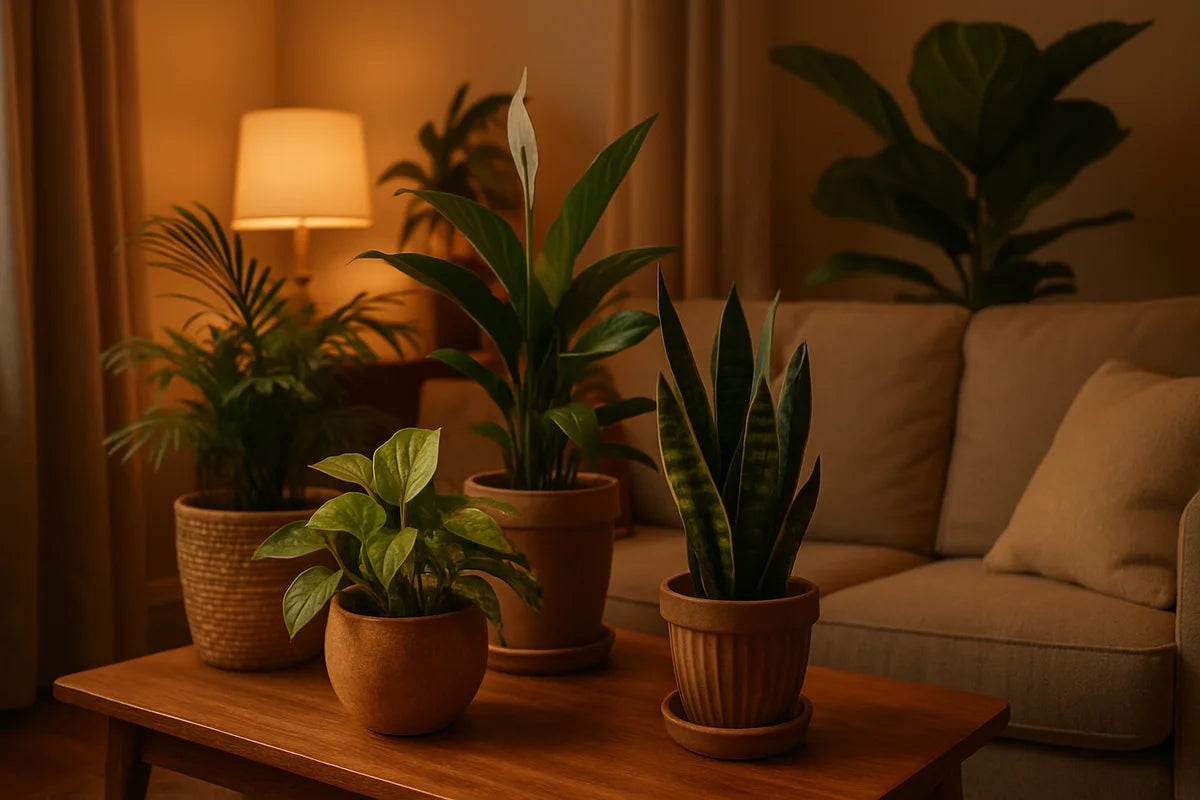
2) Peace lily (Spathiphyllum)
Peace lilies appear often in lists for VOC removal. They also add a lot of leaf area in a small footprint and tolerate medium light.
- Best for: bedrooms and living rooms with medium light
- Care tip: water when leaves start to droop slightly
- Watch out: toxic to pets if chewed
3) Snake plant (Dracaena trifasciata, formerly Sansevieria)
Snake plants are tough. They handle low light and missed waterings. People also like them because they don’t take up much floor space.
- Best for: low-light corners, busy households
- Care tip: don’t overwater; root rot is the main killer
- Watch out: mild toxicity for pets
4) Golden pothos (Epipremnum aureum)
Pothos grows fast and gives you lots of leaf area. It’s a good “volume plant” if you want more green without much fuss.
- Best for: shelves, hanging baskets, bright to medium indirect light
- Care tip: trim vines to keep growth full
- Watch out: toxic to pets
5) Areca palm (Dypsis lutescens)
If you want a plant that can make a room feel fresher, palms help because they add a lot of leaves and can boost humidity. They need more light and more consistent watering than the plants above.
- Best for: bright rooms where you want a larger plant
- Care tip: keep soil lightly moist, not soggy
- Watch out: spider mites in dry air
6) Rubber plant (Ficus elastica)
Rubber plants have big leaves and strong growth in good light. Big leaves mean more surface area, which can help with dust capture and gas exchange.
- Best for: bright indirect light, people who like statement plants
- Care tip: rotate the pot weekly so it grows evenly
- Watch out: sap can irritate skin; toxic to pets
If you want the biggest air quality gain, do this first
If your main goal is cleaner indoor air, plants are not the first tool you should reach for. These steps usually help more, and they work fast.
1) Control the source
- Don’t idle cars in attached garages.
- Use low-VOC paint and let new furniture off-gas in a ventilated space.
- Run a range hood that vents outside when cooking.
Cooking can spike fine particles. A plant won’t keep up with that. Good ventilation will.
2) Ventilate on purpose
Opening windows helps when outdoor air is clean. If outdoor smoke or pollen is high, it can make things worse. To check your local conditions, use a practical tool like the AirNow air quality index before you air out the house.
3) Use a good air cleaner for particles
If you deal with allergies, smoke, pet dander, or cooking particles, a HEPA air purifier can make a noticeable difference. For how to size one and what the numbers mean, see guidance from the Asthma and Allergy Foundation of America.
Plants can still play a role, but think of them as support, not the engine.
How many plants do you need to make a difference?
This is the question nobody likes, because the answer ruins the fantasy.
In typical homes with normal air exchange, you’d need a lot of plant mass to match the cleaning rate of ventilation or a decent purifier. That doesn’t mean “don’t buy plants.” It means you should set a fair goal:
- Use plants to add some humidity, catch a bit of dust, and support well-being.
- Use ventilation and filtration to do the heavy lifting for pollutants.
If you still want a target, aim for what you can keep healthy. A few medium-to-large plants per main room can be a nice, realistic start. Ten dying plants won’t help you. Three thriving plants might.
Where to place plants for the best effect
Placement won’t turn a pothos into a purifier machine, but it can help plants stay healthy and put their leaf area where you spend time.
Best spots
- Near a bright window with indirect light (most air-cleaning picks want this)
- In rooms where you spend hours, like a home office or living room
- A few feet away from heating or cooling vents so leaves don’t dry out
Spots to avoid
- Right above radiators or next to space heaters
- Dark corners where the plant can’t grow (growth matters)
- Behind heavy curtains where air and light both stall
If you want to nudge performance, use gentle airflow. A ceiling fan on low helps move air past leaves. Don’t blast plants with a fan up close or they’ll dry out.
Do air-purifying plants help with mold, dust, and odors?
Mold
Plants don’t remove mold spores in any reliable way. If you have a mold problem, fix moisture first. A dehumidifier, bathroom fan use, and leak repairs matter more. Overwatering plants can also raise humidity and make mold worse, so keep soil care tight.
Dust
Leaves catch dust. That can help a little, but only if you clean the leaves. Otherwise the dust stays in the room and blocks light. A damp cloth once every week or two works well.
Odors
Some odors fade as VOCs break down, but a plant won’t clear a strong smell fast. For odors, ventilation and activated carbon filters usually work better than greenery.
Safer choices if you have pets or kids
Many popular “which plant purifies air the most” picks can upset a pet’s stomach if chewed. If that’s your home, start with safer options and place plants out of reach.
- Spider plant: often listed as non-toxic to cats and dogs, though some pets still nibble it
- Areca palm: generally considered pet-friendly
If you want to check a specific plant before you buy, use a vet-backed database like the ASPCA’s toxic and non-toxic plant list.
A simple plan: pick one “top” plant and build from there
If you want the cleanest, simplest answer to “which plant purifies air the most,” start with a spider plant. Then build a small mix based on your light and your habits.
- Start with one spider plant in bright indirect light.
- Add a snake plant where light is low and you might forget to water.
- Add a pothos if you want fast growth and more leaf area.
- If you have bright light and want a bigger plant, add an areca palm or rubber plant.
- Keep them clean, don’t overwater, and replace plants that struggle.
After that, if you still worry about indoor air, measure it. A low-cost particle sensor can show if cooking or candles spike your air. Then you can fix the real cause instead of guessing.
Conclusion
The spider plant is the closest thing to a simple “winner” when people ask which plant purifies air the most, mostly because it performs well in classic VOC tests and it’s easy to keep alive. Peace lily, snake plant, pothos, areca palm, and rubber plant also make strong, practical picks.
Just keep the promise realistic. Plants can support cleaner-feeling air, but they won’t replace ventilation or a good filter. Treat them as part of a wider plan: cut pollution sources, air out the house when outdoor air is good, use filtration when you need it, and keep your plants healthy so they can do their small but real part.