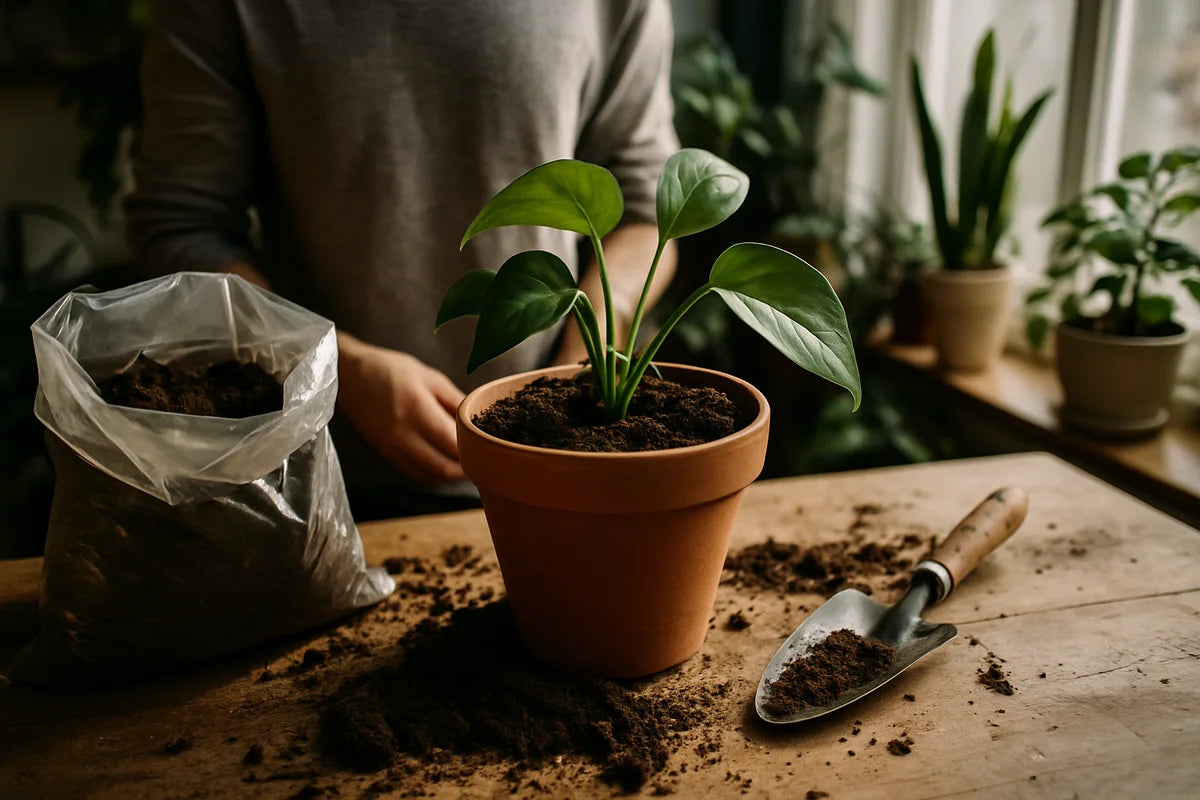
Most “indoor plant problems” aren’t light problems. They’re soil problems. Roots sit in wet muck, pots dry out in a day, leaves yellow, gnats show up, and you end up blaming yourself (or the plant). The fix is simpler than it sounds: use the best soil for indoor plants for your plant type, your pot, and your watering habits.
Indoor plants don’t grow in “dirt.” They grow in a potting mix that manages water, air, and nutrients in a tight space. Once you understand what’s in the bag and why it matters, you can pick a mix that works, or tweak one you already own.
What “best soil for indoor plants” really means

The best soil for indoor plants is not one magic brand. It’s a potting mix that hits four basics:
- Drains well so roots don’t suffocate
- Holds enough moisture so you’re not watering every day
- Stays airy so fine roots can grow
- Has steady nutrients, not a short-lived fertilizer spike
Garden soil fails indoors because it compacts and stays wet. It also brings pests and disease. Potting mixes avoid that by using light, porous materials that keep air pockets in the pot.
What’s inside potting mix (and what each part does)

Potting soil labels can feel vague. So here’s a plain-English map of the common ingredients.
Peat moss or coco coir (the moisture manager)
These hold water and give the mix body. Peat holds a lot but can turn water-repellent if it dries out too much. Coco coir re-wets more easily and comes from coconut husks. Both can work well.
If you’re curious about the peat debate and how it’s harvested, University of Minnesota Extension explains peat-free potting options in clear terms.
Perlite and pumice (the airflow crew)
These white (perlite) or gray (pumice) bits create air pockets and speed drainage. Perlite is very light and can float when you water. Pumice is heavier and stays put, but often costs more.
Orchid bark or pine fines (structure and long-term air)
Bark chunks keep a mix open as it ages. Over time, fine mixes break down and hold more water. Bark slows that shift. It’s a big reason many aroid mixes (monstera, philodendron, pothos) use bark.
Compost, worm castings, or humus (nutrients and life)
These add nutrients and help water spread evenly through the pot. Too much can make a mix heavy, so think “supporting ingredient,” not the main base.
Sand (use with care)
Sand can improve drainage only if the grains are coarse and the mix has structure. Fine sand can do the opposite and make the pot tighter. Most houseplants don’t need sand unless you’re building a cactus mix and you know your grit size.
Wetters, fertilizers, and “moisture control” additives
Many bagged mixes contain wetting agents and slow-release fertilizer. That’s not bad, but it changes how you water and feed. “Moisture control” mixes often hold water longer, which can backfire in low light or cool rooms.
How to choose the right indoor potting soil for your plants

Start with your plant category, then adjust based on your home. A bright window with warm air dries pots fast. A shady corner keeps soil wet longer. The best soil for indoor plants in your place is the one that matches those conditions.
1) For most leafy houseplants (pothos, philodendron, spider plant)
These want a mix that holds moisture but still breathes. A simple, reliable recipe:
- 2 parts all-purpose potting mix
- 1 part perlite or pumice
- 1 part orchid bark (medium chunks)
This blend works because it drains, but the base mix still holds enough water to keep you from hovering with a watering can.
2) For aroids that hate soggy roots (monstera, anthurium, alocasia)
Aroids often look “thirsty” when their roots are actually stressed from low oxygen. Give them a chunkier mix:
- 2 parts orchid bark
- 1 part potting mix or coco coir
- 1 part perlite or pumice
- Optional: a small handful of worm castings
If you keep these in a dim room, go even chunkier. More air, less risk.
3) For succulents and cacti
Succulents don’t want “fast drying.” They want “fast draining.” That means water moves through, and the root zone gets air soon after.
- 1 part cactus/succulent mix
- 1 part pumice or perlite
- Optional: 1/2 part coarse bark or gritty mineral mix
For a deeper look at indoor succulent care and why drainage matters, Clemson Cooperative Extension covers the basics in a way that’s easy to apply.
4) For peace lily, ferns, and moisture lovers
These plants like even moisture, but they still need air. The trick is a mix that holds water without turning to sludge.
- 2 parts potting mix (or peat/coir-based mix)
- 1 part perlite
- Optional: 1 part fine bark or leaf mold
If your home is dry (forced air heat), this type of mix can reduce crispy tips. If your home runs cool or low light, don’t overdo the water-holding parts.
5) For orchids (phalaenopsis and friends)
Most common orchids don’t grow in soil. They grow in bark that drains fast. Use a real orchid mix, not potting soil with “orchid” on the label.
If you want species-specific advice, the American Orchid Society’s care pages break down watering and media choices without fluff.
Match the soil to your pot, not just the plant
The pot changes everything. The best soil for indoor plants in a plastic pot may stay too wet in a glazed ceramic pot, and too dry in terra cotta.
- Terra cotta breathes and dries fast: use slightly more moisture-holding mix (less extra perlite).
- Plastic holds moisture: add more perlite, pumice, or bark.
- Self-watering pots: use an airy mix and be careful with peat-heavy blends that stay wet near the bottom.
Drainage holes matter more than any “drainage layer.” Rocks at the bottom don’t improve drainage in a meaningful way inside a pot. They reduce soil volume and can keep roots sitting in the wet zone. If you want the science behind perched water in containers, the Garden Professors explain why rocks don’t help.
Quick tests to see if your current soil is working
Before you repot everything, test what you have. You can learn a lot in five minutes.
The pour test
- Water the pot fully until water runs out.
- Watch how fast it drains and how heavy the pot stays after 10 minutes.
- If it stays heavy and soggy for days, your mix is too dense for your light level and pot type.
The squeeze test
- Grab a small handful of damp mix.
- Squeeze it.
- If it forms a tight ball and stays that way, you need more air parts (perlite, bark, pumice).
The root check (best done at repot time)
Healthy roots look firm and pale (or tan). If roots look brown, mushy, or smell sour, the soil stayed wet too long. Switch to a chunkier mix and check your watering rhythm.
How to improve a bagged potting mix without starting from scratch
Most store mixes work fine with small tweaks. This is the fastest path to the best soil for indoor plants, especially if you have a mix of plant types.
- To increase drainage: add 20-40% perlite, pumice, or bark.
- To hold moisture longer: add a little coco coir or fine bark, not more compost.
- To reduce fungus gnats: avoid constantly wet soil, top-dress with a thin layer of coarse sand or use sticky traps while the soil dries between waterings.
If you want a practical, no-nonsense overview of common houseplant pests (including fungus gnats), Oregon State University Extension has a solid reference.
Soil pH and nutrients: how much should you worry?
Most houseplants do well in slightly acidic to neutral mixes. You don’t need to chase exact pH numbers unless you grow plants that demand it (some carnivorous plants, some orchids, blueberries indoors, and so on).
Nutrients matter more. Many mixes feed plants for a short time, then fade. Plan on fertilizing during active growth. If you want safe, measured guidance on fertilizers and labels, Penn State Extension’s fertilizer overview helps you read what you’re buying.
Common feeding mistake: “rich soil” for slow growers
Snake plants, ZZ plants, and many succulents grow slowly indoors. A very rich mix can stay wet longer and push soft growth. Use a leaner, faster-draining mix and fertilize lightly when the plant is actively growing.
Repotting tips that protect roots (and your sanity)
Even the best soil for indoor plants won’t help if repotting goes wrong. These steps keep stress low.
- Pick the right pot size: go 1-2 inches wider than the old pot for most plants.
- Don’t “massage” roots that look healthy: loosen only what’s tight or circling.
- Remove rotten roots: cut mushy sections with clean scissors.
- Water once after repotting: then wait until the top inch or two dries (plant-dependent).
If you’re unsure how wet the soil is in the middle of the pot, use a simple wooden skewer test. Push it down, wait a minute, and pull it out. Damp mix will cling. Dry mix won’t. For people who like tools, a basic moisture meter can help you learn your timing, but don’t treat it like a lie detector.
For a practical resource on indoor plant care basics you can cross-check, the Royal Horticultural Society’s houseplant pages offer clear, plant-by-plant guidance.
Common soil mistakes (and what to do instead)
- Using garden soil indoors: use a sterile potting mix and amend it for your plant type.
- Buying the cheapest mix and using it as-is: add perlite or bark so it doesn’t collapse over time.
- Repotting into a pot that’s too big: size up slowly so the mix dries at a steady pace.
- Watering on a schedule: water when the plant and soil ask for it, not the calendar.
- Chasing “drainage” with rocks at the bottom: use a better mix and a pot with a hole.
Where to start this week
If you want better results fast, don’t overhaul your whole plant shelf at once. Pick one plant that struggles the most and treat it like your test case.
- Check the pot: does it have a drainage hole?
- Check the soil: does it stay wet for days? If yes, add air parts at the next repot.
- Choose one upgrade: perlite for general drainage, bark for chunky structure, or coir for easier re-wetting.
- Track your watering: note how many days it takes to dry to your plant’s comfort zone.
Once you dial in the mix for one plant, repeat the same logic across your collection. You’ll waste less money on “miracle soils,” you’ll lose fewer plants, and you’ll start spotting problems early. The best soil for indoor plants isn’t a secret. It’s a match between roots, water, air, and your home.