Kids spend a lot of time at home. They sleep, eat, play, grow, and bring home every germ from school in a five-mile radius. If you want to create a healthy home for kids, you don’t need a perfect house or a shelf full of “clean” products. You need a few smart habits, safer materials, and a home setup that supports good sleep, clean air, safe play, and calmer days.
This article breaks it down into clear steps you can actually use, whether you live in a small apartment or a busy family house.
Start with the basics: air, water, light, and sleep
When people think about a healthy home, they often jump to cleaning. Cleaning matters, but it’s not the foundation. Air, water, light, and sleep shape kids’ health every day.
Improve indoor air without buying a bunch of gadgets
Indoor air can hold smoke, cooking fumes, cleaning sprays, pet dander, mold spores, and tiny particles that irritate lungs. The good news: the simplest fixes work.
- Ventilate when you cook. Use the range hood that vents outside if you have it. If not, crack a window.
- Vacuum with a HEPA filter if you can. If you can’t, vacuum slower and more often in high-traffic areas.
- Control humidity to reduce mold and dust mites. Many homes do best around 30-50% humidity, and the EPA’s indoor air guidance explains why ventilation and moisture control matter.
- Don’t idle cars in an attached garage. Fumes can seep into the house.
- Skip scented sprays and heavy fragrances. “Clean” should smell like nothing.
If someone in your home has asthma or allergies, a portable HEPA air cleaner can help in bedrooms. For a deeper look at what filters can and can’t do, see ASHRAE’s filtration resources.
Make drinking water safer (and less confusing)
Water worries tend to spike after a scary headline. Instead of guessing, start with facts.
- Check your local water quality report. In the US, your water utility publishes an annual Consumer Confidence Report.
- If you use well water, test it at least once a year for bacteria and nitrates, and more often if you’ve had flooding.
- If you live in an older home, learn if you have lead pipes or lead solder. The CDC’s lead and drinking water page outlines practical steps.
Filters can help, but match the filter to the problem. If you’re worried about lead, look for NSF/ANSI 53 certification for lead reduction. If taste and odor bother you, carbon filtration may be enough.
Use light to support better sleep
Sleep affects mood, learning, and immune health. Most kids need more sleep than they get, and light plays a big role.
- Get bright light early in the day. Open blinds at breakfast or take a quick walk.
- Dim lights after dinner. Warm bulbs and lamps help signal “wind down.”
- Keep bedrooms dark at night. If your child needs a night light, choose a dim amber one.
Bedtime routines don’t need to be long. They need to be steady.
Clean smarter: reduce germs without harsh chemicals
To create a healthy home for kids, aim for “clean enough,” not sterile. Kids need exposure to normal dirt. They don’t need sticky floors, mold, or week-old mystery spills.
Focus on high-touch zones
You’ll get better results by cleaning the places hands hit all day.
- Doorknobs, light switches, cabinet pulls
- Remote controls, tablets, game controllers
- Bathroom faucets and toilet handles
- Kitchen counters and the fridge handle
Soap and water handles most routine cleaning. For disinfection, follow label directions and contact times. If you want clear, science-based guidance on when to sanitize and when not to, the CDC’s cleaning and disinfecting advice is a solid reference.
Pick safer products and use them the right way
“Natural” on a label doesn’t guarantee safety. And “strong” doesn’t mean “better.”
- Use fragrance-free products when possible, especially if your child gets headaches, rashes, or wheezing.
- Never mix bleach with ammonia or vinegar.
- Store products up high or locked, even if they have child-resistant caps.
- Use sprays carefully. Sprays float in the air. Liquids on a cloth cut down what kids breathe in.
If you like to check product ingredients, EWG’s cleaning product guide can help you compare options. Treat it as a starting point, not the final word, and always follow the product label.
Make the kitchen a health-support zone (not a stress zone)
Nutrition matters, but so does how food happens in your house. A healthy home for kids supports decent meals most of the time, with room for normal treats.
Set up your space for easy wins
- Put fruit where kids can see it. A bowl on the counter works better than a drawer.
- Keep grab-and-go proteins ready: yogurt, eggs, beans, rotisserie chicken, nut or seed butter (if safe for your child).
- Make water the default drink at home.
- Use smaller bowls for snacks. It helps kids notice fullness without feeling restricted.
Lower risk from food and surfaces
Little kids touch everything, then touch their mouths. Clean food habits protect them without making you anxious.
- Wash hands before meals and after outdoor play.
- Use separate cutting boards for raw meat and produce if you can.
- Don’t leave cooked food out for long stretches, especially in summer.
For simple food safety steps that are easy to follow, FoodSafety.gov’s 4 steps is practical and clear.
Choose kid-safe materials: reduce toxins where it counts
You can’t avoid every chemical. You can reduce the ones that add up. Focus on big sources: dust, smoke, some plastics, and certain home projects.
Keep dust under control
House dust isn’t just dirt. It can hold allergens and traces of chemicals from furniture, flooring, and electronics.
- Damp-dust surfaces instead of dry dusting, which just spreads particles.
- Wash bedding weekly in hot water if allergies are an issue.
- Leave shoes at the door to cut in pesticides and road grime.
Be careful with home projects and older paint
If your home was built before 1978 in the US, lead paint is a real risk. Sanding or scraping can spread lead dust fast. If you plan repairs, read EPA guidance on lead in homes and hire lead-safe certified help when needed.
Use plastics with intention
You don’t need to ban plastic. You do need to stop using it in the ways that raise exposure.
- Don’t microwave food in plastic containers.
- Avoid putting hot liquids in plastic cups or bottles unless they’re designed for heat.
- Choose glass or stainless for leftovers when it’s easy.
Create movement-friendly spaces (even in small homes)
Kids need to move. A healthy home for kids makes movement the easy option, not the “special activity.” You don’t need a playroom. You need a little space and fewer breakables in the way.
Build a “yes” zone
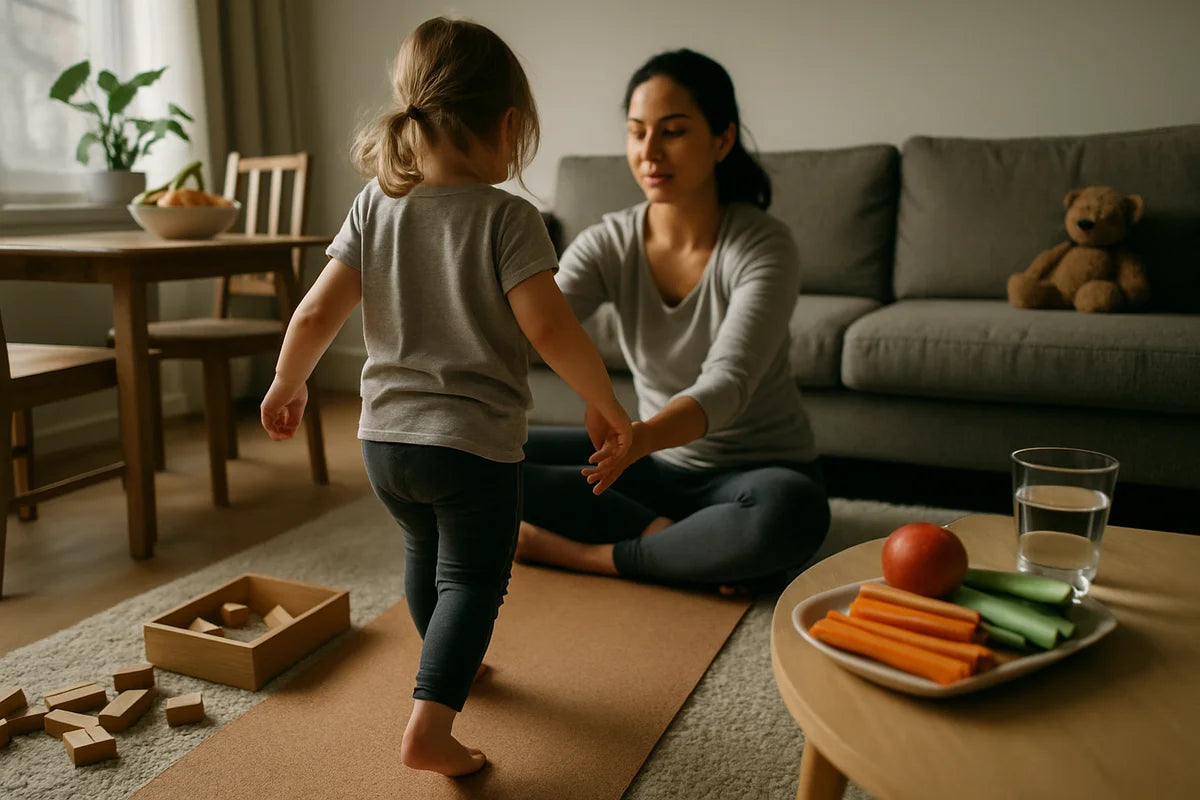
A “yes” zone is a spot where kids can play without you saying “stop” every two minutes.
- Use a washable rug or foam mat for floor play.
- Anchor tall furniture to the wall.
- Store a small set of open-ended toys: blocks, dolls, art supplies, balls.
- Rotate toys instead of buying more. Kids play longer when the choices feel fresh.
Make outdoor time more likely
Want kids outside more? Remove friction.
- Keep shoes, coats, and sunscreen in one grab spot.
- Set a simple rule like “outside after school for 20 minutes” when weather allows.
- Pick one outdoor option you can repeat: a walk, a playground loop, sidewalk chalk.
Support mental health with routines, calm, and connection
Health isn’t only physical. Home stress shows up in sleep, behavior, and family tone. You can’t remove every stressor, but you can shape the home to feel safer and more steady.
Use routines that kids can predict
Routines cut daily battles. They also help kids feel in control.
- Keep mornings simple: clothes ready, backpacks packed, breakfast basics stocked.
- Use a short after-school reset: snack, water, quiet time, then homework or play.
- Keep bedtime steps the same order each night, even if the time shifts.
Lower noise and clutter in key areas
You don’t need a spotless home. But you do need a few calm surfaces. Clutter raises stress for many kids, especially those who get overwhelmed easily.
- Clear one landing zone for school papers and shoes.
- Use bins with simple labels: “cars,” “art,” “dress-up.”
- Do a 5-minute evening reset with a timer. Kids can help, even toddlers.
Make space for feelings without letting them run the house
Kids melt down. That’s normal. A healthy home gives them a safe way through it.
- Create a calm corner: a pillow, a soft toy, headphones, books.
- Name what you see: “You’re mad. You wanted more screen time.”
- Hold the boundary: “We’re done for today. You can be mad.”
Screen time and tech: set guardrails that stick
Screens aren’t going away. The goal is balance and sleep protection, not guilt.
Protect sleep first
- Charge devices outside bedrooms when possible.
- Set a screen cutoff time that fits your family, even if it’s just 30 minutes before bed.
- Use “do not disturb” to cut late-night pings for older kids.
Make screen rules simple and consistent
- Use clear time blocks: “After homework” or “One show before dinner.”
- Keep some screen-free zones, like the dinner table.
- Watch with your kids sometimes. You’ll learn what they’re seeing and what scares them.
If you want a practical framework that’s easy to tailor by age, the American Academy of Pediatrics media guidance is useful.
Home safety checks that prevent the biggest injuries
Most serious home injuries come from falls, poisoning, burns, and drowning. A few checks reduce risk fast.
Do a quick room-by-room sweep
- Anchor dressers and bookshelves to the wall.
- Set water heater temp to a safer level to reduce scalds (often around 120°F).
- Use stove knob covers or turn pot handles inward when cooking.
- Lock up medicines, vitamins, and cannabis products the same way you’d lock up bleach.
- Use outlet covers for toddlers and cord management for blinds.
Don’t skip smoke and carbon monoxide alarms
- Put smoke alarms inside bedrooms and outside sleeping areas.
- Put carbon monoxide alarms near sleeping areas and on each floor if recommended for your setup.
- Test monthly. Replace batteries on a schedule you’ll remember.
Where to start: a simple 7-day plan
If you’re trying to create a healthy home for kids, start small. Momentum beats big plans that never happen.
- Day 1: Open windows for 10 minutes and check your bathroom for leaks or mold.
- Day 2: Set up a shoes-off spot by the door.
- Day 3: Clear one “yes” zone for play and anchor one piece of tall furniture.
- Day 4: Swap one cleaning product for a fragrance-free option and store all cleaners up high.
- Day 5: Make a bedtime routine chart with 3-5 steps.
- Day 6: Add one easy kitchen default (fruit bowl, water pitcher, yogurt in front).
- Day 7: Test smoke and CO alarms and set a calendar reminder for the next test.
Looking ahead: build a home that grows with your kids
Your kids will change fast. The home that works for a toddler won’t fit a middle schooler, and that’s fine. Keep the goal simple: clean air, safe spaces, steady sleep, real food most of the time, and routines that reduce stress. Pick one upgrade each month and treat it like a house habit, not a one-time project.
If you want to go one step further, ask your kids what feels good at home and what doesn’t. You’ll get better answers than you expect, and you’ll build a healthier home for kids that feels like theirs too.