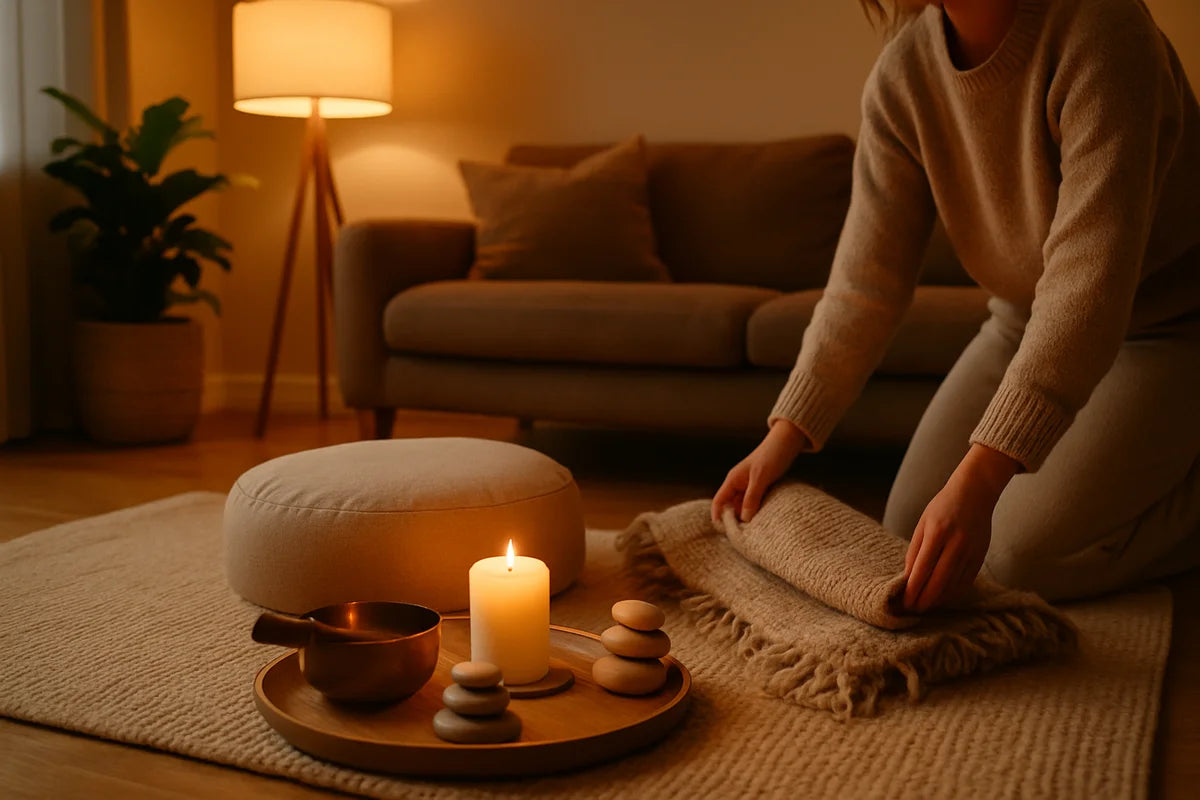
You don’t need a spare room, a perfect routine, or fancy gear to meditate. You need a spot that makes it easy to sit down, breathe, and stay there for a few minutes. A calming meditation space at home does that job. It lowers friction. It signals, “This is where I slow down.”
This article walks you through choosing the right spot, setting it up with simple items, and keeping it pleasant over time. You can do most of it in an afternoon.
Start with the real goal, not the decor

Before you buy anything, decide what you want this space to do for you. Not in a big, life-changing way. In a practical way.
- Do you want a quiet place to sit for 5 minutes before work?
- Do you want a wind-down corner at night?
- Do you want a place where you can breathe when you feel tense?
The best calming meditation space at home matches your real life. If you only meditate in the morning, put it near where you already spend mornings. If you tend to forget, place it where you’ll see it.
Pick one “default” practice
Keep it simple. Choose one thing you’ll do most often in the space, such as:
- Breath counting for 3-10 minutes
- A short guided meditation
- Body scan while lying down
- Silent sitting
Your setup should support that default practice first. Everything else comes second.
Choose a location that makes calm more likely
People get stuck here because they look for the “best” spot. Aim for a good-enough spot you can use every day.
What to look for in a spot
- Low traffic: fewer people walking through reduces distraction
- Manageable noise: you can’t control all sound, but you can avoid the loudest areas
- Comfort: no drafts, no harsh glare, no wobbly floor
- Ease: you can sit down without moving five things first
If you live with others, a calming meditation space at home can still work. You just need clear boundaries and a few practical tweaks.
Small-space options that work
- A corner of your bedroom with a cushion and a small lamp
- A section of your living room with a folding screen
- A closet nook with a cushion and soft light (it’s more common than you think)
- A balcony or patio chair, if weather and privacy allow
If noise is your biggest issue, consider using steady background sound. The NHS sleep guidance mentions calm routines and sound as part of better wind-down habits, and the same idea helps meditation too. You’re building a cue for your nervous system.
Clear the space without turning it into a project
Clutter pulls attention. You don’t need a minimalist home, but your meditation area should feel visually quiet.
A 10-minute reset
- Remove anything you don’t want to see while sitting (mail, laundry, random cords).
- Wipe the surface or floor where you’ll sit.
- Put one “home” item nearby (a small basket, tray, or shelf) so the space stays easy to reset.
This step matters more than buying a new cushion. A clean, simple corner makes a calming meditation space at home feel real right away.
Get the basics right: seat, posture, warmth
If you’re uncomfortable, you’ll spend the whole time thinking about your knees or your back. Comfort isn’t a luxury here. It’s what makes practice possible.
Seating options (choose what you’ll use)
- Floor cushion or zafu: good if your hips sit higher than your knees
- Folded blanket: cheap and adjustable
- Meditation bench: helps if cross-legged sitting hurts
- Chair: often the best choice for beginners and anyone with tight hips
If you use a chair, put both feet flat on the floor and sit toward the front half of the seat. Keep your back long, not stiff.
For clear, practical posture tips, UCLA Health’s guided meditations include simple cues you can follow without overthinking it.
Don’t forget temperature
Meditation can make you feel cooler because you’re still. Keep a throw blanket nearby. If your feet get cold, wear socks. Small discomfort breaks focus fast.
Use lighting that tells your brain to slow down
Harsh overhead light can feel like a spotlight. Soft, steady light supports a calmer mood.
Simple lighting setups
- A warm table lamp with a low-watt bulb
- A salt lamp or soft night light
- Natural light earlier in the day, with a curtain to reduce glare
Skip anything that flickers or changes color often. It can pull your attention and feel restless.
Sound: choose quiet, or choose control
Silence is great when you can get it. When you can’t, control is the next best thing.
Three solid approaches
- Earplugs for quick noise reduction
- Noise-canceling headphones for guided sessions
- Steady background sound (a fan, a white noise app, soft ambient audio)
If you want to understand why steady sound helps some people focus, the Sleep Foundation’s overview of white noise explains how consistent sound can mask sudden changes that grab your attention.
Add one or two calming cues, not ten
This is where many home setups go off track. People treat a meditation space like a shopping list. Keep it light. One or two cues can anchor the habit.
Pick cues that match your senses
- Visual: a plant, a simple piece of art, a candle (unlit is fine too)
- Touch: a soft blanket, a textured cushion cover
- Scent: essential oil diffuser or incense, if you tolerate it
- Sound: a small bell or a gentle timer tone
If you use scent, go mild. Strong smells can distract or trigger headaches. For safety basics on indoor air and scent products, the EPA’s indoor air quality guidance is a good reference, especially if you burn incense or candles often.
A note on candles and incense
If you burn anything, crack a window or keep sessions short. Put the flame on a stable surface. Never leave it unattended. A calming meditation space at home should feel safe, not risky.
Keep your space “ready to sit”
The biggest enemy of meditation is friction. If setting up takes five minutes, you’ll skip it when you’re tired or busy.
Make it one-step simple
- Leave the cushion or chair in place
- Keep a blanket folded nearby
- Store headphones, eye pillow, or timer in a small basket
- Keep a water glass outside the space if you tend to fidget with it
If you live with kids or pets, you can still keep it ready. Use a lidded basket for small items. Choose a heavier cushion that doesn’t slide around. Put delicate objects out of reach.
Use a timer and a plan so you don’t negotiate with yourself
Most people don’t quit meditation because it “doesn’t work.” They quit because they keep deciding what to do each time. Decide once, then repeat.
A simple weekly plan
- Week 1: 3 minutes a day, same time, same spot
- Week 2: 5 minutes a day
- Week 3: 7-10 minutes a day
- Week 4: add one longer session (15-20 minutes) if it feels good
Use a gentle timer so you don’t keep checking the clock. Many people like a basic app timer or a kitchen timer with a soft chime.
If you want guided options that stay practical, Ten Percent Happier offers beginner-friendly meditations that don’t get too abstract. If you prefer a free option with lots of variety, Insight Timer has a huge library and simple timers.
Make the space work for your stress points
A calming meditation space at home shouldn’t only serve your “best self.” It should serve you on rough days.
If you feel anxious
- Face the door if that helps you feel safer
- Keep the light a bit brighter
- Try shorter sessions (2-5 minutes) more often
- Use grounding objects like a smooth stone or a folded blanket in your lap
If you get sleepy
- Sit on a chair instead of lying down
- Meditate earlier in the day
- Open a window for cooler air
- Try eyes-open meditation with a soft gaze
If your mind won’t stop talking
- Use guided meditation or a simple count (inhale 1, exhale 2, up to 10)
- Write a quick “brain dump” list before you sit
- Set a clear end time so you don’t feel trapped
The American Psychological Association has a useful overview of how mindfulness supports stress management, with a focus on real outcomes and limits. See APA’s meditation and mindfulness resource for a grounded take.
Make it personal without making it precious
Your space should feel like yours. That said, if you treat it like a museum, you’ll avoid it. Aim for “inviting” not “perfect.”
Personal touches that stay simple
- A photo that makes you feel steady (not one that stirs up a lot)
- A small plant that’s hard to kill
- A notebook for a one-line reflection after you sit
- A small piece of fabric you associate with calm
If you want a bit of structure for building the habit, James Clear’s habit guide gives a clear framework for cues, routines, and rewards. You can apply it directly to a calming meditation space at home by using the space itself as the cue.
Where to start tonight
If you want results, don’t wait for the weekend. Do a small setup now, then improve it as you go.
- Pick a corner and clear one square meter or one chair’s worth of space.
- Add a seat you can tolerate for 5 minutes.
- Put a blanket nearby.
- Set a 3-minute timer.
- Sit down today, even if it feels awkward.
Over the next week, notice what breaks your focus: cold feet, phone pings, back pain, harsh light. Fix one problem at a time. That’s how a calming meditation space at home becomes a real part of your day, not a nice idea you walk past.