If you have asthma, you’ve probably stood in front of an air purifier box and wondered if it will help you breathe easier or make things worse. The confusion often starts with one feature: the ionizer. Some brands call it “ion,” “plasma,” “bipolar ionization,” or “negative ions.” The promise sounds great. The worry does, too.
So, do air purifiers with ionizers trigger asthma attacks? They can, in the wrong setup, for the wrong person, or in a room with the wrong ventilation. The main issue isn’t the ions themselves. It’s what some ionizers also create: ozone and reactive byproducts that can irritate airways.
Let’s break down what’s real, what’s hype, and how to choose an asthma-safe purifier without guessing.
What an ionizer does in plain English

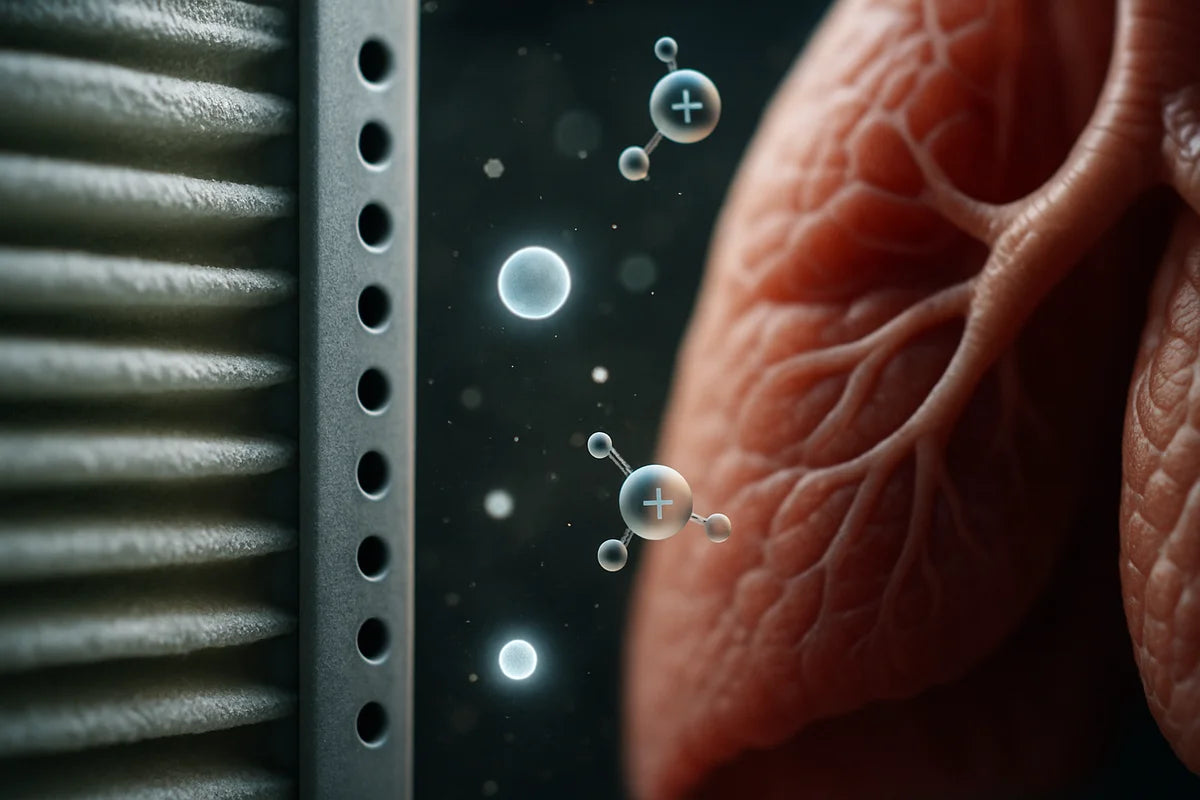
An ionizer releases electrically charged particles (ions) into the air. Those ions attach to tiny particles like dust, smoke, and pollen. Once charged, the particles may:
- Clump together and become heavy enough to fall onto surfaces
- Stick to walls, floors, curtains, and furniture
- Get pulled toward a charged collection plate in some devices
That sounds like “air cleaning,” but there’s a catch. If particles land on your couch, they’re not gone. They can get kicked back up the next time someone sits down, vacuums, or the HVAC turns on.
Ionizer vs HEPA filtration
A true HEPA air purifier works differently. It pulls air through a dense filter and traps particles inside it. You remove the filter and throw the trapped stuff away. That “remove it from the room” step matters for asthma.
The EPA’s guidance on air cleaners explains the basics well, including why filtration-based systems tend to be more dependable for particle removal.
Why ionizers can be a problem for asthma

Asthma airways get twitchy around irritants. The big concern with many ionizers is ozone. Ozone is a reactive gas that can inflame airways and worsen asthma symptoms, even at low levels.
Some products generate ozone on purpose (as “ozone generators”). Others produce it as a byproduct of ionization, even if the label doesn’t highlight that.
Ozone and asthma don’t mix
Ozone can cause coughing, chest tightness, and shortness of breath. For someone with asthma, that can tip into an attack. The American Lung Association warns against ozone generators for indoor air cleaning and explains why people with lung disease face higher risk.
This doesn’t mean every ionizer will trigger asthma attacks. It means the feature raises the odds of exposure to an airway irritant, especially in smaller rooms or poorly ventilated homes.
Hidden issue number two: chemical byproducts
Indoor air contains more than dust. It also contains gases from cleaners, paint, cooking, fragrances, and building materials (VOCs). When ionizers or “plasma” devices run, they can drive reactions that create secondary pollutants, like formaldehyde or ultrafine particles, depending on what’s in the air.
You won’t smell most of these. Your lungs just feel them.
When an ionizer is more likely to trigger symptoms

Asthma triggers vary. Still, certain patterns show up again and again when people report irritation after turning on an ionizing air purifier.
1) The room is small and the unit runs nonstop
The smaller the room, the easier it is for ozone or byproducts to build up. Bedrooms are a common trouble spot because people run purifiers all night with the door closed.
2) You’re using it near your face
Desk purifiers, nightstand units, and “personal space” ionizers can put emissions right in your breathing zone. Even low output becomes more meaningful when it’s inches away.
3) The home has a lot of VOC sources
Recent painting, new furniture, scented products, heavy cleaning sprays, and hobby supplies can increase VOCs. That raises the chance of secondary chemistry once an ionizer runs.
4) You’re sensitive to irritants, not just allergens
Some people react more to irritants (smoke, fragrance, ozone) than to allergens (pollen, pet dander). If that’s you, an ionizer feature may be a bad bet.
Do all ionizers produce ozone?
No. Output varies by design, quality, and settings. Some devices stay low enough to meet certain certification limits, while others don’t. The problem is that you often can’t tell from marketing language alone.
A practical move is to look for independent testing and clear emission limits. One resource many buyers use is the California Air Resources Board (CARB) list of certified air cleaners, which focuses on ozone emissions. If a model appears there, it has met CARB’s emission requirements.
Also look for units where you can turn the ionizer off. “Optional ionizer” is not the same as “no ionizer,” but it gives you control.
How to tell if your purifier is making your asthma worse
Asthma symptoms can flare for many reasons, so don’t assume the purifier is the cause. But if symptoms track closely with using the ionizer, pay attention.
Common signs the ionizer feature isn’t agreeing with you
- Your throat feels scratchy or you start coughing soon after it turns on
- You feel chest tightness that improves when you leave the room
- Symptoms worsen overnight when the purifier runs in the bedroom
- You notice a sharp “electric” smell (often linked with ozone or reactive air chemistry)
A simple, safe troubleshooting test
- Turn off the ionizer feature (keep the fan and filtration running, if possible).
- Use the purifier that way for 3-7 days.
- Track symptoms, rescue inhaler use, and sleep quality.
- If symptoms improve, leave the ionizer off and reassess your setup.
If your unit doesn’t allow you to disable ionization, that’s useful information. It may not be a good match for an asthma household.
What to buy instead if you have asthma
If your goal is fewer asthma symptoms, you want reliable particle removal with low irritation risk.
Start with a true HEPA purifier sized for your room
Look for “true HEPA” (or HEPA H13/H14 if the brand states it clearly). Then size it properly using CADR (Clean Air Delivery Rate). CADR is more useful than vague claims like “covers 1,000 square feet.”
A quick rule: bigger CADR is better, and you can run a bigger unit at a lower (quieter) speed.
For help interpreting CADR and choosing the right size, AHAM’s CADR guidance is a solid consumer-friendly reference.
Choose activated carbon if odors and fumes bother you
HEPA handles particles, not gases. If cooking smells, smoke, or fragrance triggers your asthma, you’ll want activated carbon (or another adsorbent media). The more carbon by weight, the better it tends to work. Thin “carbon sheets” help a little but saturate fast.
Avoid “ozone,” “plasma,” and vague “active air” claims
Marketing often bundles ionizers with other “active” tech. If you see terms like:
- ozone
- plasma wave
- photocatalytic oxidation (PCO)
- bipolar ionization
- hydroxyls
Pause and look for third-party testing that shows low or no ozone and no harmful byproducts. If the brand can’t provide clear test results, keep shopping.
How to use an air purifier without stirring up asthma
Even the best purifier can disappoint if you use it the wrong way. Small changes can make it work better and feel better.
Place it where air can move
- Keep at least 6-12 inches of space around the unit.
- Don’t shove it behind curtains or furniture.
- In bedrooms, keep it a few feet from the head of the bed, not right next to your pillow.
Run it steady, not just during flare-ups
Purifiers work best when they keep particle levels low all day. If you only run it after symptoms start, you’re chasing the problem.
Change filters on schedule
A clogged filter reduces airflow and cleaning power. Set a calendar reminder and replace filters based on hours used, not wishful thinking. If wildfire smoke or heavy pet dander is common in your home, you may need to change filters sooner.
Pair it with source control
Purifiers help, but they don’t replace basics that matter for asthma:
- Fix water leaks fast to reduce mold growth.
- Use a vent hood that exhausts outdoors when cooking.
- Vacuum with a HEPA vacuum if dust is a trigger.
- Keep fragrance products out of bedrooms.
If you want a deeper look at indoor triggers and home steps that help, NHLBI’s asthma resources are a reliable medical starting point.
Special cases people ask about
What if the purifier says “ozone-free”?
That claim can mean different things. Some brands mean “no ozone generator mode.” Others mean “below a certain limit.” Look for independent certification or test reports, and check whether the ionizer can be switched off.
Can an ionizer help with smoke?
Smoke contains tiny particles and gases. Ionizers may charge particles, but they don’t reliably remove them from the room the way a HEPA filter does. For smoke, a HEPA purifier with substantial activated carbon usually works better. If you want a practical walkthrough for smoke events, AirNow’s wildfire smoke guidance has clear steps you can use at home.
What about “ionic” purifiers with no fan?
Many of these have low airflow, which limits how much air they clean. Some can also produce more ozone relative to what they actually remove. For asthma, low-airflow devices often disappoint, even when they don’t cause irritation.
If you already own an ionizing air purifier
You don’t always need to throw it out. You do need to use it in a way that lowers risk.
Safer ways to use it
- Turn off the ionizer feature and run filtration only, if your unit allows it.
- Don’t run ionization in bedrooms, nurseries, or small closed rooms.
- Increase ventilation when you run it, like cracking a window a bit if outdoor air is clean.
- Wipe surfaces more often since charged particles can settle on furniture and floors.
If you want a hands-on way to check whether your changes are working, consider using an indoor air quality monitor that tracks fine particles (PM2.5). Sites like IQAir’s monitor guides can help you understand what a monitor can and can’t tell you before you buy.
Where to start if you’re shopping right now
If you want the short version that still protects your lungs, here’s a simple path:
- Choose a true HEPA purifier with CADR that matches your room size.
- Skip built-in ionizers unless you can disable them and you have a reason to use them.
- If odors, smoke, or fumes trigger you, pick a unit with a real carbon bed, not a thin sheet.
- Place it with good airflow and run it daily.
- Track symptoms for two weeks and adjust.
Looking ahead
Air purifier marketing will keep pushing “active” tech because it sounds advanced. Asthma care tends to move the other way: reduce exposure to proven irritants, remove particles with filters, and keep the air steady and predictable.
If you suspect an air purifier with ionizers triggers asthma attacks in your home, treat it like any other trigger. Change one variable, watch what happens, and choose the setup that gives you calmer breathing day after day. If symptoms persist or worsen, bring the details to your clinician, including the model you use, whether ionization is on, and where the unit runs. That kind of real-world data helps you make safer choices fast.