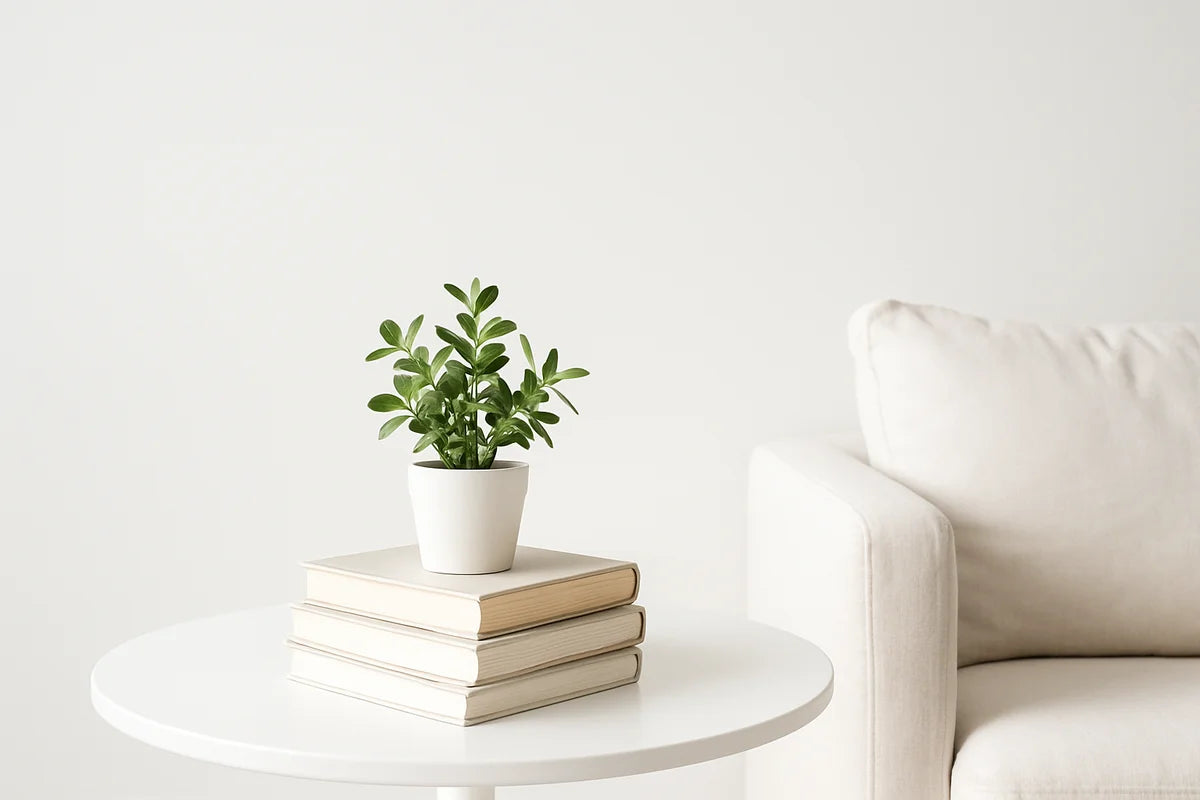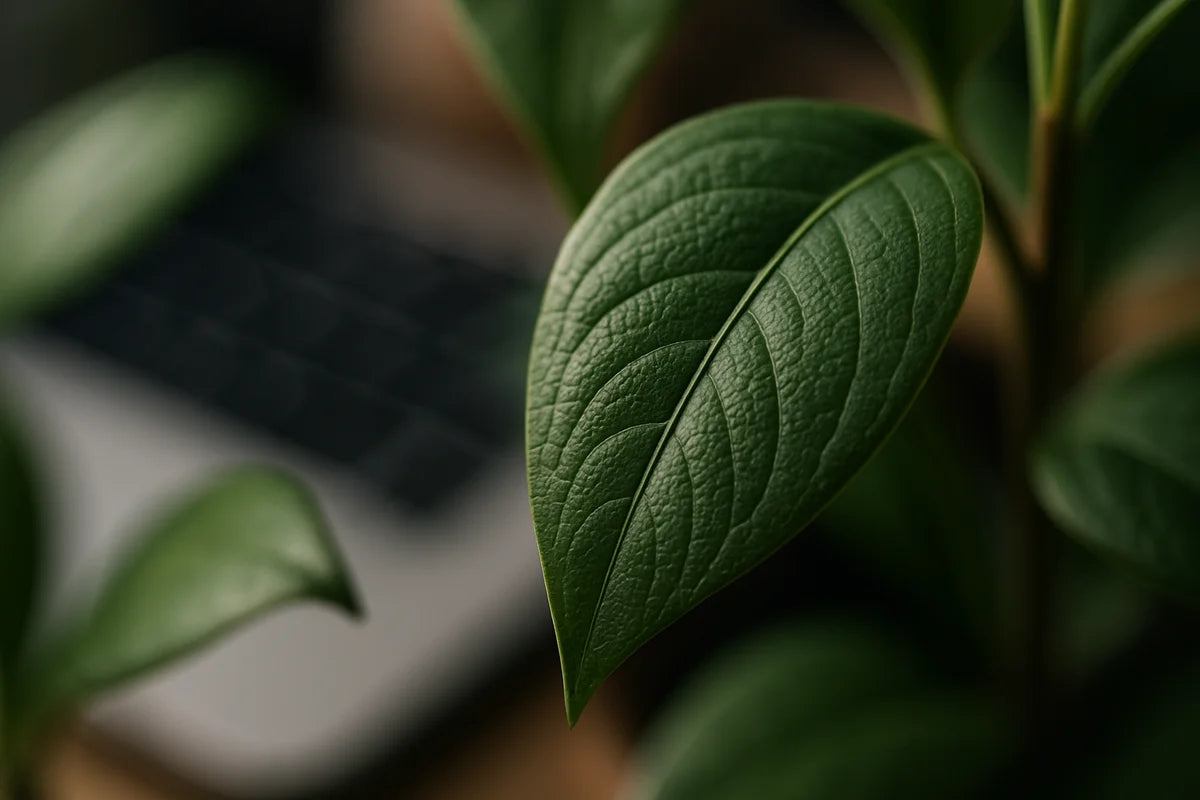
When your brain feels scattered, you usually blame your inbox, your phone, or your calendar. But your workspace matters too. A bare desk, harsh light, and stale air can make it harder to settle into deep work. Home office plants for better focus won’t fix everything, but they can nudge your space in the right direction: calmer, fresher, and easier to stay with one task.
This article breaks down which plants work well in real homes, how to place them for fewer distractions, and how to care for them without turning plant care into a second job.
Do plants actually help you focus?
Plants help focus in a few practical ways. First, they can make a space feel less stark, which lowers tension for many people. Second, some plants can support better indoor air, especially when you also ventilate and control humidity. Third, plants give your eyes a softer “rest point” when you look up from a screen.
Research on plants and productivity is mixed, but many studies point in the same direction: people often feel better in rooms with greenery. If you want a quick overview of how indoor air and ventilation affect comfort, the EPA’s indoor air quality guidance gives a clear baseline. And if you’re curious about how your indoor environment can affect thinking and decision-making, Harvard’s work on healthy buildings is a solid starting point, including their research summaries at Harvard T.H. Chan School of Public Health.
Here’s the most useful way to think about it: home office plants for better focus work best as part of a simple system. Good light, decent air flow, fewer visual distractions, and a plant or two that you can keep alive.
How to choose the right home office plants for better focus
Forget the “best plant” lists that treat every home the same. Choose based on your space and your habits.
Start with your light, not your wishlist
Light decides everything. A plant that needs bright light will limp along in a dim corner and waste your time.
- Bright, indirect light: near a window with sheer curtains or a few feet back from a sunny window
- Medium light: a room with windows where you can read comfortably during the day
- Low light: you need lamps on most of the day (few plants truly thrive here)
If you’re unsure, take a photo at your desk at midday. If it looks dim on camera, it’s probably low light.
Pick plants that match your attention span
If you want plants for focus, don’t choose plants that demand constant attention. Low-drama plants reduce guilt and decision fatigue.
- If you forget to water: pick drought-tolerant plants (snake plant, ZZ plant, pothos)
- If you overwater: pick plants that forgive mistakes (pothos, spider plant) and use pots with drainage
- If you travel: use self-watering setups or group plants and water deeply before you go
Decide what you want the plant to do
Different plants solve different problems:
- Reduce “sterile office” vibes: medium to large leafy plants
- Add a soft visual break near your screen: small desktop plants
- Make the room feel brighter: upright plants with lighter leaves
- Keep care simple: tough plants that tolerate missed waterings
10 home office plants for better focus (and why they work)
These plants show up in so many home offices for one reason: they’re forgiving. The goal is steady greenery, not a high-maintenance hobby.
1) Snake plant (Sansevieria)
Snake plants handle low to medium light and missed waterings. Their upright shape also looks tidy, which helps if visual clutter distracts you. Let the soil dry out between waterings.
2) ZZ plant (Zamioculcas zamiifolia)
If you want a plant you can almost ignore, start here. ZZ plants tolerate low light and dry soil. Water sparingly and don’t let it sit in soggy soil.
3) Pothos (Epipremnum aureum)
Pothos grows fast, looks friendly, and gives you a simple win when you see new leaves. It does well in medium light but tolerates low light. Water when the top inch of soil dries.
4) Spider plant (Chlorophytum comosum)
Spider plants handle beginner mistakes and brighten a shelf or cabinet. They also produce “pups” you can propagate, which can be a fun, low-stakes break between tasks.
5) Peace lily (Spathiphyllum)
Peace lilies like medium light and consistent watering. They’re great if you’re someone who remembers routines. The leaves droop when it’s thirsty, which acts like a built-in reminder.
6) Rubber plant (Ficus elastica)
Rubber plants bring a clean, bold look without being fussy. Give it bright, indirect light for the best growth. Let the top layer of soil dry before watering again.
7) Chinese evergreen (Aglaonema)
This is a solid “office plant” for a reason. It tolerates lower light and doesn’t demand perfect care. Keep it out of harsh direct sun.
8) Aloe vera
Aloe is simple if you have bright light. It likes to dry out fully between waterings. Put it on a sunny sill and ignore it most of the time.
9) Philodendron (heartleaf types)
Like pothos, heartleaf philodendron stays easy and forgiving. It trails nicely off a shelf, which can soften a workspace without taking up desk space.
10) Herbs you’ll actually use (mint, basil, rosemary)
Herbs can support focus in a different way: they add scent and a tiny “ritual” (pinch a leaf, make tea, add to lunch). Use them only if you have strong light. Mint spreads aggressively, so keep it in its own pot.
Where to put plants in a home office (so they help, not distract)
Placement matters more than people think. A plant in the wrong spot becomes clutter. A plant in the right spot becomes part of the room.
Use plants as “soft boundaries”
If you work in a shared room, try one taller plant on the edge of your desk zone. It can create a gentle divide without blocking light.
- Best picks: rubber plant, snake plant, larger pothos on a stand
- Place it: beside your desk or slightly behind your chair
Keep your main sightline clean
If you stare past your monitor and see a messy shelf, your brain keeps checking it. Put a plant there instead. You’ll still glance up, but you’ll land on something calm.
- Best picks: peace lily, Chinese evergreen, spider plant
- Place it: on a shelf or cabinet in your “look up” line
Don’t crowd your keyboard
A tiny plant near your hands can feel nice, until it steals space and collects dust. If your desk is small, move plants off the work surface.
- Use: wall shelves, a windowsill, or a slim plant stand
- Keep the desk: one small pot max, pushed to a corner
Match the plant to the light you already have
If your best light is at the window, that’s where the plant should live. Don’t force it to “decorate” a dark corner. If you need help judging indoor light and plant needs, the University of Minnesota Extension houseplant resources explain care basics in plain language.
Care routines that won’t steal your time
The easiest way to kill a plant is to fuss over it. The easiest way to keep one alive is to do a few small things on a schedule you can stick to.
Use the “water check” rule
Before you water, check the soil with your finger.
- Stick your finger about an inch into the soil.
- If it feels damp, wait.
- If it feels dry, water slowly until water drains out the bottom.
This simple check prevents the most common mistake: overwatering.
Always use drainage (or create it)
Pots without drainage holes make plant care harder. If you love a pot with no hole, use it as a cover pot.
- Keep the plant in a plastic nursery pot with holes.
- Set it inside the prettier outer pot.
- After watering, empty any pooled water.
For practical pot and watering guidance, the Royal Horticultural Society’s houseplant advice is clear and reliable.
Put plant care on a low-stakes timer
Pick one day each week for a two-minute scan.
- Check soil moisture on your thirstier plants.
- Remove dead leaves.
- Rotate pots a quarter turn if they lean toward light.
If you want a simple reminder system, a plant tracking app can help, but don’t turn it into homework. If you like that kind of structure, The Sill’s plant care guides also work as quick references when you forget what a plant needs.
Focus-friendly setup ideas (based on your workspace)
If you work at a small desk
- Choose one trailing plant on a shelf: pothos or philodendron.
- Add one slim floor plant: snake plant.
- Keep the desk surface clear for your tools.
If you work near a bright window
- Try aloe or a small herb pot on the sill.
- Add a rubber plant a few feet back from direct sun.
- Use sheer curtains if leaves scorch.
If you work in a dim room
- Pick tough plants: ZZ plant, snake plant, Chinese evergreen.
- Consider a basic grow light if you want more choices.
- Don’t buy five plants at once. Start with one that can handle it.
Common mistakes that make plants distract you
Home office plants for better focus should lower friction, not add it. These mistakes do the opposite.
- Too many small pots: lots of tiny items read as clutter.
- Plants that shed or drop leaves often: you’ll clean more than you want.
- Fussy plants that demand perfect humidity: they pull your attention when they struggle.
- Watering on a strict calendar: soil dries at different speeds, so you’ll overwater.
- Blocking your best light with plants: you need light for your work too.
Pets, allergies, and other real-life limits
If you have pets, check safety before you buy. Many common houseplants can upset cats and dogs if they chew them. If allergies bother you, avoid plants with strong scents or lots of pollen, and keep the soil surface clean. Mold can grow in constantly wet soil, which is another reason to avoid overwatering.
If you want to go deeper on ventilation and indoor pollutants, the National Institute of Environmental Health Sciences overview of indoor air is a helpful read.
Where to start (a simple plan for the next week)
If you want home office plants for better focus, start small and make it easy to win.
- Pick one plant that matches your light: snake plant or ZZ for lower light, pothos for medium light, aloe for bright light.
- Put it where you’ll see it when you look up from your screen, but where it won’t crowd your hands.
- Use a pot with drainage and a saucer.
- Do one weekly check-in: water only if the soil feels dry an inch down.
- After two weeks, add a second plant only if the first one looks stable.
Over time, you’ll learn what your space supports. That’s when plants stop feeling like decor and start feeling like part of your work setup. Add one change at a time, keep the routine light, and let your office grow into a place where focus comes easier.