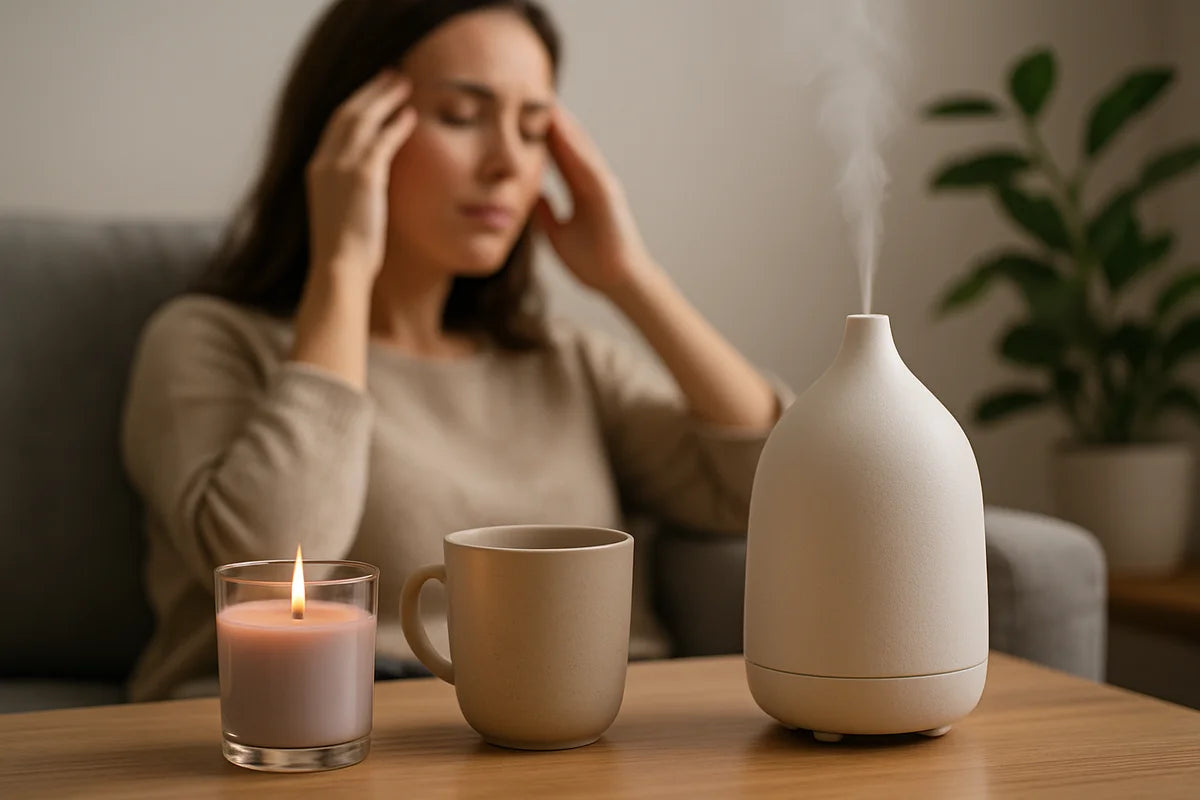
You walk in the door and your body is still braced for the day. Your jaw feels tight. Your phone keeps buzzing. Even if nothing “bad” is happening now, your system hasn’t gotten the memo.
Enhancing indoor well-being after a stressful day isn’t about perfect routines or pricey gear. It’s about a few smart cues that tell your brain and body, “You’re safe. You can shift gears.” The best part: small changes stack fast.
Start by lowering the “noise” your senses take in

Stress isn’t only in your head. It shows up as sensory overload: harsh light, clutter, stale air, constant sound, and screens shouting for attention. If you want to enhance indoor well-being after a stressful day, start by making your space feel less demanding.
Do a 3-minute reset: light, sound, and phone
- Change the lighting: switch off overhead lights and use a lamp if you can.
- Lower sound: turn off background news, even if you “aren’t listening.”
- Silence your phone for 20-30 minutes (or put it in another room while you reset).
This works because your brain reads bright light and constant noise as “stay alert.” If you need a science-backed reason to prioritize light timing, Sleep Foundation’s overview on light and sleep explains how light cues affect your body clock and wind-down.
Try a “one surface” rule for clutter
Clutter is sneaky. You might not think it bothers you, but your eyes keep landing on it. Pick one surface (kitchen counter, coffee table, desk) and clear only that. Don’t aim for spotless. Aim for “my eyes can rest.”
If you want to make this a habit, you can keep a small basket near the entry to catch keys, mail, and loose items. That one tweak prevents tomorrow’s mess from forming tonight.
Fix the air first: it’s the fastest mood upgrade most people miss

Indoor well-being depends on indoor air. If your home feels stuffy, too dry, or full of cooking smells, your body may stay on edge. Fresh air and good filtration can change how you feel in minutes.
Ventilate with purpose (even in winter)
Crack two windows for 5-10 minutes to create cross-ventilation. If that’s not possible, run the bathroom fan or kitchen hood for a short burst. According to the EPA’s indoor air quality guidance, indoor air can hold more pollutants than outdoor air, especially in tight homes.
- If you cooked: run the hood fan during and for a few minutes after.
- If you cleaned: ventilate to clear fragrances and fumes.
- If you live near traffic or wildfire smoke: keep windows closed and focus on filtration instead.
Use filtration and humidity to make breathing feel easy
If you have allergies or pets, a HEPA air purifier can help reduce airborne particles. For practical, product-agnostic guidance, Wirecutter’s air purifier guide explains what matters (CADR, room size, filter cost) without turning it into a sales pitch.
Humidity matters too. Very dry air can irritate your nose and throat, which can make you feel “off” and restless. Aim for comfort, not perfection. Many people feel best around 30-50% indoor humidity.
If you want a clear reference point, CDC healthy housing resources cover basics that affect indoor comfort, including dampness and air issues.
Give your nervous system a clear “work is over” signal

If you go straight from work stress to dinner stress to screen stress, your body never downshifts. The fix is simple: create a short transition ritual. It doesn’t need candles and soft music. It needs consistency.
Pick one physical cue you can repeat every day
- Change clothes as soon as you get home.
- Wash your hands and face with warm water.
- Make a hot drink and sit down for five minutes before doing anything else.
These cues work because they mark a boundary. Your brain likes clear lines. If you want to enhance indoor well-being after a stressful day, boundaries beat willpower.
Try a 2-minute breathing pattern that’s hard to overthink
You don’t need complicated breathwork. Try this:
- Inhale through your nose for 4 seconds.
- Exhale slowly for 6-8 seconds.
- Repeat for 2 minutes.
Longer exhales tend to feel calming because they nudge your body toward “rest and digest.” If breathing practices make you anxious, skip them and use movement instead. The goal is downshift, not “do it right.”
Use movement to drain stress, not “get a workout in”
Stress loads your body with fuel. If you don’t spend some of it, you can feel jittery or wired at night. The trick is choosing movement that matches your state.
If you feel wired: choose slow, steady movement
- Take a 10-15 minute easy walk, even if it’s just up and down the hall or stairs.
- Do a gentle mobility flow: neck rolls, shoulder circles, hip openers.
- Try legs-up-the-wall for 3-5 minutes if it feels good.
If you want a simple mobility starting point, Harvard Health’s guide to stretching explains why light stretching can improve comfort and range of motion without turning it into a fitness contest.
If you feel flat: use short bursts to reset your mood
Some days stress leaves you drained, not wired. In that case, a little intensity can help:
- Do 1-3 rounds of: 10 bodyweight squats, 10 wall push-ups, 30 seconds of marching in place.
- Put on one song and move until it ends.
Keep it short. You want “better,” not “destroyed.”
Eat and drink in a way that steadies you
Food affects indoor well-being more than people admit, especially after stress. When you’re tense, you may skip meals, graze, or chase comfort foods. None of that makes you a failure. It just means you need a plan that’s easy.
Start with hydration and a real snack
If dinner is an hour away, don’t white-knuckle it. Have water and a snack with protein and fiber:
- Greek yogurt with fruit
- Cheese and an apple
- Hummus and crackers
- Peanut butter on toast
This reduces the odds you’ll eat from stress instead of hunger. It also makes it easier to cook (or choose) something sane.
Make dinner “low decision” on weeknights
Decision fatigue is real. If you want to enhance indoor well-being after a stressful day, reduce the number of choices you face at night.
- Keep two go-to meals you can make in 15 minutes.
- Use shortcuts: bagged salad, rotisserie chicken, frozen veg, microwave rice.
- Make tomorrow’s lunch while you wait for water to boil.
You’re not aiming for gourmet. You’re aiming for steady blood sugar and less chaos.
Set up your space for recovery: comfort beats aesthetics
Your home doesn’t need to look like a magazine. It needs to support recovery. A few practical tweaks can make your evenings feel easier.
Create one “soft corner”
Pick one spot that signals rest. It can be a chair, a side of the couch, or a bed setup. Add only what helps:
- A throw blanket you actually like touching
- A lamp with warm light
- A small table so you don’t balance everything on your lap
- A charger nearby so you don’t scroll while hunting for cables
This sounds simple because it is. Your body relaxes faster when comfort is easy to access.
Keep temperature and bedding “boringly good”
Sleep quality drives indoor well-being. If you overheat at night, try lighter bedding or a cooler room. If you wake up cold, add one layer and stop fighting it.
If you want a practical checklist for a calmer sleep setup, the National Heart, Lung, and Blood Institute’s sleep resources cover what sleep loss does to your health and why routines matter.
Use screens on purpose (or they’ll use you)
Screens can help you unwind, but they can also keep you stuck in alert mode. The fix isn’t “never use your phone.” It’s using it with a plan.
Try the “one thing” rule
Before you open an app, name what you’re doing:
- Text one person back
- Watch one episode
- Order groceries
Then stop. If you can’t stop, that’s a sign you need a stronger boundary, like moving your phone to a different room during dinner.
Swap doomscrolling for inputs that calm you
- A short comedy clip
- A simple game that doesn’t spike adrenaline
- An audiobook while you tidy one surface
This isn’t about “productive” downtime. It’s about choosing inputs that don’t pour more stress into your system.
Make your evenings feel connected, not isolated
Stress often shrinks your world. You go quiet. You pull back. A small dose of connection can boost indoor well-being fast, even if you live alone.
Use a 10-minute check-in
- If you live with others: ask one real question, then listen.
- If you live alone: send one voice note to a friend or family member.
- If people feel like too much: spend time with a pet, or step outside for two minutes and greet a neighbor.
Keep it light. Connection should feel like relief, not another task.
Know when stress crosses a line
If your stress feels nonstop, or you notice panic, numbness, or sleep that keeps falling apart, it may help to talk to a pro. If you’re in the US, the 988 Suicide and Crisis Lifeline is a free, practical resource for immediate support.
Where to start tonight
If all of this sounds like too much, shrink it. Pick a three-step plan you can do in under 15 minutes. Here’s a solid default:
- Ventilate or filter: open a window for 5 minutes or turn on your purifier.
- Change your light: switch to warm, lower lighting.
- Move for 5 minutes: a slow walk, a stretch, or a few squats.
Tomorrow, add one more layer: clear one surface, set a phone boundary, or build a low-decision dinner. Indoor well-being doesn’t come from one perfect night. It comes from small cues you repeat until your home starts to feel like recovery the moment you step inside.