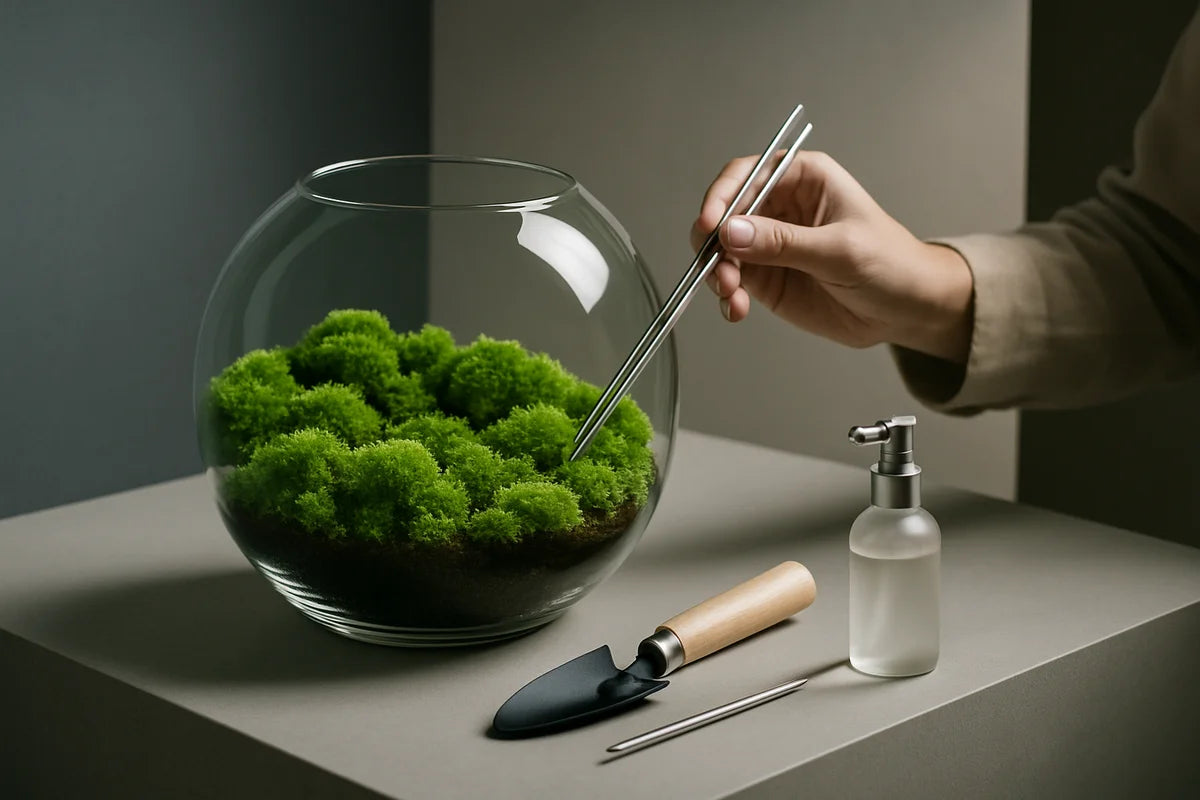
A moss terrarium looks like a tiny forest that never needs mowing. But it does need care. The good news is that moss is simple once you understand what it wants: steady moisture, soft light, clean glass, and air that doesn’t swing from swamp to desert.
This moss terrarium maintenance guide walks you through daily checks, weekly habits, and seasonal fixes. You’ll learn how to water without flooding, when to vent the lid, how to stop mold, and what to do when moss turns brown.
Know what kind of terrarium you have first

Maintenance depends on one big choice: sealed or open.
Sealed (closed) moss terrariums
These run on a mini water cycle. Water evaporates, condenses on the glass, and falls back down. If it’s balanced, you’ll water rarely. If it’s not, you’ll fight fog, rot, or dryness.
Open moss terrariums
These dry out faster and need more watering, but they get more fresh air. If your home runs warm or dry, open setups can be harder unless you stay on top of moisture.
If you’re not sure which you have, ask one question: does it have a lid that stays on most of the time? If yes, treat it like a closed terrarium.
Light management that keeps moss green
Moss doesn’t want harsh sun. It wants bright, soft light for many hours. Too little light leads to weak, stretched growth and algae. Too much light bakes the surface and turns it pale or brown.
Best indoor light for most moss terrariums
- Bright indirect light near an east or north window
- A few feet back from a sunny south or west window (behind a sheer curtain helps)
- A small LED grow light on a timer (8-12 hours is a solid start)
Watch the glass. If you see hot spots or the jar feels warm, move it back from the window. Sun through glass can overheat a terrarium fast.
If you want a deeper read on using grow lights indoors, the extension guides from University of Minnesota Extension on indoor plant lighting explain light levels in plain terms.
Watering moss without creating a swamp
Most moss problems come from watering. People either drown it or let it crisp up. Moss likes even moisture, not puddles.
Use the right water
Tap water can work, but hard water leaves white mineral marks on glass and can stress some moss over time. If your tap water is very hard, switch to rainwater, distilled, or reverse osmosis water. The USGS explanation of water hardness helps you understand what “hard” means and why it leaves residue.
Best tools for control
- A small spray bottle with a fine mist
- A pipette or syringe for targeted watering
- A turkey baster for removing excess water
How to water a closed moss terrarium
- Check the glass in the morning. A light haze or a few drops is fine. Heavy fog all day means it’s too wet.
- Touch the moss. It should feel cool and slightly springy, not crunchy and not floating.
- Mist lightly if the moss feels dry and you see no condensation for a full day.
- If you see standing water in the bottom, remove some with a baster and vent the lid for a few hours.
How to water an open moss terrarium
- Mist until the moss surface darkens evenly.
- Wait 10 minutes. If dry patches stay pale, mist again lightly.
- Avoid soaking the soil layer unless it’s clearly drying out.
A simple rule: if you can see water pooled on top of the substrate, you already watered too much.
Humidity and airflow balance
Moss loves humidity, but mold loves stale air. Your job is to keep moisture steady while avoiding a sealed jar that never breathes.
Use condensation as a quick health check
- Light morning condensation that clears by afternoon: usually ideal
- Thick fog or dripping glass all day: too wet or too warm
- No condensation for days in a closed terrarium: too dry or too much airflow
When and how to vent
If your closed terrarium stays foggy, crack the lid for 1-3 hours. If it smells earthy and fresh afterward, you’re back on track. If it smells sour or rotten, you likely have rot starting. More on that below.
If you want a solid overview of sealed terrarium airflow, the Royal Horticultural Society notes on terrariums offer simple care pointers that apply well to moss setups too.
Cleaning the glass without stressing the moss
Dirty glass blocks light and makes algae more likely. Clean glass also helps you spot issues early.
Quick weekly tidy
- Wipe inside glass with a soft microfiber cloth wrapped around chopsticks
- Use plain water only, not cleaners
- Trim any moss that climbs the glass if it keeps trapping moisture there
If you get mineral spots, use distilled water on the cloth. For stubborn spots in an empty jar you can use vinegar, but don’t do this inside a planted terrarium. Acid and fumes can stress plants and microbes.
Trimming and grooming for long-term health
Moss doesn’t “outgrow” a terrarium the way a pothos does, but it can get uneven, smother itself, or trap too much moisture if it grows thick and matted.
When to trim
- The top looks puffy and the bottom stays brown
- You see slimy patches that don’t bounce back after venting
- One area grows tall and blocks light from the rest
How to trim moss cleanly
- Use small scissors or spring snips.
- Trim a thin layer from the top, not a deep haircut.
- Remove clippings right away so they don’t rot.
- Mist lightly after trimming to settle the surface.
Want to propagate the clippings? Press healthy pieces onto damp substrate in a new jar. Keep it humid and bright, and be patient. Moss takes its time.
Feeding and fertilizing (usually don’t)
Moss doesn’t need fertilizer in most terrariums. Fertilizer can burn moss, spike algae, and push bacteria and fungi into overdrive. If your terrarium also has small ferns or other plants, keep feeding light and rare.
- If you must fertilize, use a very dilute dose (think 1/8 strength or less).
- Apply to the soil, not directly onto moss.
- Skip feeding in low light months.
If your moss terrarium looks “stalled,” check light and moisture first. Those fix more than any fertilizer will.
Common moss terrarium problems and fixes
Moss turns brown or pale
- Too much direct sun: move it back from the window and let it recover in soft light
- Dry air or missed watering (open terrariums): mist more often and consider a looser lid or humidity dome
- Heat spikes: keep it away from heaters, radiators, and hot windowsills
Brown tips don’t always mean death. If the base stays green, it can bounce back.
Mold on soil or wood
Small white fuzz shows up in many new terrariums. It often fades as the system stabilizes, but you should still act early.
- Vent the terrarium for a few hours each day for 2-3 days.
- Remove visible mold with tweezers or a cotton swab.
- Reduce misting until condensation drops to a light haze.
If mold keeps coming back, you may have decaying material buried too deep or constant saturation. Replace the worst wood bits and stop water from pooling.
For a deeper look at what causes mold indoors, the CDC guidance on mold explains the moisture link well. You don’t need to treat your terrarium like a house, but the cause and effect is the same.
Algae on glass or substrate
- Cause: too much light plus constant moisture
- Fix: reduce light intensity or shorten light hours, wipe glass, and vent more often
Algae is a sign your terrarium sits in a “bright and wet” zone. Shift one of those two and it usually calms down.
Fungus gnats
Gnats come from wet soil and decaying matter. They’re more common in open terrariums and mixed plant setups.
- Let the top layer dry a bit between misting (without letting moss crisp).
- Remove dead leaves and old clippings.
- Use yellow sticky traps outside the terrarium near it.
If you want a practical ID and control guide, Gardeners.com explains fungus gnats and control options in simple steps.
Rotting smell
A healthy moss terrarium smells like clean soil after rain. A sour, swampy smell means anaerobic rot.
- Open the lid and let it air out.
- Remove any black, slimy moss and decaying wood.
- Soak up standing water with paper towel wrapped around tongs.
- Keep it slightly drier for the next week.
If rot returns, you may need to rebuild with a better drainage layer and less organic debris.
A simple maintenance routine you can stick to
Don’t overmanage your jar. Small checks beat big rescues.
Daily (takes 15 seconds)
- Look for heavy fog, dry glass, or pooling water
- Check that it’s not sitting in direct sun
Weekly (5-10 minutes)
- Wipe the glass if needed
- Vent for an hour if it’s been sealed all week
- Remove dead bits and trim overgrowth
Monthly (10-20 minutes)
- Check the drainage area for standing water and debris
- Re-level moss patches that lifted or cracked
- Review your light schedule and adjust with the seasons
If you like tracking conditions, you can use a tiny hygrometer, but don’t let numbers replace what you see. For a practical community view on what readings mean in real jars, terrarium keepers often compare notes in places like the r/terrariums community.
Seasonal care that prevents surprises
Winter
- Keep it away from cold window glass at night
- Watch for extra drying if your heat runs often
- Consider a grow light if days are short
Summer
- Watch for overheating in sunny rooms
- Vent more if humidity spikes and fog never clears
- Reduce light hours if algae starts
When to rebuild instead of patching
Sometimes maintenance isn’t enough because the base setup fights you. Rebuild if you hit these problems again and again:
- Standing water that returns even after you remove it
- Persistent rot smell
- Mold blooms every week
- Substrate that stays muddy and compacted
In a rebuild, aim for a clean drainage layer, a barrier to keep soil out of it, and a substrate that holds moisture without turning to soup. Keep decor minimal at first. Every extra stick and leaf is future decay.
Looking ahead with your moss terrarium
Once your maintenance routine feels easy, you can start experimenting in small ways: try a second jar with a different lid style, test a simple LED timer schedule, or add one new plant that shares moss’s love of humidity. Keep notes for two weeks after any change. Your terrarium will tell you if it likes the new setup.
If you want to go further, build a “control” terrarium you barely touch and an “experiment” terrarium where you test light and venting. That side-by-side view teaches you more than any chart. And it keeps this hobby fun, which is the real secret behind a moss terrarium that stays green for years.