

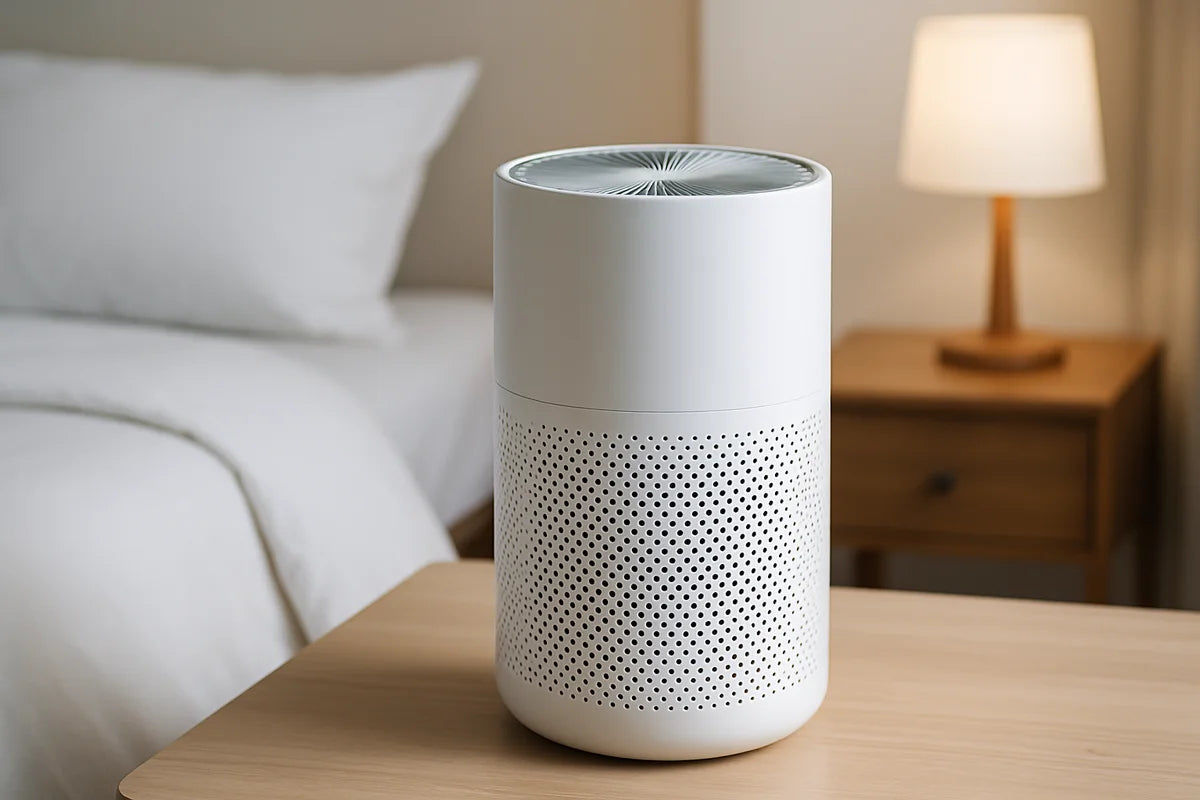
If you wake up stuffed up, itchy, or wheezing, your bedroom air can be a big part of the problem. Pollen rides in on hair and clothes. Dust mites build up in bedding. Pet dander floats and settles, then kicks back up when you move.
A bedroom air purifier setup for severe allergies can make a real dent in symptoms, but only if you size it right, place it right, and run it the right way. This article walks you through a simple, high-impact setup that fits real homes and real budgets.
What an air purifier can and can’t do for severe allergies
Air purifiers help most with airborne particles: pollen, dust, dander, mold spores, and some smoke. They don’t remove allergens locked into fabrics (like dust mite waste deep in a mattress), and they don’t stop new allergens from coming in. Think of the purifier as one strong layer in a bigger plan.
If you want a quick baseline on indoor air basics, the EPA’s overview of air cleaners and filters is clear and practical.
Severe allergies usually mean you need more than “quiet on low”
Many people run a purifier on low because it’s quiet. For severe allergies, low often doesn’t move enough air to matter. You can still keep sleep-friendly noise, but you’ll do it with smart sizing and a schedule.
Step 1: Pick the right purifier type for allergies
Marketing gets loud in this category. Stay focused on what works.
Look for a real HEPA filter (and skip “HEPA-style”)
For allergy particles, a purifier with a true HEPA filter is the safest bet. HEPA is designed to capture very small particles efficiently. Many brands use vague phrases like “HEPA-type,” which can mean almost anything.
If asthma is part of your picture, you may also find it helpful to review what the medical community says about triggers and indoor control. The AAAAI guide to indoor allergens lays out common sources and what helps.
Activated carbon helps with odors and some gases
Carbon doesn’t “do” allergies the way HEPA does, but it can reduce smells and some fumes (cooking odors, mild VOCs). If odors bother you or you live near traffic, carbon is a nice add-on. Just don’t buy a unit with a tiny carbon sheet and expect miracles.
Avoid ozone and be cautious with “ionizers”
Some devices intentionally generate ozone or use ionization. Ozone can irritate lungs. For severe allergies or asthma, that’s the last thing you need. If a purifier mentions “ozone,” “ionic,” or “plasma,” read the fine print and look for independent testing.
For a deeper safety read, the California Air Resources Board notes on air cleaners explain why ozone-based devices raise concern.
Step 2: Size it for your room, not the box
The most common setup mistake is buying a purifier rated for a huge room, then running it on low, or buying a small one and hoping “turbo” saves the day. Severe allergies need steady air changes.
Use CADR and aim for 4 to 6 air changes per hour
Clean Air Delivery Rate (CADR) tells you how much filtered air a unit delivers. For allergy relief in a bedroom, you usually want around 4 to 6 air changes per hour (ACH). More can help during peak pollen or if you sleep with pets.
Here’s a quick way to estimate your CADR target:
- Measure bedroom length x width x ceiling height to get cubic feet.
- Pick your target ACH (start with 5 for severe allergies).
- CADR target (CFM) = room volume x ACH / 60.
Example: 12 ft x 14 ft x 8 ft = 1,344 cubic feet. 1,344 x 5 / 60 = 112 CFM CADR (or higher).
If you want a fast tool, this air changes per hour calculator makes the math easy.
Don’t assume “covers 500 sq ft” means it works for allergies
Coverage claims often assume low ACH or ideal lab conditions. For a bedroom air purifier setup for severe allergies, treat coverage as a rough hint, not a promise. CADR and your room volume matter more.
Step 3: Put it in the right place in your bedroom
Placement can make a good purifier act mediocre. You want smooth airflow, not a unit that only cleans the air right next to it.
Best placement for most bedrooms
- Put it 3 to 6 feet from the bed, not right beside your pillow.
- Keep at least 6 to 12 inches of space on all sides (more if the manual says so).
- Avoid corners and tight gaps where airflow gets trapped.
- Aim the clean air outlet toward the center of the room, not into a curtain.
Door closed or open?
For allergies, you usually get better results with the bedroom door closed at night. You’ll clean a smaller air volume and keep hallway dust from drifting in. If your HVAC system already feeds the room well and you need airflow for comfort, you can crack the door, but expect slower cleaning.
Don’t block it with furniture
This sounds obvious until you see the average bedroom. A purifier half-hidden behind a nightstand can’t pull in dirty air. If you want it out of sight, choose a model designed to pull air from multiple sides and still give it breathing room.
Step 4: Build a bedtime routine that keeps air clean
How you run it matters as much as what you buy. Severe allergy relief comes from consistency.
Run it before you sleep, not just while you sleep
Turn the purifier on high for 30 to 60 minutes before bed with the door closed. This knocks down the day’s buildup. Then switch to a quieter setting for the night.
Use auto mode carefully
Auto mode often relies on particle sensors that don’t “see” all allergy particles well. Some sensors react fast to smoke but miss lighter pollen bursts. If you wake up congested, try manual control for a week: pre-clean on high, then steady medium overnight.
White noise can be a feature, not a bug
Many people sleep better with steady noise. If the purifier’s sound bothers you, don’t drop to low and hope. Instead:
- Choose a model with a smooth, steady fan sound (no whining tones).
- Oversize the purifier so medium is enough.
- Place it farther from the bed, as long as airflow stays open.
Step 5: Control the big allergy sources in the bedroom
A purifier can’t fight a losing battle if the room keeps dumping allergens into the air. The best bedroom air purifier setup for severe allergies pairs the machine with a few targeted changes.
Start with bedding and dust mites
- Wash sheets and pillowcases weekly in hot water when the fabric allows.
- Use allergen-proof covers for pillows and mattress if dust mites trigger you.
- Keep extra blankets off the bed if you don’t wash them often.
If you want a clear medical explanation of dust mite control, the Mayo Clinic’s dust mite allergy advice is easy to follow.
Pets in the bedroom: decide what “severe” means for you
If pet dander drives your symptoms, the highest-impact move is keeping pets out of the bedroom full time. If that’s not realistic, at least keep them off the bed and run the purifier more aggressively. You can still get improvement, but you’ll fight an uphill battle.
Vacuuming helps, but do it the right way
Vacuuming can stir allergens up before it removes them. If you have severe allergies:
- Use a vacuum with a sealed HEPA system if possible.
- Vacuum when you can leave the room afterward.
- Run the air purifier on high during and after vacuuming.
Humidity control reduces dust mites and mold risk
Dust mites and mold both like moisture. Many allergy specialists suggest keeping indoor humidity in a moderate range. If your bedroom feels damp, a dehumidifier may help more than another purifier.
For practical guidance on humidity and mold prevention, see CDC information on mold and dampness.
Step 6: Filter care that doesn’t sabotage performance
Filters are not “set and forget.” A clogged filter drops airflow, which drops cleaning.
Follow the replacement schedule, but watch real conditions
Most brands suggest replacing HEPA filters every 6 to 12 months, sometimes longer. If you have pets, heavy dust, wildfire smoke, or you run the unit hard, you may need changes sooner.
- If the purifier feels weaker at the same fan speed, check the filter.
- If you smell musty air from the unit, check both HEPA and carbon.
- If you see visible dust caked on the prefilter, clean it more often.
Prefilters matter more than people think
A washable or replaceable prefilter catches hair and big dust. It keeps the HEPA filter from clogging early. Clean it on schedule. Put a repeating reminder on your phone so you don’t rely on memory.
Common mistakes that keep allergies bad
These show up again and again in real bedrooms.
Buying based on “quiet” and “looks” first
Quiet matters, but performance matters more. For severe allergies, pick a unit that can hit your CADR target at a setting you can live with at night.
Running it only when symptoms flare
Allergy control works best when you keep particle levels low all the time. If you wait until you feel bad, you’ve already spent hours breathing the stuff that triggers you.
Putting the purifier where it “fits” instead of where it works
If the unit sits behind a chair or under a shelf, airflow drops. Give it open space, even if that means rearranging.
Ignoring the rest of the room
If your carpet holds dust, your curtains trap pollen, and your bed holds dust mites, a purifier can’t cover for everything. Fix the biggest sources first, then let the purifier keep the air steady.
Sample bedroom air purifier setups for severe allergies
Not sure what “right” looks like? Here are three solid setups you can copy.
Setup A: Small bedroom, pollen-heavy area
- True HEPA purifier sized for 5 ACH in your room
- Placement 4 feet from the bed with open airflow
- Run high for 45 minutes before bed, then medium overnight
- Shower at night during peak pollen and keep bedroom door closed
Setup B: Pets at home, dander triggers
- Oversized HEPA purifier so medium works overnight
- Pet-free bedroom if you can, or at least pet-free bed
- Wash bedding weekly, add mattress and pillow encasements
- Vacuum with a sealed HEPA vacuum and run purifier on high while cleaning
Setup C: Mold-prone home or humid climate
- HEPA purifier plus a humidity plan (often a dehumidifier)
- Keep humidity moderate and fix leaks fast
- Replace carbon filter on schedule if odors linger
- Keep the purifier away from damp corners and open windows at night
When a purifier isn’t enough
If your symptoms stay severe after a few weeks of a good setup, look for the missing piece. Sometimes it’s the wrong size. Sometimes it’s hidden mold, a dusty HVAC return, or a mattress that needs encasing.
If you track symptoms and still can’t connect the dots, consider talking with an allergist about testing and treatment options like immunotherapy. Your purifier can lower triggers, but it can’t change how your immune system reacts.
Where to start tonight
If you want the fastest improvement, do these three things in order:
- Close the bedroom door and run your purifier on high for 45 minutes before sleep.
- Move the purifier so it has clear airflow and sits a few feet from the bed.
- Change sheets, wash your pillowcase, and keep worn clothes off the bedroom floor.
Over the next two weeks, tighten the setup: confirm your CADR target, set a filter-cleaning reminder, and adjust fan speed until you find the best trade between noise and relief. Once the room feels stable, you can experiment with small changes like opening the door a crack or shifting placement, but keep one thing steady at a time so you know what helped.


