Moss looks quiet. It doesn’t flower, it doesn’t demand attention, and it doesn’t grow fast. Yet it pulls many people in for the same reason a slow walk, a shaded park, or a houseplant can help: it changes how you feel in your body.
When people talk about “moss for mental health benefits,” they often mean something simple. Moss gives you a small, steady way to get more nature into your day. You can touch it, watch it, care for it, and build a calm corner at home. None of that replaces therapy or medication when you need them. But it can support your mental health in a practical, low-cost way.
This article breaks down what moss can and can’t do, why it may help with stress, and how to use it as a real habit instead of a vague wellness idea.
Why nature helps your mind and where moss fits

Nature exposure links to better mood, lower stress, and improved attention. Scientists study this in many ways, from short walks in parks to long-term access to green space. Moss is not magic on its own, but it can act like a “micro-dose” of nature you can bring closer, especially if you live in a city or spend most days indoors.
Two ideas explain why moss for mental health benefits makes sense for many people:
- Green space can lower stress and support mental well-being over time, which public health agencies recognize as part of healthy communities.
- Soft fascination helps your brain rest. Natural patterns hold your attention without draining it the way screens and alerts do.
If you want the research background, the U.S. EPA’s overview of green infrastructure research is a useful starting point for how plants and green spaces affect health and cities.
What makes moss different from other plants
Houseplants help many people, but moss has a different feel. It’s low, dense, and textured. It changes how you interact with it.
It invites touch and slows you down
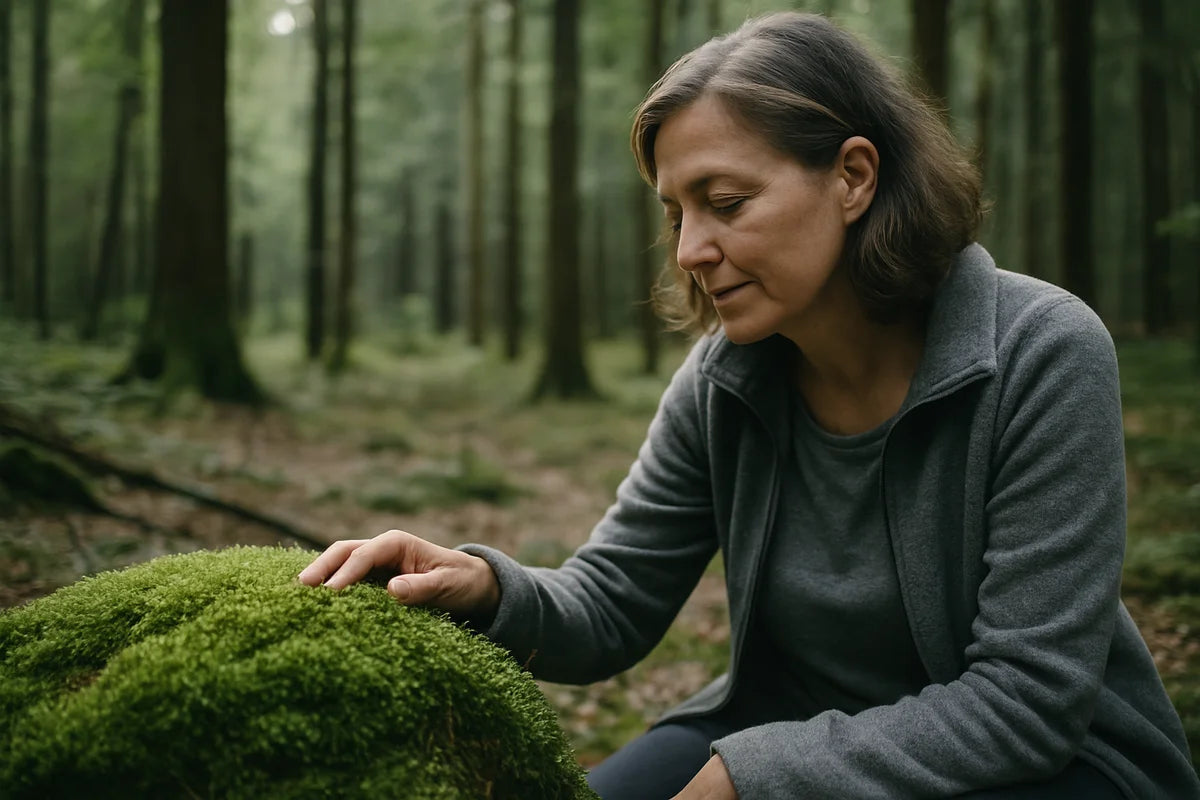
Moss has a sensory quality that many common houseplants don’t. If you’ve ever brushed your hand over a moss patch on a stone, you know the feeling: soft, springy, and cool. Sensory input matters for mood because it brings you back into your body. That can help when you feel anxious, wired, or stuck in your head.
It looks “unfinished” in a good way
Moss grows in uneven clumps and gradients. It doesn’t aim for symmetry. That can feel like a relief if you’re tired of perfect, curated spaces. A moss terrarium can look calm without looking staged.
It thrives on patience, not hustle
Moss doesn’t reward overwork. If you overwater or bake it in sun, it struggles. If you keep conditions steady, it slowly fills in. That’s a useful lesson for stress habits too: consistency beats intensity.
The mental health benefits people report and the likely reasons
Let’s be clear: moss isn’t a treatment for depression, anxiety, PTSD, or any diagnosis. But people use moss projects as a support habit, and there are good reasons it can help.
Stress relief through small, repeatable care
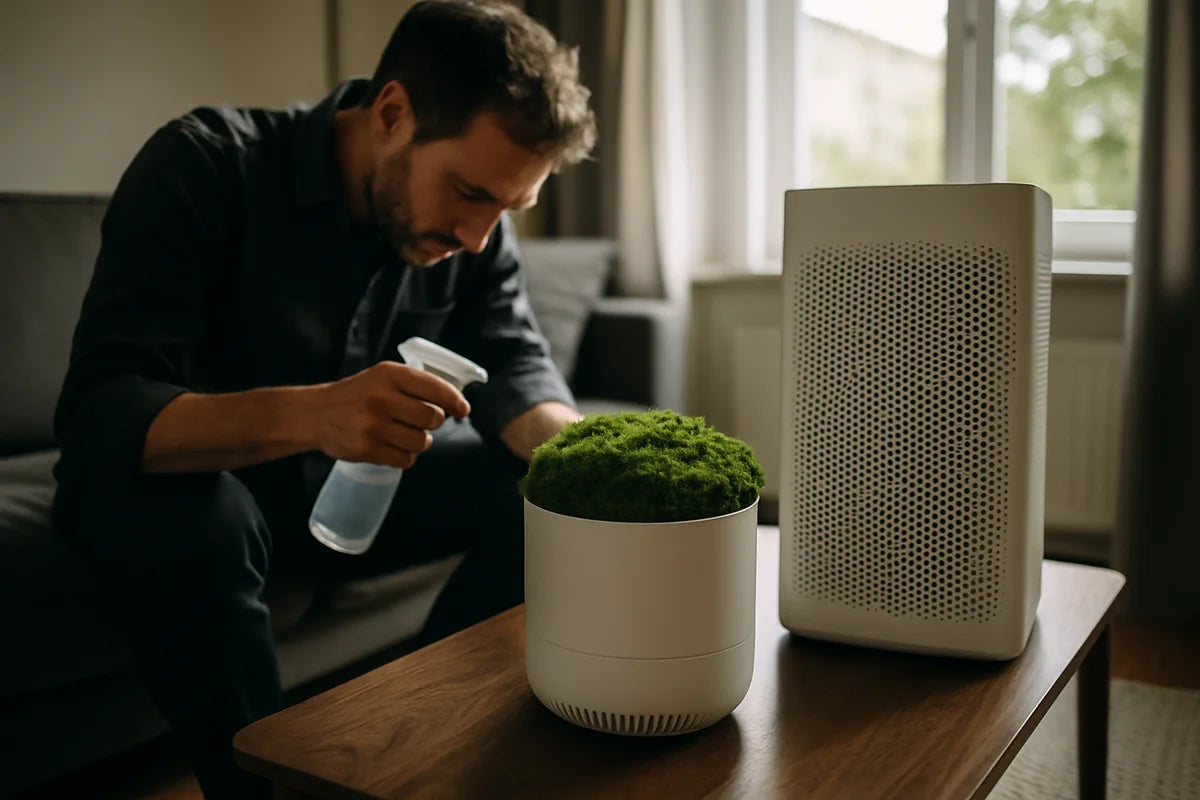
Stress often spikes when life feels big and messy. Moss care gives you a task that stays small on purpose. Mist. Check humidity. Adjust light. That’s it. You get a sense of control without falling into over-control.
Many people also find plant care soothing because it builds a daily rhythm. Those rhythms matter when sleep, work, or relationships feel unstable.
Attention reset when your brain feels fried
Have you noticed how hard it can be to read or think after hours of tabs, texts, and meetings? Nature scenes can restore attention. Moss gives you an easy focal point: tiny leaves, branching threads, gradual color shifts. You can stare at it for one minute and feel your brain unclench.
For a deeper look at how forest environments affect stress markers, see the research summaries shared by the Nature collection on forest bathing. You don’t need a forest to use the principle of slow, natural attention, but it helps to understand the why.
A grounding tool for anxious moments
Grounding works best when it’s simple. Moss can support grounding in two ways:
- Visual grounding: you track details like texture, color, and growth direction.
- Tactile grounding: you handle a terrarium jar, spray bottle, stones, or soil, and you feel temperature and weight.
If you already use grounding skills from therapy, moss can act as a cue. You see it, and you remember to slow your breath.
Gentle purpose when motivation runs low
When you feel low, big goals can backfire. “Start a whole workout plan” can feel impossible. “Mist the moss once” can feel doable. That tiny win matters.
Behavioral activation, a common therapy tool for depression, often starts with small actions that create momentum. Moss care can fit that pattern because it’s short, concrete, and repeatable.
How to use moss as a real mental health practice
Buying a moss terrarium and forgetting it won’t do much. The mental shift comes from how you use it. Here are practical ways to turn moss into a support habit.
Make a one-minute “moss check” part of your day
Pick a time you already have a pause: after coffee, before you open your laptop, or right after you brush your teeth.
- Look at the moss for 10 seconds and name three details you see.
- Take one slow breath where your exhale lasts longer than your inhale.
- Mist if needed, then stop. Don’t hover.
This works because it’s short. Your brain won’t fight it.
Use moss to build a screen-free corner
If you want moss for mental health benefits, placement matters. Put it where your eyes land when you’re stressed. Good spots:
- Near your desk, but not behind your monitor
- By the kettle or coffee maker
- Beside your bed, if you scroll at night
Then set one rule: when you notice the moss, you don’t pick up your phone for 60 seconds.
Pair it with a simple journaling prompt
Once or twice a week, sit with your moss and write one sentence:
- “Right now my body feels…”
- “One thing I can do today is…”
- “One thing I can drop is…”
That’s enough. Moss gives you a calm visual anchor so journaling doesn’t feel like a performance.
Getting started without killing it in a week
Moss can be easy, but it has a few non-negotiables. Most moss problems come from too much sun, too little humidity, or using the wrong type of moss indoors.
Choose the right setup for your home
You have three good options:
- Closed terrarium: best for most beginners because it holds humidity.
- Open dish garden: works if your home stays humid and out of direct sun.
- Moss wall art frame: looks great, but often uses preserved moss, which won’t grow.
If your main goal is mental health support and routine, pick the easiest win: a small closed terrarium on a shelf you see every day.
Light and water basics
- Light: bright, indirect light. Avoid hot sun on glass.
- Water: mist, don’t soak. Use filtered or rainwater if your tap water is hard.
- Air: open a closed terrarium for a short time if you see heavy condensation all day.
For a practical moss care reference, the Royal Horticultural Society’s overview of moss explains what moss needs and why it grows where it does.
Where to get moss and what to avoid
Please don’t strip moss from public parks or protected areas. Some habitats recover slowly, and moss can play a key role in local ecosystems.
Better options:
- Buy live moss from a reputable terrarium supplier.
- Swap with local plant groups if it’s legal where you live.
- Use ethically harvested moss products when live moss isn’t practical.
If you want a step-by-step terrarium build, this terrarium tutorial on Instructables is a solid, beginner-friendly walk-through.
Ideas that make moss more than decor
Once you have a moss setup that stays alive, you can use it in ways that support your mind, not just your room.
Try a “moss minute” after hard conversations
After a tense meeting or a tough talk, your body often stays revved up. Before you jump to the next task, do this:
- Stand or sit near the moss.
- Relax your jaw and drop your shoulders.
- Look for one new detail you haven’t noticed before.
You’re teaching your nervous system that it can shift states.
Build a small ritual for winter or low-light months
Many people feel worse in darker seasons. A moss terrarium plus a steady lamp timer can create a reliable green spot when outdoor time drops.
If seasonal mood changes hit you hard, the National Institute of Mental Health guide on seasonal affective disorder outlines symptoms and proven treatments like light therapy. Moss won’t replace those, but it can support daily structure and a sense of care.
Use it as a bridge back to outdoor time
If you feel shut in, moss can be a gentle nudge. You notice it, then you start noticing real moss outside. That can turn into short walks with a purpose: find one new patch, one shaded wall, one damp corner of a park.
For community support and local options, NAMI’s directory for help and groups can be a practical next step if you want mental health resources alongside lifestyle habits.
Common mistakes that make moss stressful
If your goal is mental calm, don’t let moss turn into another thing you “fail” at. Avoid these traps.
Turning it into a perfection project
Moss grows unevenly. It browns sometimes. It may shift after a few weeks. That’s normal. Aim for “healthy enough,” not flawless.
Over-misting when you feel anxious
Anxiety can make you fuss with the terrarium. Too much water can cause mold and a sour smell, which then adds stress. Set a simple rule: only mist when the moss looks dry and the glass shows little to no condensation.
Using moss to avoid bigger problems
Moss for mental health benefits works best as support, not escape. If you feel stuck, hopeless, or unsafe, reach out for help. A small ritual can sit beside therapy, medication, or support groups. It can’t replace them.
Looking ahead with moss as a steady anchor
If you want to try moss for mental health benefits, start small and keep it physical. Put one moss terrarium where you’ll see it every day. Give it one minute of attention. Let it cue a breath, a pause, or a short reset between tasks.
Over time, you can expand from a jar on a shelf to a calm corner, then to more outdoor time, then to other supports that fit your life. The point isn’t to collect moss. It’s to build a routine that makes your days feel a bit more livable, one quiet check-in at a time.