Why Moss Characteristics Make Proper Care Essential
Moss absorbs moisture through its surface rather than through roots, which means it reacts quickly to environmental changes. Whether you grow moss in indoor planters, terrariums, or landscaping, an imbalance in light, water, humidity, or airflow can easily lead to browning, drying, mold, or algae buildup (green film).
This guide summarizes the basic principles of moss care that apply across most environments, helping you establish a long-term maintenance standard.
The 4 Essential Conditions for Healthy Moss
Light: Avoid direct sunlight; provide bright indirect light.
Water: Prevent both overwatering and excessive drying; adjust watering methods depending on the environment.
Humidity: Maintain stable moisture levels while avoiding mold from excess humidity.
Airflow: The more enclosed the space, the more regular ventilation is required.
Light Management: Direct Sunlight vs. Indirect Light
Avoid Direct Sunlight and Focus on Indirect Light
Moss can dry out quickly or lose color under strong direct sunlight. Bright indirect light is generally the most stable condition. Even near a window, avoid spots where midday sun hits for long periods. Curtains or blinds can help diffuse the light.
Indoor Placement Tips
Indoors, moss is easier to maintain in areas that receive some indirect brightness rather than staying in constant darkness. In terrariums, strong light can raise internal temperature and dryness, so placement is especially important.
Signs of Insufficient Light
Color becomes pale and less vibrant
Moss appears limp or less dense
In humid environments, algae (green film) may increase
Watering Principles: Mist vs. Bottom Watering

Misting
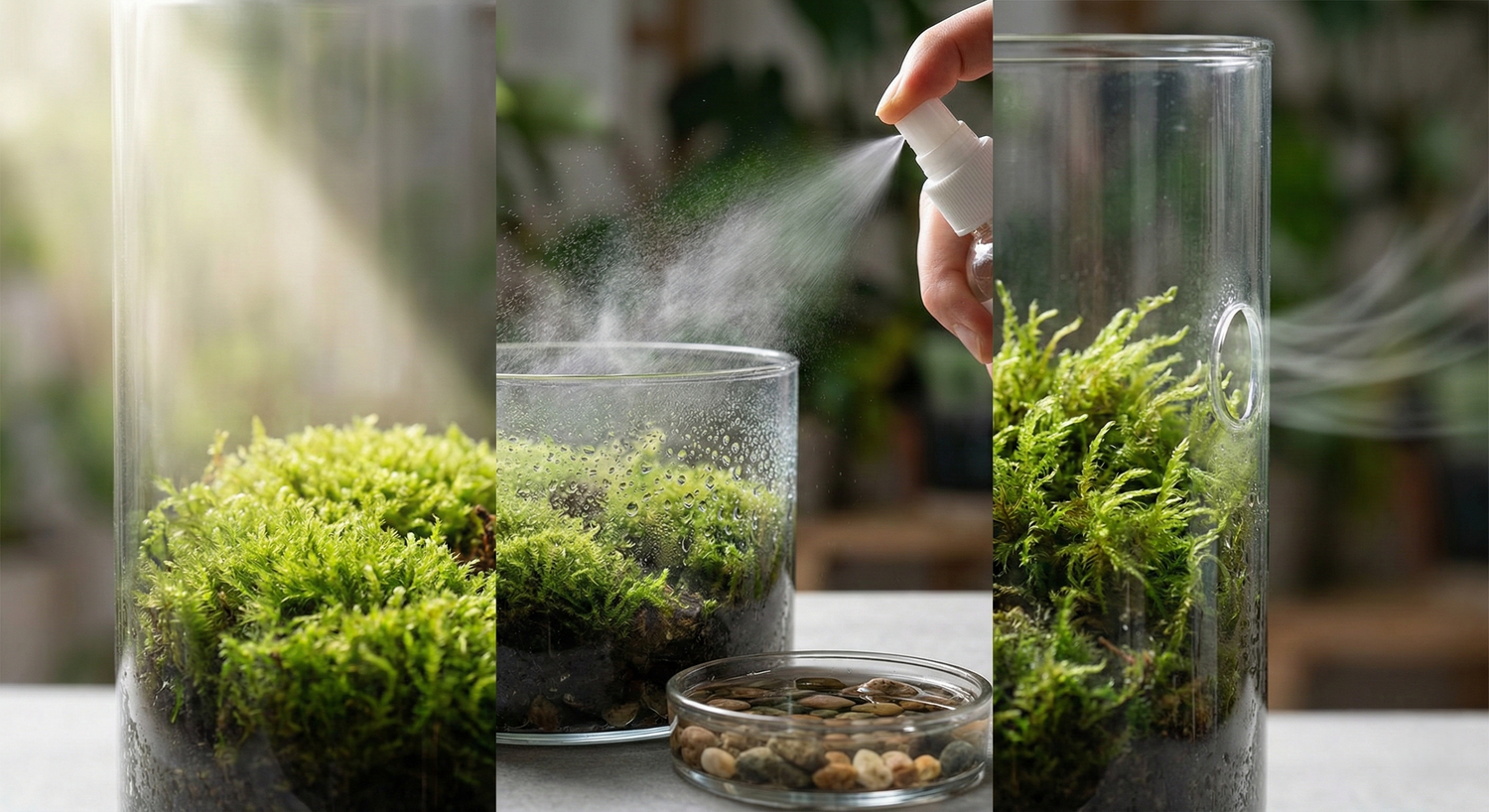
Misting evenly moistens the moss surface and is commonly used indoors and in terrariums. However, repeated misting alone may leave the substrate dry underneath, so checking the base layer is important.
Bottom Watering
Bottom watering helps rehydrate dry substrate from below. If water remains pooled too long, it can lead to odor, mold, or over-saturation. Drain excess water or adjust the amount to keep conditions safe.
Factors That Affect Watering Frequency
Temperature: Higher temperatures increase drying speed
Humidity: Low humidity causes faster evaporation
Airflow: Strong airflow dries moss faster, while weak airflow increases risk of overwatering
Water Choice: Tap Water, Filtered/Distilled Water, Rainwater
Tap Water Considerations
Tap water may leave mineral residue, causing white marks on moss or salt buildup in the substrate. If these signs appear, review water choice, watering volume, and cleaning routines.
Pros and Cons
Filtered water: Fewer impurities, but mineral content varies
Distilled water: Minimal residue, helpful for surface staining control
Rainwater: Can be useful but may carry pollutants depending on collection conditions
Humidity Balance: Maintaining Moisture Without Mold
Using Covers
Covers help retain humidity, but poor airflow can lead to mold and odor. If using a lid, establishing a ventilation routine is essential.
Humidifiers and Pebble Trays
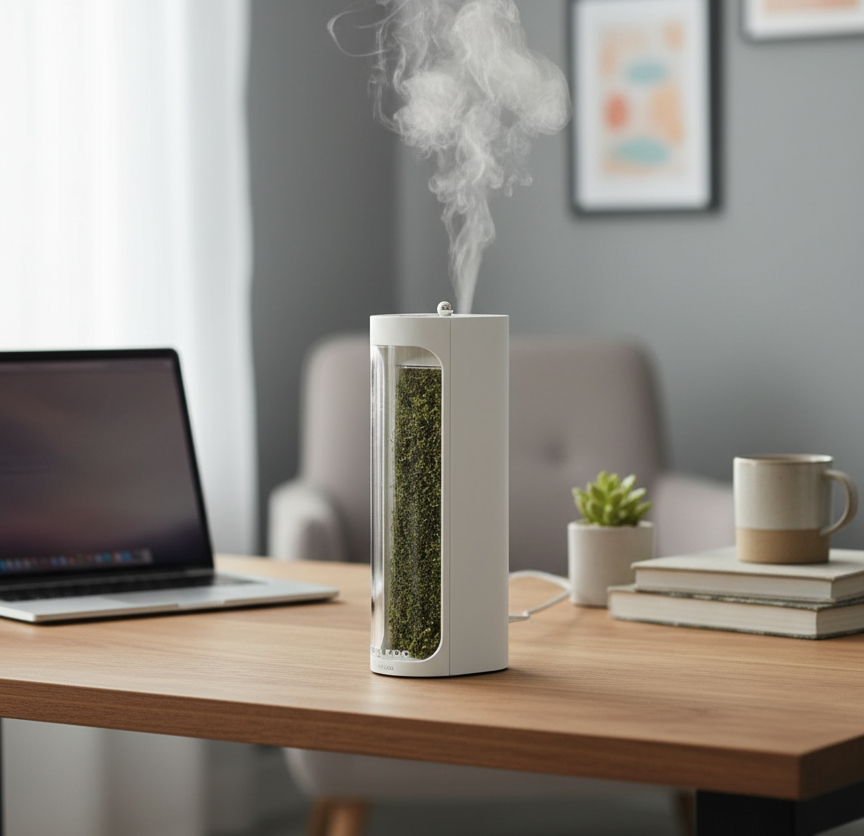
In dry indoor air, increasing ambient humidity is often more stable than excessive misting. Pebble trays can boost surrounding moisture without direct water contact.
Signs of Excess Humidity
Surface stays wet for too long
Mold, odor, or algae increases
Substrate becomes soggy or water pools at the bottom
Airflow Management: Ventilation and Mold Prevention
Moss needs humidity, but stagnant air creates problems. Place moss where air circulates naturally. In sealed terrariums, open the lid regularly to refresh the air.
Mold Prevention in Enclosed Containers
Increase ventilation time if misting leaves heavy moisture
Remove dead leaves or organic debris promptly
Prevent standing water by checking drainage and watering volume
Substrate Care: Drainage, Stability, and Contamination
Do You Need a Drainage Layer?
In terrariums where water easily collects, a drainage layer can help. In thinner or well-ventilated setups, it may be less necessary. The key is preventing water from pooling.
Substrate Stability
Moss can be sensitive to substrate conditions. Avoid substrates that rot or produce odor. Rather than focusing on exact chemical values, monitor changes and maintain stability.
Signs of Salt or Contamination
Repeated white residue → review water and substrate
Darkening substrate or odor → suspect overwatering and buildup
Water beads off instead of soaking → check for surface contamination
Cleaning Habits for Long-Term Moss Health
Remove Debris
Dead leaves, dust, and plant fragments can cause mold and odor. Remove them whenever visible.
Trim Browning Areas
Brown patches often do not recover. Trimming early can help prevent spreading.
Surface Dust Care
Dust blocks airflow and light. Avoid rubbing moss dry—light misting followed by gentle removal reduces damage.
Troubleshooting Checklist by Symptom
Browning
Check for prolonged direct sunlight
Confirm whether moss dries too fast or stays wet too long
Trim damaged areas and rebalance light, humidity, airflow
Drying Out
Avoid direct heating or AC airflow
Consider ambient humidity support instead of only increasing misting
If substrate fully dries, combine with bottom watering
Mold
Increase ventilation and adjust cover use
Remove dead material and excess organic matter
Reduce watering and eliminate standing water
Algae (Green Film)
Check for strong light combined with constant moisture
Reduce misting and allow drying time with airflow
Clean gently and monitor recurrence
Odor
Check for pooled water and drainage issues
Remove any rotting organic matter
Strengthen ventilation routine and reduce excess moisture
Seasonal Care Tips
Summer Heat
High temperatures can cause both drying and overwatering issues. Avoid intense light exposure and ensure airflow prevents overheating after misting.
Winter Dryness
Indoor heating dries air quickly. Instead of only misting more, combine humidity support with airflow protection.
Heating and AC Use
Direct airflow dries moss unevenly. Move moss away from vents and maintain indirect ventilation.
Long-Term Routine: Weekly and Monthly Checklist
Weekly Check
Light exposure and placement
Surface and substrate moisture balance
Ventilation time if covered
Remove debris and trim browning areas
Monthly Check
Substrate odor, pooling water, contamination
Repeated mineral residue or salt buildup
Record recurring mold/algae zones and adjust conditions
FAQ
Does moss need fertilizer?
Moss is sensitive to excess nutrients, which can create problems. Before adding fertilizer, first check light, water, humidity, airflow, and substrate condition.
Is misting alone enough?
Misting is useful, but if the substrate dries out, bottom watering or ambient humidity support may also be needed.
How much sunlight does moss need?
Bright indirect light is the safest standard. Because light strength varies by location, observe color and drying speed and adjust placement accordingly.
Final Summary: Key Moss Care Principles
The core of moss care is maintaining balance—avoiding overwatering while keeping moisture and humidity stable. Bright indirect light, regular ventilation, preventing standing water, and maintaining cleanliness through debris removal are the foundations of long-term moss health in indoor, terrarium, and landscape environments.