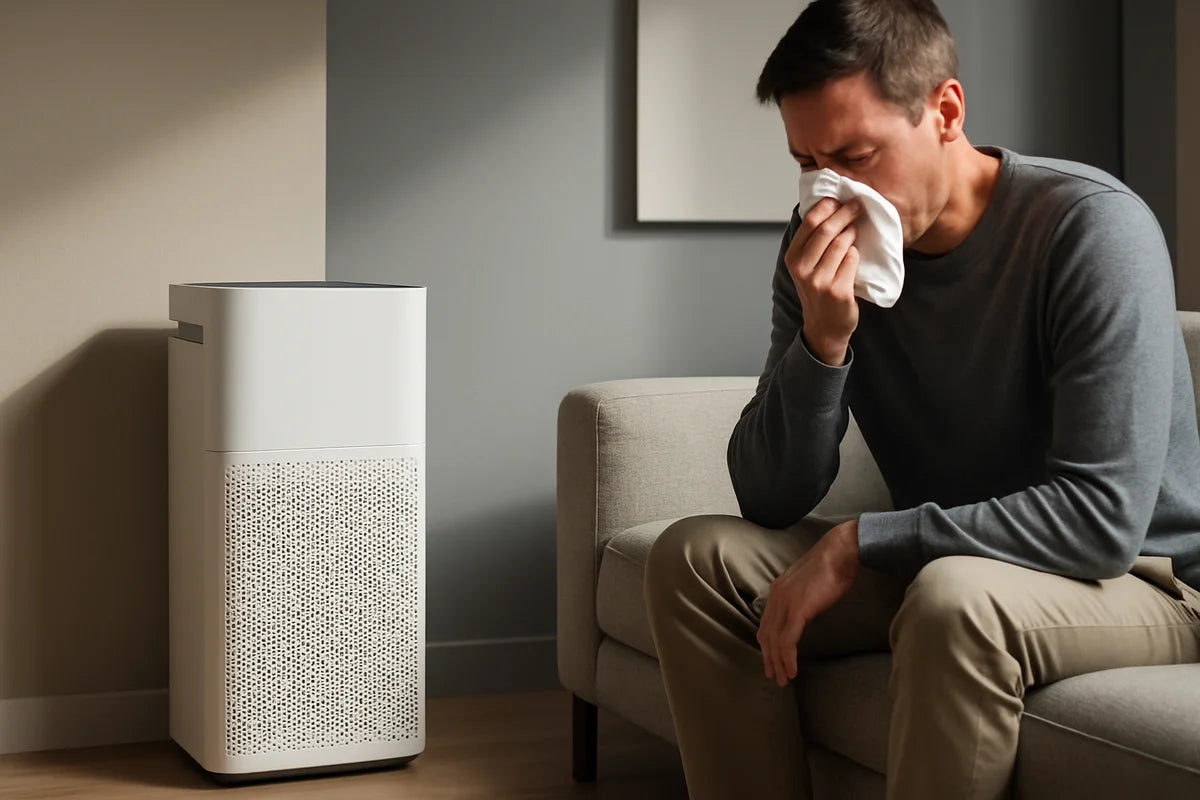
An air purifier should make breathing easier. For many people with asthma, it does. But if you’ve started coughing more, waking up tight-chested, or reaching for your rescue inhaler more often since you plugged one in, don’t ignore it. Sometimes the device isn’t helping. Sometimes it’s stirring up the exact stuff that sets you off.
This article walks through the most common signs your air purifier is making asthma symptoms worse, why it happens, and what you can do today to fix it.
First, can an air purifier really worsen asthma?

Yes. Not because “purifiers are bad,” but because certain designs, settings, and maintenance issues can add irritants to your air or spread them around. Asthma triggers vary, too. One person reacts to dust. Another reacts to fragrance. Another reacts to ozone or humidity swings.
The goal isn’t to ditch your purifier. The goal is to make sure it’s doing the job you bought it to do: reducing particles and irritants without adding new ones. If you want a quick baseline on common indoor pollutants, the EPA’s guide to indoor air quality gives a clear overview.
9 signs your air purifier is making asthma symptoms worse
1) Your symptoms get worse within an hour of turning it on
This timing matters. If you feel chest tightness, wheeze, cough, or throat burn soon after the purifier starts, suspect one of these:
- An ionizer or “plasma” feature producing ozone or reactive byproducts
- A dirty filter blasting trapped dust back into the room
- Airflow that kicks up settled dust from floors, bedding, or curtains
Try this simple test: turn it off for a full day, then run it for two hours with you in the room. If symptoms track closely with run time, you’ve learned something useful.
2) Your throat feels dry or your cough turns “scratchy” at night
A purifier doesn’t remove moisture by itself, but strong airflow can make a room feel drier, especially if you run it close to your bed. Dry air can irritate airways and make nighttime asthma feel worse.
What to do:
- Move the purifier farther from your bed so air doesn’t blow at your face
- Use a lower fan speed at night
- Check indoor humidity with a cheap hygrometer and aim for about 30% to 50%
If humidity is out of range, you may need to address that directly. For practical guidance, Energy Vanguard’s breakdown on indoor humidity is a solid read from an HVAC-focused source.
3) You notice a sharp “clean” smell, like chlorine or electricity
Clean air usually doesn’t smell like much. A sharp smell can point to ozone, ionization, or chemical reactions with other indoor gases. Some brands market this smell as proof it’s “working.” For asthma, that’s a red flag.
Ozone can irritate lungs even at low levels, and several asthma and lung health groups warn against devices that intentionally generate it. The American Lung Association’s overview of ozone explains why it can be a problem indoors.
If your purifier has settings like “ion,” “plasma,” “UV + ion,” “fresh,” or “active oxygen,” turn those features off first. If you can’t disable them, consider swapping the unit for a true mechanical HEPA model.
4) Your nose runs more, you sneeze more, or your eyes itch
If your “allergy-like” symptoms spike after you start using the purifier, you may be dealing with particle blow-back. This often happens when:
- The filter is installed wrong or doesn’t seal well
- The unit uses a low-grade filter that leaks fine particles around the edges
- The filter is overdue and air starts channeling through gaps
Many asthma symptoms overlap with allergy symptoms. If your nose and eyes flare up at the same time your breathing does, treat it as an air problem, not a mystery illness.
5) You feel worse when you stand near the purifier’s exhaust
Here’s a quick check: stand a few feet from where air comes out. Do you cough more? Do you feel a tickle in your throat?
If yes, the purifier may be:
- Throwing dust into the air due to a loaded filter
- Leaking particles because the filter frame doesn’t fit tightly
- Generating ozone or other irritants as part of its “extra cleaning” tech
Air should leave the unit cleaner than it entered. If the exhaust zone feels irritating, stop running it until you inspect the filter and settings.
6) Your asthma flares when you clean or change the filter
This is common and easy to miss. If you bang the filter out, vacuum it, or shake it over a trash can, you can release a concentrated cloud of fine particles. That exposure can trigger symptoms right away or later the same day.
Safer filter handling:
- Turn the unit off and unplug it before opening
- Wear a well-fitting mask if you react strongly to dust
- Remove the filter gently and slide it into a trash bag
- Don’t wash HEPA filters unless the manual says you can
- Wipe the inside of the unit with a damp cloth, not a dry duster
If you’re unsure what “HEPA” should mean in a home unit, this Consumer Reports air purifier coverage can help you understand performance differences and common pitfalls.
7) You bought the wrong size purifier and now it runs on high all day
Undersized purifiers often run at max speed to keep up. That can create drafts, noise (which can disrupt sleep and make asthma feel worse), and more agitation of dust in the room.
This problem shows up in bedrooms a lot: a small unit on a nightstand, blasting air across bedding and curtains for 8 hours straight.
Two things help here:
- Pick a unit with a clean air delivery rate (CADR) that matches your room size
- Place it so it can circulate air without blowing directly at you
If you want a practical way to estimate what you need, an AHAM-based CADR sizing guide is useful. Many manufacturers publish their own, but for a neutral explainer, this CADR guide from Smart Air breaks down what the numbers mean in plain language.
8) You see more dust on surfaces even though you run the purifier
This feels backwards, but it happens. If your purifier sits too close to a dusty corner, under a shelf, or beside a fabric chair, strong intake airflow can lift settled dust and spread it before the filter captures it. Some of that dust drops back out on nearby surfaces.
Try these placement fixes:
- Keep it at least a foot or two from walls and furniture so air can flow
- Avoid placing it right next to curtains, hampers, or pet beds
- Elevate it slightly if your floor is dusty and you can do so safely
Also check your cleaning routine. Purifiers help, but they don’t replace vacuuming. If you have asthma, a sealed HEPA vacuum can make a big difference because it removes dust without spraying it back out.
9) The purifier “fixes” one room but your symptoms worsen elsewhere
This sign points to a whole-home airflow issue. You may be cleaning one room while pulling dirty air from another space. Common culprits:
- Leaky ducts or poor HVAC filtration
- Air pulled from a musty basement or garage
- Cooking fumes and particles drifting from the kitchen
- Bedrooms getting stuffy because doors stay closed and ventilation is weak
In other words, the purifier becomes a strong fan that changes how air moves in your home. For a broader look at ventilation and filtration basics, the CDC’s ventilation guidance offers a clear starting point.
Common purifier features that can irritate asthma
Ionizers and ozone generators
Some purifiers intentionally create charged ions. Some create ozone. Some do both. Even when the ozone output meets a legal limit, sensitive lungs can still react. If your asthma is active, it’s safer to stick with mechanical filtration (HEPA) and skip add-on “air treatment” modes.
Fragrance add-ons and “aroma pads”
Many people with asthma react to scents. If your purifier has an aroma slot, don’t use it. Even “natural” essential oils can trigger bronchospasm in some people.
Dirty pre-filters
Washable pre-filters sound convenient, but they need frequent cleaning. If you forget, airflow drops and the unit can start pulling air around the filter instead of through it.
How to troubleshoot fast without buying a new unit
Step 1: Turn off all extra modes
Disable ion, plasma, UV-ion combos, and any “fresh” mode. Run fan-only filtration if that’s an option.
Step 2: Check the filter fit and the change schedule
Open the unit and confirm:
- You removed the plastic wrap from the new filter (it happens a lot)
- The filter sits snug with no gaps
- The arrow on the filter matches airflow direction
- You’re within the recommended replacement window
Step 3: Move it and re-test for 48 hours
Placement changes can fix a surprising number of problems. Put it in a spot with open airflow, not under a desk and not right next to bedding. Then track symptoms for two nights and two days.
Step 4: Pair it with source control
If your home keeps generating triggers, the purifier has to fight a losing battle. The biggest “sources” to manage first:
- Smoking or vaping indoors (including guests)
- Scented candles, incense, and fragrance sprays
- Cooking smoke without a vent that exhausts outdoors
- Pet dander buildup on soft furniture
- Dampness and visible mold
When the real problem isn’t the purifier
Sometimes an air purifier gets blamed because it’s the new thing in the room. If symptoms worsen, also consider:
- A viral illness or seasonal allergy spike
- A change in medication or inhaler technique
- New cleaning products, detergents, or room sprays
- Humidity changes from weather or HVAC use
If you’re tracking asthma symptoms, write down what changed and when. Patterns show up fast when you keep notes for a week.
Where to start if you suspect your purifier is making asthma symptoms worse
If you want a simple plan that doesn’t spiral into research:
- Turn off ionizer or “plasma” features right now.
- Move the unit so it doesn’t blow at your face, especially at night.
- Replace the filter if you’re near the end of its life or you can’t remember the last change.
- Run it on a steady medium setting instead of max, and see how your breathing feels over the next 48 hours.
- If symptoms still track with purifier use, stop using that unit and switch to a true HEPA purifier with no ozone feature.
If your asthma symptoms are getting worse fast, or you’re using a rescue inhaler more than usual, follow your asthma action plan and talk with a clinician. You can also bring the purifier model number and specs to the visit. That small detail can help you and your doctor spot an irritant feature right away.
Looking ahead, the best setup is boring: a right-sized HEPA purifier, filters changed on time, steady humidity, and fewer indoor irritants. Once you lock that in, you can start fine-tuning room by room, and your purifier can go back to doing what it should: helping you breathe easier, not harder.