Houseplants and moss get pitched as simple fixes for stale indoor air. The truth sits in the middle. Yes, some plants and moss can help with natural air purification in small ways, and they can make a room feel fresher by adding moisture, trapping dust on leaves, and nudging you to open windows and care about air quality. But they won’t replace ventilation, a good HVAC filter, or a HEPA purifier.
This article gives you a clear, useful list of the best plants and moss for natural air purification, plus how to place them, how many you’d need, and what to do if you want cleaner air for real.
What “natural air purification” really means indoors

When people say plants “purify air,” they usually mean a few different things:
- Plants can absorb some gases through leaf pores (stomata).
- Potting soil and root microbes can break down some compounds.
- Leaves can catch dust and tiny particles that later get wiped off.
- Plants can raise humidity, which helps some people feel less dry (but too much can cause mold).
There’s also the famous NASA plant study. It did find that certain plants could reduce some volatile organic compounds (VOCs) in sealed test chambers. Real homes are not sealed chambers, and air changes constantly through gaps, doors, and ventilation. That’s why the effect in normal rooms is usually modest. If you want the science context, read NASA’s original write-up, Interior Landscape Plants for Indoor Air Pollution Abatement.
So where do plants and moss fit? Think of them as part of a broader indoor air plan. They can support comfort and awareness, and they may help at the edges. For asthma, smoke, or heavy allergens, you’ll need more than greenery.
How to pick plants that actually help

Not every “air purifying” plant works well in a real home. Use these filters when you choose:
- Hardy leaves you can wipe: dust capture only works if you clean the leaves.
- Fast growth: more leaf surface area tends to help more than a delicate plant with a few stems.
- Tolerance to indoor light: a struggling plant won’t do much and often grows moldy soil.
- Low allergy risk: avoid plants that drop lots of pollen indoors.
One more note: indoor air quality is often driven by ventilation and sources, not “lack of plants.” The EPA’s indoor air quality guidance focuses on source control, ventilation, and filtration. That’s still the best starting point.
Best plants for natural air purification (realistic picks)
These are solid choices because they’re tough, common, and give you a lot of leaf area without constant drama.
1) Snake plant (Sansevieria / Dracaena trifasciata)
Snake plants handle low light and missed waterings. Their stiff leaves also collect dust well, so you can wipe them down every couple of weeks.
- Good for: bedrooms, offices, corners with lower light
- Care tip: let soil dry out between waterings
- Watch out: toxic to pets if chewed
2) Spider plant (Chlorophytum comosum)
Spider plants grow fast, tolerate beginner mistakes, and give you lots of narrow leaves that can trap dust. They also make “babies,” so you can scale up without buying more plants.
- Good for: shelves, hanging baskets, kitchens
- Care tip: bright, indirect light keeps it fuller
- Watch out: leaf tips brown if water has lots of salts; try filtered water
3) Pothos (Epipremnum aureum)
Pothos is one of the best “more leaves per square inch” plants you can grow indoors. Let it trail across a shelf or train it up a pole to build leaf area.
- Good for: living rooms, offices, low to medium light
- Care tip: prune it to encourage bushier growth
- Watch out: toxic to pets
4) Peace lily (Spathiphyllum)
Peace lilies have broad leaves you can wipe clean, plus they signal thirst by drooping. They can also raise humidity a bit in dry rooms.
- Good for: bathrooms with a window, bedrooms, shaded spots
- Care tip: keep soil lightly moist, not soggy
- Watch out: toxic to pets; overwatering invites fungus gnats
5) Rubber plant (Ficus elastica)
If you want fewer plants with more impact, go bigger. A rubber plant offers large, thick leaves that hold onto dust until you wipe it away.
- Good for: bright rooms where you want a tall plant
- Care tip: rotate it monthly so it grows evenly
- Watch out: sap can irritate skin; keep from pets
6) Areca palm (Dypsis lutescens)
Palms add a lot of surface area and can help with perceived freshness by raising humidity. They also soften rooms that feel dry in winter.
- Good for: living rooms, open-plan spaces
- Care tip: bright, indirect light and consistent watering
- Watch out: don’t overwater; ensure good drainage
7) Boston fern (Nephrolepis exaltata)
Ferns bring dense fronds that can catch dust, but they demand steady moisture and decent humidity. If your home is dry, they can struggle.
- Good for: bathrooms, kitchens, homes that aren’t bone-dry
- Care tip: misting helps a bit, but a humidifier helps more
- Watch out: dry air leads to crispy fronds and dropped leaves
Best moss for natural air purification: what moss does well indoors
Moss is different from most houseplants. It doesn’t have roots in the usual sense, and it takes in water and nutrients through its surface. That makes it great at holding moisture and catching fine dust. But moss indoors only thrives if you control moisture and light.
Sheet moss and cushion moss (for terrariums)
These are common terrarium mosses. They do best in enclosed or semi-enclosed setups where humidity stays high. In an open bowl on a shelf, they often dry out fast.
- Good for: closed terrariums, cloches, shaded windows
- Why it helps: holds moisture, traps fine dust on its surface
- Care tip: use distilled or rain water to reduce mineral buildup
Sphagnum moss (as a support moss)
Sphagnum often acts as a growing medium, not a “display moss.” It holds a lot of water, which can boost humidity around nearby plants. It’s useful in propagation boxes and for humidity-loving plants.
- Good for: propagation, humidity trays, terrarium layers
- Care tip: keep it damp, not soaked
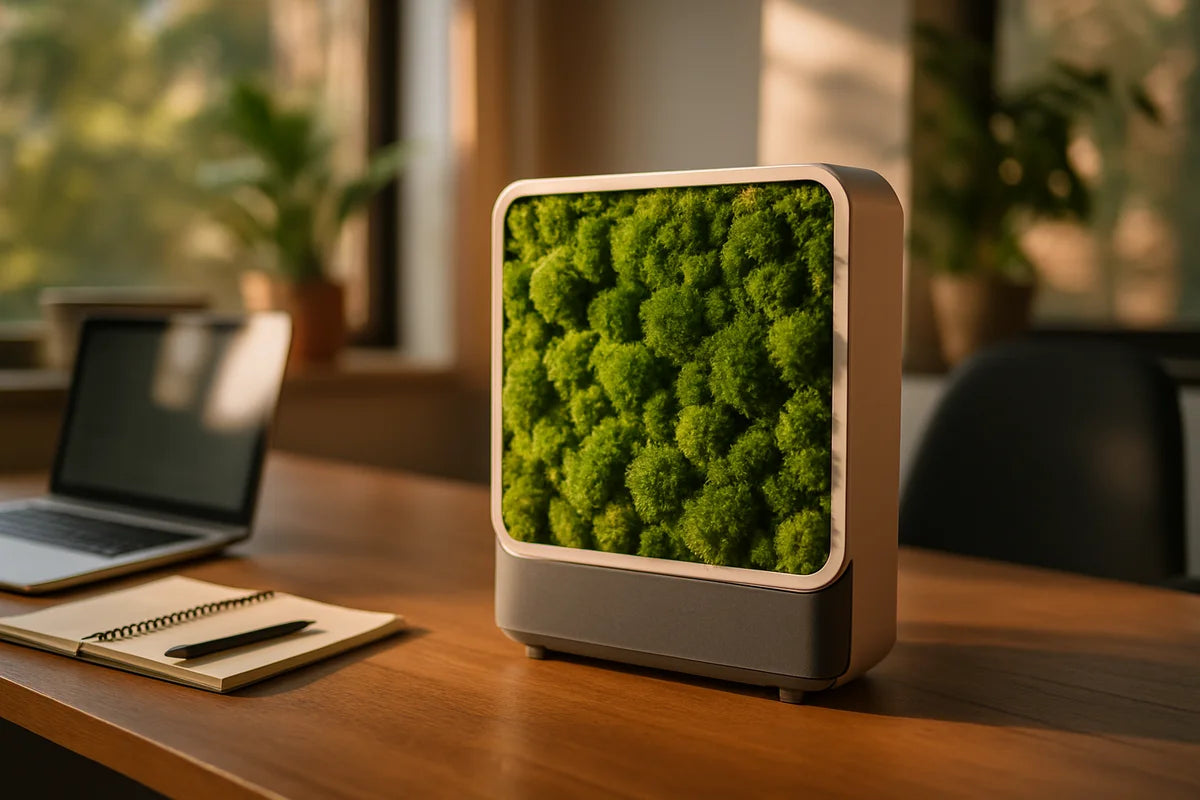
“Preserved” moss walls: pretty, low upkeep, not a purifier
You’ll see preserved moss panels sold as living decor. They aren’t alive, so they won’t exchange gases or add humidity the same way. They can still catch dust, but you can’t rinse them like live moss. If you want one, treat it as decor, not natural air purification.
If you want a deeper look at how indoor plants behave in real rooms (not sealed lab boxes), the research in Scientific Reports on VOC removal in real-world conditions is worth reading.
Where to place plants and moss for the best effect
Placement matters more than most people think. You want plants where they’ll stay healthy and where you’ll maintain them.
Put high leaf-area plants where air moves
Air that never moves won’t pass over leaves much. Place a bigger plant a few feet from:
- A return vent (not blocking it)
- A doorway that stays open
- A ceiling fan zone
A gentle fan in the room often does more for air mixing than adding another small plant.
Use moisture-loving plants where humidity already runs higher
Bathrooms with a window, laundry rooms, and kitchens are good homes for ferns and peace lilies. If humidity stays high, you’ll spend less time fighting crispy leaves.
Keep moss in a controlled setup
If you want moss to thrive, use a terrarium. A closed terrarium also keeps spores and soil mess contained, which matters if you deal with allergies.
How many plants do you need for noticeable air cleaning?
If your goal is measurable natural air purification, you’d need far more plants than most homes can handle. That doesn’t mean plants are pointless. It means you should set the right goal:
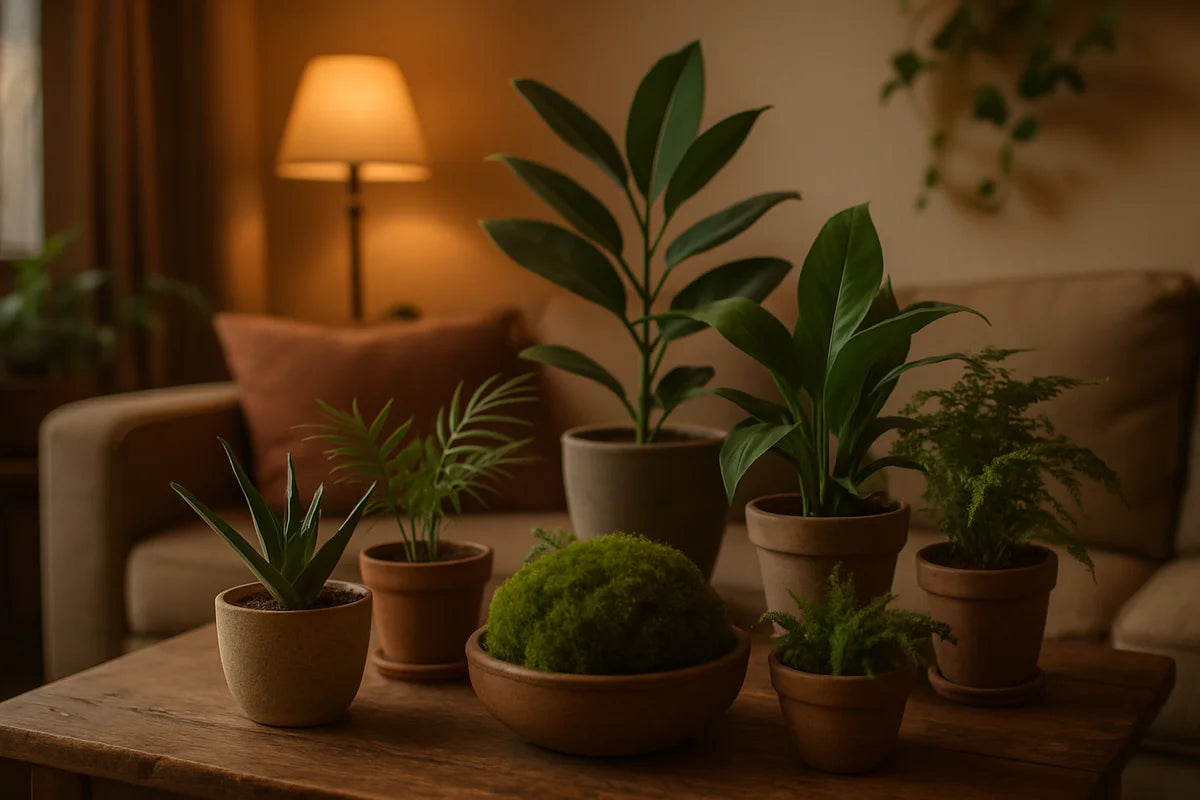
- For comfort and a “fresher” feel: 3-8 medium plants in a room can make a difference in mood and humidity.
- For dust reduction: fewer, bigger plants with wipeable leaves help more than many tiny plants you never clean.
- For VOCs and fine particles: use plants as support, not as the main tool.
Want a practical check on your real air? Use a low-cost monitor that tracks PM2.5 and CO2. CO2 is a strong clue for ventilation. The U.S. Department of Energy’s ventilation basics explains how fresh air flow works in plain terms.
Care habits that make plants better “air helpers”
A dusty, stressed plant won’t help much. These simple habits raise the odds that your plants support cleaner air and don’t create new problems.
Wipe leaves on a schedule
Set a reminder every 2-3 weeks. Use a damp cloth. Skip leaf-shine products. They can clog leaf pores and attract dust.
Control soil moisture to prevent mold and gnats
Overwatered soil can smell musty and attract fungus gnats. For many common houseplants:
- Let the top inch of soil dry before you water again.
- Use pots with drainage holes.
- Empty saucers after watering.
Choose a low-dust potting mix and top-dress if needed
Some mixes shed fine particles when dry. If you notice dust, add a thin top layer of clean pebbles or horticultural sand to reduce soil splash and surface dust.
Quarantine new plants
New plants can bring pests and mold. Keep them separate for a week or two, check leaves, and repot if the soil smells sour.
When plants and moss aren’t enough: simple upgrades that work
If you care about air quality, don’t stop at greenery. Pair plants with steps that move the needle.
Use a HEPA purifier where you sleep
For smoke, pet dander, and fine particles, a HEPA purifier helps more than any plant collection. Look for a unit sized to your room. CADR matters, but real performance depends on how you run it.
If you want a practical sizing walkthrough, the AHAM guide to room air cleaners and CADR explains what the numbers mean.
Upgrade HVAC filtration if you have central air
A better filter can cut indoor particles, but you must match it to your system. A filter with too much resistance can reduce airflow. If you’re not sure, ask an HVAC tech.
Cut VOC sources at the root
- Store paints, solvents, and strong cleaners outside living areas when possible.
- Ventilate during and after cooking.
- Let new furniture off-gas in a ventilated space if you can.
Plants can support natural air purification, but source control does the heavy lifting.
Room-by-room plant and moss picks
Bedroom
- Snake plant or pothos for low-fuss greenery
- A rubber plant if you have bright light and want fewer, bigger plants
- A small closed moss terrarium if you want moss without mess
Living room
- Areca palm for leaf area and humidity
- Rubber plant for dust-catching leaves you can wipe
- Spider plant in a hanging basket to add volume without taking floor space
Bathroom (with a window)
- Boston fern for humidity-heavy spaces
- Peace lily if you want broad leaves and simple care cues
- Moss terrarium on a shelf away from direct sun
Home office
- Pothos or snake plant near your desk for low maintenance
- Spider plant for fast growth and easy propagation
Where to start
If you want the best plants and moss for natural air purification, start small and make it easy to keep going.
- Pick one tough plant with lots of leaf area (rubber plant, pothos, or snake plant).
- Place it where it gets the right light and where you’ll remember to wipe the leaves.
- Add a second plant only after the first one thrives for a month.
- If you love moss, build a closed terrarium so it stays healthy without constant misting.
- Track your air for two weeks, then decide if you need a purifier or more ventilation.
Plants and moss won’t solve indoor air on their own, but they can push you toward better habits: cleaning dust, watching humidity, and caring about airflow. If you treat greenery as a partner to ventilation and filtration, you’ll get the best of both worlds: a home that looks alive and air that feels easier to breathe.