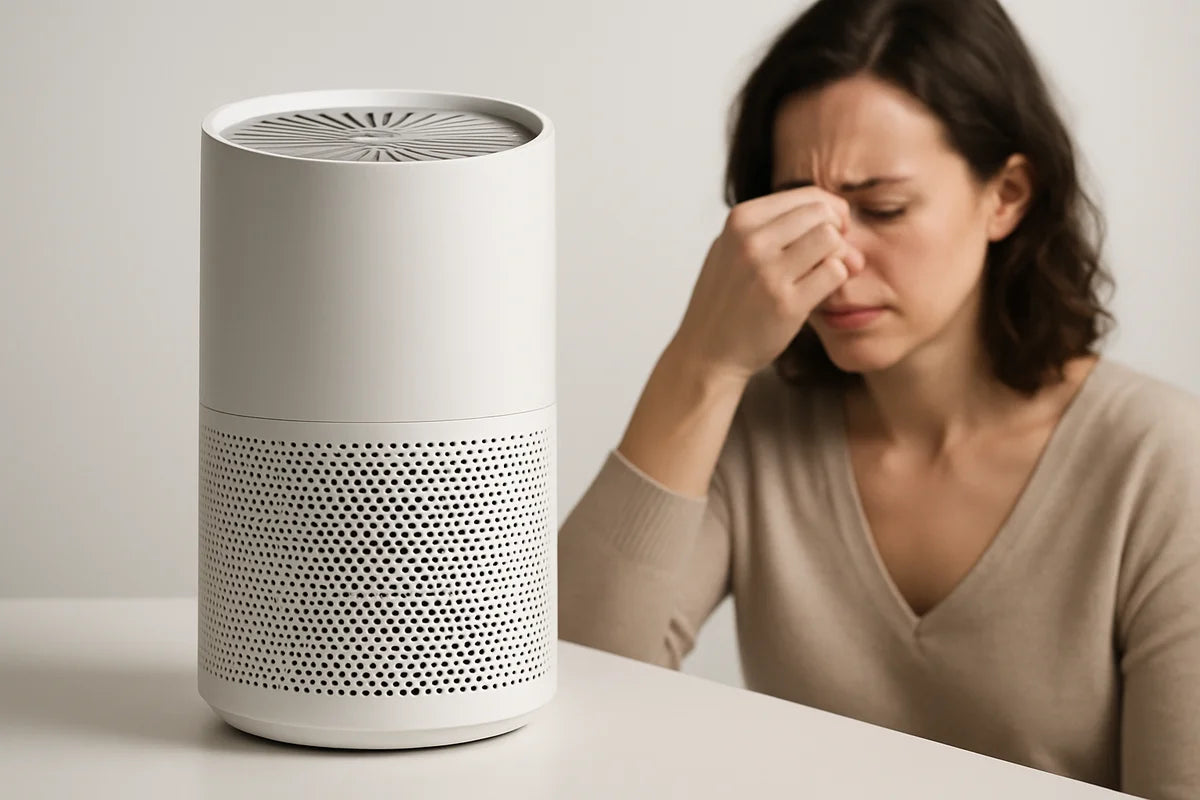
Your home office does a lot in a small space. It holds your laptop heat, coffee smells, printer fumes, and whatever dust drifts in from the rest of the house. If you work with the door closed, that air can get stale fast. And when the air feels “off,” focus drops. Headaches creep in. You start reaching for another coffee when what you may need is cleaner air.
Natural air purifiers for home office setups won’t replace a good mechanical filter for smoke or heavy pollution. But they can make a real difference in day-to-day comfort by cutting odors, adding moisture in dry rooms, and reducing dust you breathe in. They also look good on a shelf. That helps when your workspace doubles as a bedroom corner.
What “natural air purifiers” can and can’t do

Before you buy anything, get clear on the goal. Natural air purifiers for home office setups work best as support. They help manage common indoor issues, but they have limits.
They can help with
- Light odors from food, pets, and general “closed room” smell
- Dry air that irritates your nose and throat (with humidity support)
- Dust that settles on surfaces (when paired with smart cleaning and airflow)
- Low-level VOCs from new furniture, paint, and office gear when you also ventilate well
They can’t replace
- A HEPA air purifier for wildfire smoke, heavy allergies, or high PM2.5
- Proper ventilation when you have strong fumes (paint, solvents, heavy cleaning agents)
- Source control, like fixing a leak that causes mold
If you want the basics of indoor air problems and what drives them, the EPA’s indoor air quality guide gives a clear overview without hype.
Start with the simplest “purifier” of all: fresh air

If your home office has a window, you already own a strong tool. Ventilation swaps stale indoor air for outdoor air. It also helps lower carbon dioxide buildup, which can make you feel tired and foggy in closed rooms.
Quick ventilation routines that fit a workday
- Open a window for 5-10 minutes at the top of each hour if outdoor air is decent.
- Create a cross-breeze by opening a door or a second window in another room.
- Run a bathroom fan for a short burst if your office sits near a bathroom and windows aren’t an option.
Want to know when outdoor air is “decent”? Use a live air quality map like AirNow’s AQI tool before you air out the room, especially during wildfire season.
Plants as natural air purifiers for home office setups
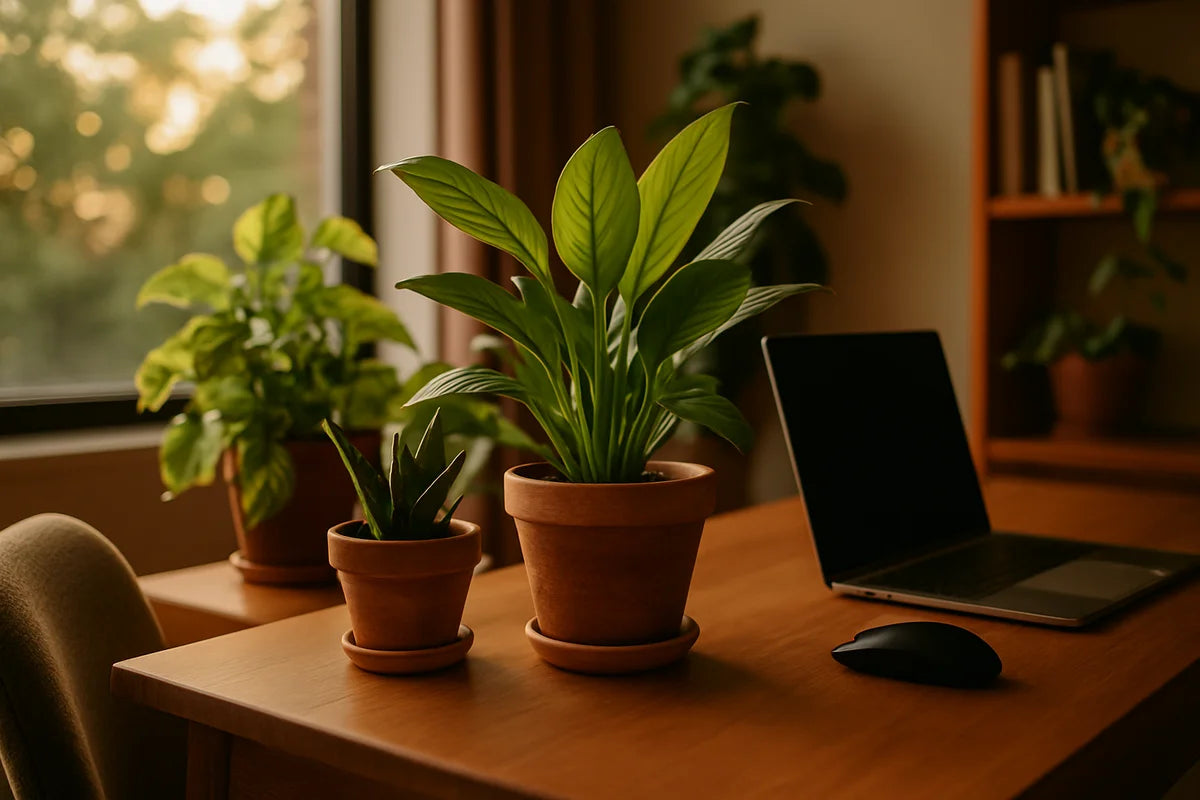
Houseplants won’t scrub your air like a machine with a fan and a filter. Still, plants can help in practical ways: they add a sense of freshness, support humidity a bit, and nudge you to care for your space. Some research also suggests plants can remove certain pollutants in controlled settings, though real rooms are more complex. If you want the research angle, this review in Nature explains why plants alone won’t match mechanical filtration in most homes.
So why use plants? Because they’re still useful, just for the right reasons. Think comfort, routine, and a cleaner-feeling workspace.
Best low-drama plants for a desk or shelf
- Snake plant (Sansevieria): handles low light, forgetful watering, and tight corners.
- Pothos: grows fast, trails nicely, and does fine in medium light.
- Peace lily: good for a calmer look, but keep it away from pets.
- Spider plant: tough, affordable, and easy to propagate.
Plant care tips that keep air and allergies in mind
- Don’t overwater. Wet soil can invite fungus gnats and mold.
- Use a saucer and empty it. Standing water turns into a mini swamp.
- Wipe leaves once a week. Dust collects there and ends up back in the room.
- If you have allergies, choose fewer plants and keep them clean rather than building a jungle.
Activated charcoal and carbon as natural odor control
When people say they want “cleaner air,” they often mean one thing: the room smells weird. Activated charcoal (or activated carbon) helps most with odor and some gases. It doesn’t catch dust the way a filter does. But it’s simple, quiet, and easy to place near the source.
Where charcoal works well in a home office
- Near a trash can that holds food wrappers
- By a litter box in an office-adjacent room
- Close to a closet where musty fabric smells collect
- Next to a printer area (for smell, not particles)
How to use it without wasting money
- Pick a container with lots of airflow, like a breathable bag or perforated canister.
- Set a reminder to replace or refresh it based on the maker’s guidance.
- Don’t hide it in a sealed drawer and expect results.
Carbon works best when air can pass through it. That’s the whole point.
Salt lamps and “ionizers” need a reality check
Some natural air purifier trends sell a comforting story, not clean air. Salt lamps look nice, but they don’t move enough air to purify a room. Many “ionizer” devices can also create ozone, which can irritate lungs.
If you’re curious about ozone and why it matters indoors, the California Air Resources Board fact sheet on ozone generators lays it out in plain English.
If you like the warm light of a salt lamp, use it for mood. Just don’t expect it to do the job of actual airflow and filtration.
Humidity as a natural ally for cleaner-feeling air
Dry air can make your home office feel harsh. Your throat gets scratchy. Your eyes feel dry. Dust seems to hang around. Keeping humidity in a healthy range can make the room feel better, even if it doesn’t “purify” in the strict sense.
A good humidity target for most home offices
Aim for about 30-50% relative humidity. Too low feels dry. Too high can push mold growth and dust mites.
For a deeper look at humidity, comfort, and mold risk, CDC guidance on mold is a solid, practical reference.
Natural ways to add moisture without turning your office into a greenhouse
- Use a small evaporative humidifier if your climate is very dry (it’s not “natural,” but it’s often safer than steam for desk use).
- Dry a small load of laundry on a rack in a nearby area (only if you already ventilate well).
- Group a few plants together to slightly increase local humidity.
Don’t skip measurement
Guessing leads to problems. A basic hygrometer costs little and tells you if your “dry air” feeling is real. If humidity sits above 55-60% often, focus on ventilation and moisture control, not adding more water to the air.
Natural cleaning habits that cut dust and irritants
Natural air purifiers for home office setups work best when you lower the junk in the air to begin with. Dust is a mix of fabric fibers, skin flakes, soil, and tiny bits of whatever else is in your home. The fastest way to breathe less of it is to stop it from building up.
A simple weekly reset for your workspace
- Wipe hard surfaces with a damp cloth. Dry dusting just kicks particles back up.
- Vacuum the floor edge where dust piles up, especially near baseboards.
- Clean your keyboard and desk mat. Your hands stir up what lives there.
- Wash or swap a blanket throw if you keep one on your chair.
Small swaps that help every day
- Take shoes off at the door to cut outdoor particles tracked inside.
- Use a lidded bin and empty it often if you eat at your desk.
- Avoid heavy room sprays. Many just mask smells and add more chemicals to the air.
If you want a solid middle-ground reference on how homes handle airflow and pollutants, Green Building Advisor’s ventilation and IAQ articles do a good job connecting building basics to real homes.
How to set up a “natural air purifier” zone around your desk
You don’t need to treat the whole house at once. Your breathing zone is the 2-3 feet around your face. Clean that area first.
A practical layout that works in most rooms
- Put one easy plant on the side of your desk where you’ll see it and care for it.
- Place activated charcoal near the main odor source, not in the middle of the desk.
- Keep one clear path for airflow from a door or window to your chair area.
- Keep paper piles and fabric clutter away from the spot where you sit. They hold dust.
When you should add a mechanical purifier anyway
If you deal with wildfire smoke, heavy allergies, or you live near busy traffic, add a HEPA purifier. You can still keep the natural supports, but don’t ask plants and charcoal to do a job they can’t do.
To size a purifier, you need to match the unit to your room. A practical way to think about it is air changes per hour (ACH) and clean air delivery rate (CADR). For a clear explanation of what those terms mean, see Energy Vanguard’s CADR breakdown.
Common mistakes that make your home office air worse
- Overwatering plants and letting damp soil sit for weeks
- Using scented candles or sprays all day to “fix” odors
- Ignoring the source, like a musty rug or a trash bin that needs emptying
- Keeping windows shut for days because it’s cold or hot outside
- Buying a gadget that “cleans” air but never moves air through a filter
Where to start this week
If you want natural air purifiers for home office setups that actually help, keep it simple and build momentum.
- Check outdoor air on AirNow and air out the room for 5-10 minutes each morning.
- Do a damp wipe of your desk and a quick vacuum pass around your chair.
- Add one low-care plant and commit to not overwatering it.
- Use activated charcoal near the odor source you notice most.
- Buy a cheap hygrometer and see what your room humidity really is.
After a week, you’ll know what moved the needle. Then you can decide if you need a HEPA unit for extra support, a better ventilation plan, or just less clutter and more fresh air. The best setup is the one you’ll keep doing when work gets busy.