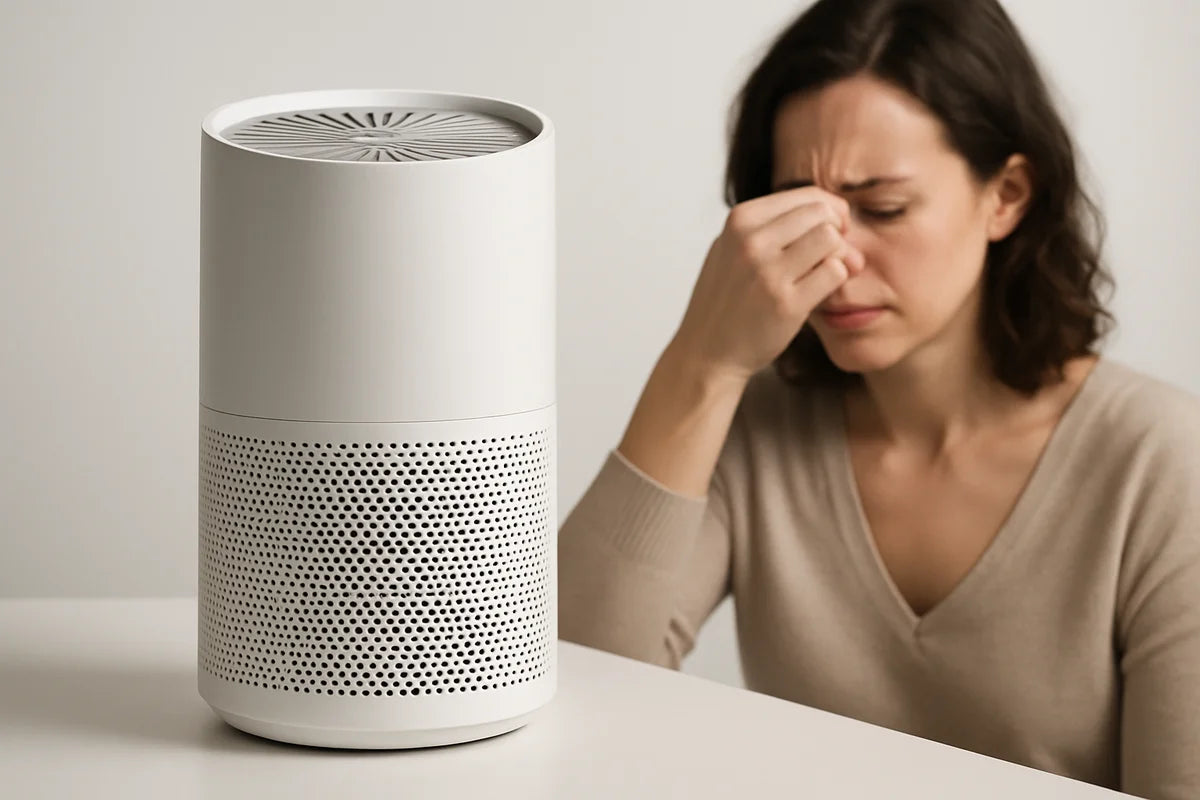
For some people, a whiff of perfume, cleaning spray, or air freshener doesn’t just smell “strong.” It flips a switch. Within minutes, your head tightens, your stomach turns, and the day starts to shrink around the pain.
If smells trigger your migraines, an air purifier can help, but only if you pick the right type and use it the right way. This article breaks down what matters (and what doesn’t), which filters actually remove odor triggers, and how to set up a room so your purifier does real work instead of just humming in the corner.
Why smells trigger migraines in the first place

Migraine isn’t just a bad headache. It’s a brain and nerve condition that can make you extra sensitive to light, sound, and smell. Odors can act like a spark when your system is already primed.
Smell triggers often fall into two buckets:
- True chemicals in the air (like fumes and gases) that irritate your nose and airways
- Strong scents (even “clean” ones like essential oils) that overload a sensitive nervous system
Many odor triggers are VOCs (volatile organic compounds). VOCs come off paints, new furniture, cleaning products, fragrances, and even some cooking. The U.S. Environmental Protection Agency explains common indoor sources and why VOCs matter for health in its overview of VOCs and indoor air quality.
An air purifier for migraines triggered by smells aims to lower those triggers, especially in the rooms where you spend the most time. It won’t fix every migraine, but it can cut the “random scent hit” that pushes you over the edge.
What an air purifier can and can’t do for smell-triggered migraines

Let’s be blunt: a purifier can’t stop a migraine that’s already rolling. And it can’t make a bottle of perfume in the next room harmless if you keep the door open and spray it anyway.
What it can do well:
- Reduce airborne particles that carry odor and irritation (smoke, cooking aerosols, dust, pet dander)
- Adsorb some odor-causing gases and VOCs when it has enough activated carbon or other sorbent media
- Lower the baseline “stuffy” smell in a room so smaller triggers don’t stack up
What it won’t do well:
- Remove all gases instantly (gases behave differently than particles)
- Fix the source (a leaking paint can, a moldy cabinet, a scented plug-in)
- Replace ventilation when you need fresh outdoor air
Think of it like this: you get the best results when you use a purifier as part of a simple anti-trigger system. Source control first, airflow second, filtration third.
The two filter types that matter most for odor-triggered migraines
1) HEPA for particles (and why it still helps with smells)
HEPA filters are built to capture fine particles. True HEPA is tested to remove at least 99.97% of 0.3 micron particles under lab conditions. That matters for smoke, dust, and aerosols from cooking, which can make a room feel “heavy” and irritating even when you can’t name the smell.
Particle control also matters because some odor compounds hitch a ride on tiny particles. If you remove the particles, you often reduce the intensity of the smell.
For background on how HEPA works and where it fits in indoor air cleanup, the CDC/NIOSH guide on HEPA filtration is a solid reference.
2) Activated carbon for gases and VOCs (the real “odor” filter)
If your migraines are triggered by smells, you should care about the carbon stage as much as the HEPA stage, and often more.
Activated carbon doesn’t “trap” gases like a net. It adsorbs them onto a huge surface area. But here’s the catch: carbon only works well if there’s enough of it and the air moves through it slowly enough to make contact.
That’s why many small, stylish purifiers struggle with odors. They may include a thin carbon sheet that helps a little but saturates fast.
Look for:
- A substantial carbon weight (brands often list pounds or kilograms of carbon)
- A deep carbon bed or thick cartridge, not just a flimsy sheet
- Replaceable carbon filters, with clear replacement schedules and real availability
If you’re dealing with strong chemical odors, you may also see other sorbents (like alumina or zeolite blends). That can help, but carbon quantity and design still do most of the work.
Specs that actually matter when choosing an air purifier for migraines triggered by smells
CADR and room size (don’t guess)
CADR stands for Clean Air Delivery Rate. It tells you how quickly a purifier cleans the air of certain particles. It’s not a perfect measure for VOC removal, but it’s useful for sizing and for keeping the air moving.
Choose a unit rated for a larger room than you have. Why? Because you’ll often run it at lower fan speeds (quieter, less draft) while still getting decent air changes.
The Association of Home Appliance Manufacturers (AHAM) explains CADR and sizing in its CADR guidance.
Quick sizing rule that works for most bedrooms: pick a purifier that can handle your room at a high setting, then run it on medium or low most of the time.
Noise and “stress load”
Migraine brains often hate noise. A purifier that whines, clicks, or rattles can become its own trigger.
When you compare models, look for:
- Decibel ratings at each fan speed (not just “sleep mode” marketing)
- A smooth sound profile (fan “whoosh” beats high-pitched whine)
- Stability on the floor (no vibration against baseboards or furniture)
If possible, buy from a retailer with easy returns so you can test it in the real room at night.
Ozone and “ionizer” modes (avoid them)
Some purifiers include ionizers or ozone features. Ozone can irritate lungs, and for sensitive people it can feel harsh fast. If smells trigger your migraines, don’t add another irritant to the mix.
Look for a purifier that does not generate ozone and lets you turn off any ionizer function. The California Air Resources Board maintains a list of certified air cleaners and explains ozone concerns in its indoor air cleaning devices program.
Filter cost and replacement reality
A purifier that needs pricey filters every two months can become a dust collector in the corner. Check:
- How often you must replace HEPA and carbon filters
- Whether you can buy replacements easily (and not just from one seller)
- Total yearly cost, not just the unit price
For odor-triggered migraines, plan on replacing carbon more often than the HEPA, especially if you cook a lot or live near traffic.
How to set up your purifier so it actually reduces odor triggers
Put it where the air is, not where it looks nice
A purifier needs clear airflow. Don’t tuck it behind a chair or under a desk.
- Leave at least 6-12 inches of space around intakes (more is better)
- Keep it out of corners if the intake sits on the sides
- Place it closer to the likely odor source when possible (kitchen edge, litter box area, entryway)
For migraine prevention, the best placement is often the bedroom, since sleep is when your nervous system should get a break.
Run it before you need it
If smells set you off, don’t wait until you smell something. Run the purifier on a steady low or medium setting so the room stays “clean” by default.
Helpful routines:
- Bedroom: run all night, every night
- Kitchen: run on high while cooking and for 30-60 minutes after
- After cleaning: run on high for 1-2 hours, windows open if outdoor air is decent
Pair it with smart ventilation
A purifier recirculates indoor air. Ventilation swaps indoor air for outdoor air. For odor and VOC problems, you often need both.
Basic moves that help:
- Use your kitchen range hood when you cook (vented outdoors if possible)
- Crack a window for short “air flush” periods if outdoor air is clean enough
- Use bathroom fans during and after showers to cut humidity and musty smells
If you want a simple way to judge when to open windows, check local outdoor air quality first. AirNow is a practical tool for smoke days and high pollution days.
Common smell triggers at home and what to do about them
An air purifier for migraines triggered by smells works best when you also remove the worst offenders. Here are high-impact fixes that don’t require a full home remodel.
Fragrance products (the big one)
- Drop plug-in air fresheners, scented candles, wax melts, and spray deodorizers
- Switch to fragrance-free detergent and dryer sheets (or skip dryer sheets)
- Ask housemates to keep perfumes and body sprays in a closed room with the fan on
Cleaning products
- Choose fragrance-free cleaners when you can
- Use small amounts and ventilate while cleaning
- Store chemicals in sealed bins, not open under the sink
Cooking smells and smoke
- Use lids and the range hood
- Run the purifier on high during frying or searing
- Clean grease filters and surfaces so odors don’t linger
New furniture and paint “off-gassing”
- Air out new items in a garage or spare room if possible
- Ventilate hard for the first week
- Run a carbon-heavy purifier in that room, not across the house
Off-gassing often fades with time, but sensitive people can struggle during the first days and weeks.
Musty smells and humidity
A purifier won’t fix dampness. If humidity drives musty odors, you may need a dehumidifier and a moisture check (bath fan use, leaks, damp basements).
If you suspect mold or chronic dampness, focus on moisture control first. For an overview of indoor pollutants and control steps, the EPA indoor air quality pages are a good starting point.
Choosing a purifier type based on your main migraine trigger
If perfume and air fresheners are your top trigger
- Prioritize a thick carbon filter (or a carbon canister style)
- Run it continuously in the room where scents drift in
- Stop the source first, because fragrance compounds can saturate carbon fast
If smoke (wildfire, cigarettes, cooking) is your top trigger
- Get true HEPA plus substantial carbon
- Size up for your room so you can move more air quietly
- Keep doors and windows sealed during smoke events
If you deal with wildfire smoke, it helps to follow a clear plan for clean air rooms. Many local public health departments share guidance, and you can also find practical steps from home airflow and filtration advice from This Old House that’s written for real homes, not labs.
If “dusty” air and allergies pile on
- HEPA matters most, but keep carbon in the mix
- Vacuum with a HEPA vacuum if you can
- Wash bedding weekly and keep pets out of the bedroom if that helps
A simple 7-day plan to test whether a purifier helps your migraines
If you’ve bought gadgets before and felt let down, this helps you test the change without guessing.
- Pick one room to control, usually your bedroom.
- Remove obvious scent sources from that room (candles, sprays, laundry products, open trash).
- Place the purifier with clear airflow and close the door at night.
- Run it 24/7 for a week. Use a higher speed for 30 minutes before bed, then switch to your quiet setting.
- Track headaches and migraine symptoms in a simple note: time, odor exposure, sleep, stress, and whether symptoms eased indoors.
- If you notice improvement, add a second location (living room or kitchen edge) or upgrade carbon capacity if odors still break through.
- If you notice no change, reassess the trigger. You may need stronger source control, better ventilation, or a different approach than filtration alone.
If you want a structured way to track migraine patterns, the American Migraine Foundation has practical resources on triggers and management at American Migraine Foundation.
Where to start if you’re buying your first air purifier
If you’re overwhelmed by specs and marketing, start with these priorities:
- True HEPA filter for particles
- A meaningful activated carbon filter (not just a thin sheet)
- No ozone, and an ionizer you can fully turn off
- Quiet operation on the setting you’ll actually use at night
- Room coverage that matches your space, with a bit of extra capacity
Then build a small “low-scent zone” around it. Fragrance-free laundry. No plug-ins. Ventilate when you clean or cook. That combo tends to do more than any single device.
Looking ahead
Smell-triggered migraines can make your home feel unpredictable. The goal isn’t perfect air. The goal is fewer surprise hits and more control over your space.
If you want the quickest win, set up one room where you can recover: a bedroom with a properly sized HEPA purifier that also has a serious carbon filter, run every night. After that, work outward. Tackle the biggest scent sources, then add ventilation habits that keep odors from building up in the first place. Over time, you’ll learn which changes lower your “trigger load” and which ones aren’t worth the effort.