Small apartments feel cozy until the air turns stale. Cooking smells hang around. Dust builds up faster than you expect. Traffic fumes slip in through old windows. And if you have pets or allergies, you may notice it even more.
The good news: you don’t need a huge machine (or a huge budget) to clean your air. Sustainable air purification options for small apartments focus on two things: cutting pollution at the source and cleaning what you can’t avoid, with as little waste and power use as possible.
What “sustainable” air purification really means
Many products claim they’re “eco” because they look minimal or use bamboo on the outside. That’s not the point. Sustainable air purification options for small apartments usually share a few traits:
- They reduce indoor pollution instead of masking it with fragrance.
- They use less electricity for the amount of clean air they deliver.
- They avoid gimmicks that create byproducts like ozone.
- They cut waste, especially from disposable filters and single-use parts.
- They fit real apartment life: limited space, shared walls, and short ventilation paths.
If you keep those goals in mind, it gets easier to choose what actually helps.
Start with the cleanest option: stop pollution at the source
If you want the biggest improvement with the lowest footprint, begin here. Every particle or gas you never release is something you don’t need to filter later.
Cook smarter (because cooking is a top indoor pollution source)
Cooking produces particles, nitrogen dioxide (from gas stoves), and greasy aerosols that stick to surfaces. In a small apartment, that cloud spreads fast.
- Use the exhaust fan every time you cook, even for “quick” meals.
- If your fan recirculates (many do), crack a window during high-heat cooking.
- Cover pans when you can to cut smoke and aerosol spread.
- Turn down high heat once the pan is hot. Most smoke comes from overheated oil.
The U.S. Environmental Protection Agency has a helpful overview of common indoor pollutants and why ventilation matters, especially in tight spaces like apartments. See EPA guidance on indoor air quality.
Skip “air fresheners” that add more stuff to the air
If a product works by scent, it doesn’t purify. Many sprays, plug-ins, and scented candles add volatile organic compounds (VOCs) and fine particles. If you want your place to smell clean, remove the source:
- Take out trash often and rinse bins.
- Wash soft items that hold odors (dish towels, couch throws, pet beds).
- Use a lidded compost container if you compost indoors.
- For persistent smells, try plain baking soda in a shallow dish, then fix the source.
Control moisture before mold starts
Mold doesn’t need much room. A damp bathroom or a chilly corner behind a dresser can do it. Sustainable air purification options for small apartments almost always include moisture control, because it prevents a bigger problem.
- Run the bathroom fan for 20-30 minutes after showers (a timer switch helps).
- Keep indoor humidity around 30-50% when you can.
- Fix small leaks fast, even slow drips under sinks.
- Don’t push large furniture flush against exterior walls if you get condensation.
For clear, science-based guidance on dampness and mold, check CDC information on mold.
Ventilation that works in an apartment (even if you can’t remodel)
Ventilation sounds simple: “open a window.” But strategy matters in a small space.
Use short, strong air swaps
If outdoor air is decent, do a quick flush instead of leaving a window cracked all day. Open two windows (or a window and a door) for 5-10 minutes to create a cross-breeze. This can clear CO2 buildup and cooking smells with less heat loss in winter and less AC loss in summer.
Time it around outdoor pollution
If you live near traffic, outdoor air changes by the hour. Try ventilating when pollution is lower, often later morning or after evening rush. A practical way to check: use AirNow’s local air quality reports before you open up on bad days.
Don’t forget the simplest “filter”: your range hood
If your range hood vents outdoors, use it hard and often. If it recirculates, keep its grease filter clean. A clogged grease filter wastes power and moves less air.
Pick the right air purifier for a small apartment (and keep it sustainable)
Once you reduce sources and ventilate well, a purifier can handle the leftovers. But not all “air cleaning” is equal. For most apartments, you want particle removal without ozone or heavy ongoing waste.
Choose a true HEPA (or near-HEPA) purifier for particles
Dust, pollen, pet dander, and smoke are particle problems. A HEPA purifier targets these well when sized and used correctly. The key spec isn’t “covers 1,000 sq ft” on a box. It’s CADR (Clean Air Delivery Rate).
AHAM, an industry standards group, explains CADR and how it links to room size. See AHAM’s CADR and air cleaner guidance.
- Match CADR to your room, not your whole apartment, if you can’t afford multiple units.
- In a studio, place the purifier near the main “pollution zone” (often the kitchen area) but not blocked by furniture.
- Run it on a lower setting most of the day, then boost during cooking or cleaning.
Watch for ozone claims and “ionizers”
Some devices market “ionization,” “plasma,” or “activated oxygen.” These can create ozone or other reactive byproducts. You don’t want that in a small, enclosed space. If a product can generate ozone, skip it.
For a plain-language overview of air cleaning tech and what to avoid, the nonprofit Energy Star program covers what matters for efficiency and safety. See Energy Star air purifier guidance.
Make filter waste smaller (and cheaper)
Filters create waste, but you can reduce it a lot:
- Pick a model with a washable pre-filter. It catches hair and lint so the main filter lasts longer.
- Vacuum the pre-filter every 1-2 weeks (or more if you have pets).
- Replace the HEPA filter based on performance, not a rigid calendar. If airflow drops and cleaning the pre-filter doesn’t help, it’s time.
- Buy fewer, better filters. Some very cheap units need frequent replacements, which creates more trash and cost.
If you want to go further, look for brands that offer filter recycling programs. It’s not universal, but it’s growing.
Use less energy without giving up clean air
A sustainable purifier runs often, not just for a panic clean. So energy use matters.
- Look for Energy Star certification when possible.
- Use “auto” mode if it’s reliable, but don’t trust it blindly. Some sensors respond more to dust than smoke.
- In bedrooms, run a higher speed for 30-60 minutes before sleep, then drop to low.
DIY and low-waste options that actually help
You don’t need to buy a premium device to improve air. A few low-waste moves can make a real dent, especially for particles.
Build a DIY box fan filter (when smoke or dust spikes)
If you want a budget-friendly option, a DIY setup using a box fan and a high-quality HVAC filter can work well for particles. It’s not pretty, but it’s practical for wildfire smoke or a dusty renovation next door.
For tested designs and safety notes, see guidance from UC Davis on building a Corsi-Rosenthal box. Use common sense: don’t leave a DIY fan running unattended, and keep it away from kids, pets, and curtains.
Clean with a HEPA vacuum (so you remove dust instead of tossing it)
Air purification isn’t only about machines that sit in a corner. Cleaning habits change what becomes airborne.
- If you can, use a vacuum with sealed filtration and a HEPA filter.
- Vacuum slowly. Fast passes kick dust up.
- Dust with a damp cloth, not a dry duster that flicks particles into the air.
Plants, charcoal bags, and other popular “natural” fixes
People love natural solutions. Some help a little. Some don’t help in the way you think.
Do houseplants purify air?
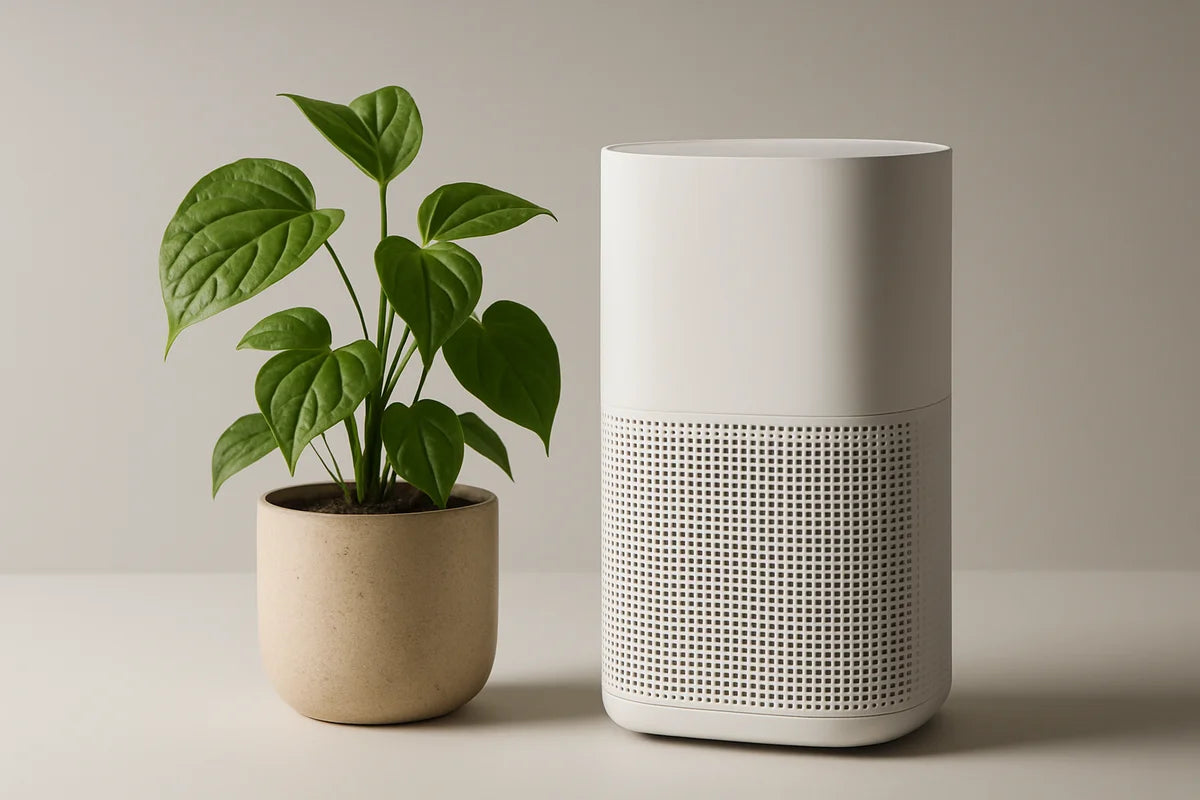
Plants look great and can boost your mood. But in real apartments, they don’t clean air at a meaningful rate compared to ventilation and filtration. If you like plants, keep them. Just don’t rely on them as your main plan for sustainable air purification options for small apartments.
Activated carbon helps with some odors and VOCs (within limits)
Carbon filters can reduce some gases and odors, but they saturate. They also vary a lot in quality. If your main problem is cooking smell, a carbon layer in a HEPA purifier can help, but it won’t replace a vented range hood.
Charcoal “odor bags” have a narrow use
They can help in tiny enclosed spots like shoes closets or pantry corners. They won’t clean the air in a whole studio.
Room-by-room strategy for small spaces
In a small apartment, one change can affect everything. Still, it helps to think in zones.
The kitchen zone
- Make your range hood your default.
- Keep a purifier within a few steps of the stove if smoke is common.
- Use lids and lower heat to reduce emissions.
The sleeping zone
- Keep bedding clean and wash pillows and duvet covers on a schedule.
- Run the purifier near (not right next to) your bed to cut dust and pollen overnight.
- If outdoor air is good, do a short air flush before sleep.
The bathroom and closet corners
- Stop dampness with fan use and quick drying.
- Don’t store wet towels in closed hampers.
- If you must use a small dehumidifier, choose an efficient model and aim it at the dampest zone, not the whole apartment.
How to choose the best option for your apartment and your goals
If you’re unsure where to start, use this simple decision path.
If your main issue is dust, pollen, or pet dander
- Get a right-sized HEPA purifier with a washable pre-filter.
- Upgrade cleaning habits: HEPA vacuum, damp dusting, wash soft items.
If your main issue is cooking smoke or odors
- Use your range hood and add timed window ventilation when outdoor air is decent.
- Choose a purifier with HEPA plus a real carbon filter (not just “carbon coated”).
If your main issue is wildfire smoke
- Use a HEPA purifier and keep windows closed when AQI is bad.
- Seal obvious leaks with removable weatherstripping.
- Consider a DIY box fan filter as a backup if you need more CADR on a budget.
If your main issue is mold risk
- Focus on humidity control and ventilation first.
- Clean small spots early and fix the water source.
- A purifier can help with spores, but it won’t solve dampness.
Where to start this week
You don’t need a shopping spree. Start with one or two changes you can keep doing.
- Do a 10-minute audit: find your biggest source (cooking, dust, dampness, pets, smoke from outside).
- Set one habit: run the kitchen or bathroom fan every time, or do a daily 5-minute cross-ventilation when air outside is good.
- If you buy a purifier, size it for the room where you spend the most time and plan for filter upkeep.
- Track how you feel for two weeks: fewer odors, less dust on surfaces, easier breathing at night.
Air quality tech will keep improving, and apartments will (slowly) get better ventilation standards. For now, the most sustainable path is still the same: make less pollution indoors, swap air when you can, and filter what’s left with efficient gear you’ll actually maintain.