Most of us think about air pollution as an outdoor problem. But indoor air can be worse, especially in tight, well-insulated homes where stale air lingers. Cooking, cleaning sprays, damp basements, pets, smoke from candles, even that “new” smell from furniture can all add to the load.
The good news: you can improve air quality in home naturally with a handful of simple habits. No fancy setup needed. Start with the basics (fresh air, moisture control, and fewer indoor pollutants), then build from there.
What “bad indoor air” usually is

Indoor air problems tend to fall into a few buckets. Once you know which one you’re dealing with, the fix gets much easier.
- Particles: dust, pet dander, pollen, smoke, soot, and cooking aerosols
- Gases and fumes: volatile organic compounds (VOCs) from paints, cleaners, fragranced products, and some building materials
- Moisture and mold: damp air that feeds mold and dust mites
- Combustion pollutants: carbon monoxide and nitrogen dioxide from gas stoves, fireplaces, and attached garages
- Outdoor pollutants that drift inside: wildfire smoke, traffic pollution, seasonal pollen
If you want a quick primer on the main indoor pollutants and how they affect health, the EPA’s indoor air quality overview lays it out in plain language.
Start with the biggest win: fresh air, on purpose

Many homes don’t “breathe” much. That’s great for energy bills, but it can trap pollutants indoors. Ventilation fixes that fast.
Do short, strong air-outs
You don’t need to leave windows open all day. Try this instead:
- Open two windows on opposite sides of the home for 5-10 minutes
- Add a fan pointing out one window to push stale air out
- Do it once in the morning and once in the evening when outdoor air is clean
If pollen is your problem, air out after rain or later in the day when counts often drop. If you live near traffic, avoid rush hour.
Use your exhaust fans every time you cook and shower
Your kitchen and bathroom are pollutant factories. Cooking releases particles and gases. Hot showers dump moisture into the air. Turn on the fan before you start, and keep it running 10-20 minutes after.
If your range hood vents back into the kitchen (recirculating), it helps with grease but does less for gases. A vented hood that exhausts outdoors works better for real air quality. For why this matters, see the ASHRAE indoor air quality resources on ventilation and healthy buildings.
Control humidity: the quiet driver of mold and musty air
If you can only fix one “comfort” issue, fix moisture. High humidity makes the air feel heavy, feeds mold, and increases dust mites. Low humidity can irritate your nose and throat. Most homes do best around 30-50% relative humidity.
Find your humidity level (then act)
A cheap hygrometer tells you what’s going on. If humidity sits above 50% for long stretches, focus on moisture sources:
- Run the bathroom fan longer, and crack the door after showers
- Fix plumbing leaks fast, even small drips under sinks
- Don’t dry laundry indoors unless you vent the dryer or open windows
- Cover pots while boiling and use the range fan
- Keep furniture a few inches off exterior walls in damp rooms
If you’re fighting damp basements or repeated mold, the CDC’s guidance on mold and moisture is a solid, practical reference for what works and what to avoid.
Use natural moisture control where it counts
Not every home needs a dehumidifier, but many basements do. If you want to improve air quality in home naturally first, start with building habits:
- Keep gutters clear and slope soil away from the foundation
- Ventilate the bathroom and kitchen consistently
- Store cardboard off basement floors (it holds moisture and can grow mold)
- Use lidded bins instead of open stacks in damp rooms
Cut sources at the root (this beats “air freshening” every time)
If your home smells “chemical,” “perfumed,” or “stale,” you can usually trace it to a source. Removing the source improves indoor air faster than trying to cover it up.
Go fragrance-light
Many scented products release VOCs and other irritants. This includes air fresheners, plug-ins, incense, scented candles, and strongly fragranced cleaners and detergents.
- Use unscented or fragrance-free cleaners and laundry products
- Skip spray deodorizers; open a window and deal with the source odor
- For bathrooms, clean drains and run the fan instead of masking smells
If you want a deeper look at common VOC sources and how to reduce them, the Mayo Clinic’s indoor air quality article explains the basics without alarmism.
Rethink candles and “cozy” smoke
Burning anything indoors creates particles. Some people tolerate it fine; others get headaches or coughing. If you love candles, use them less often, keep the wick trimmed, and avoid smoky jars. For fireplaces and wood stoves, make sure the flue works and the wood is dry.
Store chemicals like you mean it
Paints, solvents, pesticides, and fuel cans can off-gas for months. Store them outside the living area if you can (a shed is better than a closet). Keep lids tight. Don’t idle cars in the garage, even with the door open.
Clean smarter: reduce dust without kicking it into the air
Dust is not just dirt. It’s a mix of skin flakes, textile fibers, soil, pollen, and sometimes combustion particles. You can’t eliminate it, but you can keep it from circulating.
Vacuum with the right machine, the right way
- Vacuum high-traffic floors 2-3 times per week if you have pets or allergies
- Use a vacuum with a sealed system and HEPA filtration if possible
- Vacuum slowly so the machine can capture fine particles
Don’t forget soft surfaces. Upholstery and rugs hold onto dust and dander. A quick pass with a brush attachment helps.
Dust with a damp cloth, not a dry feather duster
Dry dusting often just moves particles into the air. A slightly damp microfiber cloth traps dust instead. Rinse it often. Work top to bottom so you don’t redo surfaces.
Wash bedding hot and keep sleeping air clean
Your bed collects dust mites, skin flakes, and pet dander. If you wake up stuffy, start here.
- Wash sheets weekly
- Wash pillowcases more often if you have allergies
- Use mattress and pillow covers if dust mites trigger symptoms
- Keep pets off the bed if you’re sensitive
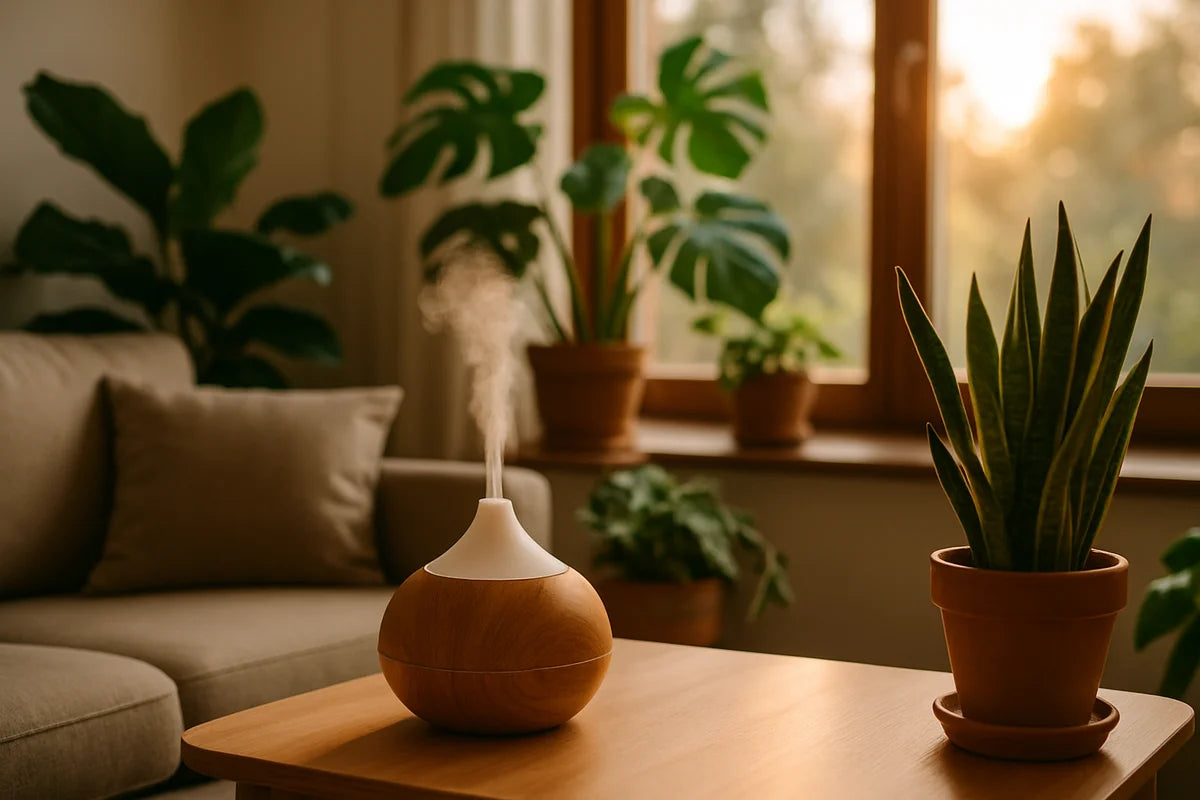
Use plants carefully (helpful, but not magic)
Houseplants can boost mood and may help a bit with humidity and some odors. But they won’t “scrub” a home’s air in the way many social posts claim. Think of plants as a nice extra, not the main plan.
If you keep plants, avoid overwatering. Damp soil can grow mold and attract gnats, which makes indoor air feel worse. Choose a few easy plants, give them enough light, and let the top layer of soil dry between waterings.
Natural kitchen habits that make a big air difference
The kitchen is often the biggest driver of indoor particles, even in clean homes.
Cook with lids, lower heat, and the fan on
- Use the range hood on high when frying or searing
- Cover pans when you can to cut aerosols and moisture
- Prefer baking, steaming, or simmering over frequent deep frying
Watch for gas stove pollution
Gas stoves can release nitrogen dioxide and other byproducts. You don’t have to panic, but you should ventilate. Always run the hood, and crack a window during heavy cooking.
For a clear rundown of gas stove concerns and practical steps, see Scientific American’s explanation of gas stove health risks.
Check the hidden culprits: filters, vents, and “mystery” smells
Sometimes the issue isn’t what you do day to day. It’s what your home has been holding onto.
Change HVAC filters on a schedule
If you have forced-air heating or cooling, the filter matters. A clogged filter reduces airflow and can worsen dust. Most homes do well changing filters every 1-3 months, depending on pets, allergies, and how often the system runs.
Not sure which filter rating to use? The U.S. Department of Energy’s home maintenance guidance includes practical tips on HVAC upkeep and efficiency that tie directly to air quality.
Keep vents and returns clear
- Don’t block return vents with furniture
- Vacuum vent covers now and then
- If a room always smells stale, check if air can flow in and out (a closed door can trap air)
Track odors like a detective
Musty smell in one room only? That often points to moisture behind a wall, damp carpet padding, or a slow leak. Sharp chemical smell after new furniture? That may be off-gassing. Pet smell that returns right after cleaning? That often lives in fabrics, not the air.
Try a simple log for a week: when the smell starts, where it’s strongest, and what you were doing (cooking, showering, running heat). Patterns show you the source.
Make an “indoor air routine” that’s easy to keep
Most people fail at indoor air fixes because they choose tasks that are too big. Build a small routine instead.
Daily (5 minutes total)
- Run kitchen fan while cooking
- Run bathroom fan after showers
- Do a quick 5-10 minute cross-ventilation air-out when outdoor air is clean
Weekly (20-40 minutes)
- Vacuum floors and rugs
- Damp-dust flat surfaces
- Wash bedding
- Check for any new damp spots under sinks and around toilets
Monthly (15 minutes)
- Check humidity readings
- Inspect window sills and corners for condensation or spotting
- Clean the range hood filter if it’s greasy
When “natural” isn’t enough (and what to do next)
Natural steps often solve most indoor air problems. But some cases need extra help. If you see visible mold that keeps coming back, smell gas, or get headaches that stop when you leave home, treat that as a signal. Fixing air quality isn’t just about comfort.
If you want to measure your home’s air instead of guessing, you can start with local outdoor readings and compare. Many areas provide live data through AirNow’s air quality index reports, which can help you decide when to open windows and when to keep them closed.
Where to start this week
If you’re not sure what to do first, pick the simplest actions with the biggest payoff:
- Ventilate on purpose: cross-ventilate for 5-10 minutes once or twice a day when outdoor air is clean.
- Use exhaust fans every time you cook and shower, and let them run after.
- Cut fragrances for a week and see what changes in your breathing and headaches.
- Get humidity into the 30-50% range by fixing moisture sources and improving airflow.
- Clean dust with damp methods and vacuum slowly with good filtration.
Once those habits stick, you can decide what you need next: a better vented range hood, a basement moisture plan, or a tighter cleaning routine in allergy season. The best part is that each small change stacks. Over a month, you’ll feel it in the air, and you’ll spend less time chasing odors and more time enjoying your home.