Your home can steady you or drain you. The difference often comes down to small, repeatable choices: how light hits a room at night, whether clutter blocks your path, how loud your space feels, and if you have one spot where your brain learns to downshift.
When you cultivate a relaxing home atmosphere for better mental health, you’re not chasing a perfect “calm” aesthetic. You’re building a space that lowers daily friction and helps your nervous system recover. This article breaks that into practical steps you can start today, even if you rent, share space, or live in a small home.
Start with the goal: less friction, more recovery

A relaxing home isn’t silent and spotless. It’s a place where you can move through your routines with less strain. Think in two buckets:
- Reduce stress triggers: harsh light, constant noise, visual clutter, bad air, “nowhere to sit,” messy entryways.
- Add recovery cues: softer light at night, a tidy landing zone, comfortable seating, fresh air, soothing scents, simple rituals.
One useful lens is the body’s stress response. When you face noise, bright light late at night, or a chaotic room, your body can stay keyed up. Research on stress and the nervous system often points back to the same basics: sleep, safety cues, and recovery time. For an overview of how stress affects the body, see the American Psychological Association’s summary of stress effects.
Light: the fastest way to change how a room feels

If you do only one thing, change your lighting. Light shapes mood and sleep. Harsh overhead bulbs can keep you alert when you want to wind down. Dim, warm light does the opposite.
Use “day mode” and “night mode” lighting
- Day mode: open blinds, use brighter bulbs, and place a task lamp near work areas.
- Night mode: swap to warm bulbs, turn off overheads, and use 2-3 small lamps instead.
A simple rule: after dinner, make your home look like a living room, not an office. If you need guidance on how light affects your body clock, the National Institute of General Medical Sciences explains circadian rhythms in plain language.
Quick upgrades that don’t require rewiring
- Warm LEDs (look for “soft white” or about 2700K) in the rooms where you relax.
- Plug-in dimmers or smart bulbs so you can lower light without thinking.
- One bedside lamp that’s easy to reach, so you don’t rely on ceiling lights at night.
Sound: make your space feel quieter without total silence
Noise wears you down, especially when it’s unpredictable. You don’t need a soundproof home. You need fewer sharp edges: less echo, less street noise, less “everything is loud all the time.”
Soften echo with soft surfaces
- Add a rug or runner in high-traffic areas.
- Hang curtains (even simple ones) to cut bounce and street noise.
- Use fabric where you can: cushions, throws, even a wall hanging.
Create steady background sound when you need it
Steady sound masks sudden noise. If you live with neighbors or share walls, try white noise, rain sounds, or a fan at night. If you want a practical primer on the different “colors” of noise (white, pink, brown) and when to use them, Sleep Foundation’s guide to white noise is a solid starting point.
Air and scent: don’t ignore the basics your brain notices first
Stale air, lingering cooking smells, and dust can make a home feel heavy. Good air reads as safety and comfort, even if you don’t notice it right away.
Ventilation you can do in minutes
- Open two windows for 5-10 minutes to create a cross-breeze.
- Run the bathroom fan during and after showers.
- Use the range hood while cooking, if you have one.
Indoor air quality affects health more than most people think. For clear, practical guidance, the EPA’s indoor air quality page covers common pollutants and simple fixes.
Use scent as a cue, not a cover-up
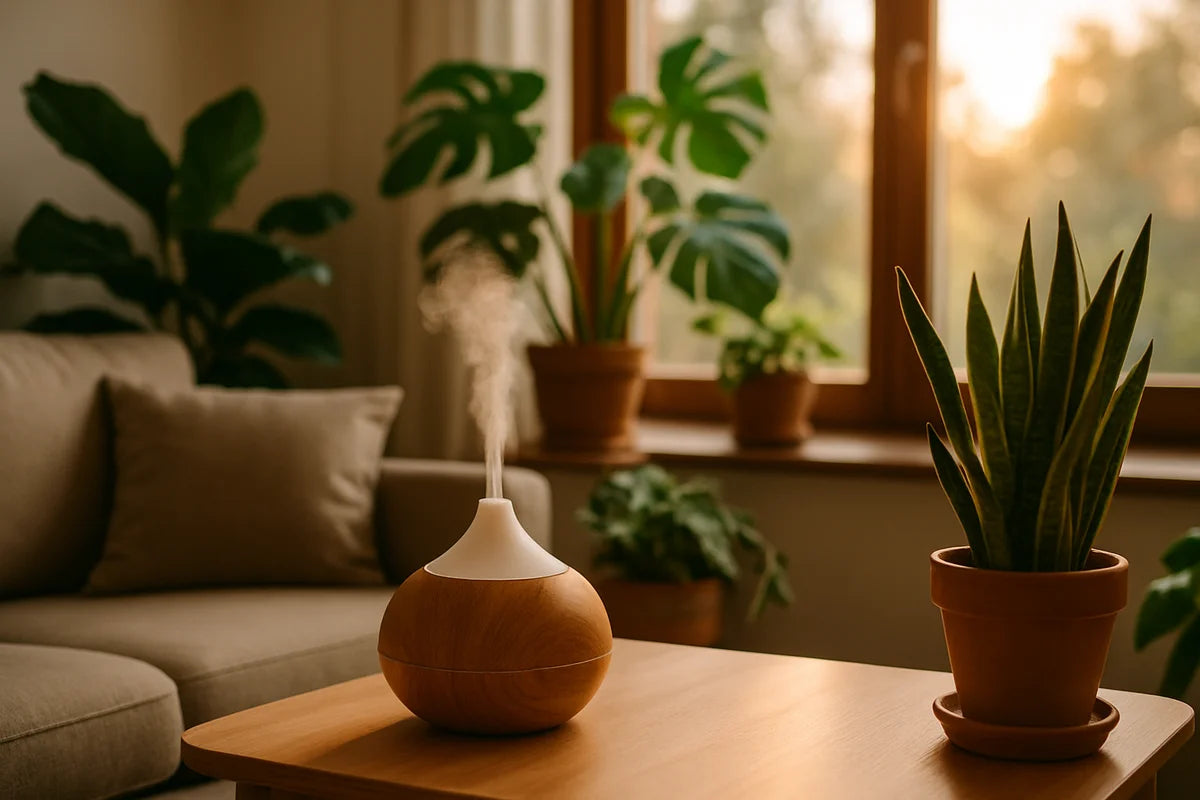
Scents can become a “switch” that tells your brain it’s time to relax. Keep it simple and gentle. You don’t want a strong fragrance that gives you a headache.
- Vent first, then add scent.
- Try one consistent scent in the evening (lavender, cedar, clean linen, or unscented if you prefer).
- Avoid mixing many scented products at once (candles plus plug-ins plus sprays).
If you like essential oils, use them sparingly and follow safety tips, especially with pets. For a balanced overview, Cleveland Clinic’s guidance on essential oils covers benefits and cautions.
Clutter: reduce visual noise without aiming for perfect
Clutter isn’t a moral failure. It’s often a sign you don’t have enough storage, your routines don’t match your space, or you’re tired. Still, clutter can keep your brain “on.” A calmer room gives your attention fewer things to track.
Use the “one-surface reset”
Pick one surface you’ll clear most days: the kitchen counter, coffee table, or nightstand. This gives you a visible win and a mental exhale.
- Set a 5-minute timer.
- Throw away trash and recycling first.
- Return obvious items to their homes.
- Make a small “to deal with” pile and stop when the timer ends.
Make landing zones so stuff stops drifting
- Entry: a hook for keys, a tray for wallet, a spot for shoes.
- Bedroom: a basket for worn-but-not-dirty clothes.
- Living room: one bin for remotes, chargers, and odds and ends.
This is how you cultivate a relaxing home atmosphere for better mental health without turning your life into a constant cleanup project. You’re designing the room to support the habit, not forcing willpower.
Comfort: build one “exhale spot” in every home
You need at least one place where your body can fully relax. Not a workspace. Not a doomscroll spot. A place that signals rest.
What makes a good exhale spot?
- Support: a chair or sofa that doesn’t make you tense up.
- Light control: a lamp nearby, not just overhead lighting.
- Warmth: a throw blanket, socks, or a heating pad if you like heat.
- Reach: water, a book, tissues, and your charger within arm’s length.
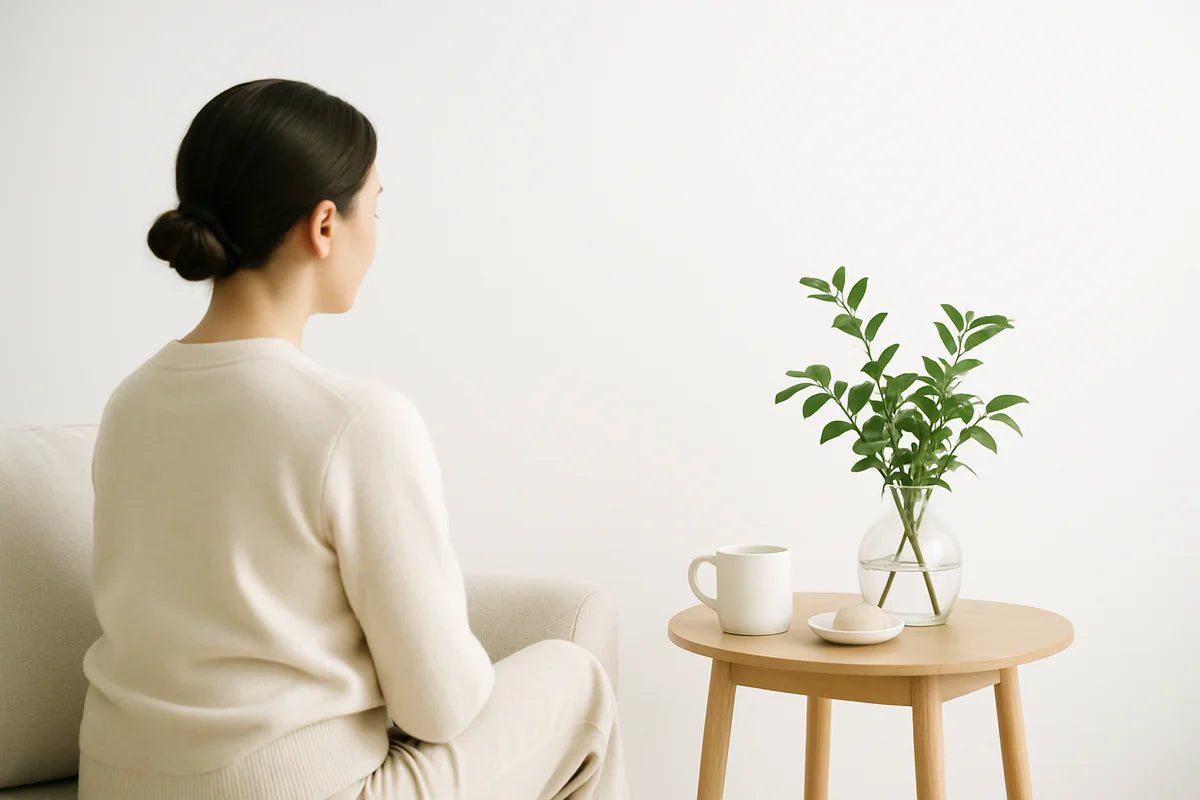
If you’re short on space, claim a corner. Add one lamp, one cushion, and one small table. That’s enough to change how the room feels.
Color and visuals: choose calm on purpose
Color affects mood, but you don’t need a full repaint. What matters most is contrast and busyness. Too many loud patterns or clashing colors can feel restless. A few steady tones can feel grounding.
Easy visual edits
- Pick one “base” color you already have (cream, gray, tan, soft green) and repeat it in small ways.
- Limit patterns to one or two per room.
- Hide the chaotic stuff (cables, mail piles, kid toys) in bins with lids.
Bring in nature, even in a small way
A plant, a bowl of lemons, or a vase of grocery-store flowers can make a room feel cared for. If you’re curious about why nature cues help mental health, Greater Good Magazine at UC Berkeley shares research-backed ideas in an easy read.
Routines: make calm automatic, not another task
Your home atmosphere comes from what happens in it each day. Tiny rituals matter because they repeat. They teach your brain what to expect.
A 10-minute evening reset
- Dim lights in the main room.
- Do a fast tidy of the one surface you chose.
- Set out one thing that helps tomorrow (coffee mug, gym clothes, lunch container).
- Pick one low-stimulation activity for 15 minutes: stretch, shower, read, or music.
Protect sleep with “house rules” that feel kind, not strict
- Charge your phone outside the bedroom, if you can.
- Keep the bedroom cool and dark, or use a sleep mask.
- Use the bed for sleep and sex, not work.
If you want a practical checklist for sleep-supportive habits, CDC sleep hygiene guidance keeps it straightforward.
Room-by-room changes that pay off fast
Entryway: reduce the “walk-in stress spike”
- Add one hook per person for bags and coats.
- Keep a small tray for keys and earbuds.
- Put a small mat inside the door to cut dirt and grit.
Kitchen: make it easier to feed yourself
- Clear one counter area for food prep.
- Keep a bowl of easy snacks visible (fruit, nuts) if that helps you eat regularly.
- Use warm under-cabinet lighting or a lamp in the evening.
Living room: reduce stimulation, increase comfort
- Angle seating so conversation feels easy.
- Keep one basket for blankets and one bin for small clutter.
- Pick one calm activity you can do without screens and leave it out (puzzle, knitting, book).
Bedroom: treat it like a recovery room
- Use two small lamps instead of one bright overhead light.
- Keep the floor clear near the bed so mornings feel smoother.
- Choose bedding that feels good on your skin, even if it’s not fancy.
When you share space: set boundaries without making it weird
Roommates, kids, partners, and family can make “relaxing” feel out of reach. You can still cultivate a relaxing home atmosphere for better mental health by agreeing on a few basics.
- Pick quiet hours (even one hour a night) where noise stays low.
- Create personal zones: one shelf, one drawer, one corner that stays yours.
- Use signals: a lamp on means “I’m open to chat,” headphones mean “not now.”
If money is tight, focus on what changes the feel without big spending: lighting, sound, and clutter control. For a practical, free tool that can help you plan small home projects and prioritize tasks, try a simple habit tracker like Todoist or any checklist app you’ll actually use.
Where to start this week
Pick one change that lowers stress today, and one change that supports recovery tonight. Keep it small enough that you’ll do it even when you’re tired.
- Today: replace one bulb with a warm bulb, or add one lamp to your main room.
- Tonight: do a 5-minute one-surface reset and set your home to night mode lighting.
- This weekend: create one exhale spot with a blanket, a lamp, and a small table.
As you repeat these choices, your home starts to teach your body a new pattern: you can come in, set things down, and feel your shoulders drop. That’s the real payoff. Not a perfect space, but a space that helps you recover, sleep better, and show up with a steadier mind tomorrow.