Kids don’t need a huge room or expensive gear to play well indoors. They need a space that feels safe, inviting, and easy to use. If you want to go one step further, you can build a green indoor play space that cuts waste, uses safer materials, and keeps indoor air cleaner. That matters because kids spend a lot of time close to the floor, touching everything, and breathing faster than adults.
This guide walks you through practical choices you can make with any budget, from paint and flooring to toys, storage, and everyday cleaning.
What “green” means for an indoor play space

A green indoor play space isn’t a themed room with a few plants. It’s a play area you set up with three goals in mind:
- Lower exposure to harmful chemicals (especially in air and dust)
- Use durable, renewable, or reused materials where it makes sense
- Design for long-term use, so you buy less and throw away less
You don’t need perfection. You need better defaults.
Start with the room basics (air, light, and layout)

Pick the right spot
If you have choices, avoid the damp corner of a basement or a room that smells musty after rain. Moisture leads to mold, and mold problems don’t stay polite. If the only space you have is below grade, focus on dehumidifying and keeping fabrics off the floor.
Make ventilation part of the plan
Many “new” smells come from VOCs (volatile organic compounds) in paint, flooring, adhesives, and furniture. Ventilation helps while you set things up and long after.
- Open windows during and after any painting or assembly.
- Use fans to move air out, not just around.
- If wildfire smoke or outdoor pollution is a concern, run a HEPA air purifier instead of opening windows.
If you want a solid primer on indoor air basics, the EPA’s indoor air quality guidance gives a clear overview without hype.
Use daylight when you can
Natural light makes a play space feel calmer and more alive. If daylight is limited, choose warm LED bulbs and skip the harsh blue-white look. Put lights on simple switches or plug-in timers so the space stays consistent.
Design the layout for real play
Before you buy anything, measure the space and map three zones:
- Active zone: jumping, climbing, gross motor play
- Quiet zone: reading, puzzles, drawing
- Mess zone: crafts, sensory play, building projects
This zoning trick cuts clutter because each item has a “home” that matches how kids use it.
Choose low-tox materials for floors, walls, and finishes
Flooring that’s softer on bodies and the planet
Floors take a beating. They also hold dust and off-gas chemicals. Aim for surfaces that clean easily and don’t require harsh products.
- Solid wood or sealed hardwood: durable and long-lived if you already have it.
- Cork: renewable, warm underfoot, and naturally springy.
- Natural linoleum (not vinyl): made from linseed oil and other natural materials.
If you need a rug, try wool (naturally stain resistant) or cotton. Look for options that don’t come with heavy chemical treatments.
If you’re comparing material pros and cons, Green Building Advisor often breaks down indoor-friendly building choices in plain language.
Paint and wall choices that don’t stink up the room
Paint can be a big VOC source, especially in a small playroom. Choose a low-VOC or zero-VOC paint, and still ventilate. “Zero-VOC” doesn’t mean “zero smell,” and tinting can add VOCs back in, so ask before you buy.
Want a simple explainer on VOCs and why they matter indoors? The California Air Resources Board overview is clear and science-based.
Skip the heavy fragrance trend
Scented plug-ins, candles, and sprays can irritate kids with asthma or allergies. If you want the room to smell fresh, clean with mild soap, ventilate, and deal with the source (dirty bins, damp rugs, old cushions). You’ll get better results than trying to cover it.
Pick furniture and storage that lasts
Buy less by choosing pieces that adapt
A green indoor play space works longer when the furniture changes with your kid.
- A low shelf with bins works for toddlers and grade-schoolers.
- A sturdy table can shift from blocks to homework to model kits.
- A floor cushion corner can become a reading nook later.
Look for solid wood, metal, and repairable hardware. Avoid “fast furniture” that wobbles after one move.
Secondhand can be the greenest choice
Used shelves and tables keep materials in circulation and cost less. You can often find real wood pieces that beat new particleboard.
Quick safety check for secondhand finds:
- Make sure tall furniture anchors to studs.
- Check for peeling paint, rough splinters, and pinch points.
- Avoid old foam cushions that shed dust and smell stale.
Make storage easy enough that kids will use it
If cleanup feels like a chore, it won’t stick. Use open bins, picture labels for younger kids, and a “rotation bin” to keep the space from overflowing.
- Keep 6-10 core toys out.
- Store the rest in a closet or labeled tubs.
- Swap every week or two based on what your kid asks for.
This cuts buying pressure because “new” play often comes from rotation, not purchases.
Choose toys and play materials with lower waste and higher replay value
Go for open-ended toys
Open-ended toys do more with less. They also keep kids interested longer, which is the real secret to buying less.
- Wood blocks, magnetic tiles, and simple trains
- Dolls, animals, and small-world figures
- Play silks, blankets, and cardboard boxes
- Art supplies that don’t dry out in a week
Try to avoid single-use craft kits that create instant trash. If you like guided projects, build your own “project shelf” with basic supplies.
Watch for materials and finishes
You don’t need to fear every plastic toy, but you can make smarter picks:
- Choose solid, well-made items that won’t crack fast.
- Avoid strong chemical smells. Trust your nose.
- Look for water-based finishes on wood where possible.
If you’re buying for babies or toddlers who mouth toys, you may want to avoid older soft plastics. For background on chemicals of concern in some plastics, the National Institute of Environmental Health Sciences overview on endocrine disruptors gives a grounded starting point.
Add “free” loose parts without adding junk
Loose parts spark creativity, but they can turn into clutter fast. Curate them.
- Pinecones, smooth stones, and sticks (washed and dried)
- Fabric scraps and ribbon
- Paper towel tubes, egg cartons, and clean cardboard
- Jar lids and sturdy containers for sorting games
Set a container limit. When it’s full, something has to go.
Build in movement without turning your home into a gym
Choose one “big body” feature
Indoor movement helps kids regulate mood and energy. Pick one main item based on space and age:
- Toddler balance beam or stepping stones
- Foldable climbing triangle
- Pull-up bar with rings (for older kids, installed safely)
- Mini trampoline with a handle (use rules and supervision)
Then keep the rest simple: a yoga mat, a few foam blocks, and clear floor space.
Use safer surfacing
If you add climbing, think about falls. A thick wool rug plus a natural rubber pad can help. So can a quality foam mat, but look for options with lower odor and better durability so you replace it less.
Create a low-waste craft and sensory station
Stock a “core kit” instead of endless kits
Craft kits feel tidy until they don’t. A core kit handles most projects and cuts packaging waste.
- Washable markers and colored pencils
- Watercolor set and one good brush per kid
- Child-safe scissors and a glue stick
- Recycled paper, cardboard, and a notebook for drawing
Store it in a lidded bin so it doesn’t spread across the house.
Plan sensory play that won’t wreck your floors
Sensory play can be simple and green if you keep boundaries clear:
- Use a tray or shallow under-bed bin as a “sensory table.”
- Try dry rice, oats, or kinetic sand in small amounts.
- Set a rule: sensory materials stay on the tray.
If you need ideas that don’t rely on buying special products, Creative Child magazine’s activity posts often share simple, home-based play ideas you can adapt.
Keep the space clean without harsh cleaners
Reduce dust at the source
Dust isn’t just dirt. It can hold bits of fibers, soil, and residues from indoors. A green indoor play space stays healthier when you cut dust buildup.
- Vacuum with a HEPA filter if you can.
- Wash washable rugs and covers on a schedule.
- Use a damp cloth for shelves so you trap dust instead of spreading it.
Use simple, fragrance-free cleaning products
Warm water, mild dish soap, and a microfiber cloth handle most mess. For disinfecting, follow product directions and avoid overuse. If you want a clear, practical rundown on safer cleaning choices, the Consumer Reports guide to cleaning and disinfecting safely covers what works and when you need it.
Handle shoes and outdoor gear smartly
If the play space sits near your entry, add a small shoe basket and a hook rail. Less tracked-in dirt means less cleaning and less floor wear.
Bring nature indoors without creating new problems
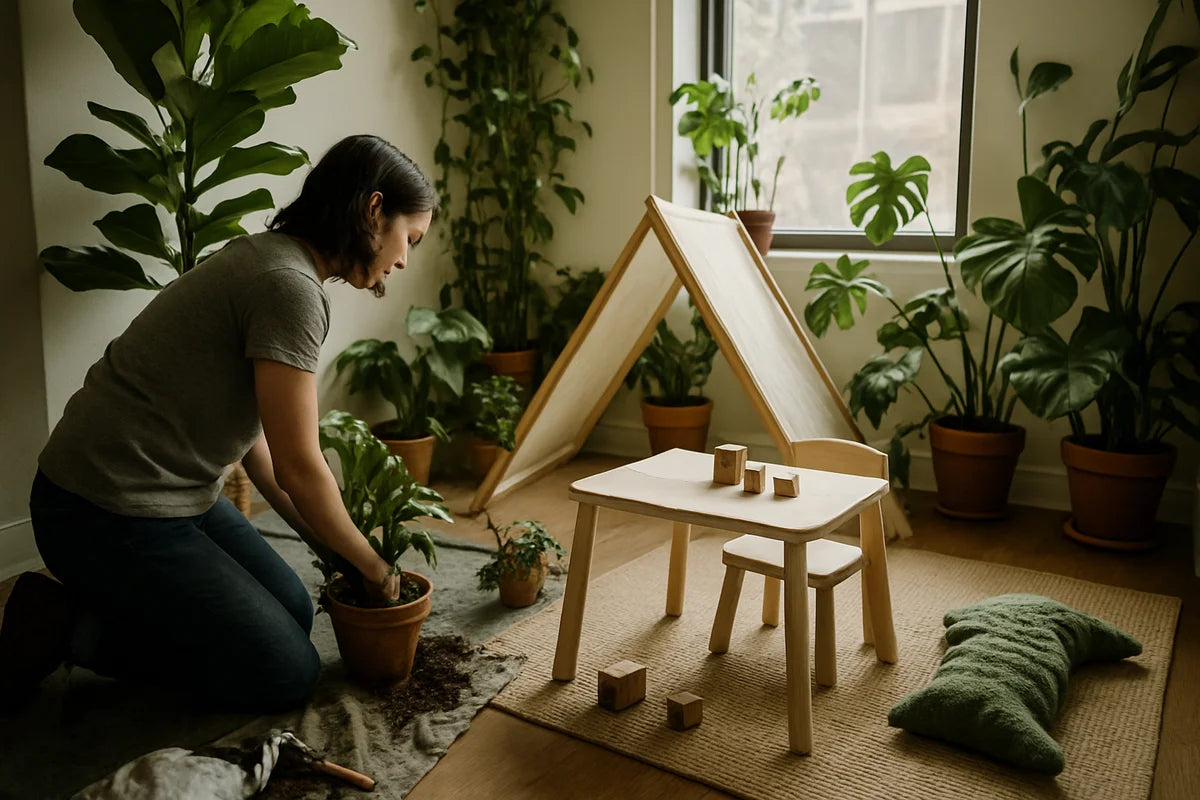
Choose kid-safe plants and place them well
Plants can make a room feel calmer, but don’t place them where kids can dump soil during a quiet moment. Use heavy pots, put them on higher shelves, and pick non-toxic varieties if you have toddlers or pets.
If you’re unsure what’s safe, check a trusted list like the ASPCA plant safety database. It’s meant for pets, but it helps you avoid many common risky plants.
Use natural textures kids can touch
Try a basket of pinecones, smooth stones, and wood slices for building and sorting. Add a small nature shelf with seasonal finds. This gives kids a link to outdoors even when weather traps you inside.
Safety checks that also support a greener setup
Safety and sustainability work together. When you prevent damage, you replace less.
- Anchor shelves and dressers to the wall.
- Cover outlets and manage cords.
- Choose durable storage that won’t crack into sharp edges.
- Keep a small repair kit: wood glue, screws, sandpaper, and a basic screwdriver.
When something breaks, try fixing it before you toss it. Kids learn from that, too.
Where to start this week
If you want momentum, don’t begin with shopping. Begin with air, space, and the items you already own.
- Clear the floor and set your three zones with painter’s tape or simple rugs.
- Ventilate for a few days and remove anything that smells strongly of chemicals or mildew.
- Set up one low shelf with 6-10 toys and a rotation bin.
- Switch to fragrance-free cleaning for the play area and vacuum dust weekly.
- Pick one upgrade that will last: a cork mat, a solid table, or better storage.
As you improve the space, you’ll start to see what your kid uses most. Let that guide your next choices. A green indoor play space grows best when you build it around real play, not a perfect photo.