Moss walls show up in cafes, offices, and living rooms because they look calm and natural. But most people want more than looks. They ask two practical questions: will a moss wall help with sound absorption, and will it improve air quality?
The honest answer is: moss walls can help with noise in certain ways, and their air quality benefits depend on what kind of “moss wall” you mean and how the room works. This article breaks down the facts, clears up common myths, and gives you steps you can use before you spend money or drill holes.
What counts as a “moss wall”?

People use the term for a few different products, and the difference matters for both acoustics and air quality.
Preserved moss panels (the common retail option)
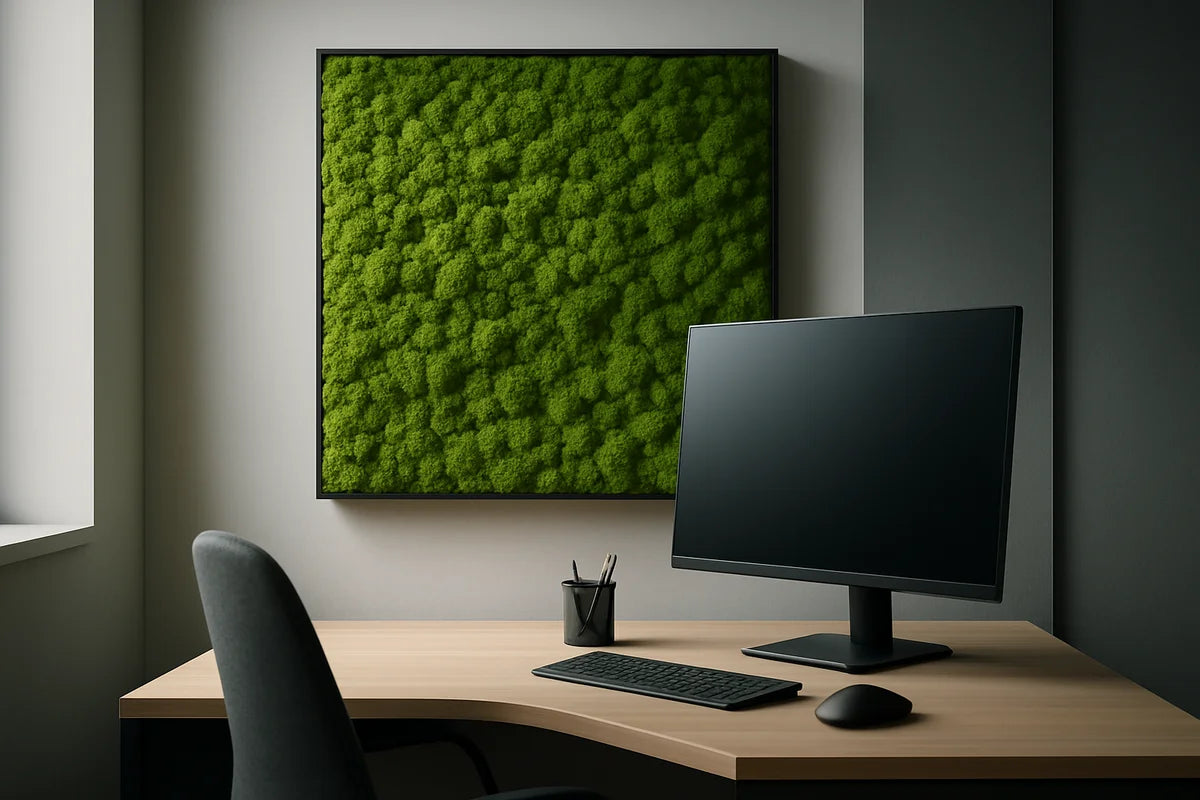
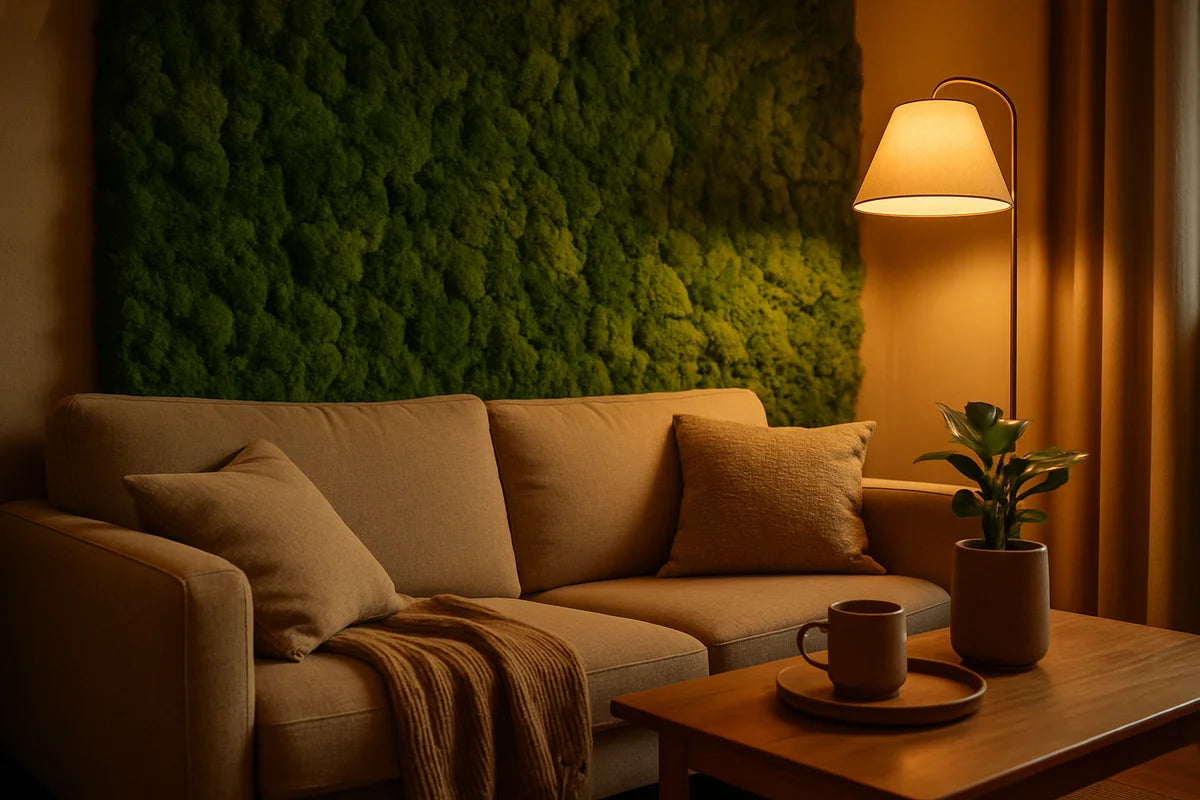
Most commercial moss art uses preserved moss. Makers treat real moss with glycerin or similar agents so it stays soft and green without water or light. It’s “real” plant material, but it isn’t alive.
- No watering, no sunlight, low upkeep
- Usually mounted on a wood, felt, or composite backing
- Can add texture that helps with echo, depending on thickness and coverage
- Does not photosynthesize, so don’t expect it to “make oxygen”
Living moss walls (less common indoors)
Living moss walls use live moss with irrigation and light. They’re harder to keep stable indoors because moss wants steady moisture, decent airflow, and the right light.
- Needs water delivery and drainage planning
- Often needs grow lights indoors
- Can affect humidity and may influence some indoor pollutants, but results vary
Mixed “green walls” with plants plus moss accents
Some walls combine live plants and preserved moss. These can behave more like classic plant walls for air and moisture, but the design and maintenance matter more than the label.
Moss wall sound absorption: what you can expect
Let’s separate two problems people call “noise.” One is sound coming through walls (your neighbor’s TV). The other is sound bouncing around inside your room (echo, harshness, and that “loud” feel even when nobody raises their voice).
A moss wall mostly helps with the second one. It can reduce reflections and tame a room that feels sharp or boomy.
Absorption vs soundproofing
Soundproofing blocks sound from traveling between spaces. That usually needs mass, airtight construction, and decoupling (like resilient channels or double studs). A moss wall does not replace that.
Sound absorption reduces reflections inside a room. Soft, porous surfaces help because they turn sound energy into a tiny amount of heat through friction. This is where moss walls can contribute, especially when they have depth and an absorbent backing.
If you want a clear, practical overview of how indoor acoustics works, the acoustic terms and concepts explained by Acoustic Glossary are a solid reference without the sales pitch.
Why moss can help with echo
Moss has a complex surface: lots of small cavities, uneven texture, and air gaps. That breaks up and absorbs some mid to high frequencies, which are the ones that make rooms feel “ringy” and tiring.
But performance depends on a few details:
- Thickness: deeper material usually absorbs more sound than a thin skin.
- Backing: felt or acoustic PET backing can boost absorption compared to hard boards.
- Coverage: a small panel looks nice but won’t change a lively room much. Area matters.
- Placement: put it where sound reflects, not where it’s hidden behind shelves.
What sound range does a moss wall affect most?
Most decorative absorbers mainly help mid and high frequencies. Low bass needs much thicker treatment, larger air gaps, or purpose-built bass traps. A moss wall can make speech clearer and reduce “clatter,” but it won’t stop a subwoofer thump.
If you want a benchmark for absorption, manufacturers of acoustic materials often publish NRC (Noise Reduction Coefficient) or similar ratings. Ratings vary by product and test method, so compare like with like. For background on standard room acoustics measures, you can check how the building industry frames acoustic comfort in resources like Architect Magazine’s acoustic basics.
Where moss walls make the biggest difference
- Home offices with bare walls, hard floors, and video calls
- Open-plan offices where speech carries and rooms feel “hot”
- Restaurants and cafes that want less chatter bounce
- Hallways and lobbies with lots of glass and stone
A quick rule you can use: if clapping your hands makes a sharp “ping” or quick flutter echo, absorption will help. A moss wall can be part of that fix, but it works best when paired with other soft surfaces (rugs, curtains, upholstered seating).
Air quality: separating myth from measurable impact
This is where marketing gets loud. Some sellers imply moss walls “purify the air” in a big way. The truth depends on whether the moss is alive, how much airflow passes through it, and what pollutant you care about.
Do preserved moss walls improve air quality?
Preserved moss is not living. It doesn’t photosynthesize and it doesn’t actively process gases. That said, it can still affect your indoor environment in smaller ways:
- It can trap dust on its surface, like any textured material.
- Some products use low-odor treatments, but others can off-gas at first, depending on adhesives and backing.
If your goal is cleaner air, the bigger levers are still ventilation, filtration, and moisture control. The EPA’s indoor air quality guidance lays this out in plain terms: source control, ventilation, and filtration tend to beat “add a product to the room” solutions.
Do living moss walls improve air quality?
Living plant systems can influence indoor air, but the effect in real homes and offices is often smaller than people assume. Plants can absorb some pollutants, and they can change humidity. But indoor pollutant levels depend heavily on outdoor air exchange, indoor sources (cooking, cleaning products, office equipment), and HVAC filtration.
Research on plants and indoor pollutants shows mixed results when you move from lab chambers to real rooms. For a deeper look at what science does and does not support, see this research-backed overview from Drexel University on houseplants and air cleaning.
That doesn’t mean a living moss wall is useless. It means you should treat it as a supporting feature, not your main air cleaning plan.
What moss walls can do for comfort: humidity and perception
Even when pollutant removal is modest, people often feel better in rooms with natural textures. That’s real comfort, and it matters. If you use a living system, humidity changes can also affect how your throat and skin feel, and how “dry” a room seems in winter.
Be careful, though. Too much moisture can drive mold and dust mites. If you suspect humidity issues, use a simple hygrometer and keep most homes around 30-50% relative humidity.
The hidden air quality factor: materials, adhesives, and VOCs
When people ask about moss wall air quality, they often focus on what the moss “does.” But the bigger question can be what the whole assembly adds to the room.
Potential sources include:
- Adhesives used to mount moss and panels
- Paints, stains, or sealants on frames and backboards
- Synthetic backings
- Cleaning sprays used on or near the wall
If you’re sensitive to smells or you’re installing in a nursery, ask for low-VOC materials and let the piece air out before hanging it. You can also look for products tested under indoor air programs. One practical reference is the indoor air quality certification overview from SCS Global Services, which explains what these tests aim to measure.
How to get better sound absorption from a moss wall
If your main goal is acoustics, design the wall like an acoustic panel that happens to be moss, not like art that happens to be on a wall.
1) Choose depth over a thin surface layer
Thicker moss and a porous backing absorb more. If a seller can’t tell you thickness, ask for a cut sample photo or a spec sheet.
2) Pick the right backing
A hard board backing reflects sound. A fibrous backing (felt, recycled PET) helps absorption. Some makers offer an “acoustic” build for this reason.
3) Cover the reflection points first
In a home office, that often means the wall behind your screen or the wall behind you on calls. In a dining room, it’s usually the largest bare wall near the table.
4) Don’t rely on one surface
If your room has glass, tile, and bare drywall, a single moss panel won’t do the whole job. Pair it with at least one other soft element: a rug, lined curtains, or upholstered seating.
5) Measure the change so you know it worked
You don’t need lab gear. A simple way is to record a voice memo before and after and listen for echo. If you want a quick sound level check, use a phone app as a rough tool (not a legal measurement). For a practical primer on what decibel numbers mean and how people perceive them, NoiseMeters’ decibel scale explainer is clear and usable.
How to make a moss wall a net positive for air quality
If you want the moss wall to support healthier indoor air, focus on the basics first, then choose materials that don’t add new problems.
Start with the three big moves
- Control sources: choose lower-odor cleaners, vent your stove, store solvents sealed.
- Ventilate: run bath and kitchen fans, and bring in outdoor air when conditions allow.
- Filter: use a good HVAC filter if your system supports it, or a portable HEPA unit for the room.
If you’re sizing a portable air cleaner, CADR matters. The AHAM CADR guidance helps you match a unit to room size.
Then choose a moss product that fits the room
- Ask what adhesive and backing the maker uses and whether it has a strong smell at install.
- Avoid placing any wall system where it can get splashed (behind sinks) unless it’s designed for that area.
- Keep preserved moss dry. If it stays damp, something else is wrong in the room.
Care tips that protect both acoustics and air
Moss walls fail for predictable reasons. Most problems come from the room, not the moss.
Preserved moss wall care
- Keep it out of direct sun to prevent fading.
- Don’t mist it. Preserved moss should stay dry.
- Dust it gently with cool air or a soft duster if needed.
- Keep indoor humidity in a normal range so the moss stays stable.
Living moss wall care
- Plan irrigation and drainage from day one. “We’ll figure it out later” turns into wall damage.
- Use lighting that matches the moss needs, not just mood lighting.
- Watch for musty smells. That often signals poor airflow or too much moisture.
Is a moss wall the right choice for you?
It’s a strong choice if you want better acoustic comfort and you like natural texture. It’s a weak choice if you expect it to replace ventilation or a proper air filter.
A good fit looks like this:
- You have a room that sounds “hard,” and you want less echo and sharper speech.
- You can cover a meaningful wall area, not just a small square.
- You’re willing to pick low-odor materials and let the piece air out if needed.
A poor fit looks like this:
- You need soundproofing between rooms.
- You have moisture issues you haven’t solved yet.
- You want a big, proven drop in indoor pollutants without changing ventilation or filtration.
Looking ahead: smarter moss walls (and smarter rooms)
Moss walls sit at an interesting crossroads. Designers want natural surfaces. Homeowners want calmer, quieter rooms. Building teams want materials that don’t add chemical load indoors. The next wave will likely focus less on claims and more on specs: tested acoustic performance, verified low-emission materials, and modular systems you can repair instead of replace.
If you’re thinking about adding one, start by choosing your goal: better sound, better air, or both. Then match the moss wall to that goal. For sound, treat it like a real absorber: thickness, backing, placement, coverage. For air, treat it like a material choice inside a broader plan: clean inputs, good ventilation, solid filtration, and humidity you control.
Do that, and a moss wall can be more than decor. It can be a useful part of how your room feels day to day.