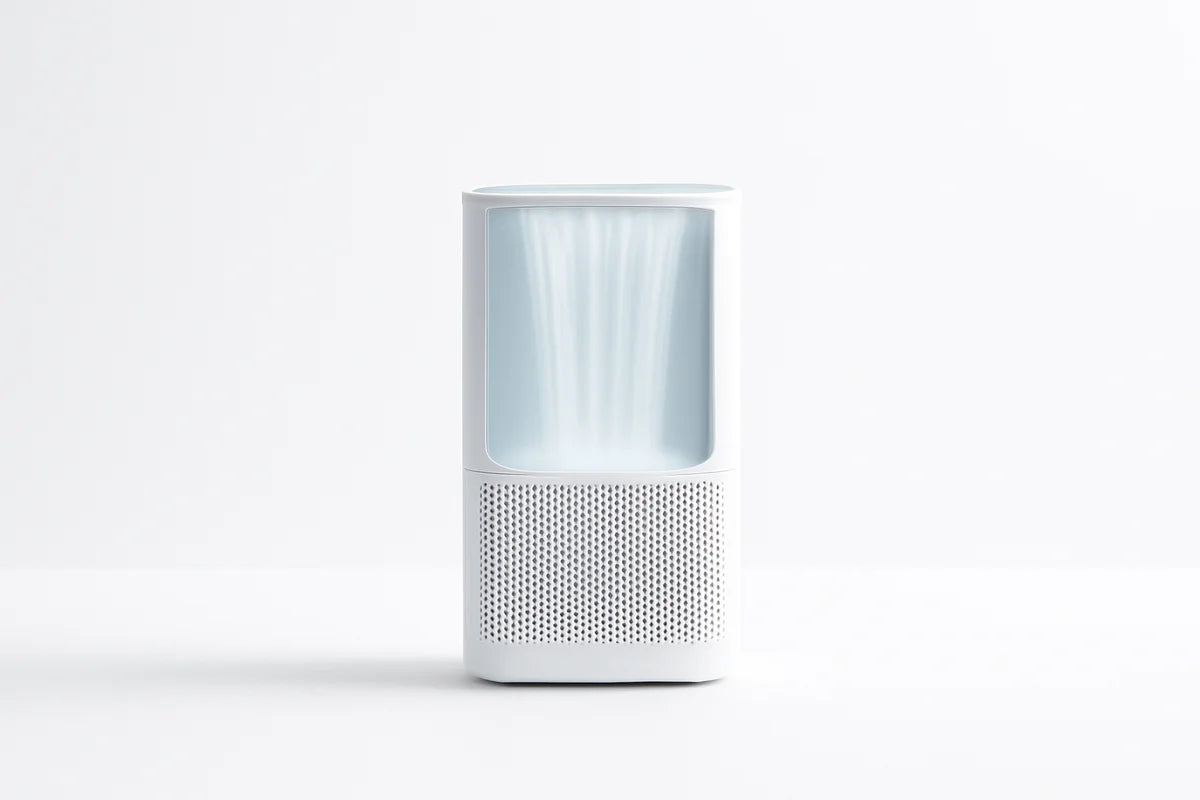
Air purifiers often look like plain boxes that hum in the corner. A waterfall air purifier tries to do more. It pulls air through moving water, which can trap some particles and add a “fresh air” feel in the room. Some models also add a fan, ionizer, UV light, or a traditional filter.
That mix can be helpful or pointless, depending on the design. If you’re shopping for a waterfall air purifier because you want cleaner air, fewer odors, or less dust, this article will help you sort solid features from marketing noise, and choose a unit that fits your room and your habits.
What is a waterfall air purifier?

A waterfall air purifier (sometimes called a water-based or water-wash purifier) uses water as part of its filtration path. Inside the unit, a pump lifts water and lets it fall over a surface (a screen, steps, a wheel, or a column). A fan draws air into the machine and pushes it through this wet zone. The idea is simple: water can catch stuff floating in the air, and it can also dissolve some gases.
In the real world, performance depends on:
- How much air the fan moves (airflow)
- How long the air stays in contact with water (contact time)
- How fine the bubbles or spray are (surface area)
- Whether the unit also uses a HEPA filter or other media
- How often you clean and refill the tank
How water-based purification actually works
1) Water can trap larger particles
When dusty air hits moving water, heavier particles can stick and settle. This can reduce visible dust and some lint. It’s the same basic idea as wet mopping: water grabs what a dry wipe can miss.
But very small particles behave differently. Fine particle pollution (PM2.5) stays airborne and slips through many water-only designs unless the airflow and water contact are engineered well. PM2.5 matters because it can reach deep in the lungs. For health context on particle pollution, the EPA’s overview of particulate matter is a solid starting point.
2) Water can absorb some gases, but not many
Water can dissolve a limited set of gases. It’s not a magic sponge for indoor smells. Many common indoor odors come from VOCs (volatile organic compounds) that water doesn’t capture well. Activated carbon and other sorbent filters usually do a better job with VOCs.
If VOCs are your concern (new paint, new furniture, cleaning products), it helps to learn what you’re up against. The CDC/NIOSH indoor environment resources give a practical overview of indoor air issues and exposure basics.
3) Water adds humidity, sometimes on purpose
Many waterfall air purifiers raise indoor humidity. That can feel great in winter when heated air dries out your skin and throat. It can also backfire in humid climates by pushing your home into the mold-friendly zone.
A common comfort range is roughly 30% to 50% relative humidity. Too low feels dry. Too high supports dust mites and mold. For a clear, research-backed rundown, see ASHRAE’s indoor air quality guidance.
Waterfall air purifier vs HEPA: which cleans better?
If your main goal is to remove fine particles (smoke, PM2.5, allergens), a true HEPA purifier usually wins. HEPA filters are tested against particles around 0.3 microns, and many perform well across a wide range of sizes when paired with a strong fan and sealed housing.
Waterfall units vary a lot. Some are basically humidifiers with a light “air washing” effect. Others combine water washing with a HEPA stage, which can work well if the design avoids leaks and keeps airflow high.
When you compare models, don’t focus on how soothing the waterfall looks. Focus on measurable cleaning capacity. The most useful spec is CADR (Clean Air Delivery Rate). If you want to understand what CADR means and how it’s tested, AHAM’s CADR program explains it in plain terms.
Who should consider a waterfall air purifier?
A waterfall air purifier can make sense if you fit one of these profiles:
- You want a mix of light particle reduction and added humidity in a dry room.
- You hate the idea of buying filters often and you’re willing to clean a water tank regularly.
- You mainly want to cut visible dust, pet hair, or larger bits, not wildfire smoke.
- You enjoy the look and sound and you’ll actually keep it running and maintained.
It’s usually not the best choice if you need serious smoke control, you have asthma triggered by fine particles, or your home already runs humid.
Key features that matter (and the ones that don’t)
CADR and room size
If the brand lists CADR, use it. If it doesn’t, you’re guessing. As a quick rule, you want enough clean air for at least 4 to 5 air changes per hour in the room where you’ll run it. Practical calculators make this easy. You can estimate needs with a CADR room-size calculator and then compare that with the purifier’s numbers.
True HEPA stage (if particles are your priority)
Some waterfall air purifier models include a true HEPA filter after the water stage. That combination can help because:
- The water stage can knock down larger dust and extend filter life.
- The HEPA stage can handle the fine stuff water misses.
If a listing says “HEPA-like” or “HEPA-type,” treat it as marketing, not a standard.
Activated carbon (if odors are your priority)
If odors drive your purchase, look for a real carbon filter with enough weight and surface area. A thin carbon sheet won’t do much. Water alone rarely solves cooking smells, litter box odors, or off-gassing.
Noise and fan control
Most people stop using loud purifiers. A good unit gives you:
- A quiet low mode you can sleep with
- A high mode that actually moves air when you need it
- A clear decibel rating (or credible third-party tests)
Tank design and cleaning access
This is the make-or-break part. If the tank is hard to scrub, you won’t scrub it. Look for:
- A wide opening that fits your hand or a brush
- Smooth surfaces instead of tight corners
- A pump you can remove and rinse
- Parts you can take apart without tools
Ionizers and ozone: be careful
Some waterfall air purifiers include ionization. Ionizers can reduce particles in lab conditions, but they may also produce ozone, which can irritate lungs. If you see “ozone,” “activated oxygen,” or vague claims about “fresh mountain air,” slow down and read the fine print.
For a clear, consumer-focused warning, the California Air Resources Board guidance on ozone and air cleaners lays out what to watch for.
UV lights: often oversold
UV can inactivate germs under the right conditions: correct wavelength, enough intensity, enough exposure time, and clean surfaces. Many small consumer units don’t meet those conditions. If a model claims strong germ-killing performance, look for test data, not slogans.
Maintenance: the part no one wants, but everyone needs
A waterfall air purifier can turn into a bacteria bath if you ignore it. Warm, still water plus trapped dust creates a nice home for microbes. If you buy one, plan a routine you can keep.
A simple cleaning schedule
- Daily or every 2 days: empty and refill with fresh water if you run it often.
- Weekly: wash the tank and any trays with dish soap, rinse well, air dry.
- Monthly: descale if you have hard water, and clean the pump and waterfall surfaces.
Use plain water. Avoid adding essential oils unless the manufacturer says it’s safe. Oils can degrade plastics and leave residue that’s hard to remove.
Hard water and mineral dust
If your tap water is hard, minerals can crust up the pump and leave white dust in the room as the water evaporates. You can reduce this by:
- Using distilled water
- Using demineralization cartridges if the model supports them
- Descaling with a mild acid solution approved by the manufacturer
How to use a waterfall air purifier so it actually helps
Place it where air can move
Don’t wedge it behind a couch. Give it space on all sides so it can pull in dirty air and push out clean air. If you’re targeting a problem area (like pet beds), place it nearby but not blocked.
Run it long enough
Air cleaning is about volume over time. Running a unit for 30 minutes and shutting it off won’t do much. If noise bugs you, run it high for an hour when you leave the room, then low when you’re in it.
Pair it with source control
No purifier fixes a smoking room, a mold problem, or a gas stove that vents poorly. Basic steps beat fancy machines:
- Use kitchen and bath exhaust fans
- Vacuum with a HEPA-rated vacuum if you have allergies
- Fix leaks fast
- Ventilate when outdoor air is decent
Common buying mistakes
Buying for looks instead of airflow
That waterfall window can be hypnotic. It can also hide a weak fan. If a unit can’t move enough air for your room, it won’t matter how clever the water path is.
Assuming “filterless” means “no work”
Filterless often means you become the filter. You trade replacement filters for cleaning time. That’s fine if you’re up for it. It’s a bad deal if you know you won’t clean a tank every week.
Ignoring humidity
If your home already sits above 50% humidity, adding a water-based unit can push you into musty territory. If you’re not sure where you are, a cheap hygrometer can tell you in seconds.
What to look for before you buy
- A stated CADR (or credible independent tests) that fits your room size
- A true HEPA filter if you care about smoke, pollen, or fine dust
- Real carbon media if odors matter
- Easy tank access and clear cleaning instructions
- No ozone, and an ionizer you can turn off
- Reasonable ongoing costs (filters, cartridges, distilled water)
The path forward: choosing the right setup for your home
If you like the idea of a waterfall air purifier, start by getting clear on your goal. Is it dryness relief, less visible dust, fewer allergy triggers, or odor control? Once you name the job, you can pick the right tool. In many homes, the best answer is a hybrid: water for a bit of washing and comfort, plus a HEPA and carbon stage for serious cleaning.
Your next step is simple: measure your room size, check your humidity, then shop for airflow and maintenance ease before you shop for extra features. If you do that, you’ll end up with a unit you’ll keep running, not one you abandon after the first grim tank-cleaning session.