How to Improve Indoor Air Quality for Home Offices
If you work from home, you spend a lot of hours breathing the same indoor air. When that air holds dust, smoke, stale odors, or chemical fumes, you feel it. Your eyes itch. You get headaches. You feel tired even when you slept fine.
The good news: you can improve indoor air quality for home offices without turning your house into a science project. Most fixes are simple. A few cost money, but they pay off fast in comfort and focus.
Why indoor air quality matters in a home office

Indoor air can hold a mix of stuff you do not want in your lungs: fine dust, pet dander, mold spores, and fumes from paints, cleaners, and furniture. Some homes also pull in outdoor pollution from traffic, wildfire smoke, or pollen.
Bad air does not always smell bad. Carbon dioxide (CO2), for example, has no odor, but high CO2 often goes with poor ventilation. When fresh air drops, many people feel sleepy or foggy.
If you want a baseline, the U.S. Environmental Protection Agency has a clear overview of common indoor pollutants and what drives them in homes and offices: EPA indoor air quality guidance.
Start with the basics: identify your main pollution sources

Before you buy anything, figure out what is most likely hurting your air. Ask a few plain questions.
- Do you smell musty odors, or see condensation on windows? That points to excess moisture and possible mold.
- Do you have pets, lots of fabrics, or carpeting in the office? That raises dust and dander.
- Do you burn candles or incense, or use a fireplace? That adds fine particles.
- Did you paint, buy new furniture, or install new flooring lately? That can add chemical fumes (VOCs).
- Do you live near traffic, or deal with seasonal wildfire smoke? Outdoor air may be your biggest problem.
Once you know your likely sources, the fixes get easier and cheaper.
Ventilation: get fresh air in, stale air out

Ventilation is the foundation of good indoor air quality for home offices. You can filter all day, but if your room never gets fresh air, pollutants build up.
Use simple ventilation steps that fit your day
- Open two windows for 5 to 15 minutes to create a cross-breeze, if outdoor air is clean.
- Run a bathroom fan after showers to dump moisture outdoors.
- Use a kitchen range hood that vents outside when cooking, not a recirculating one.
- Keep interior doors open when possible so air can mix and your HVAC can do its job.
If you want a deeper look at how ventilation affects health, the Harvard T.H. Chan School of Public Health has practical research and guidance on indoor air and ventilation: Harvard’s guidance on ventilation and air quality.
Watch outdoor air quality before you open windows
On bad outdoor air days, opening windows can make indoor air worse. If you live in an area with wildfire smoke or high ozone days, check local air quality first. A practical tool is the AirNow site from U.S. agencies: AirNow air quality index (AQI).
When AQI is high, keep windows closed and focus on filtration instead.
Filtration: clean the air you already have
Filtration helps most when your home office has dust, pet dander, smoke particles, or pollen. It also helps on days when you cannot ventilate much.
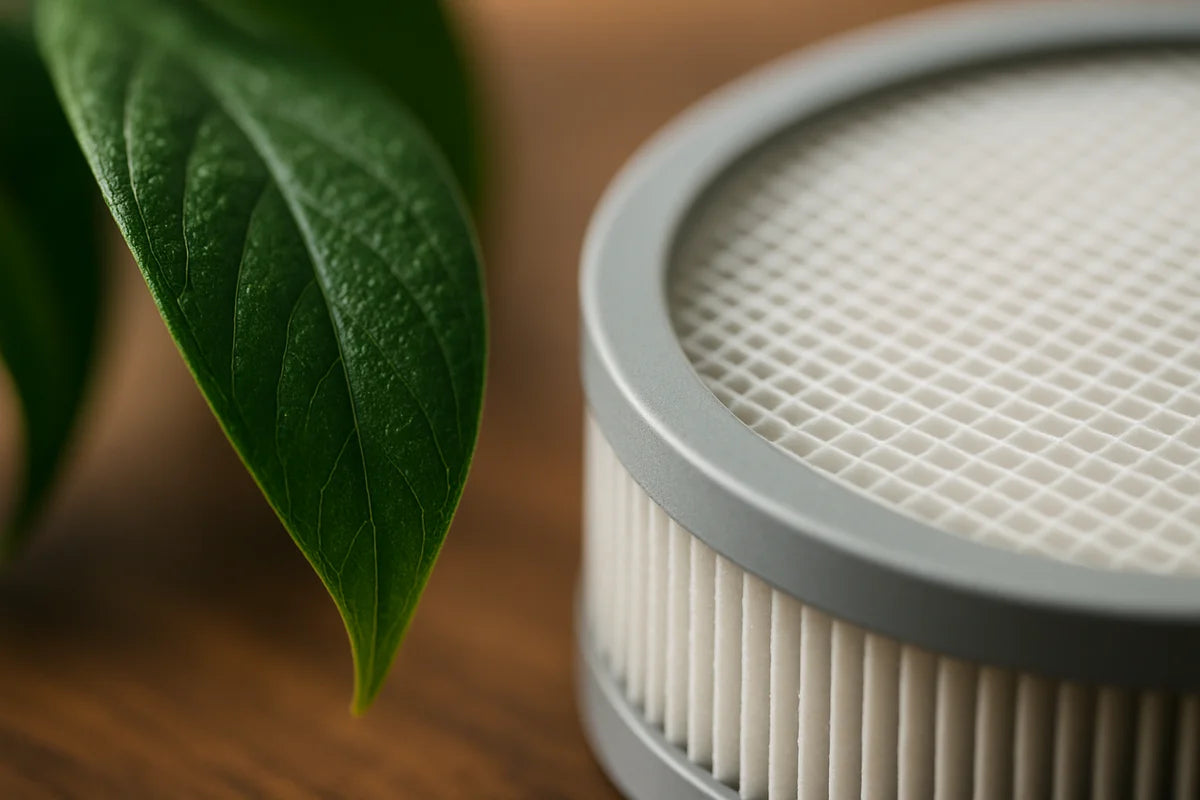
Use a HEPA air purifier sized for your room
A true HEPA purifier can trap very small particles. But size matters. A small unit in a big room will not do much.
- Measure your room (length x width) and note ceiling height if it is not standard.
- Look for a CADR rating (clean air delivery rate) that matches your room size.
- Run it on a higher setting during meetings, cleaning, or smoke events, then lower it for quiet work.
- Replace filters on schedule. A clogged filter cuts airflow and performance.
If you want help choosing a unit by room size, this tool is handy: AHAM guidance on CADR and room air cleaners.
Upgrade your HVAC filter (if you have central heating and cooling)
Your HVAC system can act like a whole-house filter if you use the right filter and run the fan often enough.
- Check what filter your system can handle before you buy a dense one.
- A MERV 11 to 13 filter often gives a good balance of filtration and airflow in many systems.
- Change filters on time. If you have pets or you run the fan a lot, you may need more frequent changes.
Do not guess. If airflow drops, comfort drops and equipment strain goes up. If you are not sure what your system can take, ask an HVAC tech.
Skip ionizers and ozone generators
Some devices claim to “freshen” air by producing ions or ozone. Ozone can irritate lungs, even at low levels. California’s air resources agency explains why ozone indoors is a problem and lists certified air cleaners: California ARB guidance on indoor air cleaning devices.
If you want a safe default, stick with mechanical filtration like HEPA.
Control moisture to prevent mold and musty air
Moisture problems can wreck indoor air quality for home offices fast. Mold and dust mites thrive in damp spaces, and that musty smell tends to linger.
Keep indoor humidity in a healthy range
Aim for about 30% to 50% relative humidity. Below that, air feels dry and can irritate eyes and throat. Above that, mold risk rises.
- Buy a small hygrometer (humidity meter) and keep it on your desk for a week.
- If humidity runs high, use a dehumidifier and empty it often, or drain it to a sink.
- If humidity runs low in winter, a humidifier can help, but clean it often to avoid mold growth inside the tank.
Fix the source, not just the symptom
- Seal obvious leaks around windows or in the roof.
- Check for damp spots behind furniture on outside walls.
- Do not push a desk tight against a cold exterior wall if condensation forms there.
If you see widespread mold, or you smell it but cannot find it, you may need a pro. Small surface spots are one thing. Hidden growth in walls is another.
Reduce dust, dander, and allergens with smarter cleaning
Cleaning can improve air, but it can also stir up particles if you do it the wrong way. The goal is to remove dust, not launch it into the air right before a long work session.
Use a HEPA vacuum and clean in the right order
- Dust with a damp microfiber cloth, not a dry feather duster.
- Vacuum with a HEPA vacuum, slow and steady, especially on rugs.
- Finish with a quick air purge: run the purifier on high for 30 to 60 minutes.
Pay attention to soft goods
- Wash blankets and throws that sit on your office chair.
- Clean curtains or blinds, since they trap dust.
- If you can, choose a washable area rug instead of wall-to-wall carpet in the office.
If allergies hit hard, consider keeping pets out of the home office during work hours. It feels strict, but it works.
Cut chemical fumes (VOCs) from common home office items
That “new” smell from furniture, carpet, or paint comes from chemicals off-gassing into your air. Printers, markers, and some cleaners can also add fumes.
Choose low-odor products and store supplies well
- Pick low-VOC paint and let it cure with good ventilation.
- Store solvents, extra paint, and harsh cleaners in a garage or sealed bin, not under your desk.
- Avoid air fresheners. They mask odors and often add chemicals.
Give new items time before you work next to them
If you buy a new chair, bookshelf, or rug, unbox it in a ventilated space first. If weather allows, let it air out for a day or two before you place it in your office.
Watch CO2 levels if you feel sleepy or foggy
If you work in a small room with the door closed, CO2 can build up fast, especially during calls with another person in the room. High CO2 does not mean you are being “poisoned,” but it often signals low fresh air.
Use a CO2 monitor as a feedback tool
A basic consumer CO2 monitor can show patterns. If CO2 climbs during your work blocks, try one of these:
- Open a window for a short burst between meetings (when outdoor air is good).
- Run your HVAC fan more often.
- Add a small fresh air intake if your setup allows it, or work with your HVAC contractor on options.
Do not obsess over one number. Use trends to guide habits.
Set up your home office for cleaner air
Layout helps more than people think. You can reduce dust and improve airflow with a few changes.
- Place your desk away from litter boxes, kitchens, or workshops if you can.
- Keep the air purifier near you, but do not block its intake or outlet.
- Do not shove furniture over supply vents or returns.
- Manage cords and clutter so you can clean fast and often.
A simple action plan you can follow this week
If you want to improve indoor air quality for home offices without getting stuck in research, follow this order. It covers the biggest wins first.
- Check outdoor AQI daily for a week and note when you should vent or seal up.
- Run a HEPA purifier in the office and keep the door closed if the rest of the home is dusty or smoky.
- Measure humidity and correct it if it stays above 50%.
- Upgrade your cleaning routine: damp dusting, HEPA vacuum, then filtration.
- Remove or seal chemical sources under the desk and switch to mild cleaners.
Conclusion
Cleaner air makes home office work feel easier. You think clearer, your eyes feel better, and the room stops smelling stale. Start with ventilation when outdoor air is clean, use filtration when it is not, and keep moisture under control. Then tighten up cleaning and cut fumes from the products you use every day.
Most of these steps take an hour or less to set up. After that, you just keep a few habits, replace filters on time, and let your home office air stay clean while you work.