Is moss good for bedroom air quality? What it can (and can’t) do
Moss has a certain pull. It looks calm, feels soft, and brings a patch of green into rooms that don’t get much sun. So it’s normal to wonder: is moss good for bedroom air quality, or is it just a nice-looking trend?
The honest answer is mixed. Living moss can help in small, specific ways, mainly by adding a bit of moisture and trapping some dust on its surface. But it won’t “clean” your bedroom air in the way an air purifier does, and preserved moss (the kind used in most moss walls) doesn’t purify air at all. If you like moss, you can still use it in a bedroom. You just need the right expectations and a few practical rules so you don’t trade “fresh air” for mold risk.
What “good bedroom air quality” actually means

Before you buy anything green, it helps to define what you want to fix. Bedroom air quality usually comes down to a few basics:
- Low levels of particles (dust, pet dander, pollen, smoke)
- Low levels of irritants and gases (VOCs from paint, furniture, cleaners)
- Healthy humidity (not too dry, not too damp)
- Low mold risk
- Enough fresh air exchange, especially at night
If your bedroom feels stuffy when you wake up, carbon dioxide can play a part. If you sneeze in bed, dust and allergens might be the main issue. If you get a musty smell, moisture is usually the cause. Moss can touch one of these (humidity) more than the others.
For a solid overview of what affects indoor air, the EPA’s guide to indoor air quality lays out the main sources and fixes in plain language.
How moss interacts with air indoors

Moss isn’t like a typical houseplant. It has no true roots and takes in water and nutrients across its surface. That matters for air quality because it changes how moss behaves indoors.
1) Moss and humidity: the biggest real effect
Living moss holds water like a sponge. In a dry room, some of that moisture can move into the air as the moss dries out. In practice, a small moss arrangement won’t act like a whole-house humidifier, but you might notice a slight change if your bedroom gets very dry in winter.
Humidity cuts both ways. Too dry can irritate your nose and throat. Too humid raises the risk of mold and dust mites. Many health groups point to a middle range, and CDC guidance on mold explains why damp indoor spaces become a problem fast.
2) Moss and particles: some trapping, not true filtration
Moss has a textured surface that can catch dust. That sounds like air cleaning, but it’s not the same thing. A HEPA filter pulls a large volume of air through fine media. Moss just sits there. Dust may settle on it, especially if it’s near airflow from a fan or vent.
Also, once dust lands on moss, you still need to deal with it. If you let dust build up, you can end up with a dirty, damp surface in a bedroom. That’s not a win for air quality.
3) Moss and VOCs: don’t expect miracles
People often repeat the idea that plants “remove toxins.” Plants can take up some VOCs under certain conditions, but those results often come from lab chambers with controlled airflow, not real bedrooms with normal ventilation.
If VOCs worry you, start with source control and ventilation: low-VOC paint, airing out new furniture, and good airflow. The NYC Department of Health indoor air page gives a practical rundown of common indoor pollutants and what to do about them.
4) Moss and oxygen at night: a common worry
Some people avoid bedroom plants because they think plants “steal oxygen” at night. Plants do respire, but the effect from a small amount of greenery in a bedroom is tiny. The bigger factor for that “stuffy” feeling is usually poor ventilation, not your decor.
Living moss vs preserved moss: a crucial difference

This is where many moss discussions go off track. The moss you see in modern wall panels and frames is often preserved. Makers treat it with glycerin and dye so it stays soft without watering. It’s basically no longer alive.
Preserved moss (most moss walls)
- Does not photosynthesize
- Does not transpire water like living moss
- May still catch dust on its surface
- Can look great with almost no upkeep
If your main goal is better bedroom air quality, preserved moss won’t deliver much beyond a calmer look. That said, a calmer bedroom can still help you sleep. Just don’t confuse “relaxing” with “purifying.”
Living moss (terrariums and moss trays)
- Can slightly raise humidity in a dry room
- Needs the right light, moisture, and airflow to stay healthy
- Can become a mold risk if kept too wet or sealed
So, is moss good for bedroom air quality? Living moss can help a little if your room runs dry. It can hurt if you overwater it or keep it in a closed, steamy setup.
When moss can help your bedroom air
There are a few cases where moss makes sense as part of a wider plan.
Your bedroom is too dry
If you wake up with a dry nose, static shocks, and flaky skin in winter, your humidity may be low. Living moss can add a small amount of moisture, but it won’t replace a humidifier if the air is very dry.
A better approach is to measure first. A cheap hygrometer tells you what’s real and what’s guesswork. If you want a quick reference for humidity and comfort, Energy Vanguard’s humidity guidance does a good job explaining tradeoffs without hype.
You want a low-pollen, low-soil option
Traditional potted plants bring soil, and soil can support fungus gnats if you overwater. Moss setups often use less soil (or none), which can make pest issues easier to avoid. That doesn’t make moss “clean,” but it can be simpler than a large pot of damp mix in a bedroom corner.
You like greenery but don’t get much sun
Many moss types prefer low to medium light. If your bedroom doesn’t get strong window light, moss can fit better than a sun-hungry plant. Just remember that “low light” doesn’t mean “no light.” A dark bedroom all day can still be too little for living moss.
When moss can make bedroom air worse
Moss problems almost always come from moisture. Air quality and moisture are tied together, and bedrooms already have moisture sources (breathing all night, showers in nearby bathrooms, wet towels).
High humidity or poor airflow
If your bedroom sits above 60% humidity for long stretches, you’re already in the zone where mold and dust mites can thrive. Adding a living moss terrarium can push you further in the wrong direction.
If you suspect dampness, check the basics: window condensation, musty smells, and spots on walls or behind furniture. For clear steps to reduce indoor moisture, Building Science Corporation’s moisture resources are some of the most useful homeowner-friendly material out there.
Closed terrariums that stay wet
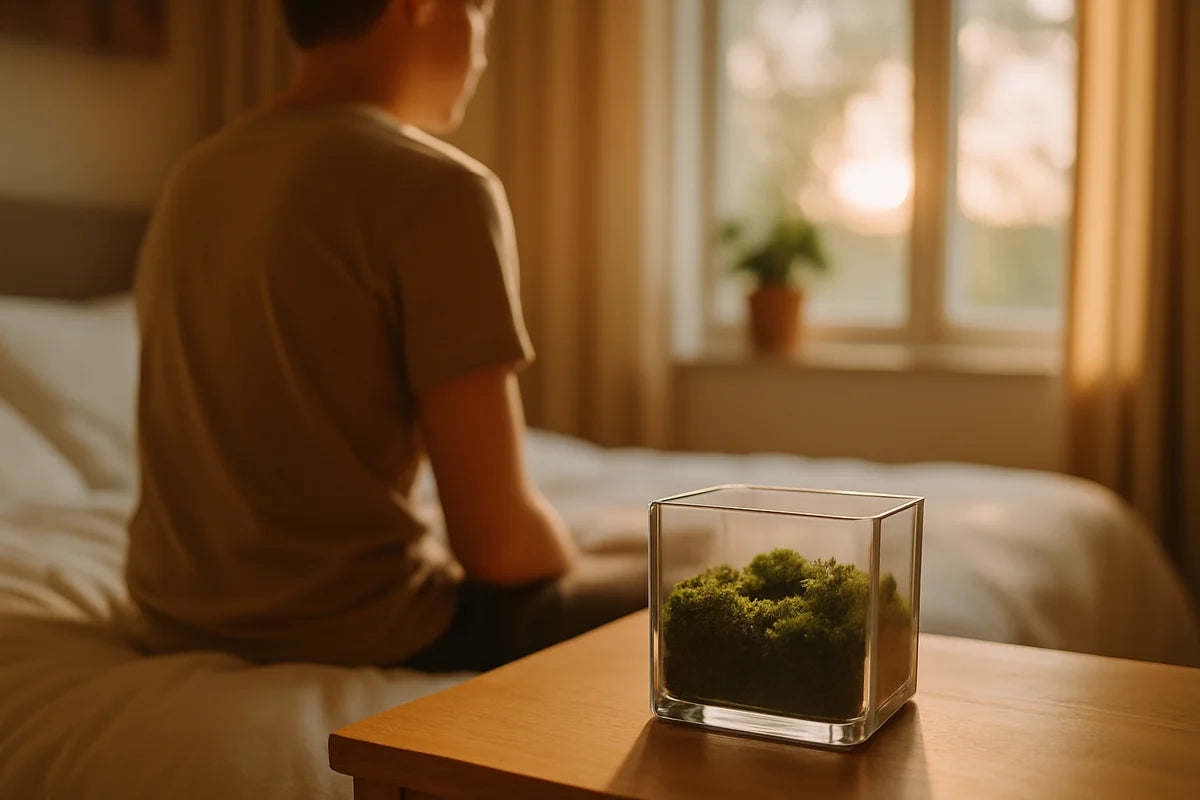
A sealed glass terrarium can look neat, but it can also trap moisture and encourage mold if you keep it too wet. If you want moss in the bedroom, an open container with good drainage (or a design that doesn’t hold puddles) is safer.
Allergies and sensitivities
Moss itself isn’t a common allergen like pollen, but any damp organic surface can host mold spores if conditions allow. If you have asthma or mold sensitivity, treat living moss like you would any humidity source: monitor and keep it dry enough to stay clean.
How to use moss in a bedroom without creating problems
If you like the look and feel of moss, you can make it work. These steps keep the air benefits (small as they are) and cut the risk.
1) Measure humidity first
Don’t guess. Put a hygrometer on your nightstand for a week and see the pattern. Aim for a middle range. If your room already runs humid, skip living moss and choose preserved moss instead.
2) Choose the right moss setup
- For dry rooms: a small open moss tray or moss bowl can add gentle moisture.
- For humid rooms: preserved moss art gives you the look with no added water.
- Avoid large, constantly wet displays next to the bed if you’re prone to allergies.
3) Keep it clean and don’t let dust build up
If dust settles on moss, remove it. For preserved moss, use a soft brush or low, cool air from a blower at a distance. For living moss, avoid blasting it with strong air that dries it out unevenly.
4) Water with restraint
Most moss deaths indoors come from overwatering and stagnant air. Moss likes moisture, not soggy conditions. Mist lightly, then let the surface dry a bit between waterings. If water pools at the bottom, you’ve overdone it.
5) Put moss in the right spot
- Near indirect light, not hot sun
- Away from heat vents that dry it out fast
- Not right beside a humidifier output stream
- Not against cold exterior walls where condensation forms
Better ways to improve bedroom air quality (and where moss fits)
If your goal is to breathe better at night, moss should be a side dish, not the main meal. Here’s what moves the needle most.
Ventilation: fresh air beats “air cleaning” decor
Crack a window when outdoor air is decent. Run a bathroom fan during and after showers if your bedroom shares moisture. If you have an HVAC system, check that it runs enough to move and filter air.
Filtration: use a real HEPA purifier for particles
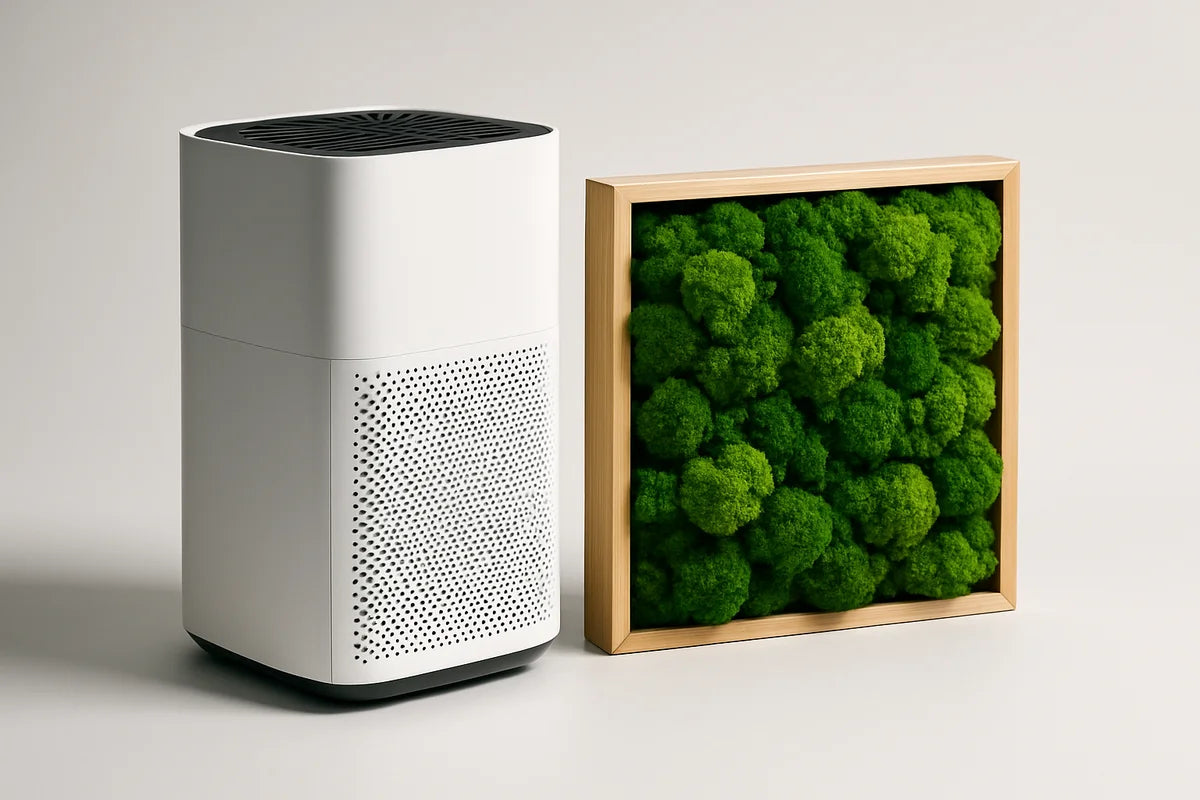
If dust, smoke, or pet dander bothers you, a bedroom-sized HEPA purifier helps more than any plant. Size matters. Match the unit to your room and choose one with a clean air delivery rate (CADR) that fits.
For practical sizing help, AHAM’s air cleaner guidance explains CADR and room coverage in a way normal buyers can use.
Source control: cut what causes pollution
- Wash bedding weekly in hot water if dust mites trigger symptoms.
- Vacuum with a HEPA vacuum if you have carpet.
- Choose low-scent cleaners and avoid heavy room sprays.
- Air out new furniture and rugs before putting them in the bedroom.
Humidity control: sometimes you need a dehumidifier, not moss
If your bedroom is damp, fix that first. A dehumidifier, better exhaust, and sealing moisture leaks matter more than adding plants. Living moss in a damp room can turn into a quiet mold project.
So, is moss good for bedroom air quality?
Moss can support bedroom air quality in a narrow way, mainly by slightly boosting humidity in a dry room. It can also collect some dust on its surface, though that’s not the same as cleaning the air. Preserved moss looks great but does not purify air.
If you want moss because you like it, go for it. Just match the type of moss to your room, track humidity, and keep the setup clean and not too wet. If you want a clear, reliable air quality upgrade, prioritize ventilation, a well-sized HEPA purifier, and moisture control. Moss can sit in the background as a pleasant extra, not the solution.