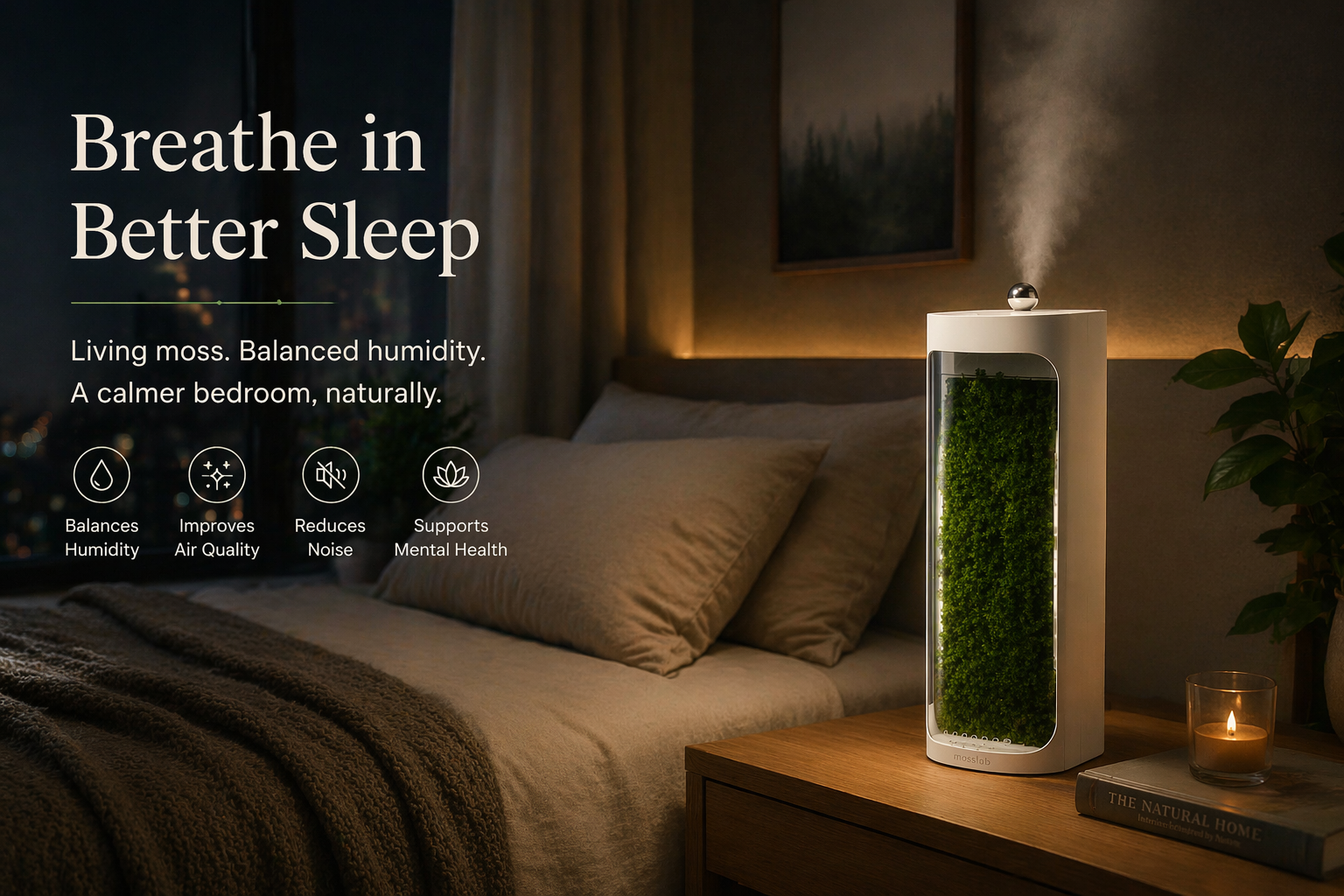
Moss air is a term people use for the air quality boost they hope to get from moss walls, moss bowls, and “moss air purifiers.” It sounds simple: add moss, breathe better. The truth is more useful than the hype.
Moss can help in specific ways, especially with moisture balance, comfort, and how a room feels. But it won’t replace ventilation, and most decorative preserved moss doesn’t “clean” air like a living plant system might. This article breaks down what moss air can (and can’t) do, how to choose the right setup, and how to get real benefits without wasting money.
What people mean by “moss air”

When someone says moss air, they usually mean one of these:
- Air in a moss-rich outdoor area (forests, wetlands, shaded gardens)
- Indoor air after adding living moss (terrariums, living moss walls)
- Indoor air around preserved moss decor (framed art, feature walls)
- Air treated by a moss-based biofilter (a fan-driven system that pushes air through living moss and microbes)
These are not the same. Outdoor mossy areas often feel cooler and more humid. Living moss indoors can influence moisture and comfort in a small zone. Preserved moss is mainly visual. Moss biofilters can reduce some pollutants, but they’re specialized products, not a DIY bowl on a shelf.
The real benefits of moss air (with clear limits)

1) Better comfort through moisture balance
Moss holds water well. Living moss releases moisture as it dries, and that can nudge humidity upward in its immediate area. If your home feels dry in winter, that can make your skin, throat, and eyes feel better.
Two cautions:
- This is a small-scale effect unless you have a large living installation.
- Too much humidity can cause mold problems elsewhere in the room.
For most homes, aim for a steady indoor humidity that supports comfort without inviting mold. The CDC’s guidance on dampness and mold is a solid reference for why moisture control matters.
2) A calmer-feeling space (and a real mental reset)
People don’t just buy moss for “air.” They buy it because green, natural textures change how a room feels. That matters. A soft visual field, fewer harsh lines, and a cue that reminds you of nature can reduce mental load.
This fits with a broader body of research on nature exposure and stress. You don’t need to move to a cabin to get a small benefit. A moss feature near your desk can act like a visual break that helps you reset between tasks. For a deeper look at why nature contact supports health, see Harvard T.H. Chan School of Public Health on nature contact.
3) Less “room echo” in some setups
This surprises people. Moss surfaces can soften a room visually, and some moss wall panels can also reduce sharp reflections of sound, depending on the backing and build. Don’t expect it to replace acoustic panels in a loud space, but it may make a small office or meeting room feel less harsh.
If you work from home and take calls all day, this “softening” can feel like an air benefit because the room feels less tense.
4) A mild buffer against tiny temperature swings
Dense plant surfaces can slightly stabilize microclimates near the surface. Outdoors, mossy ground can stay cooler and damper than bare soil. Indoors, a living moss wall can create a cooler-feeling zone close to the wall, mostly because of evaporation and moisture.
This won’t cut your energy bill on its own, but it can make a reading corner or desk area feel nicer.
5) Potential pollutant reduction with true living biofilters
This is where marketing often gets ahead of reality.
Some living plant and moss biofilter systems use airflow and microbes to reduce certain pollutants. They work more like a “green HVAC add-on” than like decor. Results depend on airflow rate, plant health, maintenance, and the target pollutant.
If you want air cleaning that you can measure, start with proven steps like ventilation and filtration. The EPA’s indoor air quality guidance is a practical starting point for what actually moves the needle.
Living moss vs preserved moss: the difference matters

Living moss
- Can exchange moisture with the air
- Needs light (usually bright, indirect), stable moisture, and the right species
- May support microbial communities that play a role in biofiltration in engineered systems
- Can fail if it dries out or gets too much sun
Preserved moss
- Real moss that has been treated to stay soft and keep its color
- Does not grow and does not photosynthesize
- Does not act like a living air cleaner
- Still offers visual and acoustic benefits in some builds
If your goal is cleaner air, don’t assume preserved moss will help. Treat it as interior design that can improve mood and comfort, which is still a valid win.
What moss air will not do (and what to do instead)
Moss won’t fix high CO2 from poor ventilation
If you wake up groggy or your home office feels stuffy, CO2 buildup and stale air might be the culprit. Moss won’t solve that. Fresh air does.
Try this instead:
- Open windows for short bursts when outdoor air is decent
- Use bathroom and kitchen exhaust fans as intended
- Consider a ventilator if your home is tight and you have ongoing issues
Moss won’t replace a HEPA filter for smoke, dust, and pollen
Wildfire smoke, pet dander, and fine dust need filtration. A tested air purifier with a HEPA filter is the direct tool for that job.
If you’re shopping, look for a unit sized to your room and check the CADR rating. AHAM’s air cleaner guidance explains what to look for and how to compare models without guesswork.
Moss won’t “detox” a moldy room
If you already have dampness, a moss feature can make things worse by adding more moisture to the mix. Fix leaks, improve airflow, and dry the space first. If you’re dealing with a musty smell that won’t go away, start with moisture control, not more greenery.
Actionable ways to get the benefits of moss air at home
Step 1: Decide what benefit you want
Pick one main goal so you buy the right thing.
- Want a calmer room? Preserved moss art can work and needs little care.
- Want humidity help in a dry season? A living moss terrarium can help in a small area.
- Want measurable air cleaning? Look at ventilation, filtration, or a purpose-built biofilter system.
Step 2: Keep humidity in the safe zone
If you use living moss indoors, track humidity. Guessing leads to the two classic problems: dried-out moss or a damp room.
- Use a basic hygrometer and keep an eye on trends
- In most homes, moderate humidity feels best and reduces risk
- Don’t push humidity up if you already have condensation on windows
If you want a quick reference for healthy indoor ranges and comfort factors, Energy Saver’s humidity control guide is a clear, practical resource.
Step 3: Place moss where it helps most
Placement changes the result more than people think.
- Near your desk: best for mood and “mental reset” benefits
- Near a reading chair: boosts comfort and makes the space feel softer
- Not right next to a heating vent: vents dry moss fast and can scatter dust
- Away from direct sun: most moss scorches or dries out
Step 4: Choose a setup that matches your time
Low effort: preserved moss frame
- Best for: visuals, calmer feel, some sound softening
- Care: keep it out of direct sun, don’t soak it, dust lightly
Medium effort: closed moss terrarium
- Best for: a stable microclimate, small humidity boost nearby
- Care: bright indirect light, occasional venting, watch for mold
High effort: living moss wall (true living system)
- Best for: strong visual impact, potential microclimate effects
- Care: irrigation plan, plant health checks, pest control, lighting
If you’re curious about designing a living wall system that actually survives indoors, you’ll get more practical detail from horticulture-focused resources like University of Minnesota Extension (search their site for indoor plant care and humidity tips). It’s not moss-specific on every page, but the plant care fundamentals apply.
Do moss air purifiers work?
Some do, but you need to separate three product types:
- Decor items labeled as “air purifying” with no fan and no data
- Living plant displays with airflow but no clear performance testing
- Engineered biofilters designed to move air through plant or moss media, often used in offices
If a seller claims serious pollutant removal, ask for:
- What pollutants they tested (VOC types vary)
- Room size and air changes per hour assumptions
- Maintenance requirements and how performance changes over time
For most homes, you’ll get more reliable results from a good filter and source control: don’t smoke indoors, use low-VOC products, store solvents outside living space, and vent when cooking. The California Air Resources Board overview of indoor air pollution lays out common sources in plain language.
Who benefits most from moss air features?
- People with dry-air discomfort who want a small, local humidity boost
- Home office workers who want a calmer, less sterile workspace
- Renters who want a strong design change without construction
- Anyone building a wellness corner where the goal is a better-feeling room, not lab-grade air cleaning
Common mistakes to avoid
- Buying preserved moss expecting it to clean the air
- Adding living moss to a room that already has dampness issues
- Putting moss in direct sun or near a heat source
- Overwatering a terrarium and letting mold take over
- Ignoring the basics: ventilation, filtration, and source control
A simple “best of both” plan for cleaner, nicer indoor air
- Start with fresh air and filtration: ventilate when you can and use a HEPA air purifier sized to your room.
- Control moisture: track humidity so you don’t create a mold-friendly home.
- Add moss for comfort and mood: use preserved moss for low effort, or a small living terrarium if you enjoy plant care.
- Place it where you’ll see it daily: the mental benefit comes from regular use, not from a moss wall hidden in a hallway.
Conclusion
The benefits of moss air are real when you define them clearly. Moss can make a room feel calmer, soften sound, and in living setups, nudge humidity in a more comfortable direction. What it won’t do is replace ventilation or a good filter.
If you treat moss as part design and part comfort tool, you’ll get the best return. Start small, keep humidity in check, and pair moss with the basics of clean indoor air. That mix works better than any marketing claim.