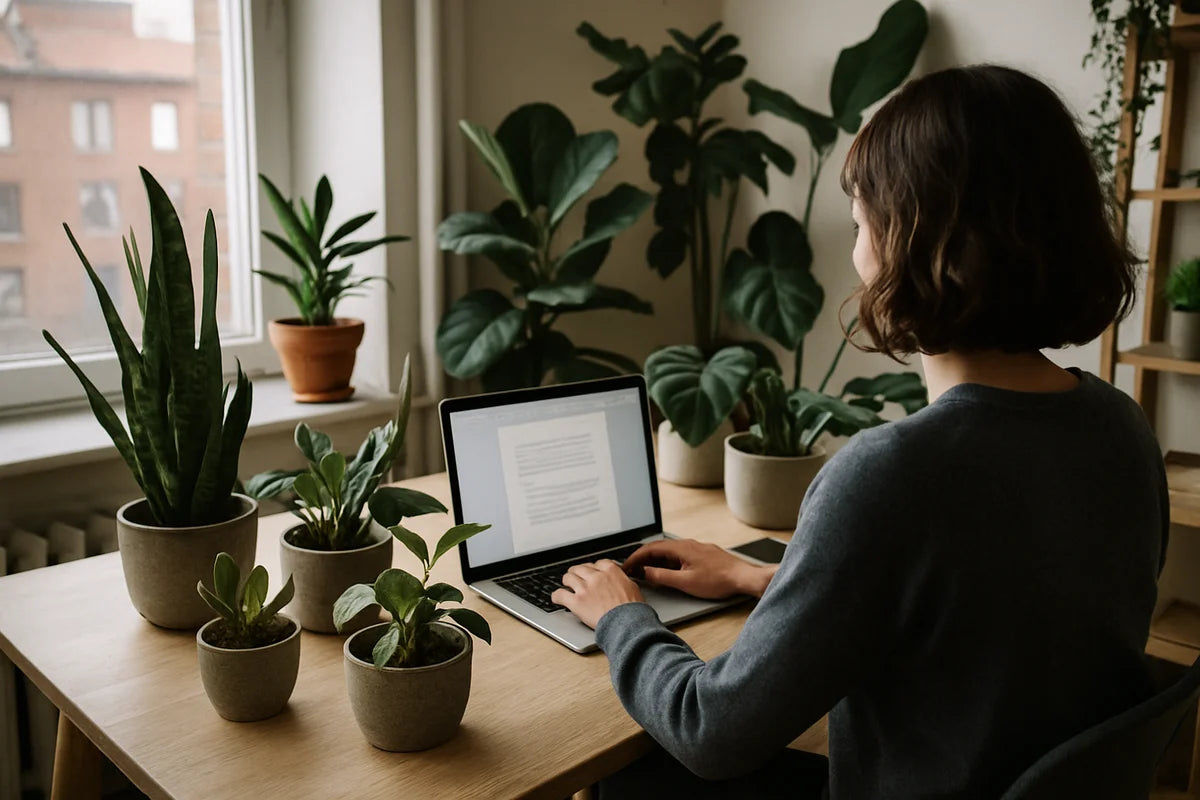
A good workspace helps you focus. Most people think that means a chair, a desk, and maybe a better screen. But the room itself matters, too. Light, air, noise, and even what you see in your side vision can nudge your brain toward calm focus or restless distraction.
That’s where indoor plants can help. The best indoor plants for improving productivity won’t magically write your emails or finish your report. What they can do is make your space feel cleaner, softer, and easier to sit in for long stretches. They also give your eyes a place to rest that isn’t a glowing rectangle.
Below you’ll find practical plant picks, where to put them, and how to keep them alive with minimal fuss.
How plants support focus and output

Productivity is a mix of attention, mood, and stamina. Plants can support all three in small but real ways.
They make your workspace easier to stay in
People stick with tasks longer when a space feels pleasant. A plant adds texture and color without adding clutter. That matters if you’re prone to fidgeting or you keep “resetting” your desk instead of working.
They can improve comfort by raising humidity a bit
Many heated or air-conditioned rooms run dry. Plants release water vapor through transpiration, which can slightly raise humidity near your desk. It won’t replace a humidifier, but it can help you feel less dry-eyed and scratchy-throated.
They can reduce stress, which protects attention
Stress steals working memory. Small stress cuts add up across a day of meetings and deadlines. Research on indoor greenery often links plants with better mood and perceived well-being. If you want a deeper look at how indoor air and comfort affect health and performance, the EPA’s indoor air quality guidance is a solid starting point.
A quick reality check on “air-purifying plants”
You’ll see big claims that certain plants “clean the air.” Plants can remove some pollutants under lab conditions, but most homes and offices would need a lot of plants to match the effect of ventilation. The well-known NASA research is often over-stated online. If you want the original context, you can read the NASA report on interior landscape plants and how it tested pollutant removal.
Bottom line: choose plants for comfort, mood, and visual calm first. Consider air cleaning a bonus, not the main point.
What makes a plant good for productivity
When you’re picking the best indoor plants for improving productivity, aim for “low drama.” A plant that drops leaves, attracts pests, or needs daily watering will become another task on your list.
- Low maintenance: weekly or biweekly care beats daily care.
- Stable look: fewer dropped leaves means less visual mess.
- Fits your light: the right plant in the wrong light will struggle.
- Works with your space: floor plants for corners, small plants for shelves, trailing plants for height.
- Safe for pets or kids if that matters in your home.
9 best indoor plants for improving productivity
These picks cover most common setups: home offices, cubicles, and shared workspaces. I’ll call out light needs, care level, and where each plant tends to work best.
1) Snake plant (Sansevieria)
If you want a plant that survives missed waterings, start here. Snake plants handle low light, stay upright, and don’t sprawl across your desk.
- Why it helps: clean lines, no fuss, strong “orderly” look that suits a work area.
- Light: low to bright indirect.
- Water: let soil dry fully, then water. Overwatering is the main killer.
- Best spot: floor beside your desk or a cabinet top.
2) ZZ plant (Zamioculcas zamiifolia)
ZZ plants look polished even when you ignore them. The leaves are glossy and hold their shape, which keeps your workspace looking put together.
- Why it helps: stays neat with almost no maintenance.
- Light: low to medium indirect.
- Water: every 2-4 weeks depending on season and light.
- Best spot: corner of a home office or near a north-facing window.
3) Pothos (Epipremnum aureum)
Pothos grows fast and forgives mistakes. It also gives you a simple “reward loop” because you can see progress in new vines and leaves.
- Why it helps: easy growth and soft trailing lines reduce the harsh feel of screens and office gear.
- Light: low to bright indirect (variegated types want more light).
- Water: when the top inch of soil dries.
- Best spot: shelf above your monitor or a bookcase where it can trail.
4) Peace lily (Spathiphyllum)
Peace lilies are great if you like a plant that “tells” you when it’s thirsty. Leaves droop, you water, and it perks up.
- Why it helps: strong visual signal helps you keep a simple routine.
- Light: medium indirect works well; it can tolerate low light.
- Water: keep lightly moist, not soggy.
- Best spot: near but not in direct sun, like a side table by your desk.
5) Rubber plant (Ficus elastica)
Want a plant that makes your office feel “done” in one step? A rubber plant can fill empty vertical space and look sharp year-round.
- Why it helps: big leaves create a calmer visual field and make a room feel less bare.
- Light: bright indirect is best.
- Water: when the top 1-2 inches of soil dry.
- Best spot: near a bright window, a few feet back from direct rays.
6) Spider plant (Chlorophytum comosum)
Spider plants are tough, cheerful, and easy to share since they make “babies” you can pot up.
- Why it helps: looks lively without being messy; good if your workspace feels sterile.
- Light: medium to bright indirect.
- Water: when the top inch dries. It tolerates missed waterings.
- Best spot: hanging pot or high shelf where the leaves can arch.
7) Chinese evergreen (Aglaonema)
This is a smart choice for offices with weak light. Many varieties have patterned leaves that add interest without shouting for attention.
- Why it helps: adds color while staying compact and controlled.
- Light: low to medium indirect.
- Water: when the top 1-2 inches dry.
- Best spot: desk-side stand or a credenza in a dim room.
8) Succulents (haworthia, echeveria, jade plant)
Succulents work when you have strong light and want a small plant that doesn’t drop leaves. Pick one solid pot, not a crowded “dish garden” that’s hard to water right.
- Why it helps: tiny footprint, tidy shapes, low watering needs.
- Light: bright light, some direct sun often helps.
- Water: soak, then let soil dry fully.
- Best spot: windowsill or right under a bright desk lamp with a grow bulb.
9) Desk-friendly herbs (mint, basil, rosemary)
If you like sensory cues, herbs can help you reset between tasks. A quick pinch of mint or rosemary can become a short break ritual that doesn’t involve your phone.
- Why it helps: scent can create a “start work” or “break time” habit loop.
- Light: bright light, often 6+ hours near a sunny window for best growth.
- Water: herbs like steady moisture but hate soggy roots.
- Best spot: kitchen-adjacent workspaces or the sunniest window you have.
Where to place plants for better focus
Placement matters as much as the plant. Use plants to shape your attention, not steal it.
Use one plant as a visual “rest stop”
If you stare at a screen all day, your eyes need breaks. Put a medium plant 3-6 feet away from your monitor, slightly off-center. When you pause to think, look at the leaves for 10-20 seconds, then return to work.
Create a clean background for video calls
A single floor plant behind you can make your background look calmer and more intentional. Rubber plants and snake plants work well because they keep a strong shape and don’t shed much.
Keep your main work zone uncluttered
If you tend to pile stuff on your desk, don’t add three small pots. Choose one desk plant max, then place the rest on shelves or stands. A messy desk makes you feel behind before you start.
Match plant size to the job
- For a tight desk: one small succulent, a mini pothos, or a small aglaonema.
- For a bare corner: rubber plant, tall snake plant, or a large ZZ.
- For a harsh room: spider plant or pothos to soften lines.
Simple care routines that won’t steal your time
The easiest way to keep plants from hurting productivity is to stop guessing. Use a basic routine and stick to it.
Use the “lift the pot” test
After you water, lift the pot and feel the weight. Do the same every few days. When it feels much lighter, check the soil and water if needed. This beats watering by calendar.
Pick the right pot and soil
- Use pots with drainage holes whenever you can.
- For most houseplants, choose a basic indoor potting mix. For succulents, use cactus mix.
- Don’t oversize pots. Big pots hold water longer, which raises root-rot risk.
Set a 10-minute weekly reset
Once a week, do a quick lap:
- Check soil moisture on each plant.
- Remove dead leaves.
- Wipe dust off broad leaves with a damp cloth.
- Rotate plants a quarter turn if they lean toward light.
If you want a clear, science-based overview of common houseplant needs, the University of Florida IFAS houseplant resources are practical and easy to follow.
Common mistakes that make plants a distraction
Buying a high-maintenance plant for a low-light room
A fiddle leaf fig looks great online, but it often struggles in average indoor light. Struggling plants drop leaves and demand attention. If your room is dim, stick with ZZ plant, snake plant, or Chinese evergreen.
Overwatering out of guilt
Most beginner plant problems come from too much water, not too little. If you’re unsure, wait a day, then check again.
Ignoring pests until they spread
Check new plants before you place them near others. If you see sticky residue, tiny webs, or speckled leaves, isolate the plant. For ID help, University of Minnesota Extension’s guide to houseplant insects gives clear photos and next steps.
Choosing plants that aren’t safe for your home
If pets or kids chew plants, check toxicity before you buy. The ASPCA plant list is a practical tool for quick checks.
Building a small “productivity plant kit”
If you don’t want to overthink it, here are three simple setups that work in most homes and offices.
Low-light office kit
- 1 snake plant for the floor
- 1 ZZ plant for a cabinet or corner
- 1 pothos for a shelf (optional)
Bright window kit
- 1 rubber plant near the window
- 1 herb pot (mint or rosemary) for scent and quick breaks
- 1 succulent for the windowsill
Small desk kit for tight spaces
- 1 small aglaonema or peace lily
- A saucer or tray to keep the desk clean
If you want a straightforward way to measure light before you buy plants, a free phone app can help. Many people use a lux meter app to compare spots in the room. Here’s a practical explainer on how to think about bright indirect light so you can match plants to your actual conditions.
Where to start this week
Pick one plant that fits your light and your schedule. Place it where you’ll see it during a pause, not where it blocks your work. Then build a tiny routine around it: water check every Saturday, leaf wipe once a month, rotate when it starts to lean.
After two weeks, ask yourself a simple question: does this space feel easier to work in? If the answer is yes, add one more plant in a different layer of the room, like a floor corner or a shelf. Over time, you’ll end up with a setup that supports focus without turning plant care into another project.