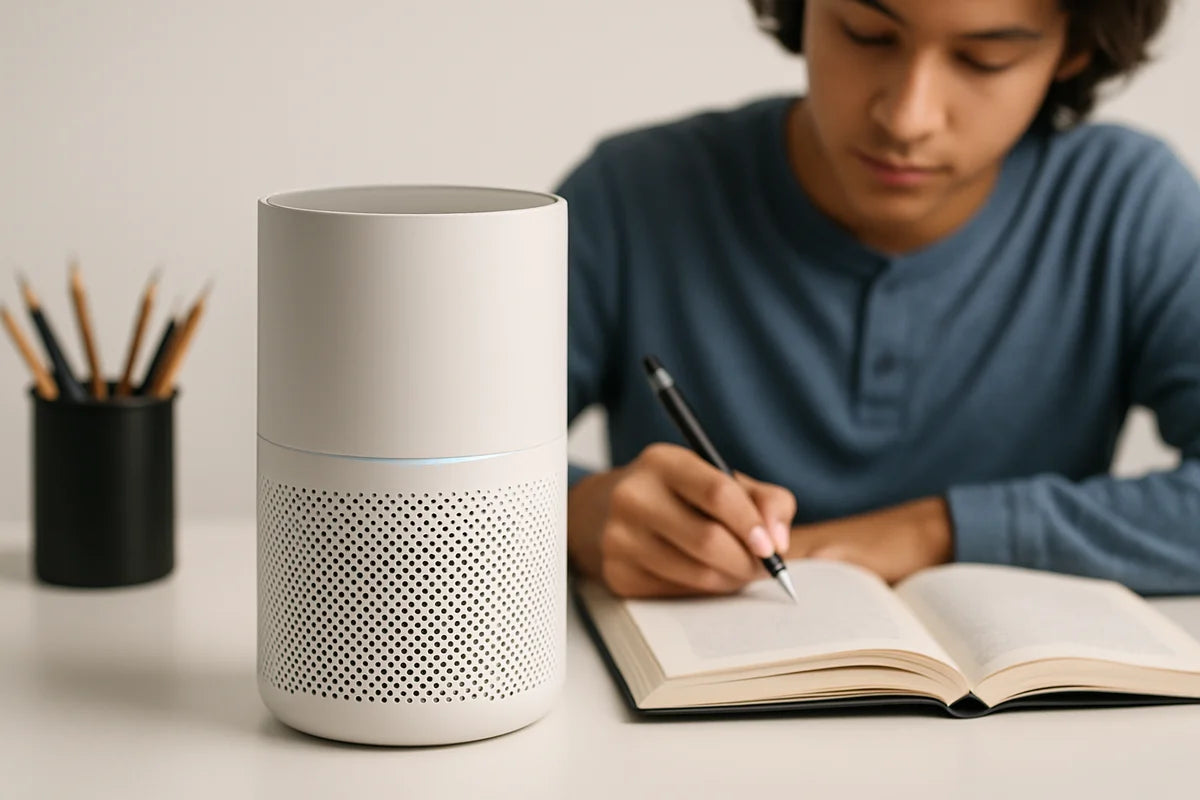
Improving Air Quality for Better Focus During Study Sessions
Ever sit down to study and feel your brain slow down for no clear reason? You might blame sleep, stress, or your phone. But the air in your room can play a quiet role in how sharp you feel. Stale air, too much carbon dioxide (CO2), dust, and fumes can all make it harder to stay alert.
The good news: improving air quality for better focus during study sessions doesn’t require a full home remodel. With a few simple checks and habits, you can make your study space feel clearer, fresher, and easier to work in.
Why indoor air affects focus

Your brain runs on oxygen and steady blood flow. When indoor air gets stale, CO2 levels rise. When pollutants build up, your body works harder to deal with them. Both can show up as the same problems: foggy thinking, headaches, and a shorter attention span.
CO2 and “stale air” can make you sluggish
CO2 isn’t a poison at the levels most homes hit, but higher indoor CO2 often means poor ventilation. That can coincide with a mix of other indoor pollutants, too. Many people notice they feel sleepy in a closed room with the door shut for hours. That feeling often has a ventilation component.
If you want a plain-language overview of indoor air basics, the EPA’s indoor air quality guide lays out common pollutants and why they matter.
Particles and fumes irritate your body in the background
Dust, pollen, smoke particles, and pet dander can irritate your airways. Some people react fast with sneezing or itchy eyes. Others just feel “off.” Cleaning products, scented candles, and some air fresheners can also release chemicals that many people find distracting or headache-triggering.
Ventilation matters, but so does what you add to the air.
Dry air (or overly humid air) can distract you
Very dry air can leave your throat scratchy and your eyes tired, especially if you stare at a screen. On the other hand, high humidity can make a room feel stuffy and can raise the risk of mold if moisture lingers.
Aim for a middle range most of the year. Many building and health groups often cite 30-50% indoor humidity as a practical target, though comfort varies by climate and season.
Quick signs your study air needs help
You don’t need a lab to spot common air issues. Watch for patterns.
- You feel sleepy or foggy within 30-60 minutes of starting.
- You get mild headaches that fade when you leave the room.
- The room smells “old” even after cleaning.
- Dust shows up fast on your desk and shelves.
- You wake up congested if your study space is also your bedroom.
- You see condensation on windows or notice musty smells.
If these sound familiar, improving air quality for better focus during study sessions is a reasonable next step, not a random wellness project.
Start with ventilation: the simplest upgrade
Ventilation means swapping indoor air for outdoor air. You can do this with windows, fans, or an HVAC system that brings in outside air.
Try a short “air flush” before you study
Open a window (or two, if you can) for 5-15 minutes before you start. If you have a box fan, set it to blow air out one window to pull fresh air in through another. This quick swap can cut that stale-room feeling fast.
Use exhaust fans when pollution spikes
Cooking, showering, and cleaning can add particles and moisture to the air. Run your kitchen and bathroom fans during and after those activities, especially if your study area sits near the kitchen.
If you live in an area with heavy outdoor smoke or traffic pollution, ventilation takes more timing. Check local air quality before you open windows. The AirNow air quality map gives current conditions for many regions and helps you decide when outside air will help or hurt.
Filter the air: what works and what doesn’t
Ventilation brings in fresh air, but it can’t solve everything. Filtering helps remove particles like dust, pollen, and smoke.
Pick the right air purifier for the room
If you use a portable air purifier, match it to your room size. Look at CADR (clean air delivery rate) and the manufacturer’s recommended square footage. Oversizing is fine. Undersizing often means no real change.
A true HEPA filter captures very small particles. If smoke or odors are an issue, look for a unit with a decent amount of activated carbon as well.
If you want a deep, technical look at how HVAC filtration ratings work, ASHRAE provides standards and guidance used across the building world. The ASHRAE filtration and disinfection resources can help you understand terms like MERV and why airflow matters.
Replace filters on schedule
A clogged filter can’t do its job well. It can also reduce airflow, which matters for both HVAC systems and portable purifiers. Set a calendar reminder based on your device guidance and your real conditions (pets, allergies, wildfire season, and so on).
Skip “air cleaners” that make ozone
Some devices sold as air cleaners can produce ozone, which can irritate lungs. If a product mentions “ozone” as a feature, treat that as a red flag. You want particle filtration, not reactive gases.
For practical, consumer-focused guidance on air cleaner types, Consumer Reports’ air purifier coverage offers clear testing-based comparisons and explains what specs matter.
Control humidity to avoid grogginess and irritation
Humidity affects comfort and can influence allergens and mold risk. You don’t need to obsess over the perfect number, but you should avoid extremes.
Use a cheap hygrometer
A small humidity meter costs little and removes guesswork. Put it near your desk, away from direct sunlight or vents. If humidity stays high (often above 60%), consider a dehumidifier or better bathroom ventilation. If it stays very low (often below 30%), a humidifier can help, especially in winter.
Keep humidifiers clean
A dirty humidifier can spray microbes and minerals into the air. Follow the cleaning instructions and change water often. If your tap water is hard, consider distilled water to reduce mineral dust.
Reduce the pollution you create in the study space
Air quality isn’t only about what’s outside. It’s also about what you bring into the room and what you do there.
Be careful with scents
Many people like scented candles, incense, and plug-in air fresheners. They can also add particles and strong chemicals to the air. If you want the room to smell better, start with cleaning, trash removal, and ventilation. If you still want scent, use it lightly and keep it away from your desk.
Choose gentler cleaning habits
You don’t need harsh cleaners for daily upkeep. Microfiber cloths, mild soap, and simple solutions work for most surfaces. If you use stronger products, ventilate during and after cleaning.
Don’t study next to the biggest particle source in your home
Common sources include:
- Kitchen cooking smoke
- A room where someone vapes or smokes
- A dusty storage area or unfinished basement
- A space with visible mold or musty odor
If you can’t change the location, focus on filtration and airflow direction. For example, keep the door closed and run a purifier inside the study space.
Make your HVAC system work for you
If you have central heating and cooling, your HVAC system can support better study air, but only if you use it well.
Upgrade the filter (within system limits)
Many systems can handle higher MERV filters, but not all. A filter that’s too restrictive can reduce airflow and strain equipment. Check your system manual or ask an HVAC tech what MERV rating makes sense for your setup.
If you rent and can’t change much, even a basic filter swap on schedule helps.
Keep supply and return vents clear
Don’t block vents with a desk, bookshelf, or laundry pile. Air needs a path in and out. Good airflow helps both temperature and air quality stay steady while you work.
Measure what you can: simple tools that guide better choices
You don’t need a wall of sensors, but one or two measurements can help you act with confidence.
A CO2 monitor can flag poor ventilation
A basic CO2 monitor can show you when the room gets stale. If numbers climb during study sessions, try opening a window, using a fan, or taking a short break outside the room. You’ll learn your space fast.
For background on why CO2 comes up in indoor air discussions, the CDC/NIOSH indoor environmental quality resources explain how indoor conditions can affect comfort and health in workplaces, which applies well to home study setups too.
Track patterns, not perfection
Instead of chasing a single “ideal” number, look for what changes your focus. Does opening a window keep you alert longer? Does running a purifier reduce sneezing and let you read longer without rubbing your eyes? Those are the wins that matter.
A simple study-session checklist for cleaner air
If you want a repeatable routine, use this quick setup before you start.
- Clear the desk and remove food trash or dirty dishes.
- Do a 5-10 minute air flush if outdoor air is clean enough.
- Turn on your air purifier 10-15 minutes before you sit down.
- Check humidity and adjust if your room feels too dry or damp.
- Avoid burning candles or using strong sprays during the session.
- Take a 2-5 minute break each hour and let the room breathe again if needed.
This routine supports improving air quality for better focus during study sessions without turning your life into a project.
Special cases: allergies, wildfire smoke, and shared spaces
If you have allergies
- Vacuum with a HEPA vacuum if you can, especially rugs.
- Wash bedding weekly if you study in your bedroom.
- Keep pets off the chair or bed where you sit for long blocks.
- Run a purifier on a steady low setting, not only when symptoms hit.
If wildfire smoke or outdoor pollution is an issue
- Keep windows closed when outdoor air quality is poor.
- Use a HEPA purifier sized for the room and replace filters as needed.
- If you have central air, use a higher-quality filter your system can handle.
- Limit indoor particle sources like frying, incense, and candles during smoke events.
If you share a study space
Roommates and family can change the air fast. Agree on a few basics: no smoking or vaping indoors, run kitchen fans when cooking, and keep strong scents out of the study area. Small agreements prevent constant frustration.
When air quality problems signal a bigger issue
Sometimes focus problems point to something you shouldn’t DIY.
- Persistent musty smells that return after cleaning
- Visible mold or water stains
- Ongoing condensation on windows
- Symptoms that improve quickly when you leave the home
If you see these signs, consider getting professional help to check moisture sources, ventilation, and mold risk. Fixing the root cause can help your health and your ability to study.
Conclusion
Clean air won’t write your notes for you, but it can make studying feel simpler. When the room has fresh air, lower particle levels, and comfortable humidity, you spend less effort fighting headaches, sleepiness, and irritation. Start with the basics: ventilate when outdoor air is decent, filter the air in the room, cut obvious pollution sources, and measure CO2 or humidity if you want clearer feedback.
Improving air quality for better focus during study sessions comes down to small, repeatable steps. Do a few of them well, and your study space will support you instead of slowing you down.