Die meisten Probleme mit der Raumluft sind nicht sichtbar, aber man kann sie spüren. Stickige Räume, Kopfschmerzen am Morgen, juckende Augen, dieser „Altbaugeruch“, der nie verschwindet. Die gute Nachricht: Man braucht keine komplette Renovierung, um vieles davon zu beheben. Smarte Wohnideen zur Verbesserung der Raumluftqualität sehen oft aus wie normale Designentscheidungen: bessere Stoffe, einfachere Oberflächen, sauberere Luftzirkulation und ein paar gezielte Verbesserungen.
Dieser Artikel konzentriert sich auf Veränderungen, die einen doppelten Nutzen haben. Sie lassen Ihr Zuhause besser aussehen und erleichtern das Atmen.
Grundlagen: Was beeinträchtigt Ihre Raumluft?

Die Raumluftqualität verschlechtert sich in der Regel aus vier Gründen: Partikel, Gase, Feuchtigkeit und schlechte Luftzirkulation. Die Einrichtung kann alle vier beeinflussen. Teppiche halten Staub zurück. Farben können ausgasen. Schwere Vorhänge blockieren Lüftungsöffnungen. In einem feuchten Badezimmer wächst hinter einer hübschen Tapete Schimmel.
Wenn Sie einen schnellen Überblick über gängige Schadstoffe und deren Behebung wünschen, legt der Leitfaden zur Raumluftqualität der EPA die wichtigsten Quellen in einfacher Sprache dar.
Drei Anzeichen dafür, dass Ihre Einrichtung Teil des Problems sein könnte
- Staub kehrt schnell zurück, selbst nach dem Putzen.
- Gerüche (Kochen, Haustiere, „neue Möbel“) bleiben tagelang bestehen.
- Kondenswasser bildet sich an Fenstern oder Sie entdecken Schimmel in den Ecken.
Wählen Sie emissionsarme Oberflächen, die trotzdem hochwertig aussehen
„Neuer Geruch“ ist keine Eigenschaft. Es sind oft Chemikalien, die aus Farben, Bodenbelägen, Schränken und Möbeln freigesetzt werden. Dies sind flüchtige organische Verbindungen (VOCs). Man kann sich nicht durch Dekoration aus der Notwendigkeit der Lüftung befreien, aber man kann aufhören, das Feuer weiter zu schüren.
Farbe, die den Raum nicht verpestet
Wenn Sie malen, suchen Sie nach emissionsarmen oder emissionsfreien Optionen. Öffnen Sie selbst dann die Fenster und lassen Sie Ventilatoren einige Tage lang laufen. Die Wahl der Farbe ist am wichtigsten in Schlafzimmern, Kinderzimmern und kleinen Büros, wo Sie lange Stunden verbringen.
Möchten Sie Details darüber, was VOCs tun und warum sie wichtig sind? Die Übersicht der Mayo Clinic über Innenraumluftverschmutzung gibt eine klare medizinische Sichtweise ohne Hype.
Bodenbeläge und Oberflächen, die keinen Schmutz festhalten
Aus Sicht der Luftqualität gewinnen glatte, leicht zu reinigende Oberflächen. Harte Bodenbeläge sind nicht automatisch besser als Teppiche, aber sie sind leichter staubarm zu halten, wenn man sie richtig reinigt.
- Wenn Sie Teppiche lieben, verwenden Sie kleinere, die Sie oft reinigen können.
- Wählen Sie Teppiche mit der Kennzeichnung „emissionsarm“ und lüften Sie sie in einer Garage oder an einem schattigen Ort im Freien aus, bevor Sie sie ins Haus bringen.
- Vermeiden Sie schwere Teppichunterlagen, die stark riechen oder ölig wirken.
Überdenken Sie „gemütliche“ Textilien, damit sie nicht zur Staubablage werden
Textilien prägen einen Raum mehr als fast jede andere Dekorationswahl. Sie wirken auch wie Filter, was gut klingt, bis man merkt, dass man den „Filter“ immer noch reinigen muss. Wenn Sie Ideen für die Verbesserung der Raumluftqualität suchen, die die Atmosphäre nicht zerstören, fangen Sie hier an.
Fensterbehandlungen, die die Luftzirkulation fördern
Dicke Vorhänge können Lüftungsschlitze blockieren, Staub einfangen und Gerüche speichern. Sie können Weichheit ohne die Staubbelastung beibehalten.
- Wählen Sie waschbare Vorhänge und waschen Sie diese regelmäßig.
- Hängen Sie Vorhangschals so auf, dass sie Lüftungsschlitze oder Heizkörper nicht verdecken.
- Erwägen Sie Rollos oder Raffrollos in Küchen, wo sich Fett absetzen kann.
Tauschen Sie „Staubfänger“ gegen pflegeleichte Stücke aus
Diese Tauschaktionen verändern Ihren Stil nicht wesentlich, aber sie verändern, wie viel Zeug an Ihrem Zuhause haftet.
- Ersetzen Sie sperrige Decken durch einige, die Sie wöchentlich waschen können.
- Verwenden Sie Kissenbezüge, die Sie abziehen und waschen können.
- Begrenzen Sie offene Körbe in feuchten Räumen. Sie können Feuchtigkeit und muffige Gerüche speichern.
Pflanzen sorgfältig einsetzen (sie helfen, aber sie sind keine Magie)
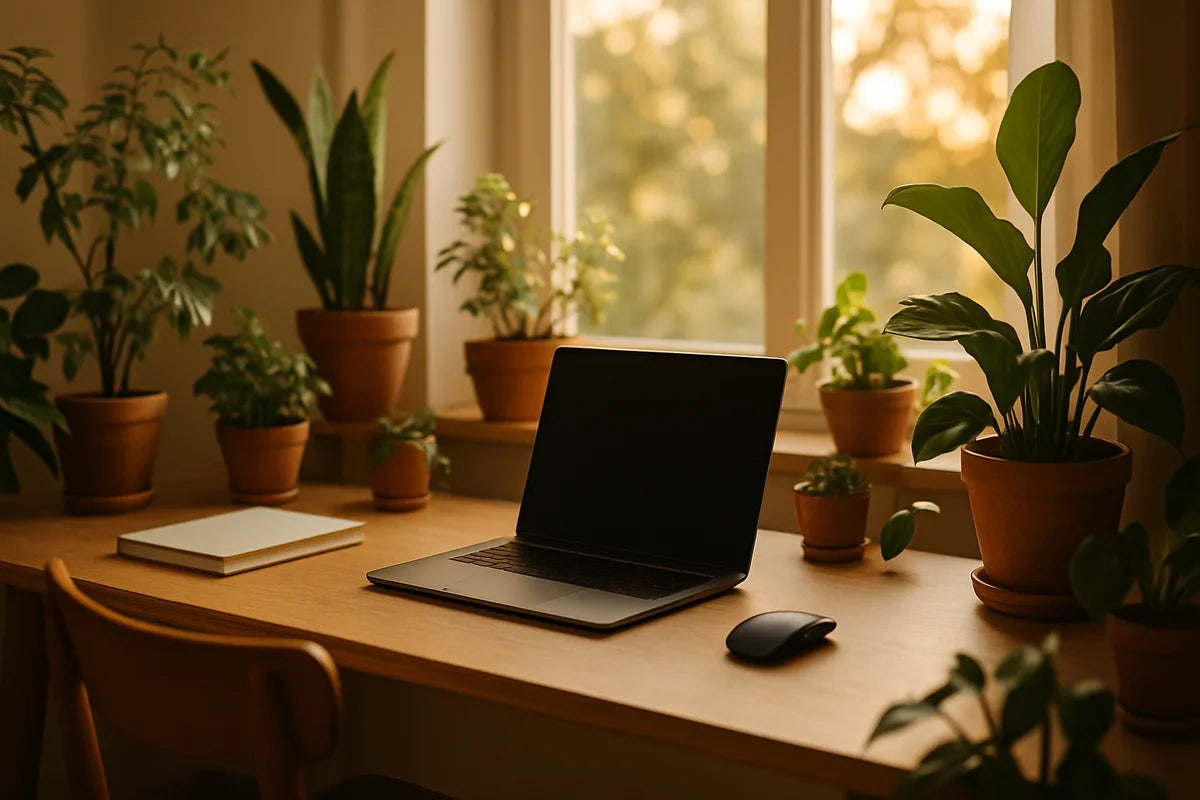
Zimmerpflanzen sehen toll aus und können zu einem gesünderen Raumgefühl beitragen. Aber behandeln Sie sie nicht wie Luftreiniger. Echte Haushalte haben echte Schadstoffbelastungen, und in den meisten Fällen bräuchten Sie sehr viele Pflanzen, um einen messbaren Unterschied zu erzielen.
Dennoch können Pflanzen eine Rolle bei Einrichtungsideen zur Verbesserung der Raumluftqualität spielen, wenn Sie sie richtig einsetzen: als Teil eines umfassenderen Plans, der Lüftung, Reinigung und Feuchtigkeitskontrolle umfasst. Für eine praktische Einschätzung dessen, was Pflanzen leisten können und was nicht, sehen Sie sich diese NIOSH-Ressource zur Umweltqualität in Innenräumen an, um einen breiteren Kontext zu Innenraumbelastungen und Kontrollmaßnahmen zu erhalten.
Pflanzenauswahl und -pflege, die keine Feuchtigkeitsprobleme verursacht
- Nicht überwässern. Nasse Erde kann Schimmelwachstum fördern und Mücken anlocken.
- Verwenden Sie Töpfe mit Drainage und schütten Sie stehendes Wasser in Untertassen ab.
- Wenn Ihr Zuhause bereits feucht ist, wählen Sie weniger Pflanzen und kleinere Behälter.
Wo Pflanzen am sinnvollsten sind
- In der Nähe von Eingängen, wo sie ins Auge fallen und eine saubere Atmosphäre schaffen.
- In hellen Küchen und Wohnzimmern, wo die Erde schneller trocknet.
- Vermeiden Sie es, Pflanzen in Schlafzimmern dicht zusammenzustellen, wenn Sie unter Allergien leiden.
Dekoration, die die Luftzirkulation verbessert (ohne wie eine Klimaanlage auszusehen)
Die Luftzirkulation ist der stille Held der Raumluftqualität. Wenn die Luft nicht zirkulieren kann, bleiben Gerüche hängen, die Luftfeuchtigkeit steigt und Staub setzt sich ab. Ein paar Änderungen in der Raumgestaltung können einen echten Unterschied machen.
Hören Sie auf, Ihre Lüftungsschlitze zu blockieren
Das klingt offensichtlich, ist aber eines der häufigsten Probleme in realen Haushalten.
- Ziehen Sie Sofas und Betten ein paar Zentimeter von den Zuluftöffnungen weg.
- Hängen Sie keine Vorhänge über Fußleistenlüftungen.
- Halten Sie hohe Bücherregale von den Abluftöffnungen fern, damit das System „atmen“ kann.
Ventilatoren als dekorative Luftbeweger nutzen
Deckenventilatoren, schlanke Standventilatoren und sogar gut platzierte Kastenventilatoren helfen, abgestandene Luft zu verdünnen. Wählen Sie einen Ventilator, den Sie tatsächlich laufen lassen werden, weil er im Raum gut aussieht. Und dann reinigen Sie ihn. Staub auf den Ventilatorflügeln wird jedes Mal in die Luft geschleudert, wenn Sie ihn einschalten.
Wenn Sie einen Badlüfter verwenden, lassen Sie ihn während des Duschens und 20 Minuten danach laufen. Besser noch, stellen Sie ihn auf einen Zeitschalter, damit Sie sich nicht daran erinnern müssen.
Luftreinigende Dekoration, die im echten Leben funktioniert
Einige „luftreinigende“ Produkte tun wenig mehr als den Raum zu beduften. Wenn Sie Ergebnisse wünschen, konzentrieren Sie sich auf Filtration und Quellkontrolle. Das kann immer noch zu Ihrer Einrichtung passen.
Wählen Sie einen Luftreiniger, der zum Raum und zum Problem passt
Bei Allergien, Rauch, Haustieren und allgemeiner Partikelkontrolle hilft ein HEPA-Reiniger. Entscheidend sind Größe und Platzierung, nicht der Marken-Hype. Achten Sie auf den CADR-Wert (Clean Air Delivery Rate) und passen Sie ihn an Ihre Raumgröße an.
Für eine einfache Einführung in die Auswahl und den richtigen Einsatz von Geräten bietet der Energy Saver-Leitfaden zu Luftreinigern und Filtern die Grundlagen in klaren Worten.
- Platzieren Sie den Reiniger so, dass die Luft zirkulieren kann, nicht versteckt hinter einem Stuhl.
- Lassen Sie ihn auf einer gleichmäßigen Einstellung laufen, anstatt ihn eine Stunde lang auf voller Leistung zu betreiben.
- Wechseln Sie die Filter rechtzeitig. Ein verstopfter Filter erfüllt seine Aufgabe nicht.
Vermeiden Sie „Lufterfrischer-Dekoration“, die Chemikalien hinzufügt
Viele Stecker, Sprays und stark duftende Kerzen fügen Reizstoffe hinzu. Wenn Ihr Zuhause gut riechen soll, entfernen Sie die Geruchsquelle und lüften Sie. Verwenden Sie dann einfache, wenig duftende Optionen.
- Verwenden Sie einen Mülleimer mit Deckel und leeren Sie ihn oft.
- Waschen Sie weiche Gegenstände, die Gerüche speichern (Haustierbetten, Decken, Vorhänge).
- Wenn Sie Kerzen anzünden, tun Sie dies nur gelegentlich und wählen Sie sauberer brennende Optionen. Vermeiden Sie Ruß.
Feuchtigkeitskontrolle kann stilvoll sein (ja, wirklich)
Feuchtigkeit fördert Schimmel, Hausstaubmilben und diesen muffigen Geruch, den die Leute mit Sprays überdecken wollen. Die Lösung ist nicht Dekoration im üblichen Sinne, aber Dekorationsentscheidungen können Ihnen helfen, die Luftfeuchtigkeit in einem sicheren Bereich zu halten.
Verwenden Sie ein Hygrometer und machen Sie es zu einem Teil Ihrer Wohnroutine
Ein kleines digitales Hygrometer ist nicht hübsch, aber Sie können es wie eine Uhr auf ein Regal stellen. Zielen Sie auf einen angenehmen Mittelwert ab. Wenn Sie einen Bezugspunkt für Luftfeuchtigkeit und Gesundheit wünschen, sind die Lüftungsstandards und -richtlinien von ASHRAE das Rückgrat vieler bewährter Baupraktiken (sie sind technisch, aber sie zeigen, was Profis anstreben).
Dekorationsentscheidungen, die versteckte feuchte Stellen reduzieren
- Lassen Sie in kalten Klimazonen einen kleinen Spalt zwischen Möbeln und Außenwänden, um das Kondensationsrisiko zu reduzieren.
- Vermeiden Sie vollflächige Stoffkopfteile in Räumen, die feucht sind.
- Wählen Sie in Badezimmern abwaschbare Farbe oder Fliesen, wo Spritzwasser auftritt, anstelle von Tapeten.
Luftentfeuchter so integrieren, dass sie dazugehören
Wenn Sie einen Luftentfeuchter benötigen, verstecken Sie ihn nicht in einer Ecke, wo er keine Luft ziehen kann. Stattdessen:
- Wählen Sie ein kompaktes Gerät mit einer klaren Form und platzieren Sie es neben einem Pflanzenständer oder einem schlanken Schrank.
- Verlegen Sie den Ablaufschlauch sauber, wenn Sie einen Bodenablauf haben, damit Sie sich nicht auf einen überlaufenden Eimer verlassen müssen.
- Halten Sie den Bereich um ihn herum frei, damit er die Luft zirkulieren lassen kann.
Klares Design schlägt Unordnung für sauberere Luft
Unordnung sieht nicht nur unruhig aus. Sie erschwert das Putzen, was bedeutet, dass mehr Staub und Hautschuppen im Raum bleiben. Wenn Sie Ideen für die Verbesserung der Raumluftqualität suchen, die nichts kosten, optimieren Sie Ihre Oberflächen.
Tauschen Sie offene Regale gegen eine Mischung aus geschlossenem Stauraum
Offene Regale sammeln schnell Staub. Sie können Ihre Lieblingsstücke weiterhin präsentieren, aber gleichen Sie sie mit Schränken oder Körben mit Deckel (in trockenen Räumen) aus. Weniger exponierte Gegenstände bedeuten weniger Staubwischen, und Staubwischen ist eine der Hauptursachen dafür, dass Partikel wieder in die Luft gelangen.
Wählen Sie Materialien, die sich leicht abwischen lassen
- Leder oder Kunstleder (wenn Sie es vertragen) lässt sich leicht abwischen.
- Holz- und Laminattische sind besser als rauer Stein, der Krümel und Staub in Vertiefungen festhält.
- Waschbare Schonbezüge helfen, wenn Sie Haustiere oder Allergien haben.
Raum-für-Raum-Upgrades, die sich schnell auszahlen
Sie wissen nicht, wo Sie anfangen sollen? Konzentrieren Sie sich auf die Räume, in denen Luftprobleme am stärksten auftreten: Schlafzimmer, Küchen und Bäder.
Schlafzimmer: Schlafzimmerluft sauberer machen
- Waschen Sie Bettwäsche wöchentlich heiß, wenn Allergien auftreten.
- Verwenden Sie einen Matratzen- und Kissenschutz, wenn Sie von Hausstaubmilben geplagt werden.
- Stellen Sie einen Luftreiniger in Bettnähe auf, aber nicht durch einen Nachttisch blockiert.
Küche: Fett- und Kochdämpfe kontrollieren
- Verwenden Sie die Dunstabzugshaube jedes Mal, wenn Sie kochen, auch für „schnelle“ Mahlzeiten.
- Wenn Sie keine Ablufthaube haben, öffnen Sie ein Fenster und verwenden Sie einen Ventilator, um die Luft nach draußen zu befördern.
- Wählen Sie abwischbare Rückwände und vermeiden Sie poröse Dekoration in der Nähe des Herdes.
Badezimmer: Feuchte Luft am Ausbreiten hindern
- Lassen Sie den Abluftventilator mit Zeitschaltuhr laufen.
- Verwenden Sie schnell trocknende Badematten und waschen Sie diese oft.
- Halten Sie Handtücher auseinander, damit sie zwischen den Anwendungen trocknen.
Wo Sie diese Woche anfangen können
Wenn Sie einen einfachen Plan wollen, der nicht zu einem monatelangen Projekt wird, versuchen Sie diese Reihenfolge:
- Entfernen Sie Blockaden an Lüftungs- und Abluftöffnungen, saugen Sie dann und wischen Sie mit einem feuchten Tuch Staub.
- Waschen Sie die größten Textilien: Bettwäsche, Decken und Vorhänge.
- Fügen Sie ein Hygrometer hinzu und überprüfen Sie die Luftfeuchtigkeit morgens und abends für ein paar Tage.
- Kaufen Sie bei Bedarf einen korrekt dimensionierten HEPA-Luftreiniger und platzieren Sie ihn so, dass er Luft ansaugen kann.
- Wenn Sie neue Dekoration kaufen, wählen Sie geruchsarme, pflegeleichte Materialien und lüften Sie sie aus, bevor sie in Ihren Wohnbereich gelangen.
Sobald Sie sehen, wie viel besser sich ein Raum mit sauberer Luft anfühlt, werden Sie mit einem neuen Filter im Kopf dekorieren. Nicht nur, was auf einem Foto gut aussieht, sondern auch, was am 30. Tag noch frisch ist. Das ist der Weg nach vorne: weniger Verschmutzungsquellen, einfachere Oberflächen, bessere Luftzirkulation und Dekoration, die die Art und Weise unterstützt, wie Sie tatsächlich leben.