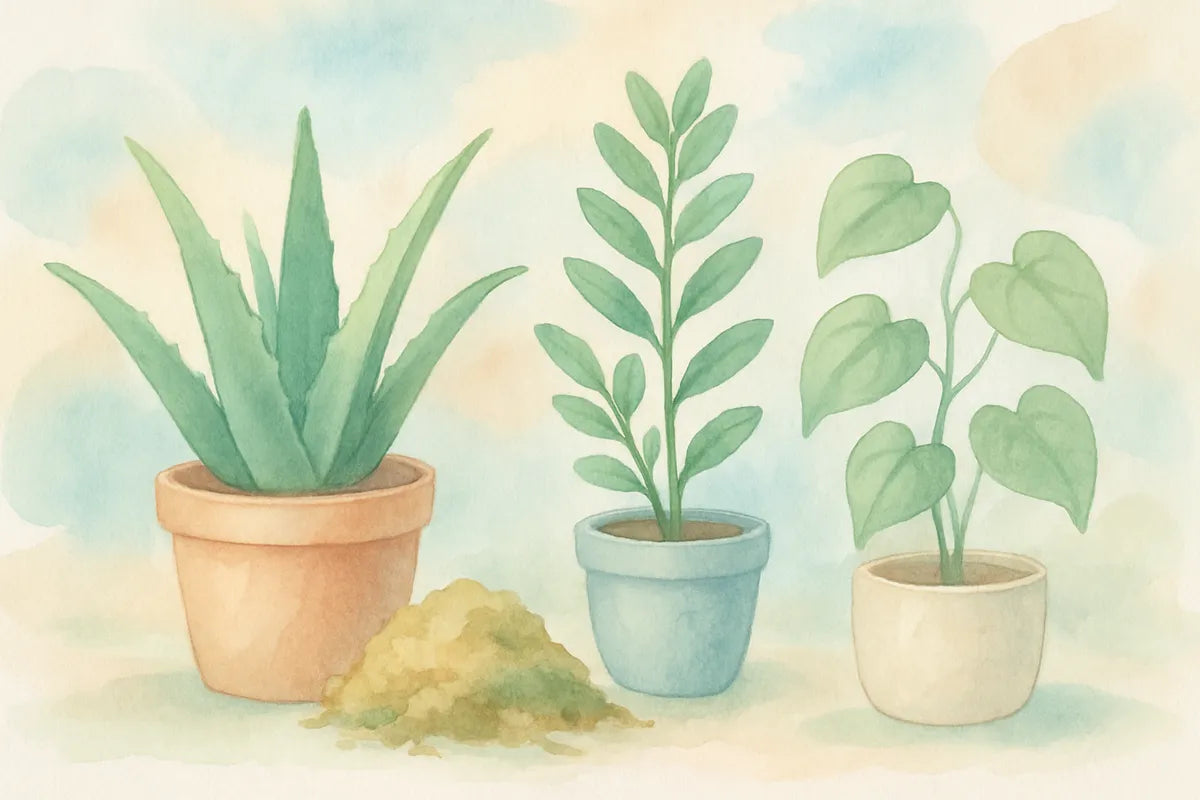
Die besten Pflanzen für die Luftqualität im Home Office: Natürliche Wege zur Luftreinigung
Wer Stunden im Home Office verbringt, atmet hauptsächlich Raumluft ein. Leider geben viele gängige Materialien – von Möbeln bis zu Reinigungsprodukten – Schadstoffe wie Benzol und Formaldehyd ab. Eine einfache, natürliche Methode, dem entgegenzuwirken, ist die Einführung von Zimmerpflanzen, die die Luft reinigen. Diese Zimmerpflanzen verbessern die Raumluftqualität, regulieren die Luftfeuchtigkeit und schaffen eine ruhigere Arbeitsumgebung. Studien, darunter solche, die einst von der NASA veröffentlicht wurden, zeigen, dass bestimmte Arten die Luft reinigen können, indem sie Giftstoffe entfernen und sauberere, atmungsaktivere natürliche Luft schaffen.
Dieser Leitfaden stellt die besten Zimmerpflanzenoptionen für Ihren Arbeitsplatz vor. Sie erfahren, welche Pflanzen die Luft reinigen, welche bei schlechten Lichtverhältnissen gedeihen und welche dafür bekannt sind, Schimmel, Schadstoffe und gängige Chemikalien in der Luft herauszufiltern. Finden wir die richtigen Pflanzen, um Ihre Innenumgebung zu verbessern und sowohl Stimmung als auch Luftqualität zu steigern.
Warum die Raumluftqualität im Home Office wichtig ist

Die Raumluftqualität beeinflusst, wie Sie sich täglich fühlen und funktionieren. In einem kleinen Büro oder Home Office können sich Schadstoffe schnell ansammeln. Häufige Quellen für die Raumluftverschmutzung sind Farben, Klebstoffe, Drucker und Reinigungssprays. Diese setzen flüchtige organische Verbindungen (VOCs) wie Benzol, Toluol und Xylol frei. Ohne einen Luftreiniger oder eine ordnungsgemäße Belüftung können diese Schadstoffe Kopfschmerzen und Müdigkeit verursachen.
Das Hinzufügen einer Zimmerpflanze zu Ihrem Arbeitsplatz ist eine kostengünstige Möglichkeit, die Luft zu reinigen und Ihren Komfort zu verbessern. Pflanzen nehmen Kohlendioxid auf, geben Sauerstoff ab und absorbieren in einigen Fällen Luftschadstoffe durch ihre Blätter und Wurzeln. Eine sauberere Innenumgebung fördert die Konzentration und reduziert Trockenheit, indem sie die Luftfeuchtigkeit auf natürliche Weise erhöht.
Wie Zimmerpflanzen die Luft reinigen

Die Wissenschaft hinter der Luftreinigung und natürlichen Luftfiltration
Die NASA-Forschung zu luftreinigenden Pflanzen begann, als Wissenschaftler untersuchten, wie man saubere Raumluft auf Raumstationen aufrechterhalten kann. Sie fanden heraus, dass einige Arten die Luft reinigen konnten, indem sie Schadstoffe absorbierten und in harmlose Substanzen umwandelten. Diese Pflanzen helfen auch in alltäglichen Innenräumen, indem sie als natürliche Luftreiniger mechanische Systeme ergänzen.
Reduzierung der Raumluftverschmutzung und Aufrechterhaltung der Luftfeuchtigkeit
Pflanzen helfen, die Luftfeuchtigkeit auszugleichen und trockene Luft zu vermeiden, besonders wenn Sie lange Stunden in beheizten oder klimatisierten Räumen verbringen. Eine Kombination aus grünem Laub und hellem Licht oder schlechten Lichtverhältnissen, je nach Pflanze, kann die Luft reinigen und gleichzeitig das Komfortniveau der Luftqualität das ganze Jahr über verbessern. Dieser Ansatz für saubere Innenräume unterstützt auch eine bessere Atemwegsgesundheit.
Die besten Zimmerpflanzen zur Luftreinigung im Home Office

Grünlilie: Ein klassischer Luftreiniger für jeden Schreibtisch
Die Grünlilie ist eine der am einfachsten zu pflegenden Zimmerpflanzen. Sie gedeiht sowohl bei hellem Licht als auch bei schlechten Lichtverhältnissen und ist wirksam bei der Filterung von Raumluftverschmutzung. Die Grünlilie ist dafür bekannt, die Luft zu reinigen, indem sie Formaldehyd und Benzol entfernt und dabei viel Sauerstoff produziert. Sie ist auch haustiersicher und tolerant gegenüber gelegentlicher Vernachlässigung, was sie zu einem perfekten Schreibtischbegleiter macht.
Efeutute: Ideal für Anfänger und Bereiche mit wenig Licht
Wenn Ihr Büro nicht viel Sonnenlicht abbekommt, ist die Efeutute eine gute Wahl. Sie kann bei schlechten Lichtverhältnissen überleben und reinigt gleichzeitig Luftschadstoffe aus Teppichen, Farben und Elektronik. Die Efeutute wirkt als natürlicher Reiniger, der gängige Giftstoffe bewältigt und so zu einer saubereren Raumluft beiträgt. Die herabhängenden Ranken dieser Zimmerpflanze verleihen Ihrem Arbeitsplatz auch optischen Komfort.
Einblatt: Elegant und effektiv bei der Entfernung von Schadstoffen
Einblatt-Pflanzen gehören zu den effizientesten Luftreinigern. Sie reinigen die Luft, indem sie Benzol, Trichlorethylen und andere Schadstoffverbindungen absorbieren. Obwohl sie moderate bis helle Lichtverhältnisse bevorzugen, kommen sie in Büros auch mit weniger Licht gut zurecht. Einblatt-Pflanzen helfen auch, die Luftfeuchtigkeit zu regulieren und schaffen so eine ausgewogene Innenumgebung, die ideal zum Atmen und für Komfort ist.
Welche Büropflanze reinigt die Luft am besten?
Wenn es um die effiziente Reinigung der Raumluft geht, heben Studien mehrere herausragende Arten hervor. Das Einblatt wird oft als einer der besten Luftreiniger bei Luftverschmutzung angesehen. Laut der Forschung der EPA zur Raumluftqualität filtert diese Pflanze schädliche Chemikalien wie Benzol und Formaldehyd, die häufig in Einrichtungsgegenständen vorkommen. Durch die Absorption dieser Schadstoffe und die Freisetzung gereinigter natürlicher Luft wirkt sie als integrierter Reiniger, der Komfort und Konzentration verbessert.
Die berühmte Clean Air Study der NASA stufte die Grünlilie jedoch als nahezu ebenso wirksam und wesentlich pflegeleichter ein. Sie gedeiht bei hellem Licht oder Halbschatten, wächst kräftig und vermehrt sich schnell. Für diejenigen, die eine robuste Schreibtischoption wünschen, die die Raumluftqualität kontinuierlich reinigt, bleibt diese Zimmerpflanze erstklassig.
Einblatt-Pflanzen nehmen immer noch den Spitzenplatz in Bezug auf die effiziente Luftreinigung ein, während Efeututen und Grünlilien dicht dahinter folgen. Die Kombination dieser Pflanzen schafft ein ausgewogenes Reinigungssystem, das die Raumluft von mehreren Schadstoffquellen reinigt und gleichzeitig die Luftfeuchtigkeit und den Sauerstofffluss aufrechterhält.
Welche Pflanze entfernt 78 % des Schimmels in der Luft?
Der Efeu ist bekannt für seine bemerkenswerte schimmelbekämpfende Fähigkeit. Von wissenschaftlichen Studien zitierte Forschungsergebnisse zeigten, dass er in nur 12 Stunden bis zu 78 % der in der Luft befindlichen Schimmelsporen entfernen kann. Obwohl er oft in größeren Innenräumen verwendet wird, eignet sich dieser Ranker gut für Home-Office-Ecken oder Blumenampeln, wo Schimmel oder Feuchtigkeit ein Problem sein könnten.
Efeu bekämpft nicht nur Schimmel – er verbessert auch die Raumluftqualität, indem er Luftschadstoffe wie Benzol und Formaldehyd absorbiert und als lebender Reiniger wirkt. Für kleinere Büroräume, die anfällig für Feuchtigkeit oder eingeschränkte Luftzirkulation sind, hilft Efeu, eine saubere Innenatmosphäre aufrechtzuerhalten. Die Kombination von Efeu mit einem Luftreiniger kann die Ergebnisse maximieren, insbesondere in feuchten Umgebungen, die mikrobielles Wachstum begünstigen.
Beachten Sie, dass Efeu helles Licht und gut durchlässigen Boden bevorzugt. Wenn Ihr Büro nur begrenztes Licht hat, mischen Sie ihn mit anderen Zimmerpflanzen, die wenig Licht benötigen, wie der Efeutute oder dem Einblatt, um eine ausgewogene Innenumgebung mit saubererer natürlicher Luft und regulierter Luftfeuchtigkeit aufrechtzuerhalten.
Welche Zimmerpflanze reinigt die Luft am meisten?
Einblatt-Pflanzen führen erneut die Liste der Pflanzen an, die die Luft am besten reinigen. Sie absorbieren ein breites Spektrum an Schadstoffen, darunter Benzol, Ammoniak und Formaldehyd. Ihre Fähigkeit, den Raum zu befeuchten, macht sie ideal für trockene Büros, in denen Klimaanlagen Halsschmerzen oder trockene Haut verursachen können. Diese Kombination aus Luftreinigung und Komfort erklärt ihre Beliebtheit sowohl in Wohnungen als auch in Büros.
Die Grünlilie verdient ebenfalls eine besondere Erwähnung. Sie ist hochwirksam bei der Reinigung von Raumluftverschmutzung in geschlossenen Umgebungen. Efeututen und Bogenhanf rangieren dicht dahinter und bieten ähnliche Vorteile bei unterschiedlichen Lichtverhältnissen. Zusammen bilden diese Zimmerpflanzen ein leistungsstarkes natürliches Reinigungssystem, das für jede Home-Office-Umgebung geeignet ist.
Für die meisten Menschen funktioniert eine Mischung aus Grünlilien, Efeututen und Einblatt-Pflanzen am besten. Diese Kombination gewährleistet eine ausgewogene Filterung verschiedener Schadstoffe, geringen Wartungsaufwand und einen verbesserten Sauerstofffluss. Laut der Zusammenfassung der NASA-Studie von House Beautiful verbessert die Vielfalt der Pflanzenauswahl die allgemeine Raumluftqualität, indem sie verschiedene chemische Quellen bekämpft.
Praktische Tipps zur Pflege gesunder Zimmerpflanzen und zur Verbesserung der Raumluftqualität
Gleichgewicht von Licht- und Wasserbedingungen
Verschiedene Arten gedeihen unter unterschiedlichen Bedingungen. Grünlilien genießen helles Licht, während Efeututen gut bei schlechten Lichtverhältnissen gedeihen. Einblatt-Pflanzen bevorzugen diffuses Sonnenlicht. Überwässerung kann zu Pilzwachstum führen, was die Raumluftqualität eher verschlechtert als verbessert. Gießen Sie Pflanzen mäßig und überprüfen Sie regelmäßig die Bodenfeuchtigkeit.
Reinigen Sie die Blätter, um die Luftreinigungskapazität zu maximieren
Staub verstopft die Poren, die Pflanzen zur Luftreinigung nutzen. Wischen Sie die Blätter jede Woche mit einem feuchten Tuch ab. Diese einfache Maßnahme hält die Oberfläche offen, um Schadstoffe wie Benzol und andere Luftschadstoffe effizient aufzunehmen.
Kombination von natürlichen und mechanischen Luftreinigern
Pflanzen eignen sich hervorragend zur natürlichen Luftreinigung, aber die Kombination mit einem elektrischen Luftreiniger sorgt für eine vollständige Abdeckung. Geräte mit HEPA-Filtern zielen auf feine Partikel ab, die Pflanzen allein nicht bewältigen können. Die Kombination beider hilft, eine optimale Raumluftqualität zu erreichen. Detaillierte Ratschläge zu Luftfiltern finden Sie im Luftqualitätsleitfaden von Energy.gov.
Gestaltung einer sauberen Innenumgebung mit Zimmerpflanzen
Der Aufbau einer gesunden Innenumgebung erfordert mehr als nur das Hinzufügen von Grün. Wählen Sie Behälter mit Drainage, stellen Sie Pflanzen an Orte, an denen sie Licht erhalten, und verteilen Sie sie gleichmäßig in Ihrem Arbeitsbereich. Ein Gleichgewicht zwischen hohen und hängenden Sorten hilft, die Luft gleichmäßiger zu reinigen und eine frische Zirkulation zu fördern. Die visuelle Ruhe üppiger Zimmerpflanzen reduziert auch Stress und schafft einen Arbeitsplatz, der sowohl die körperliche als auch die geistige Gesundheit fördert.
Fazit: Besser atmen, besser arbeiten
Die Verbesserung der Raumluftqualität in Ihrem Home Office erfordert keine großen Geräte oder Ausgaben. Mit der richtigen Mischung aus luftreinigenden Pflanzen – Grünlilie, Einblatt und Efeutute – können Sie Schadstoffe wie Benzol reduzieren und eine sauberere Innenumgebung genießen. Efeu hilft bei der Bekämpfung von Schimmel, während die Aufrechterhaltung der Luftfeuchtigkeit ein natürliches Luftgleichgewicht schafft, das mechanische Systeme allein nicht bieten können.
Diese grünen Begleiter reinigen nicht nur die Luft. Sie bringen Ruhe, Konzentration und natürliche Schönheit in Ihren Arbeitsalltag. Wenn Sie sie gut pflegen, revanchieren sie sich, indem sie die Raumluftverschmutzung reinigen, die Luftfeuchtigkeit ausgleichen und Ihr langfristiges Wohlbefinden unterstützen. Atmen Sie tief durch und lassen Sie Ihre Pflanzen den Rest erledigen.