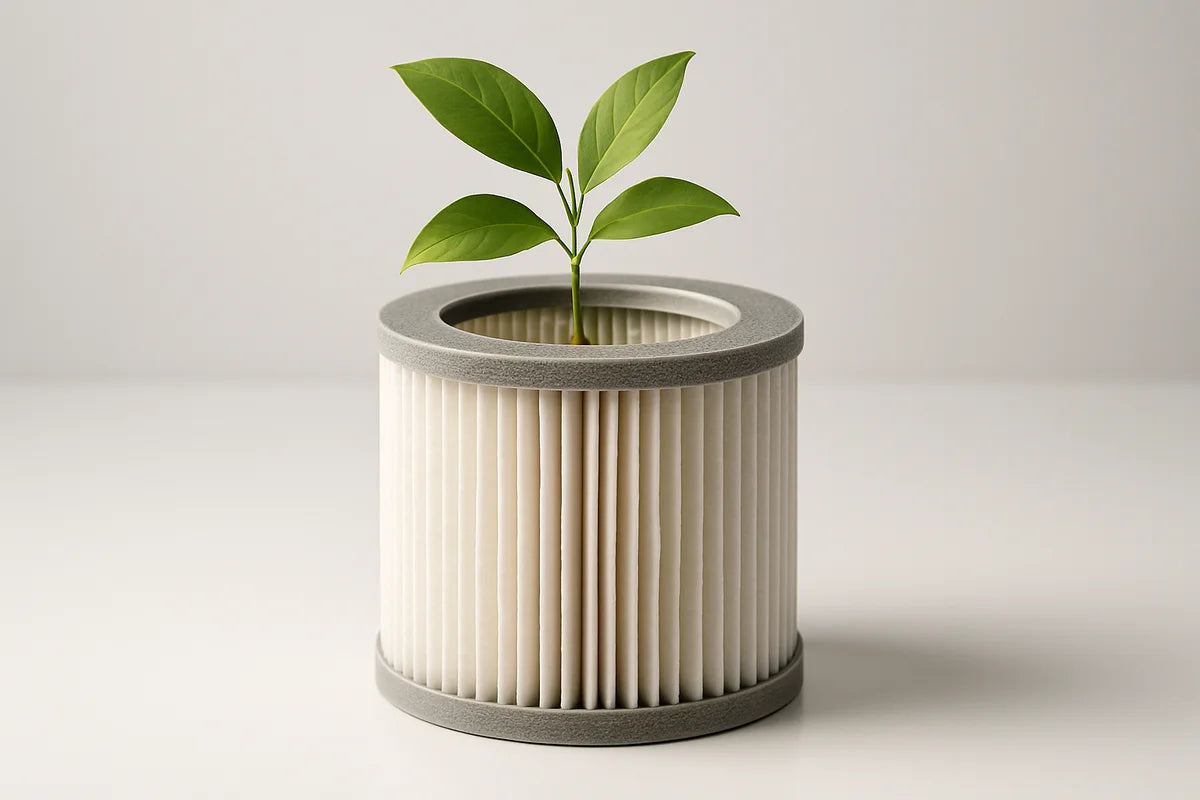
Are moss air purifiers worth it for office use?
Moss air purifiers look great. They also promise cleaner air with less noise, less power use, and a calmer workspace. If you’re picking air cleaning gear for an office, it’s fair to ask: do they actually work, and are moss air purifiers worth it for office air quality?
The short answer: they can help in specific ways, but they don’t replace a proper HEPA air purifier or good ventilation. They’re best as a design-forward add-on for certain pollutants, not a main line of defense against fine particles and viruses.
What a moss air purifier is (and what it is not)

Most “moss air purifiers” fall into two buckets:
- Passive moss walls or panels: decorative installations that rely on natural air movement.
- Active moss biofilters: units that use a fan to pull air through a plant and moss filter, often with a root-zone “biofilter” layer.
Some products use preserved moss (stabilized moss that no longer grows). Preserved moss can look nice and may help with sound, but it won’t behave like a living biofilter. When someone asks if moss air purifiers are worth it for office use, the first step is checking whether the moss is living and whether the unit moves air through it with a fan.
How they’re meant to clean the air
Living plant systems can reduce certain gases (called VOCs) and may trap some dust on surfaces. In active systems, a fan increases contact between air and the biofilter media. That matters, because air cleaning needs airflow, not just a plant sitting in a corner.
Still, the “plant air cleaning” story often gets oversold. Early lab studies showed plants can remove VOCs in small chambers. Real offices have bigger volumes, open doors, people moving, and outdoor air coming in. That changes the math.
If you want a grounded overview of indoor pollutants and what helps, the EPA’s indoor air quality guidance is a solid baseline.
What office air problems you’re really trying to solve
Before buying anything, name the problem. Offices usually deal with a mix of:
- Fine particles (PM2.5) from outdoors, traffic, wildfire smoke, printers, and cooking smells from break rooms
- Dust and allergens (pollen, pet dander brought in on clothes)
- CO2 buildup from people breathing (a ventilation issue, not a “filter” issue)
- VOCs from cleaners, new carpet, furniture, paints, markers, and some office equipment
- Odors from food, restrooms, and shared spaces
- Dry air or stuffy air complaints, which often tie back to HVAC settings
Moss systems have the best argument on VOCs and mild odor reduction, mainly in active designs. For particles like PM2.5, they usually can’t match a good HEPA unit with known airflow and a published CADR rating.
Do moss air purifiers actually work in offices?
They can work, but “work” needs a definition. Air cleaning is not vibes. It’s air volume processed per hour, pollutant type, and measured change in the room.
VOCs: possible benefits, but results vary
Living biofilters can reduce some VOCs under the right conditions. The big question is scale. How much air passes through the filter each hour? How much VOC load does your office have? And does the unit publish test data that matches real rooms?
A well-cited review from the NASA Clean Air Study helped popularize the idea that plants clean air. It was useful science, but it was not a real office test. Many brands still market as if it were.
If your office has “new building smell,” frequent solvent use, or heavy cleaning products, a moss biofilter might help a bit, but you’ll get more predictable results from source control (switch products, store chemicals sealed) plus ventilation.
Particles (PM2.5): usually not their strength
For smoke and fine dust, you want a filter that captures tiny particles and a fan strong enough to cycle room air often. That’s where HEPA shines. Most moss units don’t publish a CADR, and many don’t move enough air to compete with dedicated air cleaners.
If you’re dealing with wildfire seasons or traffic pollution, look at the practical guidance from building and energy resources like Carbon Trust for broader indoor strategies, then pair that with a proven HEPA unit sized for the room.
CO2 and “stuffy air”: moss won’t fix ventilation
People often say “the air feels bad” when CO2 climbs. Plants don’t meaningfully solve CO2 in a typical office. You fix this with outdoor air intake, better HVAC settings, or opening windows when outdoor air is clean.
If you want to check whether CO2 is a real driver, a low-cost monitor can tell you. For a simple explanation of why ventilation matters, see Harvard’s work on airborne transmission and indoor air. Even outside infection concerns, the ventilation basics still apply.
Pros of moss air purifiers in an office
They improve the look and feel of a space
This is not fluff. People respond to their surroundings. A moss wall or a living filter can soften a hard office and make a lobby or meeting room feel less sterile. If your goal includes design, they may be worth it even if the air cleaning is modest.
They’re quiet (often quieter than HEPA units)
Many active moss biofilters run at low fan speeds and can feel less intrusive than a boxy air purifier on high. In focus-heavy offices, noise matters.
They can support a “do more than one thing” approach
Used alongside ventilation and a HEPA unit, a moss system can play a small supporting role. Some teams like them as a visible sign that the company cares about the workspace.
Cons and limits you should know before buying
Marketing claims can outpace real-world performance
Many moss products don’t publish clear test results for room-sized air cleaning. If you can’t find airflow specs, filter method, and third-party testing, treat claims as unproven.
Maintenance can be real work
Living systems need care. If your office already struggles to keep a coffee machine clean, adding a living filter may not go well.
- Watering and humidity control
- Mold risk if the system stays too wet
- Replacement media or nutrients in some designs
- Pest management in rare cases
Preserved moss avoids some of this, but then you lose most of the “biofilter” function.
They can trigger allergies for some people
Not everyone loves living walls. Some employees may react to mold spores if the unit is poorly maintained, or they may dislike the smell of damp media. If you have known sensitivities in the office, plan ahead.
Cost per impact can be high
Many moss installations cost far more than a high-CADR HEPA purifier that delivers measurable PM2.5 reductions. If your goal is measurable air cleaning per dollar, HEPA usually wins.
How to decide if a moss air purifier is worth it for your office
Use this as a simple filter before you spend money.
1) Identify the main pollutant you care about
- If you care about wildfire smoke or fine dust: prioritize HEPA and sealing leaks.
- If you care about chemical smells or light VOC load: a moss biofilter could help, but still fix sources first.
- If you care about “stuffy air”: measure CO2 and improve ventilation.
2) Check whether the unit is passive or active
Passive moss panels are mostly decor. Active systems at least attempt air processing. If the product has no fan, assume minimal air cleaning.
3) Ask for real specs and test data
When you talk to a vendor, ask:
- What is the airflow rate (CFM or m3/h) at each setting?
- What pollutants does it target (VOCs, PM, odors)?
- Do you have third-party test results in a room-sized setup?
- What maintenance schedule do you recommend, and who does it?
- What happens if the moss dries out or gets overwatered?
4) Do a quick office sizing reality check
Air cleaning only works if you move enough air. For HEPA units, CADR helps. For moss systems, you may need to estimate based on airflow. A practical way to sanity-check room needs is to use a CADR or ACH guide like AHAM’s air cleaner guidance. Even if you don’t buy an AHAM-rated unit, the sizing logic is useful.
5) Run a small pilot and measure
If you manage an office, don’t guess. Pilot one unit in one area for 4 to 6 weeks. Measure before and after.
- Use a PM2.5 monitor for particle trends
- Track odor complaints and comfort feedback
- If VOCs matter, consider a basic VOC sensor, but interpret it with care since many low-cost VOC sensors are broad and not specific
For a practical starting point on what to measure in buildings, NIOSH indoor environment guidance can help you frame the basics.
Better options (or pairings) for most offices
If your only goal is cleaner air, these steps usually beat a moss system on results and cost.
Use HEPA air purifiers where people sit
Pick units sized for each room, not one unit for the whole floor. Place them where airflow won’t get blocked. Run them consistently, not just when someone complains.
Improve ventilation and filtration in HVAC
If you control the building system, upgrading HVAC filters and increasing outdoor air (when outdoor air is clean) can improve the whole space. This also reduces the need for lots of small devices.
Cut VOCs at the source
- Switch to low-odor, low-VOC cleaning products
- Store chemicals sealed and away from work areas
- Air out new furniture and carpets before full occupancy when possible
Use plants for comfort, not as your main filter
Regular plants can still be worth having. They can make a room feel calmer and more welcoming. Just don’t buy them expecting HEPA-level performance.
When moss air purifiers make sense in an office
So, are moss air purifiers worth it for office settings? Yes, in these cases:
- You want a strong design feature that also offers some air support, not a primary air solution.
- You have budget for upkeep or a service plan that keeps the system healthy.
- You’re targeting mild odor and VOC reduction in a lobby, meeting room, or reception area.
- You plan to pair it with proven steps like ventilation and HEPA filtration.
When they’re probably not worth it
- You need measurable PM2.5 reduction for smoke, dust, or seasonal pollution.
- You want the cheapest path to better air per square foot.
- No one owns maintenance, and the unit will get ignored after install.
- Your office has moisture issues already (mold risk rises when you add wet systems).
Buying checklist for a moss air purifier (office edition)
- Confirm it’s a living, active system if you expect real air cleaning.
- Get airflow numbers and ask how many air changes per hour it can deliver in your room size.
- Ask what pollutants it targets and what it does not target.
- Ask for maintenance steps in writing and assign an owner.
- Plan a pilot and measure PM2.5 and comfort feedback before scaling.
Conclusion
Moss units can be a good fit if you treat them as part decor, part support. They can also make an office feel better to work in, which counts. But if your goal is clear, measurable improvement in office air, you’ll get more reliable results from ventilation, source control, and a correctly sized HEPA purifier.
If you’re still unsure whether moss air purifiers are worth it for office use, run a small pilot, measure what changes, and decide based on data and upkeep effort, not the sales pitch.