How to Implement Biophilic Design for Mental Wellness
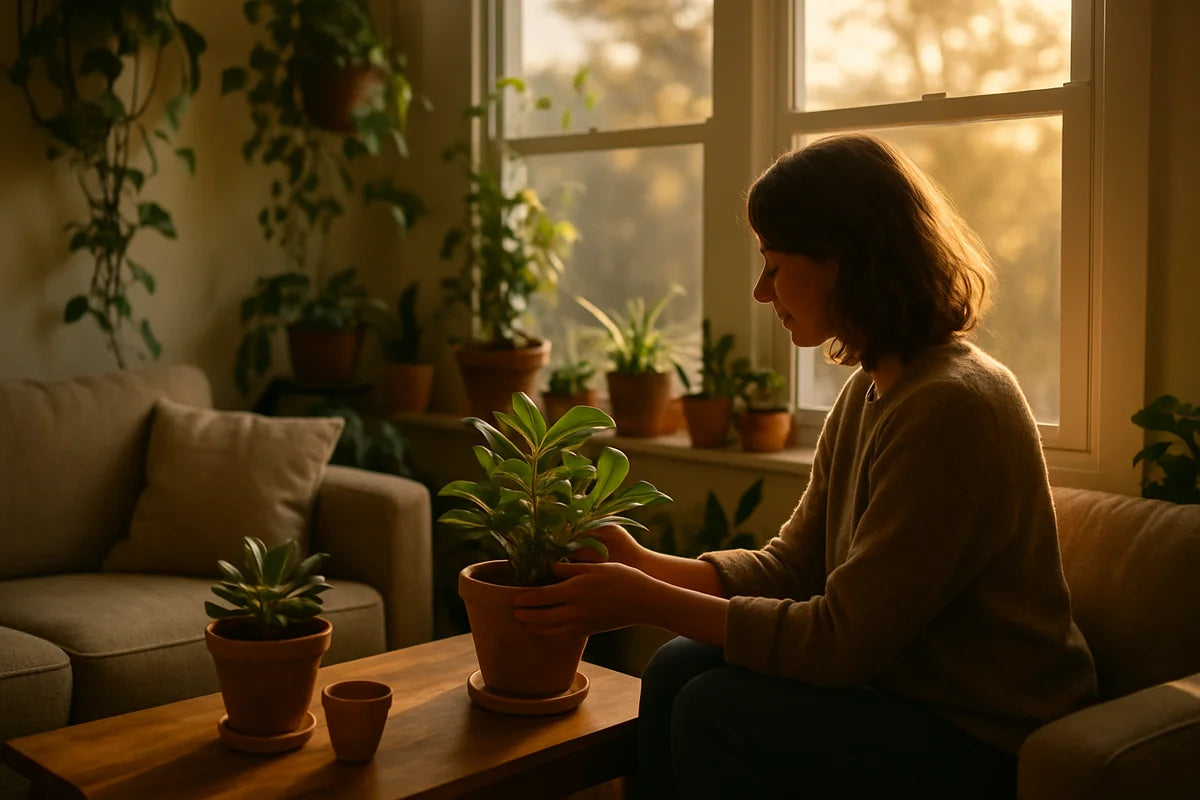
Some rooms feel easy to be in. You breathe a bit slower. Your shoulders drop. Often, it’s not the sofa or the paint color. It’s the quiet cues of nature: daylight on a wall, a view of trees, a few living plants, the feel of wood under your hand.
Biophilic design is a way to bring those cues into the places where you live and work. Done well, it supports mental wellness by lowering stress, helping you focus, and making a space feel safe and steady. You don’t need a renovation budget or a degree in design. You need a plan, a few smart choices, and a willingness to notice what actually helps you feel better.
What biophilic design is (and what it isn’t)

Biophilic design means shaping a space so it connects you to nature in simple, repeatable ways. That can mean real nature (plants, daylight, fresh air) and also nature-like patterns (wood grain, stone, curved forms, soft shadows).
It isn’t “put a plant in the corner and call it done.” A single fern can help, but biophilic design works best when you build a small system: light, air, materials, and a few daily touchpoints that keep you grounded.
Why biophilic design supports mental wellness

Your brain reads your surroundings all day. When a space feels harsh, stale, or dim, your body stays on alert. When a space offers daylight, gentle movement, and natural textures, you often feel calmer without trying.
Researchers have linked nature exposure to better mood and lower stress. For a broad overview of how nature affects mental health, see the CDC’s mental health resources and how stress and environment interact. If you want the “why” behind nature’s pull, the biophilia hypothesis overview gives a clear, plain-English summary.
Biophilic design won’t replace therapy, medication, or medical care. But it can make the hours between those supports feel easier. It can also reduce friction for good habits: better sleep, more movement, and fewer stress spikes.
Start with a quick self-audit

Before you buy anything, spend one day paying attention. Which spots feel good? Which ones drain you? Ask yourself a few direct questions:
- Where do I feel most calm, and why?
- Where do I get stuck scrolling or procrastinating?
- Do I get glare, headaches, or eye strain in any room?
- Do any spaces feel stuffy or too warm?
- Where do I naturally pause, look out, or breathe deeper?
Write down two goals. Keep them simple, like “feel less wired at night” or “focus better at my desk.” Biophilic design works best when it serves a clear need.
Implement biophilic design in 7 practical steps
1) Prioritize daylight (and control it)
Daylight is the fastest mental wellness upgrade most homes can make. It supports your body clock, lifts mood, and makes a room feel more open.
- Open up windows during the day. Move bulky furniture that blocks glass.
- Use light, simple window coverings you can adjust, not heavy curtains you never touch.
- Add a mirror to bounce light deeper into the room, but avoid aiming it where it throws glare at your eyes.
- If you work at a desk, try a side-light setup. Put the window to your left or right, not behind your screen.
If you struggle with sleep, pair daylight with darkness at night. Keep evenings dim and warm. For a practical guide to circadian-friendly lighting, the Sleep Foundation’s circadian lighting overview lays out what helps and what hurts.
2) Improve indoor air (it matters more than you think)
Stale air can make you feel foggy, tense, and tired. Fresh air supports clear thinking. Start small and build.
- Air out your home: open two windows for 5 to 10 minutes to create a cross-breeze.
- Use exhaust fans when you cook or shower.
- Vacuum with a HEPA filter if you can, especially if you have allergies.
- Consider a portable HEPA air purifier for bedrooms or offices.
If you want a solid, evidence-based checklist, the EPA’s indoor air quality guidance covers ventilation, moisture, and common pollutants without fluff.
3) Add plants, but choose the right ones for your life
Plants help because they’re living signals. You notice growth. You notice change. That quiet sense of time can steady your mood.
Don’t buy the “hardest to kill” plant if you hate how it looks. Pick plants you want to see every day. Match them to your light and your schedule.
- Low light: pothos, snake plant, ZZ plant
- Bright indirect light: rubber plant, philodendron, monstera
- Sunny window: herbs, succulents, some palms
Place one plant where your eyes land when you feel stressed: near your kettle, by your monitor, beside the couch. That placement matters more than the number of plants.
For safe plant choices if you have pets, use the ASPCA’s toxic and non-toxic plant list. It’s practical and easy to scan.
4) Use natural materials you can touch
Biophilic design isn’t only visual. Touch grounds you fast. Swap a few high-touch items for natural textures:
- Wood: a small side table, cutting board, picture frames
- Stone or clay: a mug, bowl, lamp base
- Natural fibers: cotton throws, linen curtains, wool rug
Aim for real materials where your hands land: a desktop, a chair arm, a bedside surface. If you rent, think “overlay” instead of “replace.” A wood desk topper, a cork mat, or a woven rug can change the feel of a room without a remodel.
5) Bring in nature patterns (without turning your home into a theme)
You don’t need leaf-print everything. Use nature patterns the way nature uses them: with variation and restraint.
- Choose one nature-based pattern per room: subtle wood grain, a soft botanical print, or a stone-like surface.
- Prefer uneven, organic textures over perfect repeats.
- Pick a calm color range: greens, earth tones, warm whites, and muted blues often feel easier on the nervous system.
If you want a clear framework for the main elements of biophilic design, Terrapin Bright Green’s “14 Patterns of Biophilic Design” is widely used in design practice and gives a useful checklist.
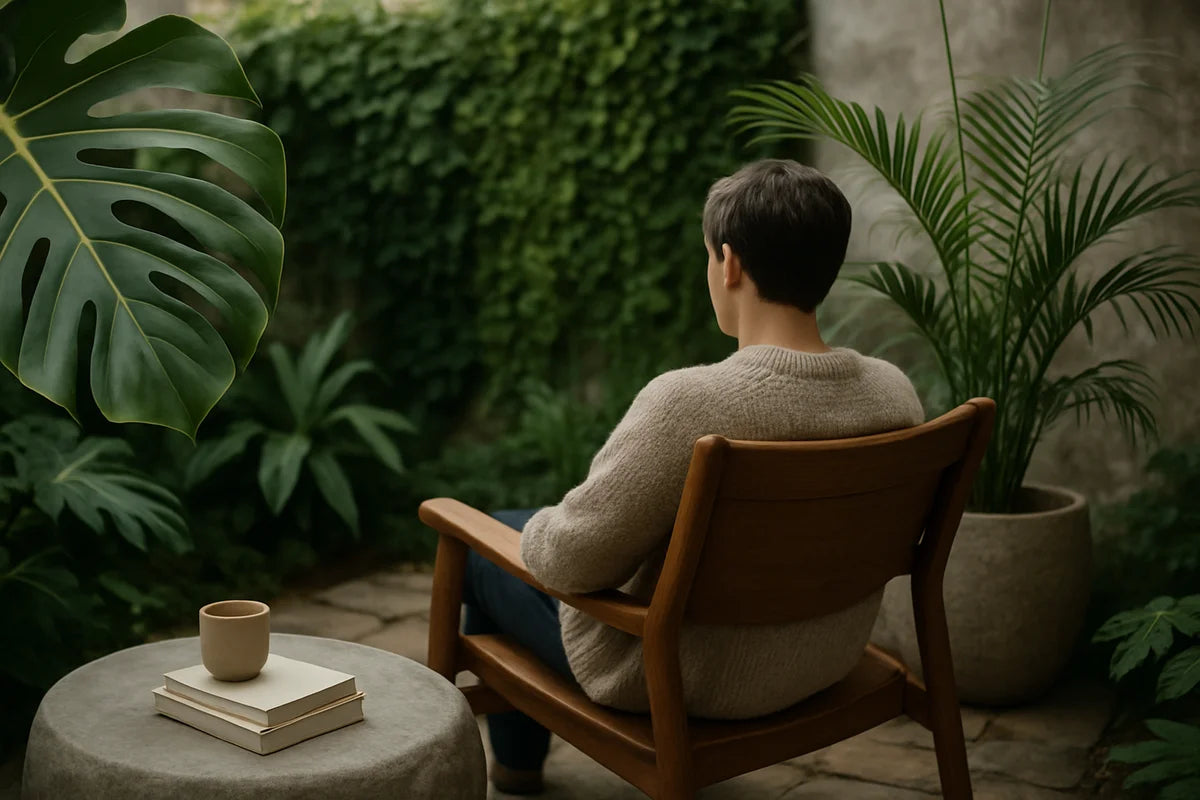
6) Create a “refuge” spot for decompression
Mental wellness improves when you have a place that signals safety. A refuge spot is a small area where you can settle without feeling exposed.
- Pick a corner with a wall behind you (not the middle of a room).
- Add a comfortable seat, a small light, and a soft textile.
- Keep one living element there: a plant, a vase of branches, or a view outside.
- Reduce visual noise: one shelf, one basket, no piles.
Use this spot for a short daily reset: tea, a book, slow breathing, or a five-minute stretch. The goal isn’t to “be productive.” The goal is to recover.
7) Use sound and scent in a natural way
Sound can calm you or push you into stress without you noticing. The same goes for smell.
- Let in natural sound when it feels good: open a window for birds and distant street noise.
- Block harsh noise when you need focus: a rug, curtains, or a white-noise machine can help.
- Choose scents that read as “clean and real,” not intense: a citrus peel in a bowl, fresh herbs, or a mild essential oil diffuser used sparingly.
If scent triggers headaches or asthma, skip fragrance and focus on fresh air and clean materials. Biophilic design should support your body, not challenge it.
Room-by-room ideas you can do this weekend
Bedroom: support sleep and a calmer start
- Get morning light into the room for 10 minutes.
- Keep nighttime light low and warm.
- Add one plant only if it won’t stress you out to care for it.
- Use natural bedding fibers if you can, even just a cotton duvet cover.
Home office or study: reduce stress and boost focus
- Place your desk near a window if possible, or angle it so you can glance outside.
- Add a small plant in your near vision, within 2 to 3 feet.
- Use a desk surface that feels good under your hands (wood, cork, a textured mat).
- Keep one “nature break” cue: a stone, shell, or small branch that reminds you to pause.
Living room: make it a recovery space
- Layer lighting: one overhead light plus one lamp. Use the lamp more often.
- Add a rug to soften sound and make the space feel settled.
- Use a simple palette and let one natural element stand out: a plant, a wood table, or a view.
Kitchen: steady your mood through routine
- Keep a bowl of fruit where you can see it.
- Grow herbs on a sunny sill if you cook even once a week.
- Open a window while you cook to clear heat and smells.
Common mistakes (and quick fixes)
- Too many plants, then guilt when they die: start with one or two and match them to your light.
- Glare and harsh light: add a sheer curtain, move the screen, or use a softer lamp.
- Nature “clutter”: a few meaningful pieces beat a shelf full of random decor.
- Ignoring comfort: a beautiful chair that hurts your back won’t support mental wellness.
- Forcing a style: biophilic design should fit your taste, not fight it.
A simple 30-day plan to implement biophilic design
- Week 1: Light and air. Open windows daily, adjust curtains, and fix glare at your main seat or desk.
- Week 2: Add one strong nature anchor. A plant, a wood piece, or a better view setup.
- Week 3: Build your refuge spot. One chair, one lamp, one living element, less clutter.
- Week 4: Refine. Swap one textile for a natural fiber, add a second plant only if the first is thriving, and tune sound at the times you feel most stressed.
If you want help estimating how much light a room gets, a practical tool is the SunCalc sun position calculator. It helps you see when a window gets direct sun so you can place plants and seating with fewer guesses.
Conclusion
Biophilic design for mental wellness works when you make nature easy to notice. Let in daylight. Clear the air. Add living things you can care for. Use materials that feel real. Build one quiet spot where your nervous system can downshift.
Start small. Pay attention to how you feel in the space, not how it looks in a photo. A few steady changes can turn your home into a place that supports you every day.