Low maintenance indoor greenery for air purification: easy plants that actually fit real life
Houseplants can make a room feel calmer and more “finished.” Many people also buy them for cleaner air. The truth sits in the middle: plants can help in small ways, but they won’t replace fresh air, good filters, and fixing moisture problems. Still, low maintenance indoor greenery for air purification can play a useful supporting role, especially if you pick hardy plants, place them well, and care for them with a light touch.
This guide covers what plants can (and can’t) do for indoor air, the easiest options for busy homes, and simple habits that keep your greenery alive without turning plant care into a second job.
Do indoor plants really purify air?

Plants take in carbon dioxide and release oxygen during photosynthesis. They also interact with tiny particles and gases through their leaves, roots, and the microbes in their potting mix. That’s the basic idea behind “air purifying plants.”
But how much does that matter in a normal home?
What research says (and what it doesn’t)
Early lab studies showed plants could reduce certain airborne chemicals in sealed chambers. Those results sparked a lot of “plants clean your air” claims. Real homes aren’t sealed chambers, though. Air moves in and out through cracks, open doors, HVAC systems, and windows. That changes the math.
If you want a grounded take, start with the EPA’s indoor air quality guidance. It focuses on source control, ventilation, and filtration because those steps move the needle most.
A widely cited research review also points out that normal air exchange often overwhelms the cleaning effect you’d get from a few pots on a shelf. You can read the open summary at this review on plant air cleaning rates.
So why keep plants on the list? Because they can still help in practical ways:
- They raise perceived comfort and make spaces feel less “stale.”
- They add humidity in dry months (modest, but real).
- They can trap some dust on leaves (especially large-leaf plants you wipe often).
- They nudge you to pay attention to light, airflow, and moisture, which matters for mold and odors.
What makes a plant “low maintenance” indoors?

Low maintenance indoor greenery for air purification isn’t about buying the “right” plant once. It’s about choosing plants that match your conditions and forgive mistakes.
Look for these traits
- Tolerates low to medium light
- Handles missed waterings without drama
- Grows slowly (less pruning, fewer repots)
- Resists common pests
- Doesn’t drop leaves constantly
Know your light before you shop
Most “easy plant” failures come from light, not water. If you can’t judge light by eye, use a free phone app and take readings at plant height in the morning and afternoon. For a deeper light explainer, University of Minnesota Extension’s guide to houseplant light breaks it down clearly.
Best low maintenance indoor plants linked to air purification
The plants below show up often in air-purifying lists, but they also earn their spot because they’re tough. For each one, you’ll get plain care rules that work in most homes.
Snake plant (Dracaena trifasciata)
If you want one plant that survives almost anything, start here. Snake plants handle low light, dry air, and irregular watering. They grow upright, so they fit tight corners.
- Light: low to bright indirect (grows faster in brighter spots)
- Water: let soil dry out fully, then water well
- Tip: use a pot with a drainage hole; root rot is the main risk
ZZ plant (Zamioculcas zamiifolia)
ZZ plants store water in thick stems and roots, so they don’t mind neglect. They also keep a neat shape without pruning. If you travel a lot, this one makes life easy.
- Light: low to medium, avoids harsh sun
- Water: every 2-4 weeks depending on season and light
- Tip: if leaves yellow, you’re watering too often
Pothos (Epipremnum aureum)
Pothos grows fast, trails nicely, and tells you when it’s thirsty (leaves lose a bit of firmness). It’s a good choice if you want greenery at eye level on shelves.
- Light: low to bright indirect; more light means stronger variegation
- Water: when the top inch of soil feels dry
- Tip: trim long vines and root cuttings in water to make new plants
Spider plant (Chlorophytum comosum)
Spider plants handle a wide range of conditions and produce “babies” that you can pot up or share. They work well in hanging planters and on windowsills with filtered light.
- Light: medium to bright indirect
- Water: when top half of soil dries; don’t keep it soggy
- Tip: brown tips often come from inconsistent watering or mineral-heavy water
Peace lily (Spathiphyllum)
Peace lilies aren’t as drought-tough as snake plants, but they’re simple if you like a plant that signals clearly. When it needs water, it droops. After watering, it perks back up.
- Light: low to medium; too much sun scorches leaves
- Water: keep lightly moist, not wet
- Tip: wipe leaves monthly so the plant can “breathe” and photosynthesize better
Rubber plant (Ficus elastica)
Rubber plants give you big leaves that catch dust and add a strong visual anchor to a room. They prefer brighter indoor light but tolerate medium light once established.
- Light: bright indirect is best
- Water: let the top few inches dry before watering
- Tip: rotate the pot every few weeks for even growth
Areca palm (Dypsis lutescens)
If you want a larger plant that feels like “real” indoor greenery, an areca palm can work, as long as you can give it decent light and steady watering. It’s not hard, but it’s less forgiving than a snake plant.
- Light: bright indirect
- Water: when the top inch dries
- Tip: keep it away from hot vents; palms hate dry blasts of air
Where to place plants for better air and fewer problems
Placement won’t turn a plant into a full air cleaner, but it can help you get the most from low maintenance indoor greenery for air purification without inviting mold, pests, or mess.
Put plants where air moves
Stagnant corners stay damp longer after watering. That raises fungus gnat risk and can sour the soil. Place plants where the room gets normal airflow, not pressed against a cold window in winter and not right over a radiator.
Use plants to support your ventilation habits
Plants pair well with the basics: open windows when outdoor air is good, run kitchen and bath fans, and keep HVAC filters fresh. For a practical overview of what helps most, ASHRAE’s resources on filtration and indoor air explain how filters and airflow reduce pollutants.
Avoid “humidity traps”
Grouping plants can raise local humidity. That’s great in a dry apartment, but risky in a damp basement. If you see condensation on windows or smell must, don’t cluster plants in that room. Fix the moisture first.
Care routines that keep plants low maintenance
Plants become “high maintenance” when you guess. Set a simple system and stick to it.
Water by feel, not by calendar
Stick a finger into the soil. If the top inch is dry, many common houseplants can take water. If it’s still damp, wait. This one habit prevents most deaths.
If you want a quick checklist for indoor watering and pot setup, The Spruce’s houseplant watering guide lays out the basics without fluff.
Pick the right pot and soil once
- Use a pot with a drainage hole for almost everything.
- Add a saucer so you don’t ruin floors, but empty it after watering.
- Choose a standard indoor potting mix. For cactus-like plants (snake plant, ZZ), mix in extra perlite for faster drainage.
Clean leaves to reduce dust
Dusty leaves look dull and can slow growth. Wipe large leaves with a damp cloth. Rinse smaller-leaf plants in the shower. This also helps if your goal includes air quality, since dust sticks to leaf surfaces.
Fertilize lightly
Most low maintenance indoor plants don’t need much food. Feed once a month in spring and summer with a balanced liquid fertilizer at half strength. Skip feeding in winter unless the plant actively grows.
Common indoor air pollutants and what plants can’t fix
If you care about air purification, it helps to name the problem. Plants may help a little with some gases, but they won’t solve the main drivers of poor indoor air.
Particles (dust, smoke, pet dander)
Plants won’t remove enough particles to matter on their own. A HEPA air purifier will. If you want a simple way to size one, use AHAM’s CADR guidance for room air cleaners to match a unit to your room.
VOCs (from paint, cleaners, new furniture)
Plants may absorb small amounts, but the best fix is source control: use low-VOC products, store solvents outside living areas, and ventilate during and after projects.
Carbon monoxide and gas leaks
No plant can protect you from carbon monoxide. Use CO alarms and maintain fuel-burning appliances. If you want a clear overview of CO safety and alarms, CDC’s carbon monoxide information is a solid reference.
Pet and kid safety: choose wisely
Many common houseplants can irritate pets or cause illness if chewed. If you have a cat that eats leaves, don’t rely on “I’ll keep it out of reach.” Cats climb.
Before you bring any new plant home, check toxicity. A practical, easy-to-search reference is the ASPCA’s toxic and non-toxic plant list.
- Often safer picks: spider plant (commonly listed as non-toxic), some palms (not sago palm), many peperomias
- Use more caution: peace lily, pothos, ZZ plant, snake plant (can cause mouth and stomach irritation if eaten)
If safety is your top concern, keep one “plant room” with a closed door or use hanging planters in truly pet-free spots.
A simple plan for a cleaner-feeling home with minimal effort
If you want low maintenance indoor greenery for air purification without overthinking, try this setup:
- Start with 2 plants: one snake plant for a low-light corner and one pothos for a shelf or hanging spot.
- Use pots with drainage holes and saucers. Skip decorative rock layers at the bottom. They don’t improve drainage.
- Water only when the soil dries to the right depth for that plant.
- Wipe leaves once a month.
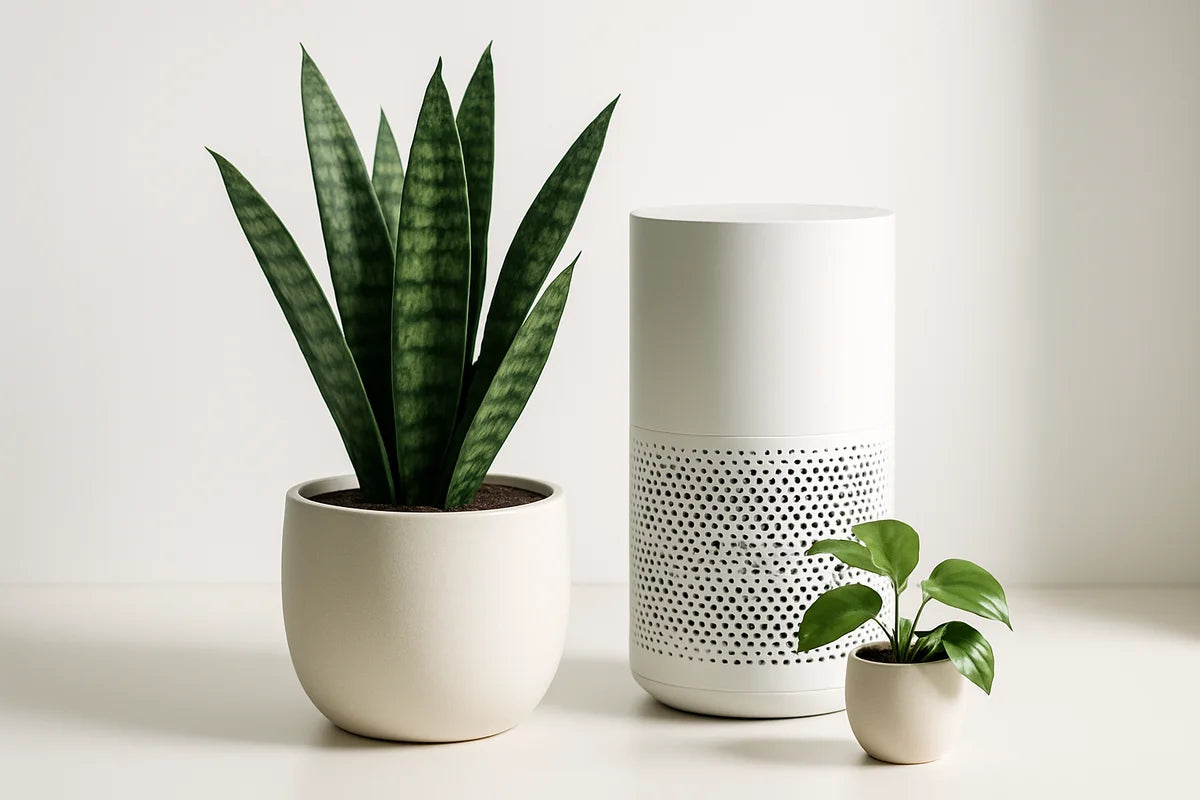
- Pair plants with one real air-quality step: run the bathroom fan during showers, use a good HVAC filter, or add a HEPA purifier in your main room.
After a month, add one larger plant if you want more impact on mood and looks, like a rubber plant or areca palm.
Conclusion
Low maintenance indoor greenery for air purification works best when you treat plants as one part of a larger plan. Pick tough species, match them to your light, and keep watering simple. You’ll get a home that looks better, feels fresher, and asks very little from you. If you also ventilate well and filter the air when needed, you’ll cover the big stuff and still enjoy the calm that living plants bring.