Sind Mooswände für Allergiker sicher?
Mooswände sind zu einem beliebten Gestaltungselement in modernen Innenräumen geworden. Sie verleihen natürliche Schönheit, reduzieren Stress und bringen einen Hauch von Grün in den Innenbereich, ohne viel Pflegeaufwand. Wenn Sie jedoch Allergien haben, fragen Sie sich vielleicht, ob eine Mooswand eine Reaktion auslösen könnte. Manche Menschen reagieren empfindlich auf lebende Pflanzen, Staub oder Feuchtigkeit, daher ist es wichtig, den Unterschied zwischen Moosarten und deren Auswirkungen auf die Luftqualität zu verstehen. Dieser Artikel erklärt, wie Mooswände mit Allergenen interagieren, was konserviertes Moos einzigartig macht und ob sie für Allergiker gesund sind.
Was ist eine Mooswand und warum ist sie in Innenräumen so beliebt?

Definition von Moos und konserviertem Moos in modernen grünen Wänden
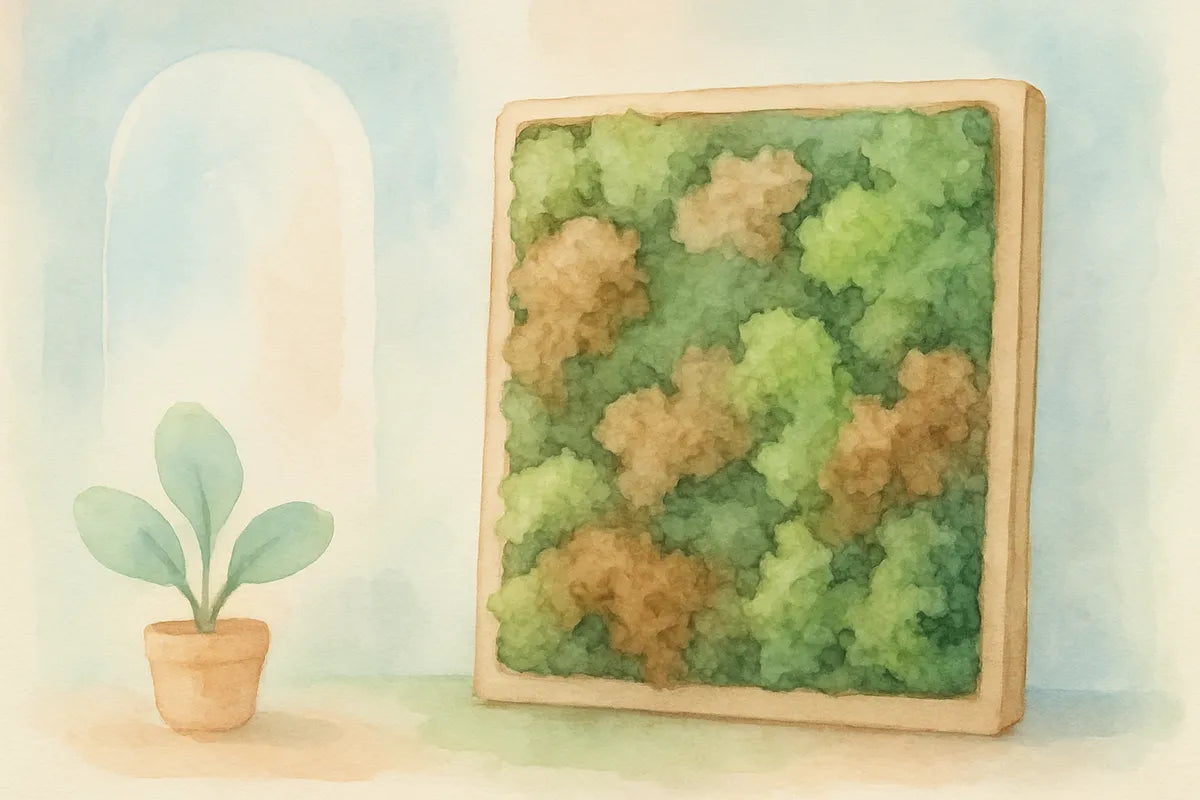
Eine Mooswand ist eine Art von grüner Innenwand, die entweder aus echtem Moos oder konserviertem Moos besteht. Echtes Moos ist eine lebende Pflanze, die Licht, Wasser und spezifische Feuchtigkeitsniveaus zum Gedeihen benötigt. Konserviertes Moos hingegen ist echtes Moos, das mit ungiftigen Konservierungsmitteln behandelt wurde, um seine Textur und Farbe ohne lebendiges Wachstum zu erhalten. Dieser Konservierungsprozess stoppt die biologische Aktivität, was bedeutet, dass das Moos weder Wasser noch Sonnenlicht benötigt.
Warum Mooswände gut zum biophilen Design passen
Biophiles Design konzentriert sich darauf, Menschen mit der Natur in Innenräumen zu verbinden. Eine Mooswand stellt diese Verbindung auf kunstvolle und pflegeleichte Weise her. Ob ein einfacher grüner Akzent oder eine vollständige Wandkunstinstallation, Mooswände können Ruhe schaffen, Stress reduzieren und natürliche Schönheit hinzufügen, ohne den Pflegeaufwand typischer lebender Pflanzen. Sie werden auch in Büros, Hotels und Wohnungen eingesetzt, um die Härte moderner Innenräume zu mildern und den Komfort zu verbessern.
Wie Mooswände die Luftqualität und Allergieauslöser beeinflussen

Luftqualität, Staub und Feuchtigkeitskontrolle verstehen
Die gesundheitlichen Auswirkungen einer Mooswand hängen von ihrer Art und Platzierung ab. Lebendes Moos trägt geringfügig zur natürlichen Luftfeuchtigkeit bei und kann sogar Staubpartikel in der Luft einfangen. Konserviertes Moos filtert die Luft nicht aktiv, gibt aber auch keine Pollen oder Sporen ab. Das ist ein großer Vorteil für Allergiker. Da konserviertes Moos nicht wächst oder sich fortpflanzt, setzt es keine neuen Allergene in die Luft frei.
Vergleich von lebendem Moos und konserviertem Moos im Allergiekontext
Obwohl beide ähnlich aussehen, kann lebendes Moos geringfügige Risiken für Personen bergen, die empfindlich auf Feuchtigkeit oder Schimmel reagieren, insbesondere in schlecht belüfteten Bereichen. Bei hoher Luftfeuchtigkeit kann lebendes Moos Sporen fördern, die die Atemwege reizen. Konserviertes Moos hat dieses Problem jedoch nicht, da es nicht mehr biologisch aktiv ist. Solange es sauber und frei von übermäßigem Staub gehalten wird, bleibt es ein hypoallergenes Material, das für die meisten Menschen in Innenräumen geeignet ist.
Gibt es einen Nachteil bei Mooswandinstallationen?

Mögliche allergische Reaktionen auf Moos und verwandte Faktoren
Obwohl Mooswände in der Regel sicher sind, können sie je nach Herstellung Nachteile haben. Einige Installationen mit konserviertem Moos verwenden Klebstoffe oder Farbstoffe, die für kurze Zeit nach der Installation leichte Gerüche oder Dämpfe freisetzen können. Chemikaliensensible Personen sollten sicherstellen, dass nur natürliche, ungiftige Produkte verwendet werden. Laut umweltfreundlichen Dekorationsexperten verwenden seriöse Lieferanten sichere Konservierungsmethoden aus nachhaltiger Forstwirtschaft.
Wartung, Staub und Bedenken bezüglich der Luftqualität in Innenräumen
Mit der Zeit kann sich auf jedem Wandbild Staub ansammeln, auch auf Mooswänden. Das liegt nicht am Moos selbst, sondern daran, dass Staub in Innenräumen natürlich vorhanden ist. Leichtes Staubsaugen mit einer weichen Bürste oder sanfte Druckluft kann Ihre Mooswand frisch und sauber halten. Vermeiden Sie direktes Wasser, da konserviertes Moos es nicht benötigt und überschüssige Feuchtigkeit Schimmel auf den umgebenden Oberflächen fördern kann. Regelmäßige Wartung trägt zur Aufrechterhaltung der Luftqualität bei und reduziert Allergierisiken.
Balance zwischen Designästhetik und praktischer Gesundheit
Obwohl Mooswände wesentlich zu einem biophilen Design beitragen, werden sie am besten dort installiert, wo die Luftfeuchtigkeit stabil bleibt. Ideale Standorte sind Wohnzimmer, Büros oder Flure anstelle von feuchten Badezimmern. Wenn die Installation echtes Moos verwendet, sorgen Sie für stabile Lichtverhältnisse und Luftzirkulation. Bei konserviertem Moos müssen Sie nur an die Reinigung denken und den Kontakt mit direkter Sonne oder Heizungsschächten vermeiden. Bei korrekter Installation sind die Nachteile im Vergleich zu den gesundheitlichen Vorteilen minimal.
Können Menschen auf Moos allergisch reagieren?
Allergierisiken in Bezug auf echtes Moos und lebende Pflanzen
Allergien gegen Moos selbst sind selten, aber möglich, insbesondere für Personen mit pflanzenbezogenen Empfindlichkeiten. Lebende Pflanzen können in feuchten Umgebungen Schimmelsporen anziehen, und Moos ist da keine Ausnahme. Da es in Feuchtigkeit gedeiht, kann es Spuren von organischem Material oder Mikrosporen enthalten. Bei Menschen mit schweren Allergien kann dies zu Niesen oder leichter Reizung führen. Es ähnelt Reaktionen, die in der Nähe von Topfpflanzen mit übermäßig bewässertem Boden auftreten.
Warum konserviertes Moos als hypoallergen gilt
Konserviertes Moos ist im Allgemeinen hypoallergen, da es nicht mehr lebt. Der Konservierungsprozess entfernt die biologischen Auslöser, die in lebendem Moos vorkommen. Es benötigt kein Wasser oder Erde, daher gibt es kein Medium, in dem Schimmel wachsen könnte. Dies macht konserviertes Moos zu einer sicheren Option für Wohnungen, Büros oder Gastgewerbebetriebe, wo die Allergiekontrolle wichtig ist. Wie Mediziner feststellen, tragen Umgebungen mit weniger lebenden Allergenen zu weniger Atemwegsproblemen bei sensiblen Personen bei.
Vorsichtsmaßnahmen für allergieempfindliche Benutzer
Wenn Sie eine Vorgeschichte schwerer Allergien haben, überprüfen Sie, ob Ihre Mooswand chemische Farbstoffe oder Stabilisatoren verwendet. Fragen Sie den Lieferanten nach Informationen zu ihrem Behandlungsprozess. Zur zusätzlichen Sicherheit vermeiden Sie häufiges Berühren des Mooses oder Bürsten, da selbst konserviertes Moos Staub auf der Oberfläche ansammeln kann. Halten Sie es trocken und sauber, um langfristigen Komfort für diejenigen zu gewährleisten, die in der Nähe leben oder arbeiten.
Sind Mooswände gesund für Innenräume?
Wellness-Vorteile: Stress reduzieren und Ruhe fördern
Mooswände fördern das Wohlbefinden durch visuelle und psychologische Effekte. Studien zum biophilen Design zeigen, dass die Exposition gegenüber natürlichen Mustern hilft, Stress zu reduzieren und die Konzentration zu verbessern. Eine grüne Wand mit echtem oder konserviertem Moos erzeugt ein beruhigendes Gefühl, ähnlich wie in der Natur zu sein. In Büros kann sie die Zufriedenheit und Kreativität steigern, indem sie organische Texturen und ruhige Naturtöne einführt.
Verbesserung der Luftqualität ohne Pflege lebender Pflanzen
Im Gegensatz zu lebenden Pflanzen reinigt konserviertes Moos die Luft nicht aktiv, verbessert aber indirekt den Komfort, indem es das Gefühl von stickiger Luft reduziert. Seine weiche, dichte Oberfläche kann etwas Staub einfangen und so die Luft sauberer halten. Bei richtiger Pflege bleibt eine Mooswand geruchsfrei und trägt zu einer ausgewogenen Raumluft bei. Wie Architektur-Experten empfehlen, kann die Integration natürlicher Materialien in Innenräumen zu gesünderen, nachhaltigeren Designergebnissen führen, ohne komplexe Pflegesysteme.
Die nachhaltige und praktische Anziehungskraft von echten Mooswänden
Echtes Moos kann auch nachhaltig verwendet werden, wenn es verantwortungsbewusst geerntet wird. Einige Installationen verwenden Rentierflechte, die in kalten Klimazonen reichlich wächst und sich auf natürliche Weise regeneriert. Da Moose weniger Wasser benötigen als traditionelle Pflanzen, passen sie gut in nachhaltige Designstrategien. Lebende Mooswände benötigen jedoch eine konstante Luftfeuchtigkeit und gelegentliches Besprühen, um gesund zu bleiben. Zu viel Wasser oder schlechte Belüftung kann im Laufe der Zeit zu Geruch oder Schimmel führen. Die Wahl zwischen echtem Moos und konserviertem Moos hängt davon ab, wie Sie Ihre gesundheitlichen Prioritäten mit ästhetischen Zielen in Einklang bringen.
So halten Sie eine Mooswand für Allergiker sicher
Einfache Reinigungs- und Pflegetipps
Verwenden Sie einmal im Monat einen Handstaubsauger oder Druckluft, um abgesetzten Staub zu entfernen. Besprühen Sie konserviertes Moos niemals mit Wasser oder Reinigungsmitteln. Wenn Ihre Mooswand umgebende Rahmen oder Materialien enthält, wischen Sie diese Bereiche vorsichtig mit einem trockenen Tuch ab. Vermeiden Sie es, sie in der Nähe von Lüftungsschlitzen, Luftbefeuchtern oder direktem Sonnenlicht zu platzieren, da Hitze und Feuchtigkeit ihre Textur und Farbe beschädigen können. Halten Sie bei lebendem Moos die Luftfeuchtigkeit zwischen 40 % und 60 %, um Schimmelbildung zu vermeiden.
Zertifizierte nachhaltige und ungiftige Moosprodukte wählen
Fragen Sie vor dem Kauf immer nach Produktzertifizierungen. Hochwertige Lieferanten bieten Moos aus nachhaltigen Farmen an, die umweltfreundliche Erntemethoden anwenden. Achten Sie auf konserviertes Moos, das mit Glycerin und natürlichen Pigmenten anstelle von synthetischen Farbstoffen behandelt wurde. Laut Experten für nachhaltiges Design gewährleisten öko-zertifizierte Moosprodukte sowohl Gesundheitssicherheit als auch dauerhafte Schönheit in Innenräumen.
Mooswände als sichere biophile Wandkunst integrieren
Richtig installiert, fungieren Mooswände als lebendige Kunstwerke, die natürliches Design mit gesundheitsbewussten Entscheidungen verbinden. Ob Sie ein großes Paneel oder ein kleines Akzentstück wählen, es ist eine effektive Möglichkeit, hypoallergenes Grün in Innenräume zu bringen. Über die Ästhetik hinaus macht die beruhigende Präsenz natürlicher Texturen Ihre Umgebung angenehmer und stressfreier.
Abschließende Gedanken zur Allergiesicherheit und Mooswänden
Mooswände, wenn sie aus konserviertem Moos bestehen, sind in der Regel sicher für Menschen mit Allergien. Sie setzen keine Pollen oder Sporen frei und benötigen weder Erde noch Wasser. Lebendes Moos kann weiterhin verwendet werden, erfordert jedoch eine sorgfältige Feuchtigkeitskontrolle, um Schimmel zu vermeiden. Für diejenigen, die die Schönheit des Grüns ohne die Allergierisiken lebender Pflanzen suchen, bietet eine konservierte Mooswand die perfekte Balance. Wählen Sie seriöse Lieferanten, halten Sie die Installation sauber und genießen Sie einen natürlichen Touch, der sowohl Gesundheit als auch Designharmonie unterstützt.
Weitere Informationen zur Aufrechterhaltung der Raumluftgesundheit finden Sie in den Leitfäden des CDC zu Innenräumen und in den Aktualisierungen der Forschung zur Raumluftqualität. Die Integration natürlicher, aber hypoallergener Materialien trägt dazu bei, Innenräume zu schaffen, die langfristiges Wohlbefinden, Nachhaltigkeit und Seelenfrieden fördern.