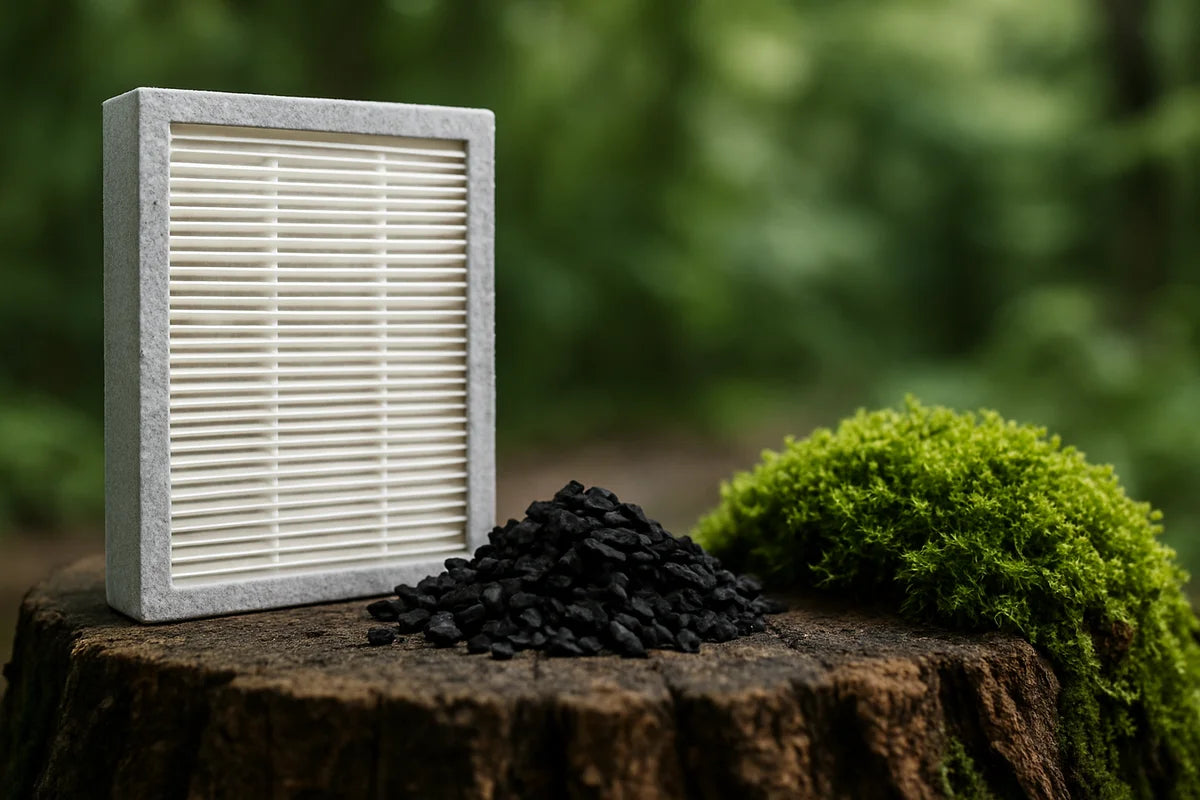
Schlechte Raumluft kann sich gut verstecken. Man riecht sie nicht immer und sieht sie nicht immer, aber sie kann trotzdem Augen, Hals und Kopf reizen. Ein großer Teil dieses Problems sind VOCs – flüchtige organische Verbindungen. Sie entweichen aus Farben, Reinigungssprays, neuen Möbeln, Teppichen, Bastelbedarf und sogar einigen Lufterfrischern.
Wenn Sie nach einer Lösung gesucht haben, sind Ihnen wahrscheinlich immer wieder drei Optionen begegnet: HEPA-Filter, Aktivkohle und Moos (oft als „Mooswände“ oder pflanzenbasierte Luftreinigung verkauft). Sie sind nicht gleichwertig. Sie wirken nicht gegen dieselben Schadstoffe. Und einige Behauptungen werden weit über das hinaus ausgedehnt, was die Wissenschaft belegt.
Dieser Leitfaden erklärt den Vergleich zwischen HEPA-Filter, Aktivkohle und Moos zur VOC-Entfernung in verständlicher Sprache, mit praktischen Schritten, die Sie heute anwenden können.
Was VOCs sind und warum sie sich in Innenräumen ansammeln

VOCs sind Gase, die bei Raumtemperatur aus Feststoffen und Flüssigkeiten verdampfen. Viele VOCs reizen Lunge und Augen. Einige haben stärkere Gesundheitsbezüge bei langfristiger Exposition. Der knifflige Teil ist, dass die VOC-Werte in Innenräumen höher sein können als im Freien, da Häuser dichter abgedichtet sind als früher.
Häufige VOC-Quellen sind:
- Farben, Beizen und Lacke
- Neue Möbel und Schränke aus Pressholz
- Reinigungsmittel, Desinfektionsmittel und Duftsprays
- Lufterfrischer, Kerzen und Räucherstäbchen
- Bastelbedarf wie Klebstoff, Epoxidharz und Lösungsmittel
- Gelagerte Brennstoffe und Chemikalien in angrenzenden Garagen
Die Übersicht der EPA über VOCs und Raumluft erklärt die Grundlagen und listet häufige Quellen auf. Sie ist eine gute Referenz, wenn Sie herausfinden möchten, was die Werte in Ihrem Zuhause erhöhen könnte.
Kurze Definitionen, damit der Vergleich Sinn macht
HEPA-Filtration
HEPA steht für High Efficiency Particulate Air. Ein echter HEPA-Filter fängt winzige Partikel (wie Staub, Rauchpartikel, Pollen und viele Aerosole) ab, indem er Luft durch ein dichtes Faservlies presst.
Wichtiger Punkt: HEPA zielt auf Partikel ab, nicht auf Gase. VOCs sind Gase.
Adsorption durch Aktivkohle
Aktivkohle (auch bekannt als Aktivkohle) hat eine riesige innere Oberfläche. VOC-Moleküle haften an dieser Oberfläche. Dies wird als Adsorption (nicht Absorption) bezeichnet.
Wichtiger Punkt: Kohle kann viele VOCs entfernen, aber die Leistung hängt stark davon ab, wie viel Kohle vorhanden ist und wie schnell die Luft durch sie strömt.
Moos und pflanzenbasierte „Biofiltration“
Moosprodukte zur Luftreinigung lassen sich in der Regel in zwei Kategorien einteilen:
- Dekorative Mooswände, die als „natürliche Luftreiniger“ verkauft werden (oft konserviert und nicht einmal lebendig)
- Lebende Pflanzen- und Moossysteme, die Luft durch ein Wachstumsmedium drücken, ähnlich einem Biofilter im Laborstil
Wichtiger Punkt: Eine dekorative Mooswand ist nicht dasselbe wie ein motorisierter Biofilter.
HEPA-Filter vs. Aktivkohle vs. Moos zur VOC-Entfernung
HEPA und VOCs: Was HEPA kann und was nicht
Wenn die VOC-Entfernung Ihr Ziel ist, wird ein reiner HEPA-Reiniger das Problem nicht von selbst lösen. HEPA leistet hervorragende Arbeit bei Partikeln, was für Allergien und Rauch wichtig ist. Aber VOC-Moleküle passieren ihn.
Warum denken die Leute also, dass HEPA bei VOCs hilft? Zwei Gründe:
- Viele Gerüche haften an Partikeln, und HEPA kann diese Partikel reduzieren.
- Viele Reiniger, die als „HEPA“ gekennzeichnet sind, enthalten auch ein kleines Kohlekissen, und die Kohle erledigt die Gasarbeit.
Wenn Ihr Hauptproblem Waldbrandrauch ist, ist HEPA sehr wichtig, da Rauch viele feine Partikel enthält. Aber Rauch enthält auch Gase, daher benötigen Sie auch Kohle. Die CDC-Anleitung für Waldbrandrauch ist klar bezüglich des Gesundheitsrisikos und der Rolle der Filterung.
Aktivkohle und VOCs: Der wahre Arbeitgeber, mit echten Grenzen
Aktivkohle ist von den dreien das direkteste Werkzeug zur VOC-Entfernung. Aber „hat Kohle“ ist nicht genug. Eine dünne Kohleschicht hält nicht lange, und bei hohem Luftstrom bewirkt sie möglicherweise gar nichts.
Hier ist, was entscheidet, ob Kohle in einem echten Raum funktioniert:
- Kohlegewicht: Mehr Pfund Kohle bedeuten in der Regel eine bessere VOC-Kapazität und längere Lebensdauer.
- Kontaktzeit: Die Luft benötigt Zeit im Kohlebett. Schnellerer Luftstrom kann die Leistung beeinträchtigen.
- VOC-Typ: Kohle bindet viele VOCs gut, aber nicht alle Gase verhalten sich gleich.
- Luftfeuchtigkeit: Hohe Luftfeuchtigkeit kann die Adsorption für einige Verbindungen reduzieren.
- Sättigung: Sobald die Kohle gesättigt ist, entfernt sie keine VOCs mehr und kann diese manchmal später wieder freisetzen.
Dieser letzte Punkt überrascht die Leute. Kohle ist kein „Einrichten und Vergessen“. Sie brauchen einen Plan zum Austausch. Wenn Ihnen eine Marke das Kohlegewicht und die Austauschkosten nicht mitteilen will, sollten Sie dies als Warnsignal betrachten.
Möchten Sie einen tieferen Einblick in Kohle in Luftreinigern aus Sicht der Tests? Die Testnotizen von Wirecutter zu Luftreinigern erklären gut, warum die Kohlegröße wichtig ist und warum einige „Geruchsfilter“ enttäuschen.
Moos zur VOC-Entfernung: Was plausibel ist und was Marketing
Moos und Pflanzen können bei der VOC-Entfernung eine Rolle spielen, aber nur in sehr spezifischen Konfigurationen. Viele der populären Behauptungen stammen aus Studien in kleinen Kammern, in denen eine Pflanze in einem versiegelten Kasten steht. Echte Häuser sind keine versiegelten Kästen, und der Luftaustausch verändert alles.
Eine wegweisende von der NASA geleitete Raumluftstudie gab den Anstoß zum Trend der Zimmerpflanzen, aber das bedeutet nicht, dass ein paar Pflanzen eine ganze Wohnung reinigen können. Den Originalbericht können Sie im technischen Archiv der NASA nachlesen.
Hier ist die praktische Realität:
- Dekorative Mooswände sind oft konserviert. Konserviertes Moos ist nicht lebendig und kann daher keine VOCs „fressen“.
- Lebendes Moos an einer Wand kann Feuchtigkeit speichern und Staub fangen, aber die VOC-Entfernung in einem offenen Raum ist ohne erzwungenen Luftstrom normalerweise gering.
- Motorisierte Biofilter (ventilatorbetriebene Pflanzenwände) können einige VOCs entfernen, da sie Luft durch Wurzeln und Mikroben im Wachstumsmedium bewegen.
Moos kann also in technischen Systemen helfen, aber ein „stromloser“ Moosrahmen an der Wand ersetzt keinen Kohlefilter zur VOC-Kontrolle. Es kann sich trotzdem lohnen, ihn zu kaufen, wenn er Ihnen gefällt und Ihnen hilft, die Luftfeuchtigkeit stabil zu halten oder den Raum angenehmer erscheinen lässt. Erwarten Sie aber nicht, dass er die VOC-Last trägt.
Welche Option sollten Sie für Ihr Problem wählen?
Wenn Sie mit Gerüchen, Ausgasungen oder „Neubau“-Luft zu tun haben
Beginnen Sie mit Aktivkohle. Kombinieren Sie sie mit Quellkontrolle und Belüftung. HEPA hilft bei Staub und allgemeiner Luftreinheit, aber es wird VOC-Gase allein nicht bekämpfen.
Beispiele:
- Neuer Couchgeruch
- Geruch von frischer Farbe
- Verweilende Gerüche von Reinigungsmitteln
Wenn Rauch das Problem ist (Waldbrandrauch, Kochrauch, Kerzen)
Sie benötigen sowohl HEPA als auch Kohle. HEPA kümmert sich um die Partikel. Kohle bekämpft viele der Gase, die Geruch und Reizungen verursachen.
Wenn Allergien und Staub das Hauptproblem sind
HEPA ist die erste Wahl. Die VOC-Entfernung ist möglicherweise nicht so wichtig, es sei denn, Sie haben auch chemische Gerüche oder Kopfschmerzen, die mit Produkten im Haus zusammenhängen.
Wenn Sie eine energiesparende, „natürliche“ Ergänzung wünschen
Moos kann als Dekoration sinnvoll sein, und lebende Pflanzen können den Komfort unterstützen. Wenn Sie eine pflanzenbasierte Filterung wünschen, die wirklich etwas bewirkt, suchen Sie nach Systemen, die Ventilatoren verwenden, um Raumluft durch das Pflanzenmedium zu ziehen. Andernfalls behandeln Sie Moos als Ergänzung, nicht als zentrale VOC-Strategie.
So wählen Sie einen Luftreiniger, der mit VOCs umgehen kann
Das Marketing ist in diesem Bereich laut. Verwenden Sie eine kurze Checkliste, und Sie werden die meisten Fehlkäufe vermeiden.
1) Achten Sie auf das tatsächliche Kohlegewicht
„Aktivkohlefilter enthalten“ sagt nichts aus. Suchen Sie nach Gramm oder Pfund Kohle. In den meisten Haushalten ist mehr besser, besonders wenn Sie starke Quellen haben.
2) Überprüfen Sie den CADR, aber beten Sie ihn nicht an
CADR (Clean Air Delivery Rate) ist hauptsächlich ein Partikelmaß. Es hilft Ihnen, ein Gerät für Staub- und Rauchpartikel zu dimensionieren, garantiert aber keine VOC-Ergebnisse. Dennoch benötigen Sie genügend Luftstrom, um die Raumluft zu zirkulieren.
3) Vermeiden Sie Ozon- und „Ionen“-Tricksereien
Einige Geräte behaupten, VOCs zu „oxidieren“. Einige davon können Ozon oder andere Nebenprodukte erzeugen. Wenn ein Produkt positiv über Ozon spricht, überspringen Sie es.
Die Anleitung der American Lung Association zu Ozon erklärt, warum Ozon kein sicheres „Luftreinigungsmittel“ in Innenräumen ist.
4) Budget für den Filterwechsel
Eine gute VOC-Anlage kostet im Laufe der Zeit Geld. Wenn der Ersatzkohle zu teuer ist, verzögern Sie den Wechsel und die Leistung lässt nach.
Was besser als jeder Filter bei VOCs wirkt
Filter helfen, wirken aber am besten, nachdem Sie die Quelle beseitigt haben. Hier können Sie schnelle Erfolge erzielen.
Zuerst die Quellkontrolle anwenden
- Verwenden Sie, wenn möglich, Farben mit niedrigem VOC-Gehalt oder ohne VOC-Gehalt.
- Lagern Sie Lösungsmittel, Brennstoffe und starke Reinigungsmittel außerhalb des Wohnbereichs, idealerweise in einem versiegelten Behälter.
- Vermeiden Sie duftende Steckdosenstecker und stark parfümierte Sprays, wenn Sie Symptome davon bekommen.
- Lassen Sie neue Möbel in einer Garage oder einem Gästezimmer mit Belüftung ausgasen, bevor Sie sie in ein Schlafzimmer stellen.
Gezielt lüften
Das Öffnen von Fenstern hilft, wenn die Außenluft gut ist. Ein Badezimmerlüfter und eine Dunstabzugshaube helfen ebenfalls, wenn sie nach außen entlüften. Wenn Sie es ernster nehmen wollen, können ausgeglichene Lüftungssysteme und eine bessere HVAC-Filterung die tägliche Luftqualität verbessern.
Einen klaren Überblick darüber, wie Belüftung in die Raumluftqualität passt, finden Sie im Belüftungsleitfaden des U.S. Department of Energy.
Messen, nicht raten
VOC-Messgeräte können Ihnen helfen, Muster zu erkennen, wie z.B. einen Anstieg nach dem Reinigen oder Kochen. Verbrauchersensoren variieren in ihrer Genauigkeit, sind aber für Trends immer noch nützlich. Suchen Sie nach einem Monitor, der TVOC meldet und auch CO2 verfolgt, wenn Sie einen Hinweis auf die Belüftung erhalten möchten.
Wenn Sie einen praktischen Ausgangspunkt zum Verständnis dessen suchen, was IAQ-Monitore Ihnen sagen können und was nicht, ist AirGradients Erklärer zu TVOC-Werten eine hilfreiche Einführung.
Realistische Aufbauten, die in normalen Haushalten funktionieren
Setup 1: Wohnung mit Reinigungsmitteln und neuen Möbeln
- Ein Luftreiniger mit einem echten Kohlefilter (kein dünnes Vlies) plus einer HEPA-Stufe
- Betreiben Sie ihn auf einer konstanten mittleren Einstellung, nicht nur einmal täglich auf „Turbo“
- Lüften Sie den Raum nach dem Auspacken von Möbeln und vermeiden Sie stark duftende Produkte
Setup 2: Haus in Verkehrsnähe mit Kopfschmerzen und stickiger Luft
- Kohle + HEPA-Luftreiniger im Schlafzimmer und im Hauptwohnbereich
- Messen Sie den CO2-Wert nachts, um festzustellen, ob die Belüftung schlecht ist
- Dichten Sie offensichtliche Luftlecks von einer angeschlossenen Garage ab und lagern Sie Chemikalien in geschlossenen Behältern
Setup 3: Sie mögen das Aussehen von Moos und möchten, dass es etwas tut
- Kaufen Sie Moos, weil es Ihnen gefällt, nicht weil Sie erwarten, dass es die Filterung ersetzt
- Wenn Sie eine echte VOC-Wirkung von Pflanzen wünschen, wählen Sie ein ventilatorgestütztes Biofiltersystem
- Halten Sie die Feuchtigkeit unter Kontrolle, damit Sie nicht VOC-Sorgen gegen Schimmelsorgen eintauschen
Wer gewinnt also im Vergleich zwischen HEPA-Filter, Aktivkohle und Moos zur VOC-Entfernung?
Wenn Ihnen die VOC-Entfernung wichtig ist, leistet Aktivkohle die Hauptarbeit. HEPA ist immer noch wichtig, aber für Partikel. Moos gehört zu einer anderen Kategorie. Es kann die Luftqualität in bestimmten technischen Systemen unterstützen, aber die meisten Moosprodukte, die Sie online sehen, werden den VOCs in einem offenen Raum nicht gewachsen sein.
Hier ist eine einfache Denkweise:
- Wählen Sie HEPA, wenn Partikel das Hauptproblem sind (Staub, Pollen, Rauchpartikel).
- Wählen Sie Aktivkohle, wenn Gase das Hauptproblem sind (VOCs, viele Gerüche), idealerweise kombiniert mit HEPA.
- Wählen Sie Moos für Design und Komfort oder für einen motorisierten Biofilter, wenn Sie pflanzenbasierte Hilfe mit messbarem Luftstrom wünschen.
Wo Sie diese Woche anfangen sollten
Wenn Sie sauberere Raumluft wünschen, ohne es zu einem Hobby zu machen, befolgen Sie diese Schritte der Reihe nach:
- Gehen Sie Ihren Raum durch und listen Sie wahrscheinliche VOC-Quellen auf (neue Gegenstände, Reiniger, Düfte, Farben, Garagentor zum Haus).
- Lüften Sie während und nach Aktivitäten mit hohen VOC-Emissionen wie Malen, gründlichem Reinigen und Bastelarbeiten.
- Wählen Sie einen Raum aus, der am wichtigsten ist, oft das Schlafzimmer, und stellen Sie dort einen Kohle-Plus-HEPA-Luftreiniger auf.
- Stellen Sie eine Kalendererinnerung für den Kohlewechsel basierend auf Ihrer Nutzung und den Herstellerangaben ein.
- Wenn Sie experimentieren möchten, fügen Sie einen einfachen TVOC-Monitor hinzu und beobachten Sie, wie sich Ihre Werte ändern.
Die Technologie für Innenraumluft entwickelt sich schnell weiter. Kohlefilter werden besser, Sensorpreise sinken stetig, und immer mehr Haushalte fügen Frischluftsysteme hinzu. Wenn Sie Ihren Plan auf die Grundlagen aufbauen – Quellen reduzieren, Frischluft zuführen und Kohle für VOCs plus HEPA für Partikel verwenden – werden Sie sich nicht von Trends, einschließlich der Moos-Trends, mitreißen lassen.