Wenn Sie mit Haustieren zusammenleben, kennen Sie die beiden großen Luftprobleme: hartnäckige Gerüche und Allergieauslöser, die sich nie zu legen scheinen. Hier kommen Luftreiniger ins Spiel, und die große Frage ist schnell gestellt: HEPA-Filter vs. Aktivkohlefilter für Tiergerüche und Allergien – welcher hilft wirklich?
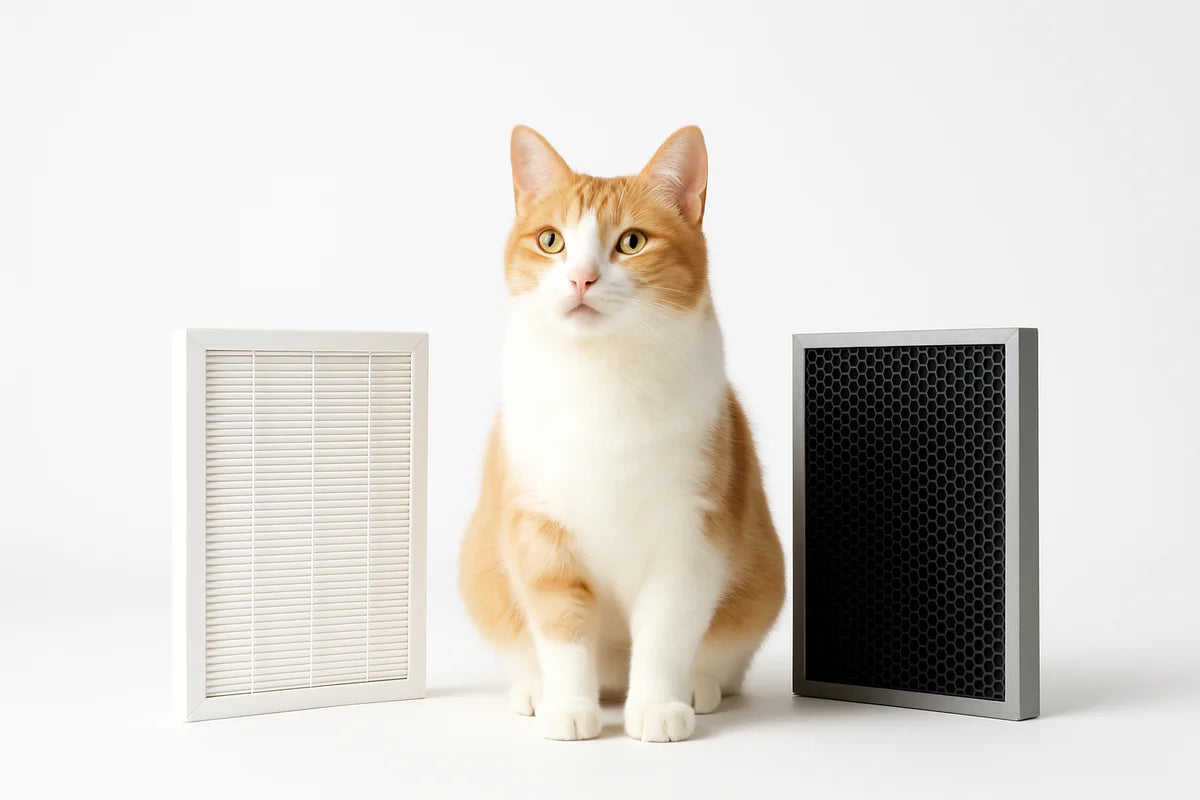
Die kurze Antwort ist, dass sie unterschiedliche Probleme lösen. HEPA zielt auf Partikel wie Tierhaare und Staub ab. Aktivkohle zielt auf Gase und Gerüche ab. Die meisten Haushalte mit Haustieren benötigen beides, aber wie viel von jedem hängt von Ihren Haustieren, Ihrem Raum und Ihren Zielen ab. Lassen Sie uns das in einfachen Worten aufschlüsseln, damit Sie selbstbewusst kaufen (oder aufrüsten) können.
Tiergerüche und Tierallergien sind nicht dasselbe Problem

Viele Menschen erwarten, dass ein Filter alles leistet. Das Problem ist, dass „schlechte Luft“ in einem Tierhaushalt in zwei Hauptformen auftritt:
- Partikel: Tierhaare, Haarfragmente, Staub, Pollen, Streustaub und eingeschleppter Schmutz
- Gase und Dämpfe: Geruchsmoleküle aus Katzentoiletten, nasser Hundegeruch, Urin, Reinigungssprays, Kochen und mehr
HEPA-Filter fangen Partikel ab. Aktivkohle adsorbiert Gase. Wenn Ihr Hauptproblem Niesen ist, jagen Sie Partikel. Wenn Ihr Hauptproblem ist, dass „das Haus nach Haustieren riecht“, jagen Sie Gase.
Diese Unterscheidung ist wichtig, denn ein Luftreiniger mit einem großartigen HEPA-Filter, aber schwacher Aktivkohle, kann die Luft „sauberer“ erscheinen lassen, während der Geruch bestehen bleibt. Das Gegenteil kann auch passieren: Starke Aktivkohle kann Gerüche beseitigen, während Sie immer noch verstopfte Atemwege von Tierhaaren und Staub haben.
Was ein HEPA-Filter bei Haustieren gut leistet

HEPA steht für High Efficiency Particulate Air. Ein echter HEPA-Filter fängt winzige luftgetragene Partikel mit hoher Effizienz ab, einschließlich vieler, die Allergikern Probleme bereiten.
In Haushalten mit Haustieren hilft HEPA am besten bei:
- Tierhaaren (mikroskopisch kleine Hautschuppen)
- Hausstaubmilben und Staub
- Pollen, die Sie an Kleidung und Fell einschleppen
- Streustaub und andere feine Ablagerungen
Wenn Ihre Symptome wie Allergien aussehen – juckende Augen, Niesen, laufende Nase – stellen Sie zunächst sicher, dass Sie einen echten HEPA-Filter und ausreichend Luftstrom für Ihr Zimmer erhalten.
Echter HEPA vs. „HEPA-ähnlich“ und andere vage Bezeichnungen
Marketing wird hier unübersichtlich. „HEPA-Typ“, „HEPA-Stil“ oder „HEPA-ähnlich“ bedeutet oft „irgendein Filter, der vielleicht hilft“. Er kann immer noch Staub reduzieren, aber er unterliegt nicht dem gleichen Standard.
Wenn Sie das Original wollen, suchen Sie nach „Echter HEPA“ und klaren Leistungsdetails. Sie können auch mehr über gängige Innenraumschadstoffe und deren Reduzierung erfahren, indem Sie die Ressourcen zur Raumluftqualität der EPA konsultieren.
HEPA allein löst Gerüche nicht
Hier ist der Teil, den viele Tierbesitzer auf die harte Tour lernen: HEPA entfernt die meisten Geruchsmoleküle nicht, da Gerüche Gase und keine Partikel sind. Ein HEPA-Luftreiniger kann die staubige „Tierwolke“ in einem Raum reduzieren, während der Geruch der Katzentoilette gleich bleibt. Wenn die Geruchskontrolle Ihr Hauptziel ist, benötigen Sie Aktivkohle, und zwar ausreichend davon.
Was Aktivkohle bei Tiergerüchen gut leistet
Aktivkohle ist eine verarbeitete Form von Kohlenstoff mit einer riesigen Oberfläche. Sie wirkt durch Adsorption, was bedeutet, dass geruchsverursachende Gase an der Oberfläche der Kohlenstoffpartikel haften bleiben.
In der Debatte zwischen HEPA- und Aktivkohlefiltern für Tiergerüche und Allergien ist Kohle der klare Sieger für:
- Geruch der Katzentoilette
- Uringerüche (insbesondere wenn die Quelle bereits gereinigt wurde)
- Allgemeine „verbrauchte Luft“ in geschlossenen Räumen
Kohle kann auch einige chemische Gerüche von Reinigungsmitteln, Kochen und Rauch reduzieren. Die Leistung hängt jedoch davon ab, wie viel Kohle in der Einheit ist und wie lange die Luft mit ihr in Kontakt bleibt.
Nicht alle Kohlefilter wirken gleich
Viele Luftreiniger enthalten ein dünnes Kohleblatt. Das kann ein wenig helfen, aber es sättigt sich in einem Tierhaushalt schnell. Wenn Sie eine echte Geruchskontrolle wünschen, suchen Sie nach einem Luftreiniger mit einem tiefen Kohlebett oder einer schweren Kohlepatrone. Mehr Kohle bedeutet in der Regel eine bessere Geruchskontrolle und eine längere Lebensdauer.
Einige Marken verwenden Kohlenstoffmischungen (wie Kohlenstoff plus andere Medien), um bestimmte Gase zu bekämpfen. Das kann helfen, aber lassen Sie sich nicht vom Marketing von den Grundlagen ablenken: Masse ist wichtig.
Kohle sättigt sich und ist dann im Grunde genommen verbraucht
Aktivkohle hält nicht ewig. Sobald sie voll ist, kann sie nicht mehr viel adsorbieren. Das merken Sie, wenn Gerüche zurückkehren, obwohl das Gerät noch einwandfrei funktioniert.
Ein Luftreiniger, der einen einfachen und erschwinglichen Filterwechsel ermöglicht, ist besser als einer mit „lebenslanger“ Garantie, die im realen Leben eines Tierhaushalts nicht zutrifft.
Was ist also besser für Tiergerüche und Allergien?
Keiner gewinnt auf ganzer Linie, da sie auf unterschiedliche Dinge abzielen.
- Wenn Sie weniger Allergiesymptome wünschen, priorisieren Sie einen echten HEPA-Filter und ausreichend Luftwechsel pro Stunde.
- Wenn Sie weniger Tiergeruch wünschen, priorisieren Sie eine ernsthafte Aktivkohlefilterstufe.
- Wenn Sie beides wünschen, wählen Sie einen Luftreiniger, der echten HEPA mit einem substanziellen Kohlefilter kombiniert.
Viele Menschen erzielen die besten Ergebnisse, indem sie das Haus als System betrachten: zuerst die Quellenkontrolle (Reinigung und Belüftung), dann die Filterung, um das Übrige abzufangen.
So wählen Sie den richtigen Luftreiniger für Ihr Zimmer
Der beste Filter der Welt hilft nichts, wenn das Gerät nicht genügend Luft bewegen kann. Sie möchten einen Luftreiniger, der für Ihr Zimmer dimensioniert ist, und Sie möchten, dass er die meiste Zeit des Tages läuft.
CADR und Raumgröße clever nutzen
CADR (Clean Air Delivery Rate) gibt an, wie viel gefilterte Luft ein Luftreiniger liefert. Ein höherer CADR bedeutet in der Regel eine schnellere Partikelentfernung. Dies ist besonders wichtig für Tierhaare und Staub.
Die AHAM erklärt CADR und warum es für reale Räume wichtig ist, in ihrer Übersicht über Luftreinigerbewertungen. Wenn Sie Modelle vergleichen, passen Sie den CADR an Ihre Raumgröße an und streben Sie dann etwas Höheres an, wenn Sie können. Tierhaushalte belasten die Luft mit mehr Partikeln als der Durchschnitt.
Achten Sie auf diese Funktionen für Tierhaushalte
- Echter HEPA-Filter (nicht „HEPA-ähnlich“)
- Eine dicke Aktivkohle-Filterstufe, nicht nur ein dünnes Blatt
- Mehrere Lüftergeschwindigkeiten, damit Sie ihn bei Bedarf hoch und nachts leiser laufen lassen können
- Leicht erhältliche Ersatzfilter und klare Austauschintervalle
- Ein abgedichteter Filterpfad, damit keine Luft um den Filter herum entweicht
Lärm und Platzierung nicht ignorieren
Ein Luftreiniger funktioniert nur, wenn er läuft. Wenn er zu laut ist, schalten Sie ihn aus. Prüfen Sie die Geräuschwerte und planen Sie, ihn die meiste Zeit auf mittlerer Stufe laufen zu lassen.
Stellen Sie das Gerät so auf, dass die Luft frei zirkulieren kann. Halten Sie es von Wänden, Vorhängen und Ecken fern. Zur Geruchskontrolle stellen Sie es möglichst in die Nähe der Quelle, z. B. in die Nähe der Katzentoilette (aber nicht so, dass Katzenstreustaub den Ansaugbereich sofort verstopft).
Aktionsplan für Tiergerüche
Wenn Geruch das Problem ist, das Sie zuerst beheben möchten, hilft die Filterung, aber Sie erzielen bessere Ergebnisse, wenn Sie sie mit einer grundlegenden Quellenkontrolle kombinieren.
Beginnen Sie an der Quelle
- Katzenstreu täglich entfernen und das Katzenklo regelmäßig reinigen.
- Unfälle schnell und vollständig beseitigen. Enzymreiniger helfen, weil sie Geruchsquellen abbauen, anstatt sie zu überdecken.
- Tierbetten häufig waschen und die Umgebung absaugen.
- Fenster öffnen, wenn die Außenluft gut ist und die Luftfeuchtigkeit nicht extrem ist.
Verwenden Sie dann Aktivkohle, um das in der Luft Verbliebene abzufangen. Wenn Sie genauer wissen möchten, wie Belüftung und Filterung in einen Plan für saubere Luft passen, bietet die CDC-Anleitung zur Raumluftqualität einen klaren, praktischen Rahmen.
Wählen Sie Kohlenstoff, der zum Problem passt
Leichte, gelegentliche Gerüche können mit einer bescheidenen Kohlenstoffstufe verbessert werden. Katzentoiletten, mehrere Haustiere oder kleine Wohnungen benötigen in der Regel mehr Kohlenstoffmasse. Wenn ein Produkt nicht angibt, wie viel Kohlenstoff es verwendet, behandeln Sie Geruchsangaben mit Vorsicht.
Aktionsplan für Tierallergien
Bei Allergien ist Ihr Ziel einfach: Reduzieren Sie luftgetragene Partikel und reduzieren Sie die Menge, die wieder in die Luft gewirbelt wird.
Einen echten HEPA-Luftreiniger lange genug laufen lassen, um einen Unterschied zu machen
Zwei häufige Fehler: Ein zu kleines Gerät kaufen und es nur „wenn es riecht“ laufen lassen. Bei Allergien sollte es täglich laufen. Viele Menschen sehen die größte Veränderung im Schlafzimmer, da Sie dort stundenlang bei geschlossener Tür verbringen.
Wenn Sie verstehen möchten, was Symptome auslöst und wie Kliniker über Allergiekontrolle denken, bietet die American Academy of Allergy, Asthma & Immunology patientenfreundliche Ressourcen.
Kontrollieren Sie den „Haar-Highway“
- Haustiere regelmäßig pflegen, idealerweise draußen oder in einem waschbaren Bereich.
- Einen Staubsauger mit versiegeltem System und möglichst einem HEPA-Filter verwenden.
- Decken und Tierbetten, wenn das Material es zulässt, mit heißem Wasser waschen.
- Ein Zimmer (oft das Schlafzimmer) als haustierfreie Zone halten, wenn Allergien schlimm werden.
Luftreiniger helfen bei schwebenden Partikeln. Reinigung reduziert das, was später in die Luft gelangt.
Was ist mit „Tierfiltern“, Ionisatoren und Ozon-Behauptungen?
Einige Luftreiniger vermarkten „Tiermodi“, Ionisatoren oder „Frischluft“-Technologien. Bleiben Sie bei bewährten Werkzeugen und vermeiden Sie riskante.
Vorsicht bei Ozon
Kaufen Sie kein Gerät, das absichtlich Ozon erzeugt. Ozon kann die Lungen reizen und ist keine sichere Methode, um Gerüche in bewohnten Häusern zu „entfernen“. Das California Air Resources Board erklärt das Problem mit Ozongeneratoren in klarer Sprache.
Ionisatoren können Wartungsaufwand verursachen
Einige Ionisatoren können Partikel verklumpen und sich absetzen lassen, aber sie können auch Staub auf Oberflächen hinterlassen und lösen Gerüche immer noch nicht so wie ein echter Kohlefilter. Wenn ein Gerät Ionisierung beinhaltet, stellen Sie sicher, dass Sie diese ausschalten können.
Wartungstipps, die die Leistung hoch halten
Filter versagen leise. Der Lüfter läuft noch, sodass es sich anfühlt, als würde der Luftreiniger „arbeiten“, auch wenn der Filter verstopft oder die Aktivkohle gesättigt ist.
Halten Sie einen einfachen Zeitplan ein
- Vorfilter (falls vorhanden): alle 2-4 Wochen in Zeiten starken Haarausfalls reinigen.
- HEPA-Filter: nach Herstellerangaben ersetzen, früher, wenn Sie ihn stark nutzen und mehrere Haustiere haben.
- Aktivkohle: ersetzen, wenn Gerüche zurückkehren oder nach Zeitplan, je nachdem, was zuerst eintritt.
Wenn Sie Hilfe bei der Schätzung des benötigten Luftstroms benötigen, probieren Sie ein praktisches Dimensionierungstool wie diesen CADR-Rechner aus, um die Angaben zur Raumgröße zu überprüfen.
Häufige Kauffehler in der Debatte HEPA vs. Aktivkohlefilter
- Kauf nach Quadratmeterangaben auf der Verpackung, ohne CADR oder tatsächliche Leistungsdetails zu prüfen
- Erwartung, dass HEPA Gerüche entfernt
- Annahme, dass jeder „Kohlefilter“ eine starke Geruchskontrolle bedeutet
- Den Luftreiniger nur wenige Stunden am Tag laufen lassen
- Das Gerät an einem Ort aufstellen, wo der Luftstrom blockiert ist
- Filterwechsel überspringen, weil das Gerät noch eingeschaltet ist
Der Weg zu einem frischeren, leichter atmenden Zuhause
Wenn Sie sich zwischen HEPA- und Aktivkohlefilter für Tiergerüche und Allergien entscheiden, treffen Sie Ihre Wahl basierend auf dem Problem, das Sie am meisten empfinden: Gerüche oder Symptome. Bauen Sie dann darauf auf.
Beginnen Sie mit einem Raum, in dem Sie den größten Erfolg erzielen möchten, oft dem Schlafzimmer oder dem Raum mit der Katzentoilette. Wählen Sie einen Luftreiniger mit echtem HEPA für Partikel und einer echten Aktivkohlefilterstufe für Gerüche, passend für diesen Raum. Betreiben Sie ihn täglich, halten Sie sich an den Filterwechsel und optimieren Sie die Grundlagen wie Staubsaugen, Fellpflege und schnelle Reinigung.
Sobald sich dieser erste Raum besser anfühlt, wenden Sie den gleichen Ansatz auf den Rest des Hauses an. Sie brauchen am ersten Tag keine perfekte Einrichtung. Sie brauchen stetige Verbesserungen, die Sie beibehalten können.