Zimmerbäume verändern einen Raum schnell. Sie verleihen Höhe, mildern Ecken ab und lassen selbst einen schlichten Raum bewohnt wirken. Doch sie werfen auch Fragen auf: Welche überleben bei durchschnittlichem Licht? Wie groß werden sie? Was tun, wenn Blätter abfallen oder Spitzen braun werden?
Dieser Artikel gliedert Zimmerbäume in klare Auswahlmöglichkeiten, einfache Pflege und praktische Lösungen. Sie brauchen keinen Wintergarten und keinen Abschluss in Botanik. Sie brauchen die richtige Pflanze für Ihr Licht, einen passenden Topf und eine Routine, an die Sie sich halten können.
Was zählt als Zimmerbaum?

Die meisten „Zimmerbäume“ sind im eigentlichen Sinne keine Bäume, die draußen wachsen. Es handelt sich oft um tropische Sträucher, die zu einem einzigen Stamm erzogen wurden, oder um Zimmerpflanzen, die hoch wachsen und verholzte Stämme entwickeln. Wichtig ist, wie sie sich in Innenräumen verhalten:
- Sie wachsen aufrecht und verleihen eine vertikale Struktur
- Sie können in Innenräumen mit der Zeit 1,20 bis 3 Meter hoch werden
- Sie vertragen das Topfleben besser als Bäume im Freien
Wenn Sie eine Pflanze möchten, die wie ein Möbelstück wirkt (im positiven Sinne), dann sind Zimmerbäume die richtige Kategorie.
Beginnen Sie mit Ihrem Licht, nicht mit Ihrer Wunschliste

Licht entscheidet alles. Bevor Sie eine Pflanze kaufen, stellen Sie sich an den Ort, an dem Sie sie platzieren möchten, und fragen Sie sich zwei Dinge: Wie hell ist es dort mitten am Tag? Trifft direktes Sonnenlicht auf diese Stelle?
Schneller Lichttest, den Sie in 30 Sekunden durchführen können
- Wenn Sie dort ohne Lampe ein Buch lesen können, haben Sie ausreichend Licht.
- Wenn der Sonnenstrahl stundenlang auf den Boden fällt, haben Sie helles, direktes Licht.
- Wenn es sich selbst mittags schummrig anfühlt, haben Sie wenig Licht.
Wenn Sie mehr darüber erfahren möchten, was „helles, indirektes Licht“ wirklich bedeutet, erläutern die Extension-Experten der University of Minnesota Extension die Lichtverhältnisse für Zimmerpflanzen in einfacher Sprache.
10 Zimmerbäume, die gut in Innenräumen gedeihen
Diese Pflanzen sind aus gutem Grund beliebt. Sie sehen nicht nur auf einem Foto gut aus. Sie vertragen normale Wohnungen, vergessene Wassergaben und winterliche Heizungen.
1) Gummibaum (Ficus elastica)
Gummibäume wirken kühn, nicht pingelig. Ihre dicken Blätter vertragen trockene Luft besser als viele Tropenpflanzen und können mit der Zeit zu einem echten Zimmerbaum heranwachsen.
- Licht: mittel bis hell indirekt
- Gießen: die oberen 5-7 cm trocknen lassen
- Gut geeignet für: Menschen, die zu viel gießen, da er verzeihender ist, als er aussieht
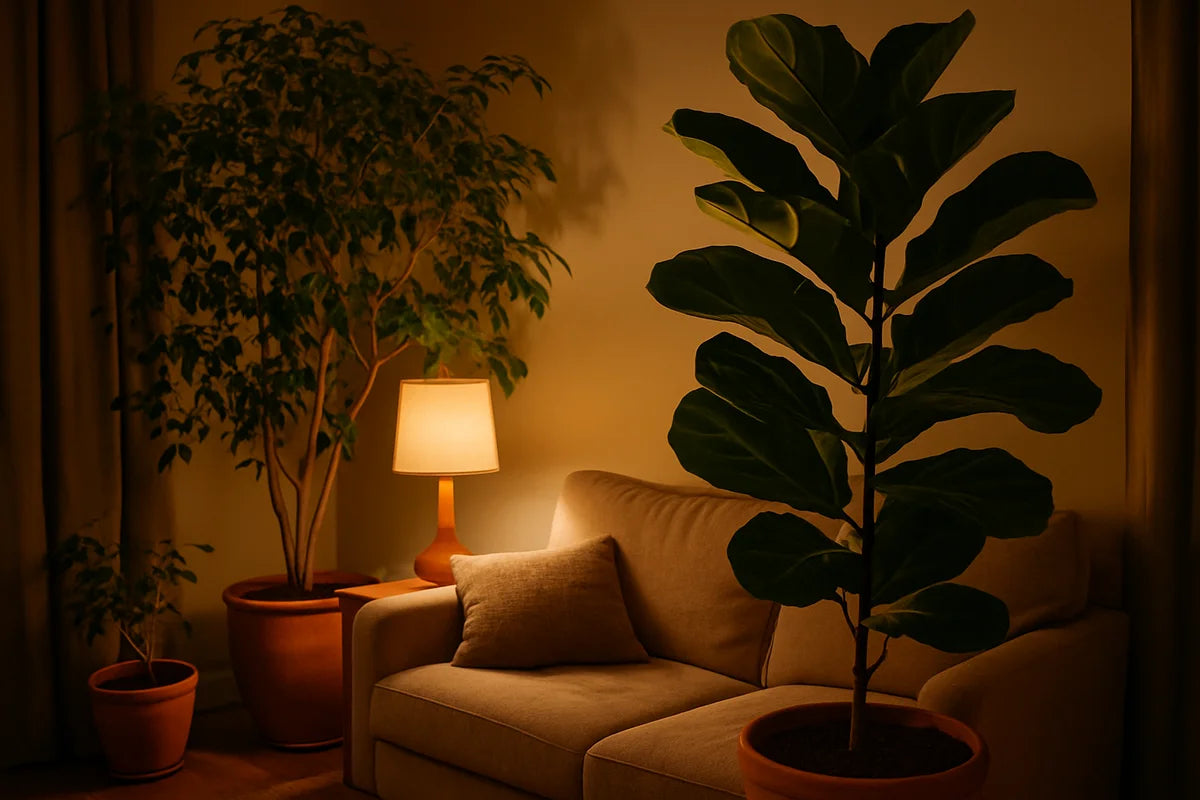
2) Geigenfeige (Ficus lyrata)
Diese Pflanze kann prächtig gedeihen, aber sie reagiert empfindlich auf ständige Veränderungen. Stellen Sie sie an einen hellen Ort, gießen Sie sie regelmäßig und vermeiden Sie es, sie zu oft zu bewegen.
- Licht: hell indirekt, etwas sanfte Morgensonne ist hilfreich
- Gießen: wenn die oberen 5 cm trocken sind
- Gut geeignet für: einen stabilen Platz in der Nähe eines hellen Fensters
3) Drachenbaum (Dracaena marginata, fragrans und andere)
Dracaena verleiht Ihnen eine Baumform ohne Drama. Sie verträgt schwächeres Licht besser als viele andere Zimmerbäume.
- Licht: schwach bis hell indirekt
- Gießen: wenn die Hälfte des Topfes getrocknet ist
- Gut geeignet für: Büros, Schlafzimmer und Anfänger
4) Geldbaum (Pachira aquatica)
Oft mit geflochtenen Stämmen verkauft, wachsen Geldbäume bei gutem Licht schnell und erholen sich gut nach einer vergessenen Wassergabe.
- Licht: mittel bis hell indirekt
- Gießen: wenn die oberen 5-7 cm trocken sind
- Gut geeignet für: Menschen, die einen weichen, blättrigen Look wünschen
5) Yucca-Palme (Yucca elephantipes)
Möchten Sie eine Pflanze, die Vernachlässigung mag? Yucca kommt dem nahe. Sie bevorzugt helles Licht, verträgt aber durchschnittliche Räume, wenn Sie nicht zu viel gießen.
- Licht: helles Licht, etwas direkte Sonne ist in Ordnung
- Gießen: nur nachdem der Topf gut getrocknet ist
- Gut geeignet für: sonnige Räume und volle Terminkalender
6) Kentia-Palme (Howea forsteriana)
Die Kentia-Palme hat ein ruhiges, klassisches Aussehen und verträgt schwächeres Licht besser als viele Palmen. Sie wächst langsamer, was sie für das Leben in Innenräumen geeignet macht.
- Licht: schwach bis mittel indirekt
- Gießen: wenn die oberen paar Zentimeter trocken sind
- Gut geeignet für: Wohnzimmer, wo Sie Höhe ohne scharfe Konturen wünschen
7) Areca-Palme (Dypsis lutescens)
Areca-Palmen wirken voll und hell, benötigen aber mehr Licht und eine konstantere Bewässerung als Kentia-Palmen.
- Licht: hell indirekt
- Gießen: wenn die oberen 2,5 cm trocken sind
- Gut geeignet für: hellere Räume und Pflanzenliebhaber, die Veränderungen frühzeitig bemerken
8) Olivenbaum (Olea europaea)
Ja, man kann einen Olivenbaum drinnen anbauen, aber nur, wenn man ihm echte Sonne geben kann. Dies ist eine der wenigen Zimmerbaumarten, die tatsächlich direktes Licht wünschen.
- Licht: so viel direkte Sonne, wie Sie ihm geben können
- Gießen: wenn die oberen 5-7 cm trocken sind
- Gut geeignet für: Süd- oder Westfenster, Wintergärten, helle Balkone
9) Zitrusfrüchte (Zitrone, Calamondin, Limette)
Zitruspflanzen können drinnen funktionieren, aber behandeln Sie sie wie eine Fruchtpflanze, nicht wie eine Dekorationspflanze. Sie benötigen Sonne, Luftzirkulation und Düngung in der Wachstumsperiode.
- Licht: stundenlanges direktes Sonnenlicht
- Gießen: gleichmäßige Feuchtigkeit, nicht durchnässt
- Gut geeignet für: Menschen, die Freude an der praktischen Pflege haben
Für die artenspezifische Pflege erklärt der Leitfaden der Penn State Extension zum Anbau von Zitruspflanzen in Innenräumen Licht, Düngung und häufige Probleme klar und deutlich.
10) Schefflera (Schefflera arboricola)
Schefflera verleiht Ihnen das Aussehen eines Blätterdachs. Sie wächst bei gutem Licht schnell und verträgt Rückschnitt gut, wenn sie zu groß wird.
- Licht: mittel bis hell indirekt
- Gießen: wenn die oberen 5 cm trocken sind
- Gut geeignet für: das Formen zu einem kleinen „Baum“ durch regelmäßigen Schnitt
Wo Zimmerbäume für optimales Wachstum platziert werden sollten
Die meisten Zimmerbäume gehen ein, weil sie zu weit von einem Fenster entfernt stehen. Ihre Augen gewöhnen sich an wenig Licht. Pflanzen tun das nicht.
Verwenden Sie diese Platzierungsregel
- Helles, indirektes Licht: innerhalb von 0,6-1,5 Metern von einem hellen Fenster
- Mittleres Licht: 1,5-2,4 Meter von einem hellen Fenster entfernt oder in der Nähe eines Ostfensters
- Weniger Licht: Ecken ohne direkte Sonne, aber immer noch mit etwas Tageslicht
Drehen Sie Ihre Pflanze alle 1-2 Wochen um ein Viertel. Diese einfache Angewohnheit verhindert Schrägwuchs und einseitiges Wachstum.
Topf, Erde und Drainage, die die meisten Probleme verhindern
Man kann alles andere richtig machen und trotzdem eine Pflanze verlieren, wenn der Topf nass bleibt. Wurzeln brauchen Luft genauso wie Wasser.
Wählen Sie den richtigen Topf
- Wählen Sie einen Topf mit Abflussloch. Ohne Loch, kein Geschäft.
- Verwenden Sie einen Untersetzer und entleeren Sie ihn nach dem Gießen.
- Für hohe Zimmerbäume wählen Sie einen schwereren Topf oder fügen Sie Gewicht am Boden hinzu (z. B. eine Schicht sauberer Steine), um ein Umkippen zu reduzieren.
Verwenden Sie eine gut durchlässige Blumenerde
Eine einfache Zimmerpflanzenerde hält oft zu viel Wasser für baumartige Pflanzen. Verbessern Sie sie mit einem der folgenden Mittel:
- Fügen Sie Perlit oder Bimsstein für die Belüftung hinzu
- Fügen Sie Orchideenrinde für die Struktur hinzu
- Für Sukkulenten wie Yucca verwenden Sie eine Kakteenerde oder mischen Sie zusätzlichen Splitt unter
Wenn Sie eine praktische Referenz für häufige Zimmerpflanzen wünschen, erklärt die Royal Horticultural Society Kompost und Mischungen für Zimmerpflanzen auf eine leicht anwendbare Weise.
Zimmerbäume gießen ohne Raten
Vergessen Sie feste Zeitpläne. Gießen Sie basierend auf der Bodenfeuchtigkeit und der Wachstumsgeschwindigkeit der Pflanze.
Der Fingertest funktioniert
- Stecken Sie Ihren Finger in die Erde.
- Wenn sie bis zum ersten Fingerglied trocken ist, sind viele Zimmerbäume bereit für Wasser.
- Wenn sie noch feucht ist, warten Sie.
Eine einfache Gießmethode, die Wurzelfäule verhindert
- Langsam gießen, bis das Wasser unten abläuft.
- 10 Minuten warten.
- Den Untersetzer leeren.
Möchten Sie ein präziseres Werkzeug? Ein einfaches Feuchtigkeitsmessgerät hilft, wenn Sie dazu neigen, zu viel zu gießen. Viele Gärtner verwenden auch den „Topf anheben“-Test: trockene Töpfe fühlen sich viel leichter an. Einen praktischen Überblick über Messgeräte und was sie können und nicht können, bietet Gardener's Supply, das erklärt, wie man ein Bodenfeuchtigkeitsmessgerät verwendet, ohne es zu einer Gadget-Obsession zu machen.
Luftfeuchtigkeit, Temperatur und Luftzirkulation
Die meisten Zimmerbäume stammen aus warmen Regionen. Sie brauchen keine Dschungelluftfeuchtigkeit, aber trockene Winterluft kann ihnen zusetzen.
- Halten Sie sie von Heizungsöffnungen und heißen Heizkörpern fern.
- Achten Sie auf gleichmäßige Temperaturen. Kalte Zugluft kann zum Blattabwurf führen.
- Wenn die Blattspitzen braun werden, erhöhen Sie die Luftfeuchtigkeit etwas mit einem Luftbefeuchter oder stellen Sie Pflanzen zusammen.
Wenn Sie neugierig sind, wie sich die Raumluftfeuchtigkeit auf Komfort und Gesundheit auswirkt (und warum Ihre Heizung ein Zuhause austrocknen kann), bieten die Seiten der EPA zur Raumluftqualität einen soliden Überblick und verweisen auf weitere Ressourcen.
Düngen und Beschneiden für eine bessere Baumform
Zimmerbäume benötigen keine intensive Düngung, aber sobald sie im Frühjahr zu wachsen beginnen, brauchen sie Nährstoffe.
Grundlagen der Düngung
- Düngen Sie im Frühling und Sommer, wenn Sie neues Wachstum sehen.
- Verwenden Sie bei Unsicherheit einen ausgewogenen Zimmerpflanzendünger in halber Stärke.
- Düngen Sie keine gestresste Pflanze. Beheben Sie zuerst Licht- und Bewässerungsprobleme.
Beschneiden für ein volleres Blätterdach
Wenn Ihr Zimmerbaum hoch und kahl wird, schneiden Sie die Wachstumsspitze. Viele Arten (Gummibaum, Schefflera, Drachenbaum) verzweigen sich unterhalb des Schnitts. Verwenden Sie eine saubere Schere und entfernen Sie nicht mehr als ein Viertel der Pflanze auf einmal.
Häufige Probleme und schnelle Lösungen
Blätter werden gelb
- Häufigste Ursache: zu viel Wasser
- Lösung: Lassen Sie die Erde zwischen den Wassergaben stärker abtrocknen, überprüfen Sie die Drainage und schneiden Sie bei Bedarf faulige Wurzeln zurück
Braune Spitzen oder knusprige Ränder
- Häufige Ursachen: trockene Luft, Salzablagerungen, ungleichmäßige Bewässerung
- Lösung: Gründlich gießen, den Topf einmal im Monat mit sauberem Wasser spülen, Luftfeuchtigkeit erhöhen, wenn die Luft sehr trocken ist
Plötzlicher Blattabwurf
- Häufige Ursachen: kalte Zugluft, Standortwechsel der Pflanze, Stress nach dem Kauf
- Lösung: Nicht mehr bewegen, Temperaturen konstant halten, nur bei Bedarf gießen
Schädlinge (Spinnmilben, Schildläuse, Wollläuse)
- Lösung: Pflanze isolieren, Blätter abwischen, dann mit Insektizidseife oder Gartenbauöl behandeln
- Tipp: Überprüfen Sie die Unterseiten der Blätter und entlang der Stiele
Zimmerbäume und Haustiere
Wenn Sie mit Katzen oder Hunden zusammenleben, prüfen Sie vor dem Kauf die Toxizität. Einige beliebte Zimmerbäume (wie viele Ficus- und Dracaena-Arten) können Magenverstimmungen oder Schlimmeres verursachen, wenn Haustiere sie anknabbern.
Verwenden Sie dazu eine vertrauenswürdige Datenbank. Die Pflanzenliste der ASPCA macht es einfach, gängige Zimmerpflanzen nach Namen zu suchen.
Wie Sie den richtigen Zimmerbaum für Ihren Raum auswählen
Passen Sie die Pflanze an Ihr Zuhause an, nicht umgekehrt.
Wenn Sie wenig Licht haben
- Kentia-Palme
- Drachenbaum
Wenn Sie helles, indirektes Licht haben
- Gummibaum
- Geldbaum
- Schefflera
- Geigenfeige (wenn Sie die Bedingungen stabil halten können)
Wenn Sie wirklich Sonne im Haus haben
- Olivenbaum
- Zitrusfrüchte
- Yucca-Palme
Wenn Sie die pflegeleichteste Option wünschen
- Gummibaum (weniger Blattabwurf als viele Ficus-Arten)
- Drachenbaum (langsam und stetig)
- Yucca (solange Sie nicht zu viel gießen)
Wo Sie anfangen und was Sie diese Woche tun können
Wenn Sie neu in der Welt der Zimmerbäume sind, wählen Sie eine Pflanze und richten Sie sie gut ein. Das ist besser, als drei zu kaufen und dann zu versuchen, sie am Leben zu halten.
- Wählen Sie den hellsten realistischen Platz in Ihrem Zuhause und dann eine Pflanze, die zu diesem Licht passt.
- Kaufen Sie einen Topf mit Abflussloch und einem Untersetzer, den Sie leeren können.
- Topfen Sie nur um, wenn die Gärtnereierde tagelang nass bleibt. Andernfalls warten Sie ein paar Wochen, damit sich die Pflanze eingewöhnen kann.
- Legen Sie einen einfachen Rhythmus fest: Überprüfen Sie die Erde zweimal pro Woche, drehen Sie die Pflanze alle ein bis zwei Wochen und wischen Sie die Blätter einmal im Monat ab.
- Nach 30 Tagen ändern Sie eine Sache nach der anderen (mehr Licht, weniger Wasser, bessere Luftzirkulation) und beobachten Sie, was sich ändert.
Sobald Ihr erster Zimmerbaum stabil ist, fügen Sie einen zweiten hinzu, der eine andere Rolle erfüllt: eine Palme für Weichheit, ein Gummibaum für kräftige Blätter oder eine Yucca für eine sonnige Ecke. Mit der Zeit schaffen Sie einen Raum, der grüner wirkt, ohne dass er viel Arbeit macht.