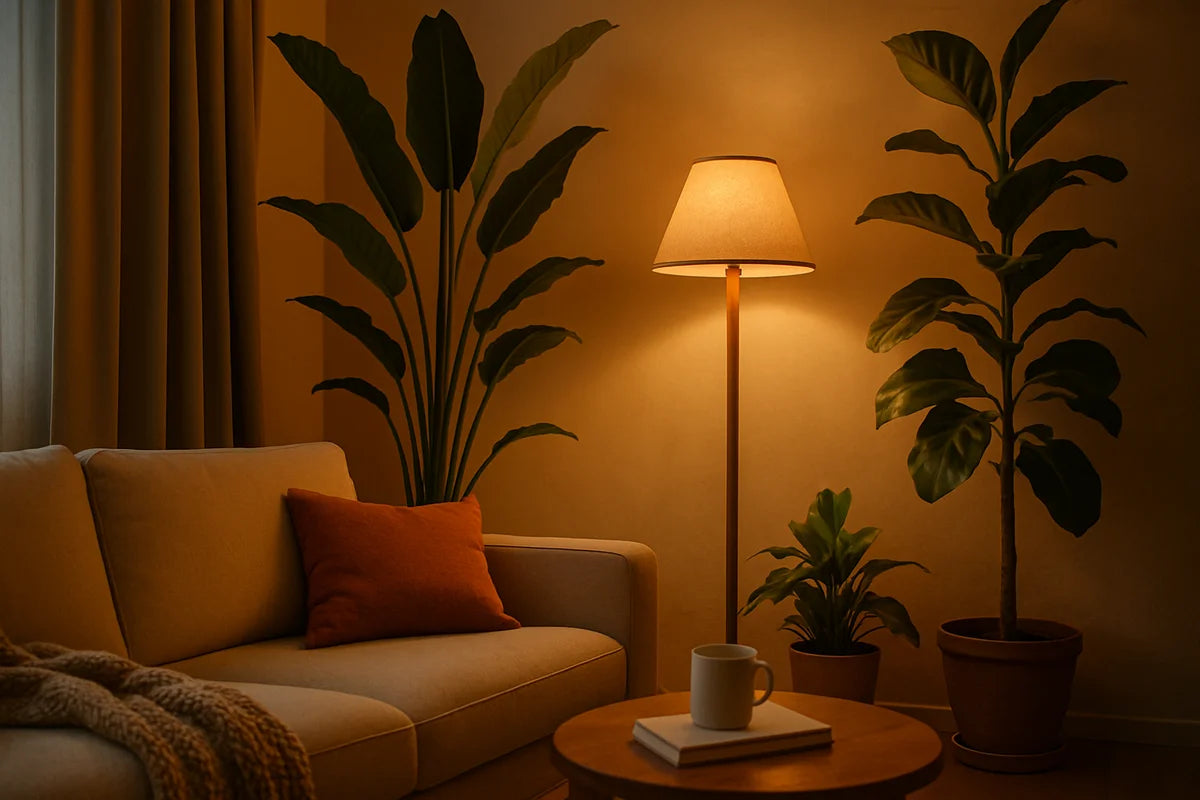
Eine hohe Zimmerpflanze kann einen Raum schneller verändern als ein neuer Teppich. Sie lenkt den Blick nach oben, mildert harte Ecken und lässt selbst einen schlichten Raum wohnlich wirken. Der Trick ist, eine Pflanze zu wählen, die zu Ihrem Licht, Ihrem Zeitplan und Ihrer Deckenhöhe passt.
Dieser Leitfaden führt Sie durch die besten hohen Zimmerpflanzen für echte Wohnungen, nicht für Gewächshausbedingungen. Sie erfahren, welche Pflanzen wenig Licht vertragen, welche schnell wachsen, wie man sie aufrecht hält und was zu tun ist, wenn sie zu groß werden.
Warum hohe Zimmerpflanzen so gut in Innenräumen funktionieren

Die meisten Räume haben visuell eine „tote Zone“: leere Ecken, kahle Wände und der ungenutzte Raum zwischen Möbeln und Decke. Hohe Zimmerpflanzen lösen das auf einen Schlag.
- Sie verleihen niedrigen Möbeln wie Sofas und Betten Höhe und Balance.
- Sie schaffen Privatsphäre und mildern offene Grundrisse, ohne das Licht zu blockieren.
- Sie lassen einen Raum durch natürliche Formen und Texturen ruhiger wirken.
- Sie helfen Ihnen, Zonen in einem Studio oder einem großen Wohnzimmer zu definieren.
Viele Menschen kaufen Pflanzen auch in der Hoffnung auf sauberere Luft. Pflanzen können eine Rolle spielen, aber behandeln Sie eine Pflanze nicht wie einen Luftfilter. Wenn Ihnen die Raumluftqualität wichtig ist, beginnen Sie mit den Grundlagen wie Belüftung und Quellenkontrolle. Der Leitfaden der EPA zur Raumluftqualität gibt einen klaren, praktischen Überblick.
Bevor Sie kaufen: Messen, Licht prüfen und den Standort planen

Messen Sie mehr als nur Ihre Decke
Bringen Sie ein Maßband mit. Sie benötigen Platz für:
- Deckenventilatoren und Hängelampen
- Gardinenstangen und Fensterverkleidungen
- Pflanzenwachstum in den nächsten 12 bis 24 Monaten
Eine Faustregel: Wählen Sie eine Pflanze, die mindestens 30 bis 60 cm kürzer ist als Ihre Decke, es sei denn, Sie sind bereit, sie zu beschneiden oder zu formen.
Kennen Sie Ihr Licht (es ist meist schwächer, als Sie denken)
„Helles indirektes Licht“ klingt einfach, bis man versucht, eine Pflanze zu platzieren. Das Licht nimmt schnell ab, wenn man sich von einem Fenster entfernt. Wenn Sie genauere Werte wünschen, verwenden Sie eine Belichtungsmesser-App oder ein einfaches Messgerät. Die Grundlagen können Sie auch den Ratschlägen der University of Minnesota Extension zu Zimmerpflanzen entnehmen.
Kurz-Spickzettel:
- Schwachlicht: mehrere Meter vom Fenster entfernt, keine direkte Sonne
- Mittleres Licht: in der Nähe eines hellen Fensters, wenig bis keine direkte Sonne
- Helles Licht: nahe einem Süd- oder Westfenster, starkes Umgebungslicht
- Direkte Sonne: Sonne trifft stundenlang auf die Blätter
Wählen Sie einen Behälter, der nicht kippt
Hohe Zimmerpflanzen werden kopflastig. Verwenden Sie einen Topf mit echtem Gewicht oder stellen Sie einen Anzuchttopf in einen schwereren Übertopf. Wenn Kinder oder Haustiere daran stoßen könnten, wählen Sie einen breiteren Topf, als Sie für nötig halten.
Die besten hohen Zimmerpflanzen (und für wen sie geeignet sind)
Im Folgenden finden Sie zuverlässige hohe Zimmerpflanzen, die Sie in echten Haushalten finden werden, weil sie robust, weit verbreitet und pflegeleicht sind.
Geigenfeige (Ficus lyrata): der Statement-Baum
Wenn Sie eine markante Silhouette und große Blätter wünschen, ist dies die klassische Wahl. Sie kann aber auch wählerisch sein.
- Am besten geeignet für: helle Räume mit stabilen Bedingungen
- Licht: hell, indirekt; etwas sanfte Morgensonne kann funktionieren
- Wasser: die oberen Zentimeter austrocknen lassen; nicht nass halten
- Achten Sie auf: Blattabfall durch Zugluft, wenig Licht oder häufiges Umstellen
Halten Sie sie in der Nähe eines hellen Fensters und drehen Sie sie alle ein bis zwei Wochen, um ein gleichmäßiges Wachstum zu gewährleisten. Wenn Sie mehr über Licht und Standort erfahren möchten, helfen Ihnen die Zimmerpflanzen-Ressourcen der Royal Horticultural Society, in praktischen Begriffen zu denken.
Gummibaum (Ficus elastica): hoch, robust und glänzend
Gummibäume entwickeln sich zu starken Zimmer-"Bäumen" mit dicken Blättern. Sie vertragen normale Wohnbedingungen besser als eine Geigenfeige.
- Am besten geeignet für: Menschen, die eine hohe Pflanze mit weniger Dramatik wünschen
- Licht: mittel bis hell; panaschierte Sorten benötigen mehr Licht
- Wasser: wenn die oberste Schicht trocken ist
- Profi-Tipp: Im Frühjahr die Spitze beschneiden, um die Verzweigung zu fördern
Drachenbaum (Dracaena): die pflegeleichte Vertikale
Drachenbäume erreichen schnell eine stattliche Höhe, ohne perfektes Licht zu verlangen. Er ist eine der praktischsten hohen Zimmerpflanzen für Büros und Wohnungen.
- Am besten geeignet für: Anfänger und Räume mit wenig bis mittlerem Licht
- Licht: niedrig bis hell indirekt
- Wasser: sparsam; er hasst durchnässte Erde
- Achten Sie auf: braune Spitzen durch trockene Luft oder unregelmäßiges Gießen
Drachenbäume können in einigen Gebieten auch empfindlich auf Fluorid im Leitungswasser reagieren. Wenn Sie wiederholt braune Blattspitzen sehen, versuchen Sie es einen Monat lang mit gefiltertem Wasser und prüfen Sie, ob sich dies verbessert.
Strelitzie (Strelitzia): große Blätter, große Präsenz
Sie möchten einen sauberen, architektonischen Look? Die Strelitzie hat lange Stiele und breite Blätter, die eine Ecke schnell ausfüllen.
- Am besten geeignet für: helle Räume und Pflanzenbesitzer, die pünktlich gießen
- Licht: helles Licht, etwas direkte Sonne hilft
- Wasser: wenn die oberen Zentimeter trocken sind
- Platzhinweis: Sie braucht Platz; Blätter reißen, wenn sie an eine Wand gedrückt werden
Wenn Sie Wachstum anstreben, belohnt diese Pflanze konstantes Licht mehr als fast jede andere auf dieser Liste.
Yucca-Palme: der „Vergiss-das-Gießen“-Champion
Yucca sieht aus wie eine Wüstenpflanze, weil sie es ist. Sie speichert Wasser und steckt verpasstes Gießen weg.
- Am besten geeignet für: helle Standorte und vielbeschäftigte Haushalte
- Licht: helles Licht, verträgt Sonne besser als viele Zimmerpflanzen
- Wasser: die Erde zwischen den Gießvorgängen gut austrocknen lassen
- Achten Sie auf: weiche Stiele durch Überwässerung
Indoor-Palmen-Optionen: Arecapalme, Kentia-Palme und Bergpalme
Palmen verleihen Höhe mit einem weicheren Aussehen als baumförmige Pflanzen. Jede hat eine andere Persönlichkeit.
- Arecapalme: schnelleres Wachstum, mag helleres Licht und mehr Wasser
- Kentia-Palme: langsamer, robuster, besser für mittleres Licht
- Bergpalme: insgesamt kleiner, kann aber in einem Ständer oder hohen Pflanzgefäß immer noch Höhe hinzufügen
Palmen mögen gleichmäßige Feuchtigkeit, benötigen aber trotzdem Drainage. Wenn der Topf Wasser hält, verfallen die Wurzeln schnell.
Bogenhanf (Sansevieria/Dracaena trifasciata): hoch, schmal, nahezu unzerstörbar
Wenn Sie Höhe ohne breites Blätterdach wünschen, bieten Bogenhanf eine klare vertikale Linie. Einige Sorten erreichen mehrere Meter Höhe, insbesondere bei hellem Licht.
- Am besten geeignet für: Räume mit wenig Licht, Schlafzimmer und enge Ecken
- Licht: niedrig bis hell; Wachstum beschleunigt sich mit mehr Licht
- Wasser: selten; Erde vollständig austrocknen lassen
Überwässerung ist die Hauptursache, warum Menschen sie töten. Im Zweifelsfall warten Sie.
Monstera am Moosstab: hoch, belaubt und formbar
Monstera beginnt nicht wie ein Baum hoch, aber man kann sie nach oben leiten. Wenn Sie eine hohe Zimmerpflanze mit üppigem Aussehen wünschen, ist dies eine großartige Option.
- Am besten geeignet für: Pflanzenbesitzer, die das Anbinden und Formen nicht scheuen
- Licht: mittel bis hell indirekt
- Wasser: wenn die obere Schicht trocken ist
- Stütze: Verwenden Sie einen Stab, ein Rankgitter oder eine Wandhalterung
Für Ideen zum Anbinden und Formen ist der Monstera-Pflegeleitfaden von Gardener's Supply klar und praktisch.
Pflegegrundlagen, die hohe Zimmerpflanzen gedeihen lassen
Gießen: langsam vorgehen und den Boden prüfen
Die meisten hohen Zimmerpflanzen sterben an zu viel Liebe. Große Töpfe speichern länger Feuchtigkeit, und die Wurzeln brauchen Luft genauso wie Wasser.
- Überprüfen Sie den Boden 5 bis 10 cm tief (tiefer bei sehr großen Töpfen).
- Gießen Sie, bis es abläuft, und leeren Sie dann die Untertasse.
- Gießen Sie erst wieder, wenn der Boden die für die Pflanze bevorzugte Trockenheit erreicht hat.
Wenn Sie eine einfache Regel wünschen, verwenden Sie diese: größerer Topf bedeutet langsamerer Zeitplan. Eine Pflanze in einem 30-cm-Topf benötigt möglicherweise nur halb so oft Wasser wie dieselbe Pflanze in einem 20-cm-Topf.
Drainage: unerlässlich
Wählen Sie einen Topf mit einem Drainageloch. Wenn Sie ein Pflanzgefäß ohne Loch bevorzugen, halten Sie die Pflanze in einem Anzuchttopf und nehmen Sie sie zum Gießen heraus. Diese eine Gewohnheit verhindert die meisten Wurzelfäule.
Erde: passend zur Pflanze, nicht zum Trend
- Ficus und Strelitzie: grobe, schnell entwässernde Mischung
- Drachenbaum und Bogenhanf: noch schneller entwässernd, mit zusätzlichem Perlit oder Bimsstein
- Palmen: feuchtigkeitsspeichernd, aber luftig (nicht dicht, nicht schlammig)
Düngung: leicht, saisonal und konstant
Im Frühjahr und Sommer wirkt ein ausgewogener Zimmerpflanzendünger in geringer Dosierung bei den meisten hohen Zimmerpflanzen. Im Herbst und Winter verlangsamen viele Pflanzen ihr Wachstum. Eine Düngung zu diesem Zeitpunkt kann kontraproduktiv sein.
Wenn Sie einen wissenschaftlich fundierten Überblick über Nährstoffe und Pflanzenwachstum wünschen, erklärt der Leitfaden der UF/IFAS Extension zu Pflanzennährstoffen die Grundlagen ohne Schnickschnack.
Drehen und Beschneiden: die gewünschte Form beibehalten
- Drehen Sie die Pflanzen alle 1 bis 2 Wochen um ein Viertel, um ein Schiefwachsen zu verhindern.
- Schneiden Sie im Frühjahr, wenn die Pflanze sich erholen kann, verkümmerte Triebe ab.
- Verwenden Sie saubere Scheren, um die Ausbreitung von Krankheiten zu reduzieren.
Bei hohen Pflanzen mit einem einzigen Stamm kann das Beschneiden der Spitze die Verzweigung anregen. So verwandeln Sie einen dünnen Stamm in einen volleren Zimmerbaum.
Häufige Probleme (und schnelle, wirksame Lösungen)
Gelbe Blätter
- Wahrscheinlichste Ursache: Überwässerung
- Behebung: Verlängern Sie die Gießintervalle und überprüfen Sie die Drainage
Braune Spitzen
- Wahrscheinlichste Ursachen: trockene Luft, ungleichmäßiges Gießen, Mineralienablagerungen
- Behebung: gleichmäßiger gießen, den Boden monatlich spülen, gefiltertes Wasser in Betracht ziehen
Schiefstand oder Umkippen
- Wahrscheinlichste Ursachen: Lichteinfall von einer Seite, kopflastiges Wachstum, leichter Topf
- Behebung: wöchentlich drehen, bei Bedarf stützen, auf einen breiteren, schwereren Topf umsteigen
Schädlinge (Spinnmilben, Schildläuse, Wollläuse)
- Behebung: Pflanze isolieren, Blätter waschen, dann mit Insektizidseife oder Gartenbauöl behandeln
- Vorbeugung: Blätter monatlich abwischen, damit sich Schädlinge nicht wohlfühlen
Wenn Sie Hilfe bei der Identifizierung von Schädlingen und der Auswahl einer Behandlung benötigen, sind die Schädlingsleitfäden der UC IPM detailliert und basieren auf echten Schädlingsbekämpfungsmethoden.
Wo hohe Zimmerpflanzen im Haus am besten aussehen
Helle Ecken in Fensternähe
Dies ist der beste Standort für Ficus, Strelitzien und Palmen. Ziehen Sie die Pflanze einen halben bis einen Meter vom Glas weg, wenn die Sonne zu stark wird.
Neben einem Sofa oder Medienelement
Eine hohe Pflanze unterbricht die harte Linie der Möbel und lässt ein Wohnzimmer ausgewogener wirken. Wählen Sie eine Pflanze mit einer starken aufrechten Form, wie z.B. einen Gummibaum oder Drachenbaum.
Eingangsbereiche und Treppenabsätze
An diesen Stellen fehlen oft Möbel, daher kann eine hohe Zimmerpflanze den gesamten Bereich aufwerten. Wählen Sie etwas, das Zugluft und weniger Licht verträgt, wie Drachenbaum oder Bogenhanf.
Schlafzimmer
Wählen Sie klare Formen, die nicht viel Schmutz abwerfen. Bogenhanf und Kentia-Palme eignen sich gut, wenn Ihr Zimmer gleichmäßige Temperaturen hat und Sie nicht überwässern.
Sicherheit für Haustiere und Kinder: sorgfältig auswählen
Viele beliebte hohe Zimmerpflanzen können Haustiere reizen, wenn sie angeknabbert werden. Ficus, Drachenbaum und viele andere können Magen-Darm-Beschwerden verursachen. Wenn Sie Ihr Zuhause mit Haustieren teilen, die knabbern, prüfen Sie vor dem Kauf die Toxizität und stellen Sie die Pflanzen, wenn möglich, außer Reichweite.
Als zuverlässige Referenz verwenden Sie die Liste der giftigen und ungiftigen Pflanzen der ASPCA.
Kauftipps: So wählen Sie eine gesunde hohe Pflanze im Geschäft aus
- Überprüfen Sie die Blätter auf Flecken, klebrige Rückstände oder Spinnweben (Schädlinge).
- Schauen Sie sich den neuesten Wachstum an. Er sollte fest und lebendig aussehen, nicht schrumpelig.
- Vermeiden Sie Pflanzen mit matschigen Stielen oder einem sauren Geruch aus dem Boden.
- Heben Sie den Topf an. Wenn er für seine Größe seltsam leicht ist, kann er stark ausgetrocknet sein.
- Fragen Sie, wann er angekommen ist. Frischere Lieferungen passen sich zu Hause oft besser an.
Wenn Sie online bestellen, planen Sie eine kurze Erholungsphase ein. Hohe Zimmerpflanzen können nach dem Versand einige Blätter verlieren, auch wenn sie gesund sind.
Blick nach vorn: Gestalten Sie Ihren Raum Pflanze für Pflanze
Wenn Sie neu in der Welt der hohen Zimmerpflanzen sind, beginnen Sie mit einer, die zu Ihrem Leben passt, nicht zu Ihrer Wunschliste. Ein Drachenbaum, ein Gummibaum oder ein Bogenhanf lehrt Sie den Rhythmus von Licht und Gießen, ohne Sie für kleine Fehler zu bestrafen.
Sobald Sie eine hohe Pflanze eine Saison lang stabil gehalten haben, können Sie wählerisch werden. Fügen Sie eine zweite Pflanze mit einer anderen Form hinzu, versuchen Sie einen helleren Standort oder leiten Sie eine Kletterpflanze an einem Stock hoch. Ihr Zuhause wird sich in kleinen Schritten verändern, und es wird sich mit jedem neuen Blatt mehr wie Ihr eigenes anfühlen.