

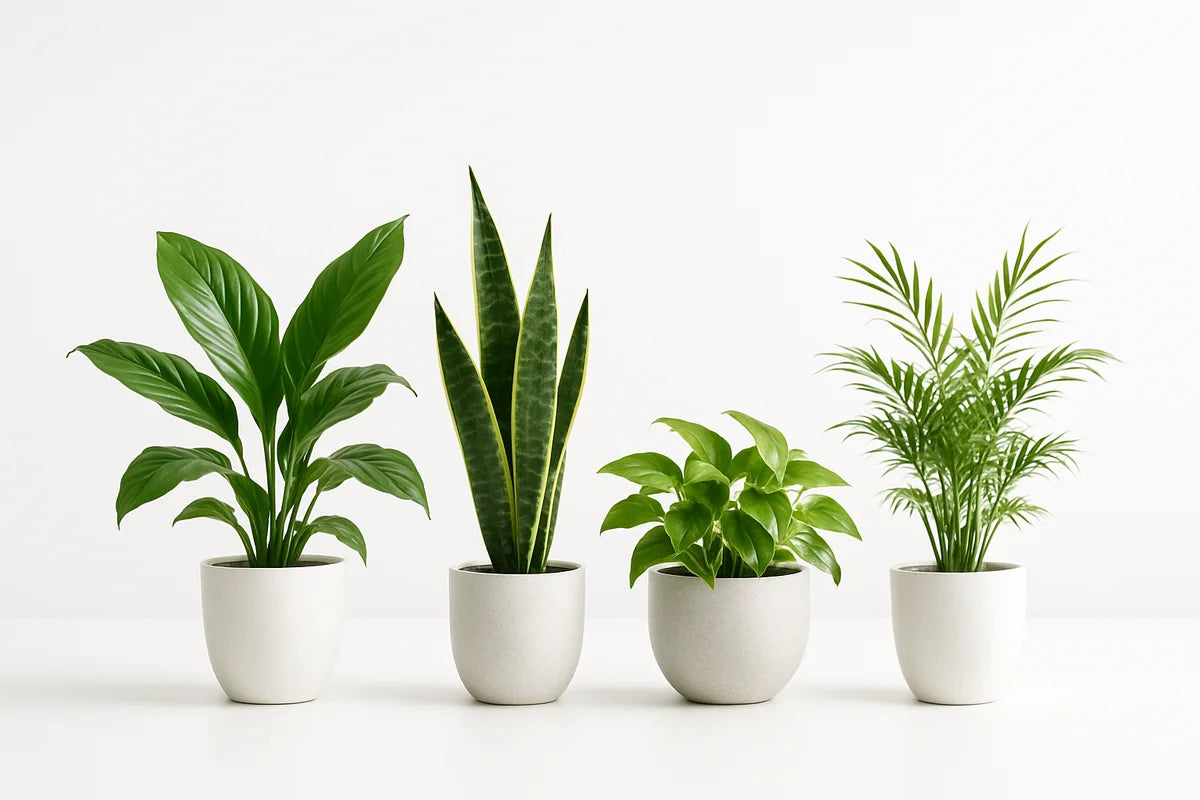
Zimmerpflanzen können einem Raum eine beruhigendere und lebendigere Atmosphäre verleihen. Aber können sie Ihre Luft auf eine Weise reinigen, die Sie bemerken? Die ehrliche Antwort: Pflanzen können auf kleine, aber echte Weise helfen, aber sie ersetzen weder frische Luft noch einen guten Filter oder die Behebung eines Feuchtigkeitsproblems. Dennoch können die besten Pflanzen zur Raumluftreinigung eine nützliche Rolle spielen, besonders wenn Sie sie mit cleveren Gewohnheiten wie besserer Belüftung und regelmäßiger Reinigung kombinieren.
Dieser Artikel behandelt, welche Pflanzen gut abschneiden, was sie für die Raumluft tun können (und was nicht) und wie Sie sie so aufstellen, dass Sie den größten Nutzen erzielen, ohne Ihr Zuhause in eine Pilzfarm zu verwandeln.
Was „Luftreinigung“ in einem Zuhause bedeutet

Die Raumluft kann eine Mischung aus verschiedenen Substanzen enthalten: Staub, Tierhaare, Rauchpartikel, Kochdämpfe, Schimmelsporen und Gase, die aus Farben, Reinigern, Möbeln und Fußböden freigesetzt werden. Viele Menschen konzentrieren sich auf VOCs (flüchtige organische Verbindungen), da sie in modernen Haushalten häufig vorkommen.
Pflanzen interagieren auf verschiedene Weisen mit der Raumluft:
- Blätter können Staub und kleine Partikel auffangen, die Sie später beim Abwischen der Blätter entfernen.
- Einige Gase können in die Blattporen eindringen und in der Pflanze oder im Wurzelbereich abgebaut werden.
- Pflanzen fügen der Luft durch Transpiration Feuchtigkeit hinzu, was hilfreich sein kann, wenn Ihre Luft zu trocken ist (aber schädlich, wenn Ihr Zuhause bereits feucht ist).
Forschungsergebnisse werden oft ohne Kontext zitiert. Klassische NASA-Arbeiten untersuchten Pflanzen und VOCs in versiegelten Kammern. Das ist nützliche Wissenschaft, aber ein Zuhause ist keine versiegelte Box. Luft bewegt sich. VOC-Quellen variieren. Und die Anzahl der Pflanzen, die Sie benötigen würden, um ein mechanisches Luftreinigungsgerät zu ersetzen, kann hoch sein. Eine einfache Übersicht über Innenraumschadstoffe und was am meisten hilft, finden Sie in der Einführung der EPA zur Raumluftqualität.
Die besten Pflanzen zur Raumluftreinigung (und warum sie beliebt sind)

Hier sind die Pflanzen, die in Diskussionen über Luftqualität immer wieder auftauchen, weil sie robust und weit verbreitet sind und einige Belege für ihre Fähigkeit haben, bestimmte Schadstoffe in kontrollierten Umgebungen zu reduzieren. Ich werde Ihnen auch erzählen, wie es tatsächlich ist, mit ihnen zu leben.
Bogenhanf (Sansevieria, jetzt Dracaena trifasciata)
Wenn Sie eine Pflanze wollen, die schwer zu töten ist, fangen Sie hier an. Bogenhanf verträgt wenig Licht, verpasstes Gießen und trockene Raumluft. Er hat auch dicke Blätter, die gut Staub sammeln.
- Am besten für: Anfänger, Schlafzimmer, Ecken mit wenig Licht
- Pflegetipp: Nur gießen, wenn die Erde vollständig trocken ist; nasse Erde ist der schnellste Weg, ihn zu verlieren
- Achtung: Er ist für Haustiere giftig, wenn er gekaut wird
Grünlilie (Chlorophytum comosum)
Grünlilien wachsen schnell, vertragen eine breite Palette an Lichtverhältnissen und bilden kleine „Spinnenkinder“, die man topfen und teilen kann. Sie werden oft in Studien verwendet, weil sie einfach zu züchten sind und viel Blattoberfläche produzieren.
- Am besten für: helles, indirektes Licht, Hängekörbe, Küchen
- Pflegetipp: Wenn die Blattspitzen braun werden, versuchen Sie gefiltertes Wasser oder lassen Sie Leitungswasser über Nacht stehen
- Achtung: Katzen behandeln sie oft wie einen Snack
Efeutute (Epipremnum aureum)
Efeututen ranken schnell und füllen Räume. Sie sind auch nützlich, wenn Ihr Hauptziel „mehr Grün mit weniger Aufwand“ ist. Wie viele Blattpflanzen sammeln sie Staub und können Ihnen helfen, einen Reinigungsrhythmus beizubehalten.
- Am besten für: Regale, Bücherregale, Büros, geringes bis mittleres Licht
- Pflegetipp: Schneiden Sie sie zurück, damit sie buschig bleibt; lassen Sie sie nicht im Wasser stehen
- Achtung: giftig für Haustiere
Einblatt (Spathiphyllum)
Einblätter sind beliebt, weil sie sauber und skulptural aussehen und sie Ihnen durch Herunterhängen „sagen“, wann sie durstig sind. Sie mögen gleichmäßige Feuchtigkeit und mittleres Licht. Sie können auch die Luftfeuchtigkeit erhöhen, was in trockenen Haushalten ein Pluspunkt ist.
- Am besten für: Wohnzimmer, Badezimmer mit Fenstern, mittleres Licht
- Pflegetipp: Halten Sie die Erde leicht feucht, nicht nass; verwenden Sie einen Topf mit Abflusslöchern
- Achtung: Pollen und Duft können empfindliche Personen stören; giftig für Haustiere
Gummibaum (Ficus elastica)
Gummibäume haben große, dicke Blätter, die wie Staubmagnete wirken. Wenn Sie eine Pflanze wollen, die sich wie ein Möbelstück anfühlt, ist dies die richtige Wahl.
- Am besten für: helle Räume mit indirektem Licht
- Pflegetipp: Wischen Sie die Blätter alle paar Wochen ab; das hilft der Pflanze und entfernt Staub aus dem Raum
- Achtung: Saft kann die Haut reizen; von Haustieren fernhalten
Schwertfarn (Nephrolepis exaltata)
Farne bieten viel Blattoberfläche. Sie geben auch Feuchtigkeit an die Luft ab, was in der winterlichen Heizperiode sehr angenehm sein kann. Der Nachteil: Sie können wählerisch sein, wenn Ihr Zuhause trocken ist.
- Am besten für: feuchte Räume, Badezimmer mit gutem Licht, Menschen, die routinierte Pflege mögen
- Pflegetipp: Nicht vollständig austrocknen lassen; verwenden Sie ein Kiesbett, wenn Ihre Luft trocken ist
- Achtung: Trockene Luft führt zu Blattabfall und knusprigen Wedeln
Areca-Palme (Dypsis lutescens)
Palmen bringen viel Grün, ohne unordentlich zu wirken. Areca-Palmen können groß werden, was mehr Blattoberfläche und mehr Einfluss auf Luftfeuchtigkeit und Staubansammlung bedeutet.
- Am besten für: helles, indirektes Licht, größere Räume
- Pflegetipp: Gießen Sie, wenn die oberste Erdschicht trocken ist; drehen Sie den Topf, damit er gleichmäßig wächst
- Achtung: Spinnmilben in sehr trockenen Haushalten
Efeu (Hedera helix)
Efeu taucht in älteren Listen von Raumluftpflanzen auf. Drinnen benötigt er helles Licht und vorsichtiges Gießen. Er kann bei manchen Menschen auch Allergien auslösen und ist giftig für Haustiere.
- Am besten für: helle Fenster, kühle Räume
- Pflegetipp: Halten Sie ihn gleichmäßig feucht und lassen Sie ihn nicht in der heißen Sonne „backen“
- Achtung: Schimmelgefahr, wenn die Blumenerde feucht bleibt
Wenn Sie den ursprünglichen Kontext von „Pflanzen in Kammern“ sehen möchten, können Sie die von der NASA unterstützte Übersicht lesen, aus der viele Listen schöpfen, gehostet vom technischen Berichtsserver der NASA.
Wie viele Pflanzen braucht man, um einen Unterschied zu machen?

Hier werden die meisten Artikel ungenau. In echten Häusern werden ein paar Pflanzen die Luft nicht so „reinigen“ können, wie es eine HEPA-Einheit kann. Eine Studie im Journal of Exposure Science & Environmental Epidemiology argumentierte, dass für eine signifikante VOC-Entfernung in typischen Gebäuden viele Pflanzen oder ein technisches Pflanzensystem erforderlich wären, nicht nur eine Efeutute auf einem Regal.
Was ist also ein praktisches Ziel?
- Pflanzen als unterstützendes Werkzeug zur Raumluftreinigung nutzen, nicht als Hauptwerkzeug.
- Wenn Sie das Aussehen mögen und sich darum kümmern können, streben Sie 3-10 mittelgroße Pflanzen in einem Hauptwohnbereich an.
- Konzentrieren Sie sich auf Blattoberfläche und Gesundheit. Eine gedeihende Gummipflanze leistet mehr als drei gestresste Pflanzen in dunklen Ecken.
Machen Sie die Raumluft sauberer mit Pflanzen und ein paar cleveren Gewohnheiten
Wenn Sie spürbare Ergebnisse wünschen, kombinieren Sie die besten Pflanzen zur Raumluftreinigung mit Änderungen, die die Verschmutzung an der Quelle reduzieren.
1) Bewusst lüften
Öffnen Sie Fenster, wenn die Außenluftqualität gut ist. Lassen Sie Abluftventilatoren laufen, wenn Sie kochen und duschen. Wenn Sie an einem Ort mit Waldbränden oder starkem Verkehr leben, müssen Sie dies an die örtlichen Gegebenheiten anpassen.
Für eine praktische, bauwissenschaftliche Betrachtung von Belüftung und Raumluft helfen Ressourcen von Energy Vanguard, die Zusammenhänge ohne überflüssige Details zu erklären.
2) Einen Luftreiniger dort einsetzen, wo es zählt
Wenn Sie unter Allergien, Rauch oder Feinstaub leiden, hilft ein HEPA-Luftreiniger im Schlafzimmer oft mehr als jede Pflanzenanlage. Pflanzen fangen Feinstaub nicht so effektiv ein wie ein Filter.
Um die CADR-Werte (Clean Air Delivery Rate) zu vergleichen und Marketinglärm zu vermeiden, prüfen Sie die AHAM-Richtlinie für CADR-Werte von Luftreinigern.
3) Feuchtigkeit kontrollieren, um Schimmel zu vermeiden
Pflanzen und Schimmel haben eine schwierige Beziehung. Pflanzen können die Luftfeuchtigkeit erhöhen, und feuchte Erde kann Pilzmücken oder Schimmel hervorrufen. Wenn Sie bereits mit Feuchtigkeit zu kämpfen haben, wählen Sie trockenheitstolerante Pflanzen (Bogenhanf, Efeutute) und gießen Sie seltener.
- Halten Sie die Raumluftfeuchtigkeit idealerweise bei 30-50%.
- Verwenden Sie Töpfe mit Abflusslöchern.
- Leeren Sie die Untersetzer, damit die Wurzeln nicht im Wasser stehen.
- Entfernen Sie abgestorbene Blätter von der Erdoberfläche.
4) Die Blätter reinigen (dies ist der unterschätzte Teil)
Staub auf den Blättern blockiert das Licht und verwandelt Ihre „Luftreinigungs“-Pflanze in ein staubiges Objekt, das nur noch herumsteht. Wischen Sie breite Blätter mit einem feuchten Tuch ab. Spülen Sie Pflanzen mit kleineren Blättern unter der Dusche ab. Tun Sie dies alle 2-4 Wochen.
Die richtige Pflanze für jeden Raum auswählen
Die Anpassung der Pflanze an den Raum erleichtert die Pflege, wodurch die Pflanze gesund bleibt. Gesunde Pflanzen bedeuten mehr Blattoberfläche und ein gleichmäßigeres Wachstum.
Schlafzimmer
- Beste Auswahl: Bogenhanf, Efeutute (wenn Haustiere sie nicht anfressen)
- Vermeiden Sie: stark duftende blühende Pflanzen, wenn Gerüche Kopfschmerzen auslösen
Küche
- Beste Auswahl: Grünlilie, Efeutute
- Warum: Sie vertragen Temperaturschwankungen und helles, indirektes Licht
Badezimmer
- Beste Auswahl: Boston-Farn, Einblatt (nur bei ausreichend Licht)
- Tipp: Wenn Ihr Badezimmer den ganzen Tag feucht bleibt, beobachten Sie die Erde genau
Home-Office
- Beste Auswahl: Gummibaum, Bogenhanf
- Tipp: Stellen Sie eine größere Pflanze in Ihr Sichtfeld, damit Sie ans Gießen denken
Häufige Fehler, die die Vorteile zunichtemachen
Die meisten Probleme entstehen durch gute Absichten und schlechte Einrichtung. Vermeiden Sie diese, und Sie werden weniger Schädlinge und gesündere Pflanzen haben.
Überwässerung
Überwässerung bedeutet nicht „einmal zu viel Wasser“. Es bedeutet normalerweise, zu oft zu gießen. Lassen Sie die obere Erdschicht trocknen, gießen Sie dann gut und lassen Sie überschüssiges Wasser abfließen.
Pflanzen in dunkle Ecken stellen
Wenig Licht bedeutet nicht kein Licht. Eine Pflanze, die kaum überlebt, wird keine neuen Blätter entwickeln, und Sie werden mit Vergilbung und Schädlingen zu kämpfen haben.
Schädlinge ignorieren, bis die Pflanze krank aussieht
Überprüfen Sie die Unterseiten der Blätter. Wenn Sie feine Gespinste (Spinnmilben) oder klebrige Rückstände (Schildläuse) sehen, isolieren Sie die Pflanze und behandeln Sie sie frühzeitig. Eine schnelle Spülung und Insektizidseife wirken oft, wenn Sie es schnell erkennen.
Duftsprays zur „Luftauffrischung“ verwenden
Viele Sprays setzen VOCs und Duftstoffe frei. Wenn Sie eine neutral riechende Luft wünschen, entfernen Sie die Quelle (Müll, feuchte Handtücher, Katzenklo), lüften Sie und verwenden Sie Filter.
Ein einfacher Plan zur Raumluftreinigung mit Pflanzen, den Sie befolgen können
Wenn Sie einen einfachen Start wünschen, der für die meisten Haushalte passt, versuchen Sie Folgendes:
- Wählen Sie für jeden Hauptbereich eine robuste Pflanze: Bogenhanf für das Schlafzimmer, Efeutute oder Grünlilie für das Wohnzimmer und einen Gummibaum, wenn Sie helles Licht haben.
- Kaufen Sie den richtigen Topf: Abflusslöcher, Untersetzer und eine grundlegende Blumenerde für Innenräume.
- Planen Sie einen zweiwöchigen Check-up ein: Fühlen Sie die Erde, wischen Sie die Blätter ab, suchen Sie nach Schädlingen.
- Fügen Sie einen HEPA-Luftreiniger im Schlafzimmer hinzu, wenn Sie unter Allergien oder Rauch leiden.
- Lüften Sie beim Kochen und Duschen, auch im Winter.
Dies hält Pflanzen in ihrem Bereich: Sie unterstützen eine sauberere Raumluft, während Sie die Hauptarbeit mit Belüftung und Filtration leisten.
Wo Sie diese Woche anfangen können
Wählen Sie eine Pflanze, die Sie am Leben erhalten können. Das klingt banal, aber es ist der ganze Trick. Beginnen Sie mit einem Bogenhanf oder einer Grünlilie, stellen Sie sie an einen Ort mit ausreichend Licht und lernen Sie ihren Gießrhythmus. Sobald Sie eine Pflanze einen Monat lang gesund halten können, fügen Sie eine zweite Pflanze dort hinzu, wo Sie die meiste Zeit verbringen.
Dann gehen Sie einen Schritt über Pflanzen hinaus: Verbessern Sie die Belüftung beim Kochen oder wählen Sie einen Luftreiniger für Ihr Zimmer anhand der CADR-Richtlinien. Tun Sie das, und die besten Pflanzen zur Raumluftreinigung werden Teil einer Einrichtung, die tatsächlich verändert, wie sich Ihr Zuhause Tag für Tag anfühlt.


